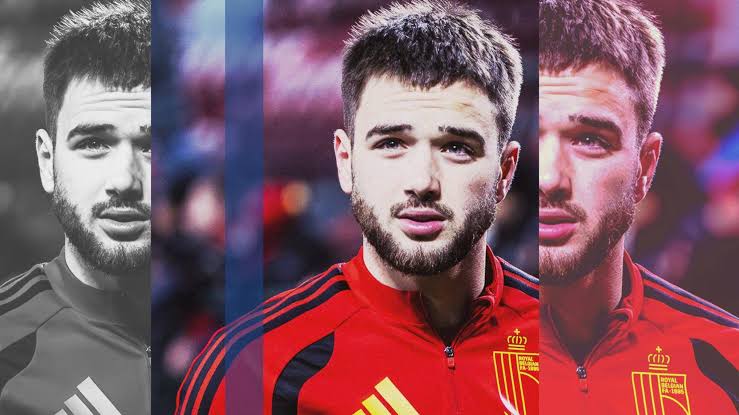
Few individual sagas in Scottish football over the past several months have generated quite as much sustained speculation as Nicolas Raskin’s position at Rangers. What began as vague interest linking the Belgian midfielder with a move to Turkish football has, over the course of a single transfer window, evolved into a genuinely tangled story involving multiple stalled deals, a squad omission, a firm stance from the Ibrox hierarchy, and — for now, at least — a player who remains exactly where he started: in a Rangers shirt, playing regular football, seemingly no closer to an exit than he was when the speculation first began. Here’s the full picture of how this situation has unfolded, why it stalled not once but repeatedly, and what happens next.
To understand why this transfer saga has attracted so much attention, it’s worth first establishing exactly what kind of player is at the centre of it. Raskin arrived at Rangers in January 2023, signing from Standard Liège on what was reported at the time to be a fee in the region of £1.7 million — a relatively modest outlay for a player who has since gone on to become one of the club’s most important midfield performers. He wasn’t a complete unknown even then: Rangers, under then-manager Michael Beale, had tracked him for a considerable period, seeing off interest from elsewhere across the continent to get the deal done on transfer deadline day.
His early career trajectory had been notable in its own right. Raskin came through the academy system at Standard Liège before a spell in Anderlecht’s youth ranks, signed his first professional contract with Gent at just 16 years old, and became the first player born in the 21st century to feature in Belgium’s top flight when he made his senior debut. After returning to Standard Liège in 2019, he established himself as a regular starter, making close to 100 appearances for his hometown club before his Rangers move materialised.
Since arriving in Scotland, Raskin has developed into a genuinely versatile and important midfield presence. Comfortable playing as either a deep-lying six or a more advanced eight, he’s known for his energy, his ability to win the ball back, and his willingness to drive forward with possession — attributes that have made him increasingly central to Rangers’ midfield setup across multiple managerial regimes. His numbers underline that importance: across the 2025/26 season alone, Raskin featured in 50 matches for Rangers across all competitions, amassing over 4,200 minutes while contributing 7 goals and 9 assists, a productive return for a player whose primary remit isn’t goal-scoring. He’s also won silverware at the club, picking up a League Cup winner’s medal during the 2023/24 campaign, and has previously spoken about the emotional weight of losing cup finals to Celtic, including a Viaplay Cup final defeat and the sting of watching Old Firm rivals celebrate at Hampden — motivation, in his own words, that drove him to keep pushing for further success.
What transformed Raskin from a well-regarded Scottish Premiership performer into a player attracting serious continental interest was, by all accounts, his performance for the Belgian national team at the 2026 World Cup. Reports consistently link the sharp rise in transfer speculation directly to his displays on that stage — the kind of tournament exposure that can rapidly and dramatically alter a player’s market value and visibility, transforming someone previously known primarily within Scottish football circles into a player being actively chased by clubs across Europe.
That’s precisely the dynamic that played out here. Having impressed for Belgium on the biggest stage international football offers, Raskin returned to Rangers as a considerably hotter transfer property than the one who had left for the tournament just weeks earlier — setting the stage for the frantic deadline-day scramble that would follow
The major European leagues’ summer transfer window reached its climax on 1 September 2026, and Raskin’s situation was very much at the centre of the deadline-day drama in Scottish football. Turkish reports on the day suggested Beşiktaş had intensified their pursuit, with journalist Tayfun Akkaya reporting that the two clubs had reached a principle agreement, and suggestions that Beşiktaş were prepared to fly Raskin to Istanbul that same night if the paperwork could be completed in time — with an added incentive reportedly dangled in Turkish media that a quick green light could even see him available for the club’s upcoming derby against Fenerbahçe.
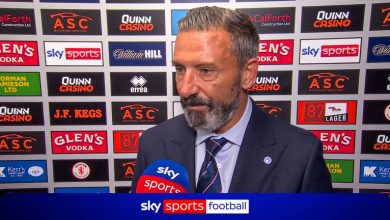
Belgian broadcaster Sporza, covering the story from a different angle, painted a more cautious picture: while Beşiktaş reportedly did have an agreement in place with Rangers, no offer that Rangers considered genuinely acceptable had actually landed by deadline day, despite Raskin’s own apparent willingness to leave. That distinction between a loosely reported “agreement in principle” and the harder reality of no formal bid Rangers were prepared to sanction proved decisive. The deal simply didn’t happen. Rangers boss Derek McInnes, addressing the situation publicly around this period, confirmed that no offer had arrived that the club could meaningfully consider, while praising Raskin’s attitude and application in training since his return from the World Cup, describing him as “first class” and stressing there was no unrest behind the scenes — the midfielder would simply keep training and playing normally until, or unless, a suitable bid materialised
Despite that public composure from McInnes, the weeks that followed told a slightly different story about just how live the speculation remained. Raskin was left out of Rangers’ matchday squad for two consecutive matches amid the growing uncertainty over his future — a far more concrete signal that a departure was being seriously considered than anything seen on deadline day itself, when he had continued playing and training as normal throughout. For a player of his importance to be left out entirely, rather than simply be the subject of speculation while continuing to feature, suggested that Rangers themselves may have been genuinely weighing up their options during this period, even as the club’s public messaging remained calm and measured.
It was during this period of uncertainty that the situation crystallised into its clearest and most concrete form yet. Beşiktaş returned with a fresh proposal — not a permanent transfer this time, but a loan deal, reportedly including a sizeable up-front fee, as the Turkish club raced against a deadline of their own: they needed Raskin registered in time to be included in their Europa League squad ahead of a tie against Celtic scheduled for 5 November, a fixture rich with irony given it would have pitted Raskin against the very league, and one of the two clubs, he’d just left.
Reports at the time suggested a verbal agreement had been reached on this loan structure, with only personal terms said to be outstanding before completion. But Rangers’ stance proved decisive and, in the end, entirely consistent with what McInnes and the club’s actions had signalled throughout the saga: the Ibrox hierarchy’s clear preference was for a permanent sale rather than a temporary loan arrangement, and Beşiktaş’s proposal was turned down on precisely that basis, regardless of the fee attached to the loan itself.
That rejection is worth sitting with for a moment, because it illuminates something important about how Rangers appear to be approaching Raskin’s situation more broadly. A loan with a significant up-front fee might, on the surface, look like an attractive proposition for a selling club wary of losing a key asset for a discounted permanent fee — cash in hand now, with the player’s rights retained, and the option (depending on structure) to bring him back or negotiate a fuller sale later. But Rangers’ rejection suggests the club valued certainty and a clean permanent transfer over the flexibility, but also the ongoing uncertainty, that a loan structure would have introduced. Put simply: if Raskin was going to leave, Rangers wanted him sold outright, on their terms, not loaned out with his long-term future still unresolved.
With the loan bid rejected and the major transfer windows across Europe having largely closed, Raskin’s route to an immediate departure effectively ran out of road. And so, just as swiftly as he’d been omitted from the squad, he returned to it. Raskin started for Rangers in their Premiership match against Falkirk on 2 September, deployed alongside Cammy Devlin in the middle of a 4-2-3-1 formation — a lineup selection that, in its own quiet way, sent a clear signal that Rangers were moving forward with him as part of the squad, deadline pressures notwithstanding.
He’s continued to feature regularly since. In a more recent Premiership fixture away at Motherwell, which finished 1-1, Raskin was directly involved in Rangers’ goal, setting up Mohammed Diomande for an early opener inside the first ten minutes — the kind of direct goal contribution that underlines his continued importance to the side’s attacking play from midfield, even amid all the swirling uncertainty about his longer-term future.
It’s worth examining more closely why Rangers, across two separate windows and two separate approaches from the same club, consistently declined to sanction Raskin’s departure — first by simply not receiving (or not accepting) an offer they considered adequate on deadline day, and then by actively rejecting a structured loan proposal weeks later.
Part of the explanation likely lies in simple contractual leverage. With Raskin still contracted at Ibrox, Rangers were under no obligation to sell on anything other than their own terms — there was no expiring deal forcing their hand, no situation where failing to sell would mean losing him for nothing. That gave the club’s hierarchy the freedom to hold out for the structure and fee they wanted, rather than being pressured into accepting a lesser offer simply because reports suggested a deal was “close.”
There’s also a squad-management dimension worth considering. Raskin’s importance to Rangers’ midfield, underlined by his statistical output across the 2025/26 season and his continued involvement in matches like the Motherwell draw, means his departure — loan or permanent — would represent a genuine loss of quality and experience in a crucial area of the pitch. A club with genuine ambitions to compete domestically and in Europe simply may not have wanted to weaken that area of the squad mid-season on anything other than terms that fully compensated for his loss, whether through a substantial permanent fee that could be reinvested, or simply by declining to let him go at all until the club felt ready to do so.
For Beşiktaş, the situation represents a genuinely frustrating one — not a single failed approach, but two separate attempts across two different transfer windows, each of which appeared close to completion at various points, only to collapse at a late stage. Their initial interest wasn’t a fleeting, opportunistic move either; it had built over a period of months, with Turkish reports as far back as late 2025 already describing Beşiktaş’s head coach as having identified Raskin as a top target for reinforcing his midfield. That level of sustained interest, twice rebuffed, suggests a club genuinely convinced Raskin represents the right profile for their system, rather than one simply chasing a fashionable name off the back of a good World Cup campaign.
The November deadline tied to Europa League squad registration adds a further layer of finality to the current situation. Having missed the opportunity to register Raskin in time to face Celtic in that competition, Beşiktaş’s motivation for pursuing a January move, should they choose to return with a fresh approach, would need to be assessed afresh — without the specific urgency of a European squad deadline driving the timeline, any renewed interest in the winter window would likely take the shape of a more conventional, unhurried negotiation rather than the scrambled, deadline-driven approaches seen twice already.
As things stand, Raskin’s short-term future looks settled, even if his longer-term one remains an open question. Barring a dramatic change of circumstances, he looks set to see out the first half of the season at Ibrox, continuing to feature as a regular starter in Rangers’ midfield, contributing to results in the way he did against Motherwell, and remaining subject to the kind of periodic transfer speculation that tends to follow any player who has both proven European-level quality and interest from a genuinely engaged suitor.
Should Beşiktaş, or indeed any other club, wish to reignite interest in a move, the most realistic route now runs through the January transfer window — a period that would allow for a more considered, less rushed negotiation than either of the two failed attempts seen over the summer. Whether Rangers’ stance on preferring a permanent sale over any loan arrangement would soften by that point is impossible to say with certainty, though the consistency of their position across two separate approaches — from a club evidently willing to negotiate hard and move quickly when circumstances demanded — suggests it’s a principle Rangers hierarchy feel strongly about, rather than a negotiating tactic likely to shift simply because a new window has opened
Perhaps the most notable aspect of how this saga has played out is how relatively smoothly Raskin himself appears to have navigated it, at least from the outside looking in. Despite being the subject of persistent, high-profile speculation, being left out of the squad for two matches, and seeing not one but two separate approaches for his signature ultimately collapse, he returned to the Rangers side against Falkirk and has continued to perform at a level consistent with his standing as one of the club’s most important midfielders — evidenced clearly by his assist in the Motherwell draw. That’s a notable degree of professional composure for a player whose immediate future was, for a period of several weeks, genuinely uncertain.
For Rangers, the resolution of this saga — at least for the time being — represents a quiet but meaningful victory of sorts: retaining a key midfielder against determined and repeated interest from a club willing to escalate its approach from a permanent bid to a heavily-incentivised loan offer, without having to compromise on their own preferred terms at any stage. Whether that victory proves temporary, with a fresh Beşiktaş approach or interest from elsewhere resurfacing in January, or whether Raskin ultimately sees out the remainder of his time at Ibrox on Rangers’ own terms entirely, remains one of the more intriguing subplots to watch as Scottish football’s winter transfer window approaches on the horizon.