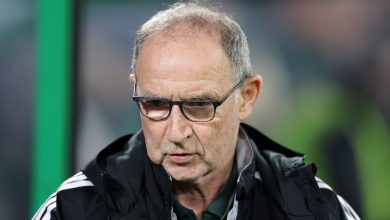
Martin O’Neill admits ‘it might be time’ to quit as Celtic boss, but stops short of resigning

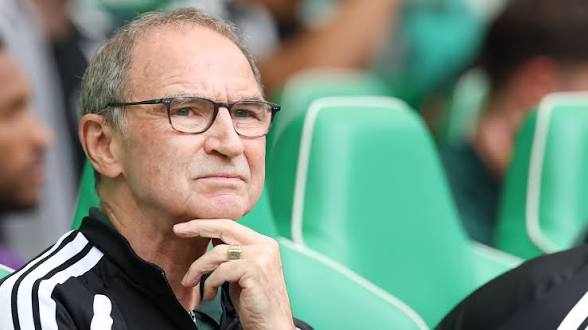
Nine months ago, Martin O’Neill’s return to Celtic was framed by those closest to the club as an act of loyalty and stabilisation — a 74-year-old legend coming back from six years of retirement to steady a sinking ship, purely on the strength of a phone call from the man who’d given him his first Celtic job a quarter of a century earlier. On Sunday, after a third defeat in eight days capped by a 1-0 home loss to Rangers, that same man stood in front of the media and openly wondered aloud whether his time was finally up. He hasn’t resigned. But he’s come about as close to publicly floating the idea as a sitting manager reasonably can.
Speaking in the immediate aftermath of Sunday’s defeat, O’Neill didn’t attempt to deflect or minimise the scale of Celtic’s recent slide. Asked directly about his future, he was unusually candid for a manager still technically in the job: “I genuinely will reflect and see,” he said. “It’s a matter of whether I can help the team. The manager is supposed to be able to do that. I will look at that this week.”
He went further still, addressing the question of his age with a mixture of self-deprecation and genuine reflection that read as considerably more serious than a throwaway line. “I think every single time something crops up and things don’t go so well, age plays a part,” he said. “And, do you know what, they might be right. I’ll be 110 in two years’ time so it might be time to wrap it up.” He confirmed plainly that he intended to “reflect on the games and speak to the board” during the coming international break — a break that, in the current circumstances, looks set to double as a genuine crossroads moment for his Celtic tenure.
When pressed on the growing criticism from supporters, O’Neill offered no pushback whatsoever. “Well, I think they’re absolutely entitled,” he said — a response that, in its total absence of defensiveness, arguably said more about the manager’s own state of mind than any of his more explicit comments about reflection and age.
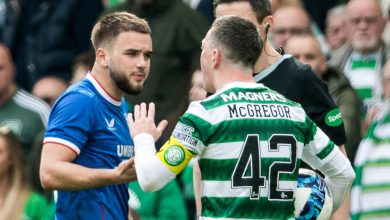
To understand why these comments landed with such force, it’s worth setting out exactly how bad Celtic’s preceding eight days had been. It began with a 3-0 defeat to Rangers in the Premier Sports Cup quarter-final at Ibrox — a game in which Celtic were, by most independent accounts, thoroughly outplayed. That was followed in midweek by a 3-1 home defeat to Hungarian side Ferencvaros in Celtic’s opening Europa League league-phase fixture, a result that dropped Celtic into League Phase difficulty after already having surrendered a Champions League qualifying spot earlier in the season. And then, on Sunday, came the 1-0 home defeat to Rangers in the season’s first league Old Firm meeting — Celtic’s first Premiership loss of the entire campaign, settled by a single Ryan Naderi strike in the 33rd minute, in a game Celtic never looked like getting back into.
Three defeats in eight days is a bruising run for any club to absorb, but the specific pattern — losing twice to Celtic’s fiercest rivals, and losing at home in both the cup and the league — turned what might otherwise have been read as a rough early-season patch into something considerably more serious. The full-time whistle on Sunday was met with audible boos from sections of the home support inside Celtic Park, a visceral, immediate expression of discontent that stood in stark contrast to the adulation O’Neill had received from the very same stands only a few months earlier.
To fully appreciate the weight of what’s now being questioned, it’s worth tracing exactly how O’Neill came to be in this position in the first place — a story that reads less like conventional football club succession planning and more like an act of institutional faith from one man specifically: Celtic’s principal shareholder, Dermot Desmond
O’Neill first managed Celtic between 2000 and 2005, a period remembered fondly by supporters not primarily for tactical sophistication but for the psychological transformation he brought to the club — as journalist Graham Spiers later put it, “the power of Martin O’Neill as Celtic manager between 2000 and 2005 was not any tactical masterclass… it was about the psychological strength O’Neill gave to the team, the club, the fans.” That spell delivered major honours and cemented O’Neill’s status as one of the most beloved managerial figures in the club’s modern history, a status that would prove directly responsible for everything that followed more than twenty years later.
Fast forward to October 2025: Brendan Rodgers, in his second spell in charge, resigned as Celtic manager following a breakdown in his relationship with Desmond, reportedly frustrated by public comments Rodgers had made about the club’s summer transfer business and an unresolved contract situation. Celtic, trailing league leaders Hearts by eight points at the time following a 3-1 defeat at Tynecastle, needed stability fast. Desmond’s solution was to reach directly for O’Neill, who was six years into retirement at the time. O’Neill later described the call itself in vivid terms: “I got a call yesterday, late afternoon or early evening, from Dermot Desmond, asking would I step in because Brendan had resigned from the football club. It was shock news as much as anything else, it shocked me too… It’s difficult to turn down the man who gave me the job in the first place 25 years ago.” He was given, by his own account, just ten minutes to make up his mind before accepting.
What followed was a genuinely remarkable turnaround, later characterised in coverage as a story of “chaos to champions.” O’Neill steadied a struggling Celtic side and guided them on a nine-game unbeaten run, but his first interim spell ended in December 2025 when the club moved to appoint Wilfried Nancy as permanent manager. That appointment lasted just 33 days before Nancy was dismissed, and Desmond turned once again to O’Neill, who returned for a second interim spell in January 2026. This time, the fairytale ran all the way to the end of the season: O’Neill led Celtic to a domestic double, winning the Scottish Premiership title on the very final day of the campaign and lifting the Scottish Cup at Hampden Park.
Even after that success, O’Neill’s future remained genuinely uncertain heading into the summer. Reports at the time suggested he had intimated, following the Scottish Cup final, that he might step aside and let Celtic pursue “somebody younger.” Desmond, in parallel, held serious talks with former Celtic striker Robbie Keane about taking the job on a permanent basis — talks that quickly ran into significant fan opposition. Keane, the Republic of Ireland’s record goalscorer who had enjoyed a prolific loan spell at Celtic Park in 2010 and gone on to win league titles in both Israel and Hungary as a manager, had drawn criticism in Ireland and among sections of the Celtic support for his decision to remain working in Israel — at Maccabi Tel Aviv — after the conflict in Gaza began. Graffiti and banners opposing his potential appointment appeared outside Celtic Park, and a fan group calling itself Celtic Fans for the Liberation of Palestine issued a public statement against the move.
Amid that backlash, and after taking time away from football to discuss matters with his family, O’Neill ultimately agreed to continue, signing an initial one-year contract with a further one-year option following what was described as a “showdown” meeting with Desmond. Announcing the deal, then-interim chairman Brian Wilson said he “warmly welcomed” the reappointment, while O’Neill himself struck a tone of quiet, almost weary gratitude: “It is once again a great privilege for me to continue as Celtic manager.” Along the way, O’Neill also passed a personal landmark, taking charge of his 989th match in management — a figure that had, at one stage, looked set to be his career’s final tally before Desmond’s phone call brought him back into the game entirely
That backdrop of a career many had assumed was already finished makes Sunday’s speculation about O’Neill’s position feel especially charged — and it’s been sharpened further by an eye-catching detail from the stands at Celtic Park itself. As Celtic’s defeat wound toward its conclusion, Sky Sports cameras picked out Roy Keane sitting in the main stand, flanked by his former Ipswich Town assistant Tony Laughlan. Journalist Stephen McGowan, writing in the aftermath, noted that the sighting immediately “set the WhatsApps flying” given Keane’s well-documented history alongside O’Neill, both at Celtic and during their time together with the Republic of Ireland national team.
McGowan was careful to add a note of scepticism to the speculation, pointing out that Keane’s last actual management job came fifteen years ago, making the idea of an immediate step into the Celtic hot seat sound, in his words, “too silly for words” on its face. But he tempered even that scepticism with a pointed aside about Celtic’s recent institutional volatility: “the way Celtic run these days, you rule nothing out” — a reference to a club that has now cycled through Rodgers’s resignation, Nancy’s 33-day tenure, and two separate O’Neill interim spells inside less than a year.
Beyond the on-pitch results, further reporting from Graham Spiers has added a layer of boardroom tension to the story. According to Spiers, O’Neill intends to use the three-week international break — including a short holiday abroad with his wife, Geraldine — to properly and finally decide whether he wants to continue in the role. More strikingly, Spiers has also reported that O’Neill grew increasingly frustrated during the summer transfer window over Celtic’s recruitment process, with reported targets he had wanted to bring in repeatedly failing to materialise.
That specific claim slots directly into a broader pattern of criticism that had already been building around Celtic’s boardroom in the days before Sunday’s defeat, independent of anything O’Neill himself has said. Fan-shareholder group Celtic Supporters Ltd had already been vocal in linking the club’s stumbling recent form to what they characterise as a pattern of poor boardroom decision-making, while former Aberdeen chief executive Keith Wyness had separately warned that Celtic’s Thursday-Sunday fixture schedule represented “a really big red flag” for a squad he considered “fairly thin” — commentary that, taken together with Spiers’s reporting on O’Neill’s own frustrations, paints a picture of a manager who may feel he was left short-resourced heading into a season that always promised to be demanding.
It’s worth stressing that, for all the crisis language now surrounding the club, Celtic’s underlying position in the table remains strong. They sit top of the Scottish Premiership, two points clear of Rangers, having won every league fixture this season bar Sunday’s defeat. Football Insider’s assessment of the situation captured that tension well, describing it as “a surprise” that O’Neill could even be facing serious pressure given the club’s league position, while noting that “plenty of blame” is being placed on the club itself, rather than the manager, for putting O’Neill in this position in the first place — a reference to the recruitment concerns raised by Spiers and echoed by fan groups and pundits alike. As one analyst put it: “it would definitely be harsh if he was sacked when you consider what he did last season, stepping in when nobody else was taking” the job.
That framing — sympathy for O’Neill personally, combined with growing scrutiny of the board above him — appears to be the dominant read on the situation among those close to the club, even as the results themselves continue to generate obvious, understandable anxiety among supporters watching a title race that had looked comfortably won suddenly tighten to two points
For now, nothing has been decided. O’Neill remains Celtic manager, has not resigned, and Celtic have made no indication of moving to dismiss him. What’s clear is that the three-week international break arrives at an unusually consequential moment: rather than simply a pause in the domestic calendar, it now doubles as the window in which one of Celtic’s most significant managerial decisions in recent memory is likely to be made — whether by O’Neill himself, in conversation with Desmond and the Celtic board, or through the continued pressure of results and supporter sentiment forcing the issue regardless of what any individual party might prefer.
Given O’Neill’s history with this exact scenario — having already stepped away once before, following the Scottish Cup final, only to be talked back into the role by Desmond after a “showdown” meeting — there’s a reasonable chance this ends the same way it has twice already: with O’Neill, after genuine reflection, choosing to continue rather than walk away. But with boos now ringing around Celtic Park, a genuine title race suddenly back in play, and reported boardroom tension over recruitment adding fuel to an already smouldering situation, this particular moment of reflection carries a weight that his two previous departures and returns never quite did. Whatever O’Neill decides over the coming three weeks, Celtic’s season — and possibly the next chapter of one of Scottish football’s most storied managerial careers — hangs in the balance.