Rangers coach’s car window smashed outside Ibrox after Old Firm win; Celtic bus fire investigated — and why Old Firm days keep producing this kind of story


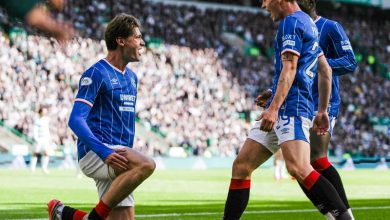
Sunday’s Old Firm derby produced a routine, well-contained football result — Rangers beating Celtic 1-0 courtesy of Ryan Naderi’s first-half strike — but, as has become depressingly familiar with this fixture, the aftermath away from the pitch generated its own set of headlines. A Rangers coach had his car window smashed outside Ibrox Stadium amid post-match celebrations, while a bus carrying Celtic supporters caught fire elsewhere in Glasgow on the same afternoon. Neither incident has been reported to have caused injuries, but together they add another entry to a long, well-documented pattern of matchday disorder that has followed this fixture for decades.
The clearest incident of the day involved Craig Clark, a Rangers coach, whose Mercedes was damaged outside the stadium as hundreds of supporters gathered to celebrate the team’s win. Photographs and video circulating on social media in the hours after the match showed the vehicle’s rear window completely shattered. According to reporting on the incident, the damage is believed to have been caused by part of a firework rather than a deliberate, targeted assault on the vehicle or its owner — an important distinction, given how quickly such images can be framed as evidence of a coordinated attack when the reality may be closer to celebratory pyrotechnics gone wrong in a crowded, high-adrenaline environment outside a football stadium.
Clark himself was photographed standing beside a supporter shortly afterwards, visibly frustrated by the damage to his car, while celebrations continued unabated around him. That juxtaposition — a genuinely aggrieved individual dealing with damaged property amid a backdrop of jubilant, oblivious celebration — is itself a familiar dynamic outside football grounds after significant results, when large, excited crowds and the use of fireworks or flares as part of that celebration can create genuine risk to bystanders, vehicles, and property in the immediate vicinity of the ground, even without any specific intent to ca
A separate, apparently unconnected incident occurred earlier the same day, well before kick-off and some distance from Ibrox itself. At 2:25pm, firefighters were called to a single-decker coach described as “well alight” on Clyde Gateway, immediately outside the Emirates Arena in Glasgow’s east end. Footage shared on social media showed the bus completely engulfed in flames, with fire crews arriving to bring the blaze under control. The coach, operated by McLean’s Coaches, had reportedly been contracted to carry Celtic supporters home from the match later that day.
A Police Scotland spokesperson confirmed the call-out in a formal statement, describing the incident in straightforward terms: “We received a call at 2:25pm to a single decker passenger coach well alight on Clyde Gateway outside the Emirates Arena in the east end of Glasgow today, September 20. Fire crews remain in attendance. There are no reports of any casualties.” The precise cause of the fire has not been confirmed publicly, and whether it was accidental or the result of deliberate action remains, as of the most recent reporting available,
It’s worth being precise about what these two incidents do and do not represent. They are not connected to each other in any confirmed way — one occurred well before kick-off across the city from Ibrox, the other outside the stadium itself after the final whistle. Neither has been confirmed to have caused any injuries. And crucially, neither incident is on the same scale as the kind of coordinated crowd violence that has, on previous occasions, marred this fixture far more seriously.
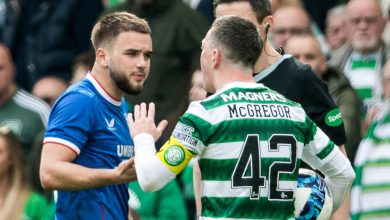
That distinction matters, because Sunday’s derby was already a heavily scrutinised occasion for reasons entirely unrelated to these two incidents. The match itself featured a heated touchline confrontation between Rangers manager Derek McInnes and Celtic assistant Mark Fotheringham, both shown yellow cards after a shouting match in the technical area just minutes into the game. The result extended Rangers’ recent dominance over their rivals, cutting Celtic’s lead at the top of the Premiership to just two points and prompting Celtic manager Martin O’Neill to openly question his own future in the role afterwards. Against that backdrop, a smashed car window and a burning bus — while newsworthy in their own right, and genuinely concerning from a public safety perspective — represent a relatively contained addition to what was already an eventful day for both clubs, rather than the kind of large-scale disorder that has occasionally followed this fixture in the past
To properly contextualise Sunday’s incidents, it’s worth looking honestly at the broader historical pattern connecting the Old Firm fixture to episodes of disorder, vandalism, and occasionally far more serious violence — a pattern that long predates this particular derby and stretches back across the entire history of organised football between these two clubs.
The most serious example remains, by an enormous margin, the 1971 Ibrox disaster — a crush on an exit stairway at the stadium following an Old Firm match on 2 January 1971, which killed 66 supporters and injured more than 200 others. It remains, to this day, one of the worst disasters in the history of British football, and a sheriff’s judgement subsequently found Rangers, as the stadium’s owners, at fault. That tragedy fundamentally reshaped stadium safety standards across British football and remains a solemn, defining part of the club’s history — one that makes any subsequent allegation of supporters mocking the disaster during moments of crowd disorder, as has occurred in more recent controversies connected to this fixture, particularly serious and painful.
Beyond that singular tragedy, the fixture has periodically produced smaller-scale but still genuinely troubling incidents of disorder over the following decades. In a 2012 meeting between the clubs — played during a period when Rangers were in administration — a total of 17 arrests were made among the crowd, split between offences under Scotland’s Offensive Behaviour at Football Act, drink-related offences, a breach of the peace, and one assault, even as the match itself, in which three players and Celtic manager Neil Lennon were all sent off, passed off relatively peacefully in terms of open crowd conflict.
More recently, an April 2024 meeting between the clubs was marred by objects being thrown from the crowd, with Celtic assistant coach John Kennedy struck by a coin during the match itself, and the Celtic dugout targeted by further missiles in the second half. Police Scotland confirmed an investigation into that incident at the time, while a Celtic Park spokesperson described it as “totally unacceptable” that staff had “once again been targeted in this way” — language that itself acknowledges this wasn’t an isolated occurrence even within recent seasons.
Most seriously in the recent record, a Scottish Cup quarter-final between the sides at Ibrox in March 2026 — won by Celtic on penalties — descended into genuinely alarming scenes after the final whistle. Celtic supporters celebrating on the pitch were confronted by Rangers fans who breached barriers to reach them, with missiles and fireworks exchanged between the two groups before police and stewards managed to form a human barrier to separate them and restore order. Celtic player Julian Araujo was pushed by a Rangers supporter during the disorder, and a member of Celtic’s backroom staff was physically attacked, prompting several Celtic players to intervene directly. A man was arrested in connection with that specific assault, and Rangers subsequently issued a formal statement expressing that they were “appalled” by reports that some supporters had mocked the 1971 Ibrox disaster during the chaos, calling for an independent review into the day’s events alongside the Scottish FA’s own formal investigation.
**Why this pattern persists**
Understanding why incidents — ranging from relatively minor property damage, as with Sunday’s smashed car window, up to the genuinely serious violence seen in March’s pitch invasion — continue to recur around this specific fixture requires acknowledging factors that go well beyond simple football rivalry. As has been extensively documented, the Celtic-Rangers rivalry carries deep historical roots connected to Glasgow’s Protestant-Catholic sectarian divide, tracing back to Celtic’s founding in 1888 by Irish Catholic immigrant communities and Rangers’ subsequent association with the city’s Protestant, unionist population. That underlying social division, while considerably diminished compared to its peak intensity across the twentieth century, continues to inform the intensity — and, at its worst moments, the volatility — of this fixture in a way that few other football rivalries anywhere in the world can claim.
Beyond that historical dimension, the simple mechanics of large-scale football celebrations create genuine, largely unavoidable risk regardless of any underlying rivalry. Crowds of hundreds or thousands of supporters, often having consumed alcohol over an extended period before and after a significant result, gathering in confined urban spaces immediately outside a football stadium, frequently deploy pyrotechnics and fireworks as part of celebration — behaviour that, while usually intended purely as celebratory rather than malicious, inherently carries risk to nearby property, vehicles, and bystanders, as appears to have been the case with the damage to Craig Clark’s Mercedes on Sunday.
Both clubs, alongside Police Scotland and the Scottish FA, have periodically attempted to address this pattern through a range of institutional responses — from formal investigations following specific incidents of serious disorder, such as the SFA’s Judicial Panel Protocol process triggered by March’s pitch invasion, through to longer-running campaigns aimed at reducing sectarian and offensive behaviour more broadly, including Celtic’s “Bhoys Against Bigotry” initiative and Rangers’ “Follow With Pride” campaign. Scotland briefly experimented with specific legislation — the Offensive Behaviour at Football and Threatening Communications Act — targeting sectarian conduct connected to football matches, though the law proved controversial and was ultimately repealed in 2018 after concerns about its practical enforceability and compatibility with free expression protections.
Despite these various efforts, the persistence of incidents connecting this specific fixture to disorder — whether the serious violence of March’s pitch invasion, the coin-throwing that struck John Kennedy in 2024, or Sunday’s comparatively minor but still notable car damage and bus fire — suggests that no single legislative, institutional, or campaign-based intervention has fully resolved the underlying dynamics that make Old Firm matchdays uniquely prone to this kind of incident, relative to most other fixtures in Scottish or British football.
None of this broader historical context should be read as suggesting Sunday’s specific incidents were on the same scale as the genuinely serious violence documented in March 2026, or in earlier decades of this fixture’s history. A smashed car window, almost certainly caused by celebratory fireworks rather than targeted violence, and a bus fire of currently undetermined cause affecting no reported casualties, sit at the considerably milder end of the spectrum of matchday incidents this rivalry has periodically produced. They are genuinely newsworthy — property damage and a vehicle fire are neither trivial nor to be dismissed, and both will likely be subject to at least some level of police assessment or investigation in the ordinary course of events — but they fall well short of representing a crisis on the scale of previous, more serious episodes connected to this fixture.
What Sunday’s incidents do illustrate, however, is the continued reality that Old Firm matchdays in Glasgow carry an elevated baseline level of risk for exactly this kind of disorder, however minor, regardless of how contained or well-policed the match itself turns out to be. Sunday’s football, by most accounts, passed off without major incident on the pitch beyond the McInnes-Fotheringham confrontation — itself a fairly standard, if spirited, example of touchline tension rather than anything approaching genuine chaos. But the surrounding city, in the hours before and after kick-off, once again produced exactly the kind of isolated but recurring incidents that have become an unfortunate, near-permanent fixture of this particular derby’s aftermath, whatever the eventual scoreline.
As of the most recent reporting available, neither Police Scotland nor the relevant fire services have indicated any arrests or formal findings connected to either Sunday’s car window incident or the Clyde Gateway bus fire. Both will likely be subject to routine investigation in the ordinary course, though given the relatively minor scale of harm involved — no reported injuries in either case — it seems unlikely either incident will generate the kind of sustained ins⁸titutional response seen following more serious episodes, such as March 2026’s SFA-led investigation into the Ibrox pitch invasion.
For Rangers and Celtic alike, attention will now turn away from these peripheral incidents and toward the three-week international break that follows Sunday’s fixture — a pause that arrives at a genuinely significant moment for both clubs, with Rangers riding a wave of momentum after completing a rare Old Firm double, and Celtic facing serious internal questions about manager Martin O’Neill’s future following his own strikingly candid comments about potentially stepping down. Sunday’s minor off-field incidents, real as they were, seem likely to be remembered as a footnote to a day that will be discussed for considerably more significant reasons once the dust settles.