Steven Gerrard’s unorthodox Rangers training method that transformed club finally made public

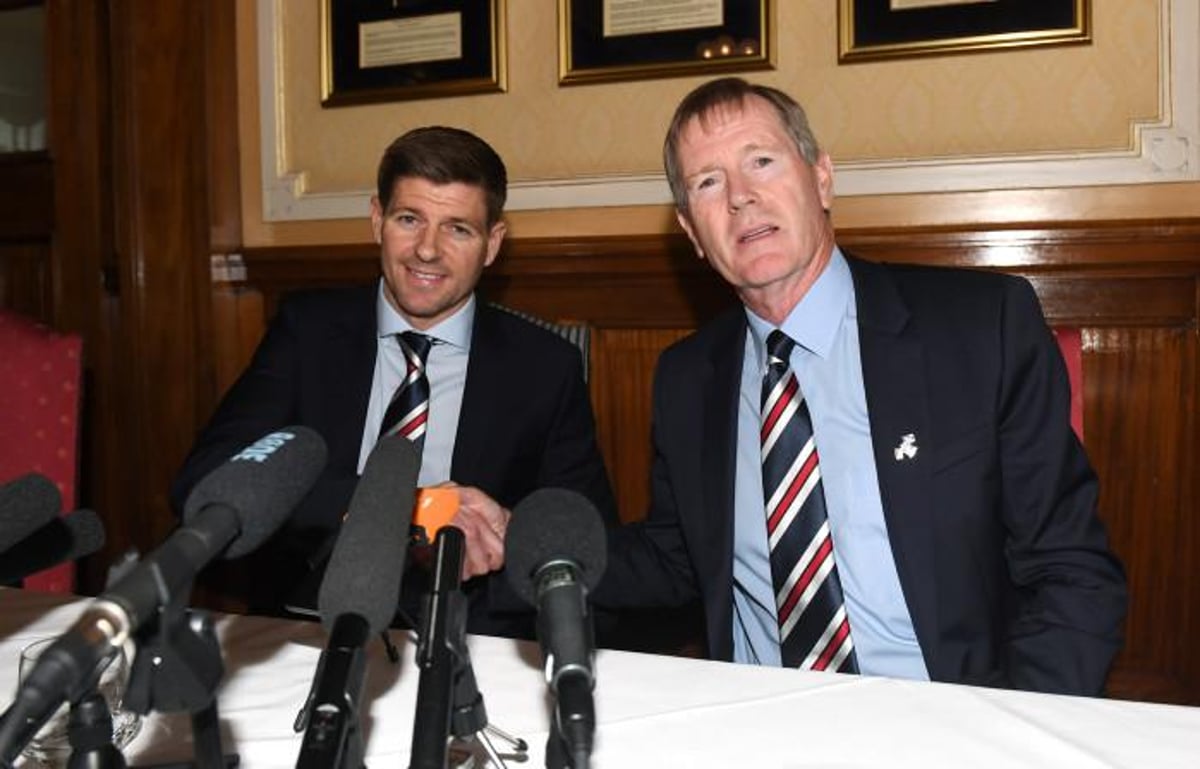
Steven Gerrard’s years at Rangers are remembered for their result: an unbeaten league title in 2020-21 that ended Celtic’s nine-year run. The mechanics of how that happened are less well known. Supporters saw matchdays, not Tuesday mornings. They knew what the team did, not how it was made.
Over the past week, some of that has come into focus. Former Rangers centre-back Connor Goldson has been speaking on Open Goal about his time at the club, and his account, combined with earlier testimony from other players and coaches, offers a more detailed view of the culture Gerrard built. None of it adds up to a single secret method. What it shows instead is a manager who combined persuasion, standards and a clear idea of how his team should train
The most vivid new account concerns how Gerrard recruited one of the central figures in his team. Speaking on Open Goal, Goldson explained that he had no intention of leaving the English Premier League when he heard that Gerrard wanted to speak to him. He received a text from the former Liverpool captain asking if they could have a phone call, and his first reaction was disbelief. He sent the message to his agent, who confirmed it was genuine, but warned him that he would be speaking to Gerrard without being on his way to Scotland.
Goldson admitted that, as far as he was concerned, he was not going anywhere. But he was speaking to his idol.
The call went well enough for the two to arrange a meeting. They planned to meet halfway, but when Gerrard learned that Goldson’s wife was heavily pregnant, he said he would drive all the way to Brighton. He then included her in the conversation, and both the player and his wife were quickly sold on the move.
The words that mattered, according to Goldson, were direct. Gerrard told him he wanted him to be one of the leaders of the group, that he wanted him to play every game, and that he would build the team, and the back line in particular, around him.
That is a small story, but it says a good deal about Gerrard’s approach. He did not rely on his reputation alone. He made a personal effort, he showed respect for the player’s family circumstances, and he made a specific promise about the player’s role. It is recruitment as relationship-building, and it is a pattern that shows up repeatedly in accounts of his time at the club.
Goldson’s second revelation is less flattering, and more revealing. He joined Gerrard’s squad at a training camp in Marbella in the summer of 2018, having left a Brighton side that was, in his words, packed with quality. After that first week, he rang his agent and asked what he had done.
His reasoning was blunt. At Brighton, he said, they had two strong elevens in training, with a standard comparable to the Premier League. At Rangers, there were perhaps seven professionals and ten youngsters, many of whom had only just come in.
It is easy to see why he was worried. The squad was still bare, as the new manager was working on bringing in players to improve on what he had inherited. Goldson did not raise his concerns with Gerrard, but the manager seems to have sensed something. He told the defender to be patient, because a lot more was coming.
That promise was kept. Over the following months and years, Rangers signed a string of players who would form the core of the team that eventually won the league. Goldson, for his part, went on to spend six years at the club, winning a league title and a Scottish Cup, among other honours, and reaching a European final.
The anecdote is a reminder that a successful team is not built in a week. In the summer of 2018, Rangers’ training sessions were thin on quality, and the manager knew it. What he had was a plan and the ability to communicate it.
If there is a theme running through the accounts of Gerrard’s time at Rangers, it is standards. A feature published by Goal shortly after he left for Aston Villa described the scale of the challenge when he arrived. Rangers were a club struggling to keep pace with Celtic and needing a significant overhaul in terms of personnel and mentality.
The piece captured Gerr thinking. What, he asked, did the club need to look like every day in training, in the gym, in recovery sessions, on rest days, when travelling, in the media and at club functions? It was an attempt to define a professional culture that extended well beyond the ninety minutes of a match.
That approach was not unique to Gerrard, but it was central to his philosophy. He had played at the highest level for Liverpool and England, and he understood that elite performance depends on what happens between games as much as on what happens during them. He tried to bring that attitude to a club that had been through years of turmoil and had lost some of its sense of itself.
Other testimony supports the picture. Kyle Lafferty, who rejoined the club in Gerrard’s first season, said the manager’s training was tough. He explained that Gerrard had been the type of player who took the intensity he showed on the training pitch into matches, and he was trying to instil the same habit in his squad
A more specific glimpse of the training itself comes from Eros Grezda, the Albanian winger who spent two years at Ibrox. Speaking to Tribalfootball, he said that sessions under Gerrard were always interesting and appealing. They did not consist of the traditional long runs. Instead, there were more and more games, different match situations and exercises that kept the players engaged, so that they looked forward to coming in.
That is a meaningful detail. Fitness training based around match-like scenarios, rather than endless distance running, was becoming more common in elite football, and Gerrard’s approach seems to have been part of that trend. The advantage is that players develop physical capacity and tactical understanding at the same time, and they are more likely to stay motivated.
It also reflects his Liverpool background. Gerrard had spent a year coaching the club’s Under-18s, working in an environment shaped by Jurgen Klopp’s ideas about intensity and pressing, and had spoken about picking up tips from that experience. He was careful to say that he was not trying to copy a team operating on a higher plane. But the influence was visible in the way his team played, and an analyst writing at the time compared the high-octane style to that of successful Manchester United sides of the 1990s.
One of the most important, and least appreciated, aspects of Gerrard’s Rangers was the team around him. When he arrived, he brought in several people from Liverpool’s academy. Michael Beale came as first-team coach, Tom Culshaw as technical coach and Jordan Milsom as head of performance.
Goal reported that Gerrard generally left the day-to-day training to Beale, who was regarded as one of the most respected coaches in the game. That is a significant point, because it challenges the idea that a single manager’s personality shaped every session. In practice, the training was a collaboration, with Gerrard setting the standards and the philosophy, and his staff designing and delivering the work.
It also helps explain how a first-time senior manager coped. Gerrard had no experience of running a first team, and he said as much when he was unveiled. He relied on a group of specialists who knew the details of coaching, conditioning and analysis. Beale, in particular, has since been described as someone who understood Gerrard’s strengths and complemented them.
The other half of the equation was Gerrard’s role as the figurehead. A player quoted by Goal described how, when Gerrard was involved in a session, he seemed to switch back into player mode. His presence, in other words, raised the level of intensity and the sense of occasion. That kind of influence is hard to quantify, but players often mention it
Another glimpse of Gerrard’s methods came in 2019, when the Scottish Daily Mail reported on how he prepared his side for a Europa League tie against Feyenoord. According to the report, he pinned comments made by the Dutch club’s players on the wall to motivate his squad. It was, the paper noted, an old-school trick, one of the oldest in the managerial manual, even if Gerrard was otherwise a modern manager obsessed with marginal gains.
Gerrard was open about the logic. He had himself drawn motivation from opponents’ comments when he was a player. The result was a 1-0 win, with Sheyi Ojo scoring the winner, in an emotional evening at Ibrox in honour of the late Fernando Ricksen.
It is a small example, but it shows his willingness to combine analytical work with psychological methods. Football is, after all, as much about belief as about tactics. A manager who can find the right emotional lever at the right moment can give his team an edge.
The training, of course, served a tactical purpose. An analysis of his first seasons identified several changes that transformed the team. In his first year, he reconfigured the midfield, brought in wide players who were comfortable on either foot and used James Tavernier and other attackers in more advanced roles. The result was a side that was unpredictable in transition and strong in pressing.
By his second season, the team had a settled philosophy. Steven Davis was deployed as a deeper-lying midfielder, tasked with bringing control and progression to the build-up. The analysis argued that this change utterly transformed the team. There was also a mental dimension. A famous comeback against Braga in the Europa League was cited as evidence of a new resilience, a refusal to give up even when all seemed lost, which the writer described as a Gerrard trademark.
The tactical work on the training pitch, then, was about creating a system that players understood instinctively. When one player moved out of his usual position, his teammates knew how to fill the space. That kind of fluidity comes only from repeated practice, and it was clearly a focus of the sessions
It is worth remembering what all this produced. Over his time at the club, Gerrard took charge of 154 games and won 101 of them, losing 20. In 2020-21, his team went through the league season unbeaten, a feat that earned the club its 55th championship and ended a decade of Celtic dominance. He was named Manager of the Year by both PFA Scotland and the Scottish Football Writers’ Association.
The run was remarkable. Rangers went 33 league games without defeat in the period leading up to the title, and the achievement was recognised across British football. Commentators noted that Celtic’s own struggles under Neil Lennon helped, but that nothing should detract from what Gerrard had done. He had proved that he had the skill and temperament for top-flight management.
Those outcomes are the best evidence that the methods worked. A team that trains with intensity, understands its roles and believes in itself will usually outperform one that does no
Gerrard was candid about the sources of his ideas. In a podcast with Robbie Fowler, he said that in management he had tried to be a sponge, stealing and learning from all the managers he had played for. He pointed to Gerard Houllier and Rafa Benitez as managers who produced compact, hard-to-beat teams, and said he had tapped into that education, especially in Europe and in the biggest domestic games.
He also credited Brendan Rodgers and Sven-Goran Eriksson, and acknowledged that he had borrowed ideas from them. It is a refreshing admission. Many managers like to present their methods as entirely original, but Gerrard was happy to acknowledge his debts.
That openness is part of what made his approach effective. A manager who is willing to learn from others, and to adapt what he learns to his own circumstances, is more likely to find solutions that work
The echoes of his time can still be heard. This week, Gerrard responded to a story about Ryan Jack, the former Rangers midfielder who is training at Auchenhowie while looking for a new club. He wrote that Rangers should put him in the middle, calling him a proper player. Jack, who is 34 and is working with the club’s physios and performance staff, won a title under Gerrard, and was also managed by Derek McInnes at Aberdeen.
It is a small moment, but it illustrates the ongoing connection between Gerrard and the club. His former players still respect him, and his opinion still carries weight with supporters.
It is also a reminder that the culture he helped create has outlasted his time at the club. McInnes, the current head coach, has taken a different approach in many ways, but the emphasis on professionalism and standards remains.
It is worth restating what this piece does not claim. The accounts I found do not describe a single, secret technique that transformed Rangers. They describe a combination of factors: the manager’s personality, the staff he assembled, the standards he demanded, the style of training and the players he recruited. If there is a specific revelation in the article that prompted the headline, it is not one I could identify, and the original may be making a bigger claim than the available evidence supports.
That is not a criticism of Gerrard. It is a reminder that success in football is rarely down to one trick. It is built from many small things done well, over a long period, by a group of people who share an ai
Steven Gerrard’s years at Rangers continue to fascinate because they were so improbable. A first-time manager took over a club in disarray, assembled a squad, and within three years had won the title without losing a game.
The recent recollections of Connor Goldson add to the picture. They show a manager who was willing to drive across the country to persuade a player, who asked for patience when the squad was thin, and who set out to build a culture that extended into every part of the club’s operation. Other testimony shows that his training was tough, game-based and engaging, that he relied on a talented staff, and that he was not above using a bit of psychology.
None of that is unorthodox in itself. But the combination, applied with energy and conviction, was enough to transform a club. For supporters, it is a reminder of what can be achieved when ambition, standards and trust come together. For the current team, it is a standard to measure themselves against








