From Trembling Debutant to Starting Winger: Inside Minsu Kim’s South Korea Journey, as Told by Those Who Watch Him Closest

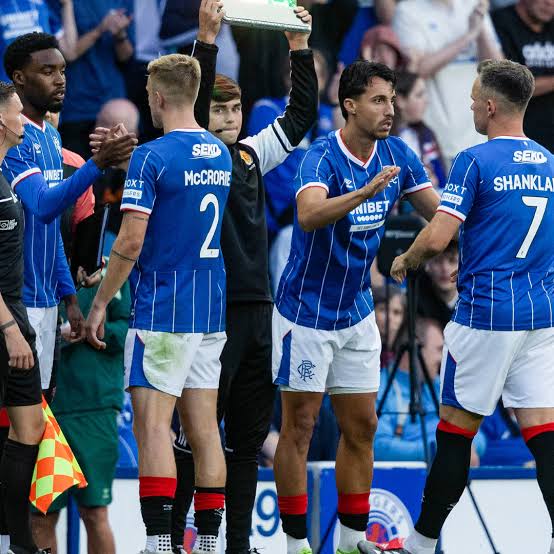
Rangers’ £8.5million summer signing has gone from uncapped outsider to a fixture in Robert Moreno’s plans in under three weeks. Here is how Korea’s media, fans and one well-placed reporter have read his first steps on the international stage, and what his first start against Venezuela told us.*
Football’s international breaks are rarely kind to club managers. Players disappear for a fortnight, travel across time zones, play in friendlies that mean little in the standings, and return with knocks, fatigue or inflated egos. Derek McInnes will have watched the build-up to South Korea against Venezuela with the familiar mixture of pride and anxiety, because on a warm Friday afternoon in Ulsan he had two of his most important summer signings lining up against each other.
Minsu Kim started for the hosts. Kevin Kelsy, the striker Rangers signed from Portland Timbers for £9.5million, started for the visitors. The game finished 0-0. Kim played roughly 66 to 67 minutes before being withdrawn, and Kelsy was taken off two minutes after him, in the 68th minute. Neither was hurt, which will have been the first thing McInnes checked. And when the final whistle sounded, cameras caught the two Ibrox team-mates talking on the pitch, embracing and swapping shirts, a small, human moment that Rangers supporters loved.
It was, by any reasonable measure, a low-key afternoon. There was no goal, no assist and no highlight reel. But for Kim it was a genuine milestone: his first senior start for South Korea, coming less than two weeks after he won his first cap, and just three weeks after he was named in a national-team squad for the very first time.
To understand why that matters, and why the Korean press has taken to the 20-year-old with such enthusiasm, you have to go back to where this story began
Minsu Kim was born on 19 January 2006 in Gwangju, in South Korea’s Gyeonggi Province. Like many talented Korean children of his generation, his football education did not stay at home. In 2016, aged ten, he moved to Spain and joined the youth set-up at Penya Blaugrana Cinc Copes, beginning a European apprenticeship that would shape him as a player.
That Spanish grounding explains much about his style. Kim is a winger and attacking midfielder who wants the ball, wants to run at defenders and, crucially, wants to do it early in possession. He eventually made his way into the Girona system, where he renewed his contract until 2027, and was then sent on loan to FC Andorra, a spell that gave him senior minutes and the first taste of competitive professional football.
When Rangers moved for him this summer, he was largely an unknown quantity to a Scottish audience. McInnes, however, had a clear problem to solve. He needed a winger who could take players on, stretch defences and give his side a different attacking dimension. Rangers activated the release clause in Kim’s contract, paying £8.5million to prise him from Girona and handing him a four-year deal.
The early returns have been encouraging, even if the statistics are modest. Kim has played six times for Rangers in all competitions, five of them in the Scottish Premiership, without yet scoring or setting up a goal. He also missed a penalty against Motherwell. But the numbers undersell his impact. McInnes trusted him enough to start him in the first Old Firm derby of the season, the 3-0 Premier Sports Cup quarter-final win at Ibrox, and he has forged a threatening left-side partnership with Djeidi Gassama that opponents have struggled to contain. Reports in the Scottish press have described him as electric on and off the ball, the kind of winger whose energy spreads through a midfield
South Korea’s summer had been a disappointing one. A group-stage exit at the World Cup left the national team in the middle of a rebuild, with Robert Moreno, the Spanish coach, tasked with injecting new energy into a squad that looked stale. Moreno scheduled four home friendlies against Ecuador, Uruguay, Venezuela and Uzbekistan, using the extended international window to experiment.
When the squad was announced, Kim’s name was on it for the first time. Until then, his only national-team connection had been a place in an Under-23 squad, without playing a game. There were genuine doubts among some observers about whether he had what it took to make the step up.
Moreno was unambiguous about why he picked him. He said he had chosen Kim on the strength of his performances at Rangers, describing him as an excellent player capable of operating in several attacking roles. He also laid out a philosophy that will be music to the ears of any young player in form: selection, he said, would be based on what players show on the pitch, not on reputation or past history. Moreno added that a player’s last ten games are the best indicator of recent performance.
For a manager inheriting a squad after a World Cup disappointment, that message is both pragmatic and shrewd. For Kim, it was a door opening
Kim won his first cap on a Thursday in Suwon, coming off the bench in the 75th minute to replace Min-kyu Song as South Korea cruised to a 3-0 victory over Ecuador. He took up a position on the right wing and played out the remainder of the match.
It was a short cameo, but a telling one. In the 84th minute, during a flowing team move that began near the halfway line, Kim made a clever off-the-ball movement, peeling away to the right of Heung-min Son and loudly calling for the return pass. It was a small thing, but it demonstrated that the young winger was not intimidated by playing alongside one of Asia’s greatest-ever footballers.
The statistics from his ten or so touches were tidy rather than spectacular: four passes attempted, four completed, two tackles, two ground duels won from four and one aerial duel won. It was, as one analysis described it, a quiet but high-energy cameo, and it showed the work rate that has made him an early favourite at Ibrox. Rangers supporters on social media, as they tend to, were generous in their reaction, with several noting how quickly he linked up with his international team-mates and how physically comfortable he looked.
The more interesting window into the debut came afterwards, when Kim spoke about the experience. He admitted he had been more nervous, and had felt himself trembling more, than in any match of his life, because he was representing the Republic of Korea. He called the occasion a dream come true and said that although his time on the pitch was short, it felt wonderful.
There was also a revealing detail about the dressing room. Kim said he had been able to communicate with Moreno in Spanish, the language he picked up as a boy in Catalonia. The coach, he explained, had gone through the team’s tactics in detail and had shown him how to be effective as a winger. It is easy to underestimate how much of an advantage that shared language gives a young player trying to settle into a new national set-up. Kim, a Korean who grew up in Spain and now plays in Scotland, has become something of a bridge between footballing cultures, and in Moreno he has found a coach who speaks his tactical language, literally.
He finished with the humility that has characterised his early interviews. He said he would work harder to prove he belonged at this level and would need to be well prepared to earn more playing time. He had not even known he would be used in the first match after being selected
South Korea lost 4-1 at Seoul World Cup Stadium on Monday 28 September, a heavy defeat that would normally dominate the post-match conversation. Instead, much of the coverage was stolen by a 20-year-old on his second cap. Introduced at half-time, Kim was deployed on the left wing in a 4-4-2 and immediately gave South Korea’s attack the speed and aggression it had lacked in the first half.
The statistics backed up the eye test. Kim earned a FotMob rating of 7.0, making him South Korea’s third-highest rated player behind only Son (7.2) and Kang-in Lee (7.6), the only two outfield players to complete the full 90 minutes. He completed 22 of his 25 passes, an 88 per cent success rate, created one goalscoring chance, made five recoveries and won five of his ten ground duels. Those are the numbers of a player who is influencing the game in every phase, not just flashing in the final third.
The Korean press reaction was striking. One publication wrote that Kim had left an intense impression and that his display showed he could grow into South Korea’s next main man. It described him as a left-sided attacker whose main strengths are shooting and dribbling, and it gave him a moniker that every young Korean attacker dreams of and none wants to carry too soon: the next Heung-min Son. The same outlet dedicated an entire article to detailing his actions on the pitch, observing that the cliché of shining despite defeat suited no day better than this one.
Social media seized on a moment in which he appeared to out-dribble Son himself, and Rangers-focused coverage was quick to amplify it. Kim’s reaction was characteristically low-key, but the effect was real: within a fortnight, a player almost unknown in his own country’s mainstream football conversation had become a talking point
One of the most useful voices in understanding how Korea has received Kim has been Joel Kim, the South Korean reporter who has become the go-to source for Korean reaction to the Rangers winger. Joel Kim has shared video content from Dalsunelive, one of the country’s biggest football YouTube channels, and has argued that “Minsu mania” has officially arrived in Korea.
That phrase captures something about how football fame works in the modern game. Korean audiences follow their overseas players with extraordinary intensity, and the cult of Son Heung-min has given them a deep appetite for the next name. Kim, signed from Girona and raised partly in Spain, did not come through the traditional K League pathway. For many Korean fans, he was a blank slate. The speed with which he has been taken up as a favourite speaks to how hungry the country is for fresh attacking talent after a disappointing World Cup.
Joel Kim’s reading of the situation ahead of the Venezuela match was telling. Speaking after Kim had been seen in training, he predicted that Moreno would tinker with his side and hand some of the fringe players minutes against Venezuela. He thought there was a fair chance Kim would start, noting that he had impressed against Uruguay after playing the entire second half and had been one of South Korea’s best players. A start, he suggested, would be another milestone in what he described as endless milestones over the past month and a half.
That prediction proved accurate. It is also worth noting how quickly the story has moved. Six weeks ago, Kim was fighting for a regular place in Rangers’ starting eleven. Today, Korean reporters are discussing whether he deserves to start for his country
Which brings us back to Ulsan.
The 0-0 draw with Venezuela was never going to be a classic, and the match was widely seen as a low-stakes encounter, a chance for Moreno to see what his fringe players could do. For Kim, it was precisely the type of opportunity a young player in his position needs: a chance to play from the first minute, with time to settle, against organised international opposition.
A few observations are worth making about what a first start of this type involves.
The role. At Rangers, McInnes has used Kim in a variety of positions, including, on occasions, in a more central role. For South Korea, Moreno has deployed him on both wings, on the right against Ecuador and on the left against Uruguay. Starting against Venezuela gave Kim the chance to show he could handle a longer spell with greater defensive responsibility. Moreno, who described him as capable of playing in several attacking roles, is clearly interested in that versatility.
The minutes. Playing around 66 or 67 minutes is a significant step up from a 15-minute cameo and a 45-minute half. It is also a sensible workload management decision. Kim has been playing regularly for Rangers, travelling long distances and adjusting to a heavier fixture load. Withdrawing him in the second hour of the match, when the game was still goalless and the match was drifting, protected him without short-changing the experiment.
The context. Venezuela’s side featured Kelsy as the focal point of attack, and the Rangers striker looked busy early on according to those following the match live, winning the ball in the air and getting on the end of crosses. For Kim, facing his own club-mate offered an unusual challenge: he knows exactly how Kelsy likes to play, and Kelsy knows exactly what Kim is going to try to do.
The result, a goalless draw, means there is little in the way of headline material. Kim did not score or assist, did not produce a viral moment of the sort the Uruguay game provided, and was not the subject of the same level of breathless praise. That in itself is a sign of maturity in the coverage. A winger who is expected to start, and does so without disgracing himself or being dramatically outplayed, is a winger who is beginning to be taken for granted, which is the highest compliment a national-team regular can receive.
It is important to be clear about what we do and do not know here. The match was played only hours ago, and detailed Korean-language post-match assessments, including the full ratings and player-by-player analysis the country’s major outlets typically publish, are still emerging. What can be said with confidence is that Kim started, that he lasted until around the hour mark, that he and Kelsy came through unscathed, and that the shirt-swap moment was warmly received. The deeper evaluation of exactly how he performed in terms of key passes, duels and heatmaps will take a little longer to settle.
No account of the Venezuela game would be complete without the moment that Rangers supporters will remember longest: the shirt swap.
Kelsy and Kim arrived at Ibrox within weeks of each other this summer, two of the most expensive signings of the McInnes rebuild. Kelsy cost £9.5million from Portland Timbers, making him one of the most expensive players in Rangers’ history, while Kim cost £8.5million from Girona. Both have been asked to carry significant expectations. Both have also had up-and-down starts, with Kelsy’s first Rangers goal coming in the derby win over Celtic, and Kim still searching for his first.
Seeing them embrace, chat and exchange jerseys after the final whistle provided a rare moment of lightness in what can be a gruelling start to the season. There is also a practical dimension. Players who form friendships off the pitch tend to link up better on it, and McInnes will hope that the two forged a stronger bond in Ulsan.
Kelsy, for his part, enjoyed a productive window with Venezuela. Earlier in the break he scored his first goal for the national team in a 2-1 defeat to Japan, so he arrives back in Glasgow with confidence. Kim, meanwhile, returns having played in three of South Korea’s matches, and if Moreno uses him against Uzbekistan on 6 October, he will complete the full set.
On one hand, there is real pride in watching a player he identified as a transfer target emerging on the international stage within weeks of joining. National-team recognition tends to boost a player’s confidence, and Kim’s performances against Uruguay will have given him a significant lift. A happy, confident winger with something to prove is exactly what Rangers need as they enter a run of crucial fixtures.
On the other hand, the workload question is genuine. Kim has played roughly one full match, plus the equivalent of a second half and a cameo, across the Ecuador, Uruguay and Venezuela games, and may feature again against Uzbekistan. He has also been travelling between Scotland and South Korea, with all the jet lag and disruption that entails. Rangers return to action against Kilmarnock after the break, and analysts have already suggested that McInnes will be cautious about how many minutes the youngster can reasonably handle.
There is also a tactical question. Kim has impressed in a variety of roles for South Korea, but at Rangers he has formed a distinctive partnership with Gassama. McInnes, who has enjoyed a recent run of form that has quietened his critics, will have to decide whether to keep the winning formula intact or reward Kim with a different role. The back-three switch that worked so well against Celtic has given the manager flexibility, and the strong form of players like Dan Neil and Ryan Naderi means there is real competition for attacking places.
Still, these are the problems every manager wants to have. A year ago, Rangers were searching for attacking identity and struggling to find it. Today, they have a squad with options on both flanks, a striker in Kelsy who has just scored for his country, and a winger in Kim who has generated headlines across two continents
The national team has long relied on a generation of players headed by Son and Kang-in Lee, along with Kim Min-jae in defence. The World Cup exit was a sign that this cycle may be coming to an end. Moreno, appointed to oversee the transition, has made clear that he intends to be ruthless about selection, rewarding form rather than reputation. For a young player like Kim, that approach represents a real opportunity.
The Korean public has shown itself eager to embrace new faces. Kim’s move to Rangers has given him a profile among Korean fans that he would not necessarily have had at Girona, partly because Scottish football draws a loyal international following and partly because Rangers fans have been quick to amplify his highlights. The combination of Old Firm exposure, Son-adjacent comparisons and social media virality has created an unusual situation for a player who, a few months ago, was largely unknown outside Spain and Catalonia.
None of this guarantees smooth career. The “next Son” label is dangerous precisely because it sets expectations that few players can meet. Kim has yet to score a goal for either club or country, and the history of football is littered with young players whose early hype outran their development. The best thing he has going for him, based on what he has said and how he has played, is a seemingly grounded temperament. He spoke about wanting to work harder and prove he belongs, not about expecting to be a star
First, the Uzbekistan friendly on 6 October gives Moreno one more opportunity to assess his attacking options. Kim could feature again, and a goal or assist in that game would transform the narrative around his first international window.
Second, McInnes must decide how to manage Kim’s minutes when Rangers face Kilmarnock. The manager has shown a willingness to back the youngster, including starting him in the derby, but he is also the type of coach who prizes freshness and will weigh the physical cost of long-haul travel.
Third, there is the ongoing question of his first Rangers goal. Kim has been involved in plenty of promising moves without finding the net or providing the final pass, and it is only a matter of time before the dam breaks. Having been given a taste of international football, and having seen his performances appreciated by a huge audience, he will surely be hungry to get off the mark.
Finally, the longer-term question is whether Kim can become a permanent fixture for South Korea. The signs are positive. Moreno clearly rates him, the Korean public have fallen for him, and his versatility makes him a useful option in several systems. If he continues to develop at Ibrox, he could be part of the core of the next Korea
Taken in isolation, a goalless draw in a friendly in Ulsan is not the stuff of legend. But what matters about Minsu Kim’s international break is the trajectory, not any single match. In the space of 16 days he has gone from being a call-up to a debutant, from debutant to a player widely praised in the Korean press, and from there to a starter in his country’s team. He has shared a pitch with Heung-min Son, swapped shirts with a club-mate, been compared to a national icon and returned to Scotland with his confidence intact and, crucially, without injury.
For Rangers, that is a very good outcome. For Korea, it is a promising sign in a period of uncertainty. And for Kim himself, it is the beginning of a story that, if he keeps his feet on the ground and his legs fresh, could stretch a long way beyond this autumn.
The trembling debutant of Suwon is gone. In his place stands a winger who has learned, in the space of a fortnight, what it feels like to be wanted by two nations. What he does with that feeling will define the next chapter, at Ibrox and in Seoul alike








