Because of Bouanani: £2.7m star looks like he’s already finished at Rangers, it’s over – opinion

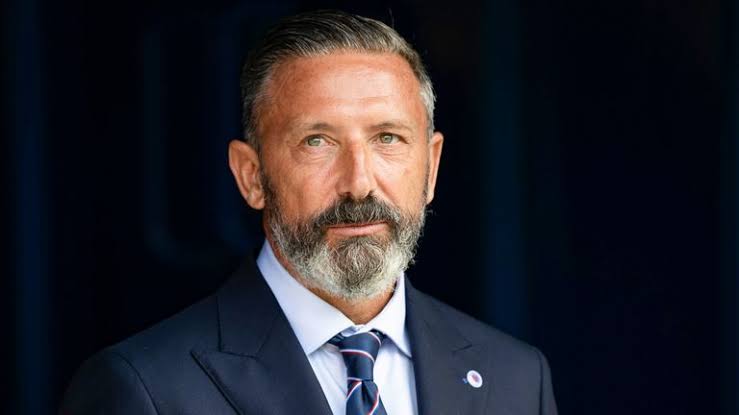
The starting point is what Bouanani showed on Saturday. He was on the pitch for ninety minutes at Dens Park, and he was the one real source of inspiration in a first half that Dundee mostly controlled. Five minutes after Bradley Fink had given the home side the lead, the winger took the ball on the edge of the box and curled a shot into the top corner with a confidence that belied his short time at the club. It was his first goal for Rangers, and it arrived at precisely the moment the team needed a response. For long stretches afterwards, he kept asking questions of the Dundee defenders, dragging them out of position and giving Rangers a threat on the flank that had been missing in earlier matches.
What makes that performance more striking is how little he had played before it. Bouanani joined Rangers on loan from VfB Stuttgart at the very end of the transfer window, which meant he arrived after the season had started and after the established players had settled into their roles. In his first six weeks he made only four appearances and played a total of 98 minutes, including a single start in the win over St Mirren. He had cameos against Celtic in the League Cup and in the league derby, and a four-minute appearance at the end of the win over Kilmarnock. Reports in Algeria, where his progress is closely followed, wondered openly whether his move had been a good idea. Against that background, the Dundee performance was not just a good display. It was a statement.
That is where the pressure on Yokota begins. The Rangers winger, who predominantly plays on the right, was one of the signings who arrived earlier in the summer with high expectations, and he provided an assist in the 5-1 League Cup win over St Mirren. But the argument made by FootballFanCast, whose opinion piece prompted this discussion, is that he has not yet shown the consistent quality in the final third that a wide player at a club like Rangers needs to produce. A few moments of promise are not the same as sustained impact, and for a player who cost nearly three million pounds, the bar is higher than it would be for a free transfer or a young player brought in to develop. When another winger steps in and takes his chance so emphatically, comparisons become unavoidable.
It is worth being clear about what the comparison involves. Bouanani is a right-sided attacking player, as the reports describe him, and Yokota operates in broadly the same area. That matters because squads are built with a limited number of places in each position, and a manager who has an in-form winger on the right does not need two. It does not mean that one player has to leave, because wide players can be rotated or moved across the front line, and McInnes has other attacking options in Djeidi Gassama and Minsu Kim. But when two players compete directly for the same role, the one who is performing better will play more, and the other may spend long periods on the bench. That can be damaging for a player who has barely begun his career in Glasgow.
The financial angle makes the situation more complicated. Bouanani’s loan includes an option to buy, reported at £15.5 million, which would make him the most expensive signing in Rangers’ history if it were triggered next summer. He remains under contract with Stuttgart until 2030, and one report has suggested that he has removed traces of his German club from his Instagram account, which some have read as a sign that he wants to stay. Whether that is true or simply the kind of speculation that surrounds every young player, it shows how much attention is on him. A club that is considering spending that much on a winger is unlikely to leave him on the bench, and that adds weight to the argument that Yokota’s chances will shrink.
That price tag has also drawn scepticism. Supporters on forums have questioned whether the club would be willing or able to spend that sum on any player, given the financial constraints that the chairman, Andrew Cavenagh, has talked about in public. Some believe Stuttgart overpaid when they signed him and that the option price is too high for Rangers to consider. Others argue that if he helps the club win the league and the club makes a big sale elsewhere, the purchase could become realistic. Football Insider, citing sources, reported that Rangers will delay a decision until nearer the end of the season and that there is no rush. That patience is sensible, but it also means Bouanani will be given every chance to prove his value, and the games he plays will come at someone else’s expense.
None of this means Yokota is a bad player, and it would be unfair to write him off after a few months. Adapting to Scottish football is difficult for many signings, particularly those arriving from other countries, and the first season is often a period of adjustment. A player who struggles in September can look like a different footballer by February, once he has learned the rhythm of the league, the physical demands and the habits of opposing defenders. McInnes has shown in the past that he is willing to be patient with players, and there is no suggestion that he has given up on this one. The point is simply that the competition for places is real, and that a player who does not take his own chances will find them being taken by others.
There is also the question of how Rangers play. McInnes’s side has been at its best when the wide players are given licence to run at defenders, and Saturday’s match showed how effective that can be when it works. Bouanani and Gassama were the source of most of the danger after the break, and the manager praised both of them afterwards. If that approach is the one that gives Rangers the best chance of winning the league, it follows that the players who suit it best will be favoured. Bouanani is direct, confident and willing to shoot, qualities that fit the approach well. For Yokota to regain his place, he would need to show something similar, and soon.
The timing of the discussion matters, too. Rangers had won seven games in a row before the draw at Dundee, which meant that breaking into the team was extremely difficult for anyone who was not already in it. A manager is understandably reluctant to change a winning side, and that explains why Bouanani spent so long on the bench despite his obvious talent. Once the run ended and the team looked less secure, the case for a change became stronger. McInnes made one alteration to the side that beat Kilmarnock, bringing in Bouanani for Kevin Kelsy, and the winger took his chance in the best possible way. That is how places are won in a competitive squad, and it is how they are lost as well.
There is a further complication, which is that January looks unlikely to bring major changes. The chairman has urged patience and indicated that transfer business will be limited as the club works towards financial stability. That means the current squad is largely the one McInnes will have for the rest of the season, so every selection decision carries more weight. If one of the club’s more expensive signings is not playing regularly, the club will have to consider what it can do about that. A loan, a sale or a period of patience are all possible, but none of them is straightforward. The more crowded the attacking positions become, the harder it is to find minutes for everyone.
It is worth considering what a manager does in that situation. McInnes has been candid in his public comments about the need for consistency and for players to earn their places, and he has shown that he is willing to change the team when results demand it. He has also shown that he values players who give him options. A winger who can play on either flank, or who offers something different from the others, may find it easier to stay in the squad than one who competes directly with a rival who is playing well. Yokota may need to prove that he is more than a one-position player, or that he has qualities that Bouanani and Gassama do not. If he can do that, he will remain an important part of the group.
Of course, there is a risk in building narrative around a single match. Bouanani had an excellent night at Dundee, but he also had a long period on the margins before it, and one goal does not make a career. The reports about his slow start were not fabricated, and they reflected real concerns about his adaptation. Supporters who are excited about his potential should remember that wingers are inconsistent by nature, and that a hot streak can be followed by a cold one. The same logic applies to Yokota. If he gets a chance and takes it, the picture can change quickly. Football’s short memory works in both directions.
What would help is clarity about the standard that McInnes expects. The manager has spoken about wanting Rangers to be more ruthless and more creative in the final third, and about feeding the wide players with more purpose. If Yokota can deliver those things, he will get his chance. If he cannot, the competition from Bouanani and others will make it harder for him to stay in the side. That is not a punishment, just the ordinary workings of a squad in which every position is contested. The best teams are the ones in which players fear losing their places, and that pressure usually improves performances all round.
The fan perspective is worth acknowledging too. Supporters tend to judge signings quickly, particularly when a fee has been paid, and a player who has not yet produced is liable to be labelled a flop. The reality is usually more nuanced. Some of the best players in the club’s recent history took time to settle, and others who looked like instant successes faded after a few months. The role of the manager is to see beyond the immediate impression, and the role of the player is to respond to it. A sensible supporter can acknowledge that Yokota has work to do without concluding that his time at the club is over. The headline that suggests otherwise is a deliberate provocation, designed to prompt discussion, and the evidence does not yet justify it.
Even so, the argument has a core of truth. Bouanani’s emergence changes the shape of the attacking options at Ibrox, and it reduces the space available to others. If he continues to play as he did at Dens Park, he will be difficult to leave out, and the winger who plays on the same side will have to wait for his opportunities. The question for Yokota is whether he can make the most of the chances he does get, and whether the manager will give him enough of them. That is a normal challenge for a young player at a big club, and it is not necessarily a sign of failure. But it does mean that the next few weeks will be important for him, and that the margin for error is small.
The wider lesson is about how quickly circumstances can change in modern football. A player who is a regular starter in September may be a fringe figure in November, and the reverse is just as likely. Squads evolve, managers adjust, and form comes and goes. What matters is how players respond to those shifts, and whether they are able to turn disappointment into determination. Bouanani did that on Saturday, after weeks of waiting for his moment. Yokota, if he is smart, will treat the competition as motivation rather than a threat. The best response to a rival’s success is to improve one’s own game, and the best way to prove a doubter wrong is to produce a performance that cannot be ignored.
So is it over for Yokota at Rangers? On the evidence available, certainly not. He is still early in his time at the club, he has contributed an assist in a heavy cup win, and he has a manager who values depth. But the picture has become more difficult, and the arrival of a rival in this kind of form is a genuine test. The next few matches will show whether he can respond, and whether McInnes sees him as part of his plans for the title race. If he does, the headline will look overblown. If he does not, it may be remembered as the moment the writing appeared on the wall. For now, the honest verdict is that the situation is uncertain, and that the winger’s future depends largely on what he does with the opportunities that come.
For Bouanani, the picture is brighter. He has the goal, the performance and the momentum, and he will want to build on them. The option to buy gives him a reason to impress, and the manager’s praise gives him confidence. He has already shown that he can handle the pressure of a big match, and that he can produce moments of quality when they are needed. If he can maintain that level, he will become a central figure in Rangers’ push for the title, and the question of what to do with the option will become a more pressing one. That is a good problem for the club to have, and it is one that supporters will be happy to discuss