Rangers star changes his mind about leaving in January after terms reportedly agreed

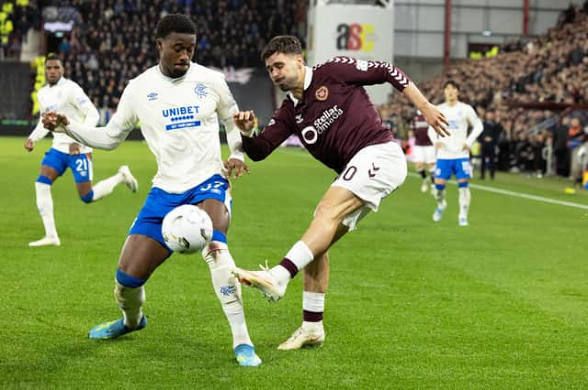
Rangers Star Nicolas Raskin Reportedly Changes His Mind About a January Exit, Even After Terms Were Said to Be Agreed
Few players in the Rangers squad have had a stranger few months than Nicolas Raskin. He was widely expected to leave in the summer, he was left out of squads while the transfer saga played out, he was linked with clubs in Turkey, Spain and Saudi Arabia, and yet he is still at Ibrox, still starting big games and still the subject of daily speculation. The latest twist is that the Belgian midfielder has supposedly changed his mind about leaving in January, even though one report claimed that personal terms with a Turkish club had already been settled. If it is true, it would be a significant piece of good news for Derek McInnes in the middle of a title race and a cup run.
The source of the latest update is the journalist Pete O’Rourke, who writes for Football Insider. According to O’Rourke, Raskin has no wish to seek a January transfer while Rangers are chasing the title. That is a short and simple claim, but it cuts directly against a lot of the noise that has surrounded the player in recent weeks. It suggests that Raskin, who spent most of the summer mentally preparing to leave, has decided that his best option is to stay put and focus on what Rangers can achieve this season. In a sport where transfer stories are often exaggerated or invented, a direct change of heart from the player himself is a notable development.
To understand why it matters, it helps to go back over how the story reached this point. Raskin spent last summer at the centre of a long and uncomfortable transfer saga. He was heavily linked with a move to Besiktas, and for a while it seemed as though the deal would be completed before the window closed. Then it stalled. One Turkish journalist reported that Rangers had made a late attempt to change the terms of the agreement after initially accepting the offer, and that the problem could not be resolved in time. The same journalist later said that Rangers rejected improved terms from both the Turkish club and Al-Ittihad, and that Raskin trained with Rangers that day. The move collapsed, and the midfielder was left in limbo.
That limbo had real consequences on the pitch. Raskin was omitted from squads during the saga, including the European trip to Jablonec and a league game against Aberdeen. For a player who had been one of the most influential midfielders in the league, being left out because of a transfer dispute was a major step, and it suggested that the relationship between the player and the club had been damaged. It also left McInnes with a decision to make, because a manager who is trying to build a team cannot rely on a player whose head is elsewhere. The fact that Raskin eventually came back into the side shows that both parties managed to put the dispute behind them, at least for the time being.
His return to the team has been a significant one. Raskin started in the draw at Tynecastle, which means he was part of the side that needed a late Olwethu Makhanya header to avoid defeat, and he is expected to play an important part in the League Cup semi-final against Aberdeen at Hampden. A midfielder of his quality brings composure, ball-winning and an ability to link defence and attack, and Rangers are a better team with him in it. McInnes has said repeatedly that he wants to focus on the players who are committed to the cause, and Raskin’s recent performances suggest that he has decided to be one of them
The reporting on his future has been remarkably inconsistent, which is part of what makes this latest story so interesting. Only a couple of weeks ago, one outlet relayed a report claiming that the Turkish club had reached a preliminary agreement with Rangers to sign Raskin in January. That report said he had agreed a salary of around £4.3 million a year, and that an initial protocol could be signed within weeks, with a formal contract to follow once the window opened. Another version of the story, relayed via a different outlet, put the personal terms at £4 million a year and the fee at around £14 million, with bonuses on top. If those figures were accurate, a deal would have looked close to inevitable.
Yet other reports painted a completely different picture. One account claimed that Raskin had rejected the move to Besiktas after initially agreeing personal terms, because he wanted to wait for a club from one of Europe’s top five leagues. That version of events has Raskin focusing on a bigger step up, with Spanish side Real Betis reportedly keeping an eye on him in the hope of exploiting his desire to leave. It is a very different story from the one in which a deal is all but done with a Turkish club, and it illustrates how difficult it is to tell what is really going on. The two cannot both be fully correct, and the truth is probably somewhere in between.
There are also doubts about whether a deal with Besiktas could actually happen. Questions have been raised about whether the Turkish club could finance a transfer of that size in January, given that their summer approach was unsuccessful. That is a fair point. Turkish clubs have a reputation for making big announcements and then struggling with the financial side, and it would not be a surprise if the deal were more complicated than the headlines suggested. Rangers, meanwhile, have shown that they are in no hurry to sell. They have held a strong position in negotiations and have not budged on their valuation, and no bid has come close to what they are demanding.
That firm stance is understandable. Raskin is a quality player, and Rangers do not need to sell him in the middle of the season. The club has spent heavily over the past two summers, and the squad is full of talent. Losing a key midfielder in January, with the title race and cup competitions in full swing, would damage the team’s chances and send the wrong signal to the rest of the dressing room. McInnes is clearly trying to build momentum, and selling a player of Raskin’s calibre would work against that. It is a decision that makes sense from a sporting point of view, even if the financial argument is more complicated.
The financial argument, in fact, is where the real tension lies. It looks unlikely that Raskin will sign a new deal with Rangers, which could leave the club with no choice but to cash in next summer, when he will have twelve months left on his contract. That is a standard problem in modern football. A player with a year left is a much less valuable asset than one with several years to run, because the buying club can wait and sign him on a free transfer. If Raskin refuses to extend, Rangers will have to decide whether to sell him for a reduced fee or risk losing him for nothing. Rangers may still have a difficult conversation ahead, with a decision over how best to protect his transfer value.
That is why the January window had looked like such an important moment. If Rangers could get a fee close to what they wanted, it would have been a smart piece of business, and it would have allowed them to reinvest in the squad. If they did not, the player’s value would start to decline. Raskin’s reported decision to stay changes the equation. It means that the club will probably have to wait until the summer to find out what they can get for him, and that they will have a significant player in their squad for the rest of the season. It also means that the risk of losing him for nothing becomes a more pressing concern.
From the player’s perspective, the reasoning is easy to understand. Rangers are second in the Premiership, only a few points off the top, and they have a League Cup semi-final to play. They also have a new manager who is clearly building something, and a squad that has shown plenty of resilience in recent weeks. For a player who wants to win trophies and play in the biggest matches, staying at Ibrox is not a bad option. A January move to a team in a weaker league, or even to a mid-table side in a bigger league, would not necessarily be an improvement, and it would mean leaving behind a genuine chance of silverware.
There is also the matter of how he is regarded within the squad and by the supporters. Raskin has had a complicated relationship with Rangers fans over the past year, and the transfer saga did not help. But the supporters respect a player who gives everything on the pitch, and he has shown that he is willing to do exactly that. Rangers supporters in particular tend to forgive a lot when a player performs, and Raskin has the ability to win them over completely if he continues to deliver. A strong run in the second half of the season, combined with a trophy or two, could change the way he is viewed for good.
It is worth noting what O’Rourke has said previously about Raskin’s longer-term plans. In an earlier report, he claimed that Raskin had no plans to join a Saudi Pro League team if he left Rangers, and that a January exit looked likely only if a club met the valuation. That report was written several weeks ago, and it described the situation in more conditional terms. The new update suggests that the player’s mindset has shifted, and that the desire to stay and compete has outweighed the pull of a move. It is a reminder that football transfers are rarely fixed in place until the ink is dry, and that a player’s priorities can change as circumstances do.
None of this means that the story is over. A change of heart in October does not guarantee that Raskin will still be at Rangers in February, and it would be naive to assume that the speculation will stop. If a club from one of Europe’s top leagues makes a serious offer, the situation could change again overnight. Similarly, if Rangers’ form dips or the title challenge fades, the temptation to seek a new challenge could return. The uncertainty is part of the nature of the modern transfer market, where players and clubs are constantly weighing their options and adjusting their plans.
Meanwhile, the issue is not confined to Raskin. Other midfielders in the squad are also facing questions about their futures, and the competition for places is fierce. Tochi Chukwuani has reportedly been ready to consider a move away from Ibrox in January if his game time does not improve, with other midfield options ahead of him in the pecking order. That is a reminder that Rangers have a lot of talent in the middle of the park, and that not everyone can play. For McInnes, the challenge is to keep the squad happy and motivated while making sure the right players are on the pitch, and a settled Raskin helps with that.
There is also the question of how Raskin fits into McInnes’s plans in the longer term. The manager has said that he wants players who are committed and who understand the demands of the club, and he has shown that he is not afraid to drop anyone who does not meet those standards. Raskin’s recent form suggests that he has bought into that philosophy, and that he is willing to do what is required. If he continues to perform well, there is no reason why he cannot be a key part of the team for the rest of the season and beyond.
For the supporters, the news is welcome but should be treated with caution. Transfer reports are notoriously unreliable, and journalists often contradict each other, as the recent coverage of Raskin has shown. A single report that a player has changed his mind does not mean the matter is settled, and there is always the possibility that the situation will shift again before January. What matters most is what happens on the pitch, and so far, Raskin has been doing his job. The rest is noise, and the best approach is to enjoy having him in the team for as long as he is there.
In the end, the story is a good example of how quickly things can change in football. A few weeks ago, it looked as though Raskin was on his way to Turkey, with terms agreed and a fee in place. Now, the latest claim is that he wants to stay and fight for the title. Whether that holds true will depend on a range of factors, including Rangers’ results, offers from other clubs and the state of his contract talks. But for now, the picture is a positive one, and McInnes has every reason to feel encouraged.
If Raskin does remain at Ibrox for the rest of the season, the benefits could be considerable. Rangers would have one of their best midfielders available for the run-in, they would avoid the disruption of a mid-season sale, and they would still have the chance to cash in during the summer, albeit with a year left on his deal. It is not a perfect outcome from a financial perspective, but from a sporting point of view it is exactly what the manager wants. A title challenge needs its best players on the pitch, and Raskin is one of them.
So the message from the latest reports is a simple one. The player who looked set to leave has decided to stay, at least for now, and the club has a chance to use him to its advantage. Whether it ends in a trophy, a lucrative sale or both, the next few months will be fascinating to watch. For Nicolas Raskin, it is an opportunity to rebuild his reputation, to repay the faith of his manager and to prove that a player who once seemed destined for the exit can still be a vital part of a winning team at Ibro