What Rangers must do to end three-year trophy drought as star addresses inconsistency and recent setbacks

There is a sentence that gets repeated at Ibrox almost every season, and it goes something like this: the club demands trophies. It is easy to say and much harder to deliver, and for the past three years Rangers have not delivered. The cabinet has been empty, the patience of supporters has worn thin, and a succession of managers has come and gone without breaking the drought. Now, with Derek McInnes in charge and a League Cup semi-final against Aberdeen at Hampden on Saturday, the club has the best opportunity it has had in a long time to put that right. Midfielder Dan Neil, who has had an up-and-down start to life in Glasgow, has been reflecting on what that opportunity means and what it will take to seize it.
The scale of the drought gives the occasion its weight. Rangers have been waiting a long time for a trophy, and with Hampden calling and silverware within touching distance, they cannot afford to let the opportunity pass them by. The BBC noted that Rangers have won only three trophies since 2012 and have finished each of the last two seasons without a piece of silverware to show for it. For a club with the resources and history of Rangers, that is a poor return, and it explains why every cup tie now carries such enormous pressure. A semi-final is not just a match. It is a step on a path that supporters have been waiting years to walk.
McInnes understands exactly how much is riding on it. Since taking charge in the summer, he has made it clear that winning a first trophy would be about far more than the medal itself. He has described it as an important way of reinforcing confidence and belief, and he is right. A squad that has been assembled largely from scratch needs evidence that its methods work. Players who have never lifted a trophy together need to learn what it feels like, and supporters who have grown cynical need a reason to believe again. A League Cup win in December would provide all of that, and it would give the whole season a sense of momentum.
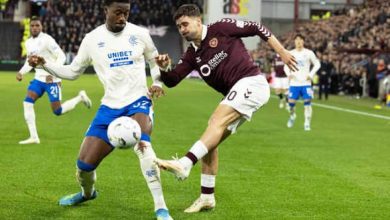
The route to the semi-final has been encouraging. Rangers beat Celtic 3-0 at Ibrox in the quarter-finals, a result that demonstrated the quality of the team when it is at its best. Neil enjoyed a dream Old Firm debut in that game, scoring twice in a performance that earned him the man of the match award. It was the sort of display that changes the way a player is viewed, especially one who had struggled to settle in his first few weeks at the club. For a former Sunderland captain who had been making his way in a new city, a new league and a new dressing room, it was the breakthrough he needed.
That context makes his comments about the highs and lows of life at Rangers particularly interesting. Neil said that when you play for a club like this, you have to take the good times with the bad, and the recent past has provided him with plenty of both. After the euphoria of the Celtic game, there was a sharp reminder of how quickly things can change. He made a costly error in the 2-2 draw with Dundee at Dens Park, a mistake that contributed to dropped points and prompted a wave of criticism. It was a brutal contrast to the Celtic match, and it illustrated the kind of inconsistency that has dogged Rangers for much of the past few years.
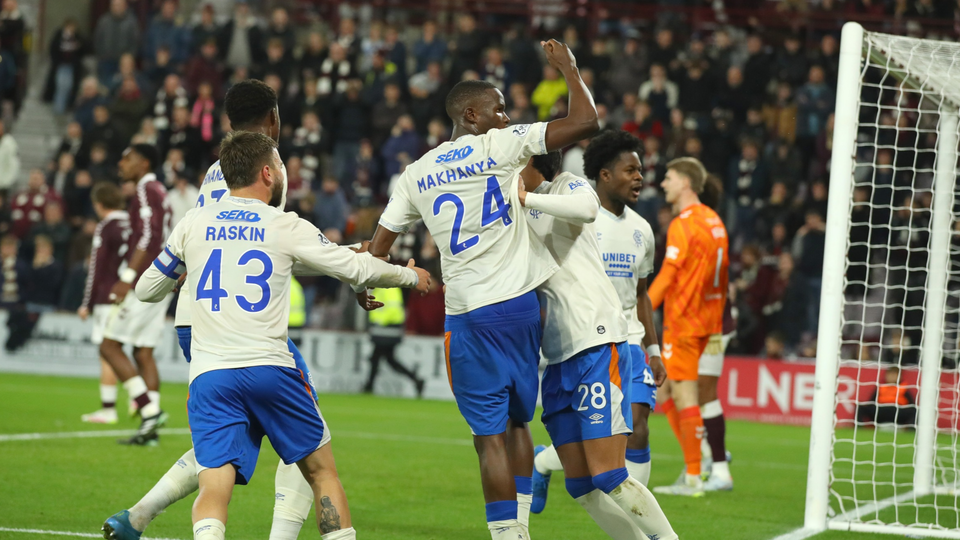
That inconsistency is the central theme of this story, and it is not confined to one player. Rangers have shown that they can beat the best teams in the country when they are at their sharpest, but they have also dropped points in matches that should have been routine. The draw at Hearts is the most recent example. McInnes’s side took an early lead, lost control of the game after the break, conceded twice in quick succession and had to rely on a late header from Olwethu Makhanya to avoid defeat. It was a result that left everyone at the club feeling relieved and slightly frustrated at the same time, and it showed that the team still has work to do.
What does a team with trophy ambitions need to fix? The first and most obvious answer is the way it manages games. At Tynecastle, Rangers failed to build on their early advantage, and McInnes acknowledged afterwards that the team had not shown enough authority after going in front. That is a problem that can be solved with better organisation and sharper decision-making. A team that takes the lead needs to keep the ball, slow the tempo when necessary and avoid giving the opposition easy opportunities to attack. In a cup semi-final, where one goal can decide the outcome, that kind of game management is crucial.
The second thing Rangers must do is start matches and halves with intensity. Several of their recent problems have come in the opening minutes after the break, when the team has looked a step behind. Makhanya publicly suggested that this was a question of character, which McInnes disputed, but both men agree that there was a spell at Hearts when the team was second best. At Hampden, there will be no room for that. Aberdeen may be struggling for form, but they have an experienced manager in Stephen Robinson who knows how to win cup ties, and they will seize on any lapse in concentration.
Third, Rangers need their key players to deliver consistently, and that is where Neil’s role comes into focus. He has welcomed the tactical freedom he has been given in recent games, particularly since the Old Firm fixture, which allows him to contribute further forward. That is a significant detail. Neil is a midfielder with an eye for goal, and McInnes has clearly recognised that his best contribution comes when he is allowed to join attacks and arrive in the box. If he can combine that attacking threat with the discipline to protect the back line when needed, he could be a decisive figure in the semi-final.
The nature of that role depends on the system the manager chooses. Neil explained that his responsibilities can change depending on McInnes’s preferred formation and on whether Rangers play with one striker or two. With a lone striker, he is likely to be asked to support the attack from deeper positions and make late runs into the area. With two strikers, he may have to take on more defensive work and help the other midfielders control the centre of the pitch. That flexibility is useful, but it also demands intelligence and awareness. A player who understands his job in different systems is a valuable asset, and Neil appears to be learning quickly.
The balance in midfield will be critical. Nicolas Raskin has returned to the side after a turbulent summer, and his composure on the ball gives Rangers a platform to build from. Alongside him, the team needs energy, ball-winning and a willingness to run. There is also uncertainty over Tochi Chukwuani, who is due to have a knee scan, so McInnes may have to adapt his plans. Having several midfielders who can perform different roles is a strength, but it also means the manager has to make difficult selection decisions, and getting them right could determine the result.
At the back, the focus has been on Emmanuel Fernandez, who has been under scrutiny after a few high-profile errors. McInnes has defended him strongly, pointing out that he has started every game this season and that the team has kept more clean sheets than anyone else in the league. He argued that the Hearts result was a collective failing, not the fault of one player. That defence makes sense, but it also places a responsibility on the whole defensive unit to be more solid at Hampden. A clean sheet would go a long way towards securing a place in the final, and it would silence the critics.
Another factor is the mental side of the game. Rangers have not won a trophy for three years, and that history can weigh heavily on players. A team that expects to win can sometimes be paralysed by that expectation, particularly in a one-off match where mistakes cannot be corrected over a longer period. McInnes has experience of dealing with this pressure, having managed teams in several semi-finals at Hampden, and he has stressed the importance of a strong, ninety-minute performance. The message is simple: do not get ahead of yourselves, and focus on the process, not the prize.
The pressure also comes from the fact that Rangers are strong favourites. Aberdeen have lost three of their last four league matches, including a defeat at home to Falkirk, and their confidence is clearly low. On paper, Rangers should win, and the supporters expect them to. But favouritism is a double-edged sword. It means that a defeat would be a major embarrassment, and that the players will feel the weight of expectation from the first whistle. Part of the manager’s job is to channel that pressure into positive energy, and so far he has handled it well.
It is also worth remembering the importance of experience in a game like this. Several of the Rangers players have never played in a Hampden semi-final, and the occasion can be overwhelming. The size of the stadium, the noise of the crowd and the significance of the match can affect even seasoned professionals. McInnes will want his experienced players to set the tone, to keep the younger ones calm and to make sure the team does not get carried away. That is where the leadership group, including captain Lawrence Shankland, will be needed.
Neil, for his part, seems to have the right mindset. His willingness to accept both the good and the bad is a sign of maturity, and it suggests that he will not be thrown off course by one mistake. The best players are not those who never make errors, but those who bounce back from them quickly, and he has already shown that ability. His performance against Celtic proved that he has the quality to make a difference in big games, and the setback at Dundee will probably serve as a useful lesson. If he can combine those two experiences, he could become a key figure for the rest of the season.
Beyond the individual players, the squad as a whole needs to show that it can maintain a high standard over a long period. McInnes has talked repeatedly about the importance of the bond between the players, and about the evolution of the group into a genuine team. That cohesion is the foundation on which trophies are built, and it takes time to develop. The early signs are positive, but there is still some way to go. A cup win would accelerate the process, giving the players a shared achievement to build on, while a defeat would raise questions about whether the team is ready for the pressures of a title race.
There is also the broader picture to consider. A League Cup would not solve all of Rangers’ problems, and it would not mean the drought was truly over in the sense that supporters want. The club’s main ambition is to win the league, and the cup is a stepping stone. But it matters enormously, because it breaks a barren run and proves that the team can win when it counts. It also ensures a sense of confidence for the games that follow, including the crucial league fixtures against Celtic and Hearts. In that sense, the semi-final is about much more than a place in the final.
If Rangers do reach the final, the opponents will be either Hearts or Hibernian, and both would pose a stiff test. Hearts, in particular, showed at Tynecastle that they can match Rangers in every department, and their fans would relish another chance to face McInnes. But that is a problem for another day. For now, the only thing that matters is beating Aberdeen, and the squad will know that the best way to do so is to stay focused on the task in hand.
So what must Rangers do to end their three-year trophy drought? The answer is not complicated, but it is demanding. They must start with intensity, manage the game sensibly once they are in front, defend solidly and take their chances. They must rely on their key players to perform and trust the manager’s plan. And they must handle the pressure of expectation with composure, treating the occasion as an opportunity and not a burden. If they can do all of that, they will have every chance of getting through.
Neil’s comments suggest that the squad understands what is required. He has experienced both the thrill of a perfect night against Celtic and the disappointment of a costly mistake at Dens Park, and he knows that consistency is the thing that separates good teams from great ones. If Rangers can find it at Hampden on Saturday, the long wait for a trophy could finally be about to end. And if they cannot, the questions will start all over again, which is exactly why this semi-final matters so much