Start him today: McInnes knows that his own Ryan Kent is warming the bench for Rangers – opinion

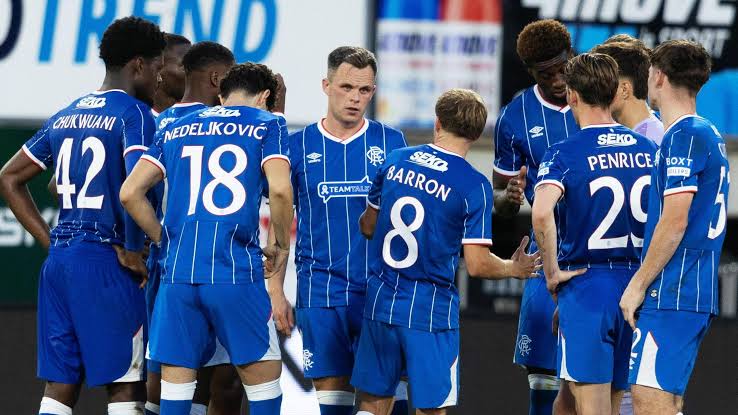
Every manager reaches a point in a big week when theory has to give way to a decision. For Derek McInnes, that point arrives tonight at Hampden, where Rangers face Aberdeen in the Premier Sports Cup semi-final with a first trophy of his reign, and the end of a three-year wait, within reach. The prize is huge. McInnes is trying to become the first Rangers manager since Philippe Clement in December 2023 to win a major trophy, and beating Aberdeen would put him in the final. In a match of that importance, the team selection matters more than usual, and the most intriguing question on the right flank is whether Badredine Bouanani should start ahead of Djeidi Gassama.
My view is that he should, and the reasoning has little to do with one bad night. It is about what Rangers need from their attack in this particular match, and about the kind of player McInnes has sitting on his bench. The comparison being made in the headline is to Ryan Kent, and it is a flattering one, but it is also a fair one. Kent was the sort of winger who gave Rangers a regular source of creativity, who could take on a defender, find a pass and make something happen when the game was stuck. The argument is that Bouanani can do the same, and that tonight, against a deep and wary Aberdeen, that is exactly the quality the team is short of.
To understand why that comparison carries weight, it helps to remember what Kent actually delivered. He made 56 assists in 218 appearances for the club in all competitions, including 21 assists across his last two league seasons at Ibrox. Those are not the numbers of a flashy but ineffective winger. They are the numbers of a player who consistently turned possession into chances. Supporters often remember Kent for the frustrations, the occasional wasted opportunity or the final ball that did not come off. But the statistics tell a story of someone who repeatedly created goals for teammates, and that is a skill that is rare and hard to replace.
Rangers have been searching for that kind of figure ever since. The reports suggest that neither of the wingers who followed Kent managed to be a Kent-esque presence by providing regular creativity from the flanks. That gap in the squad has been visible for a couple of seasons, and it is one of the reasons the team has sometimes struggled to break down organised defences. When opponents sit deep, as Aberdeen are likely to do tonight, a team needs someone who can unlock them with a clever pass or a driving run, and without that player the attack can become stale.
That is not a criticism of Gassama’s qualities, and it is worth being fair to him. He is quick, brave and willing to run at defenders, and McInnes has praised how much he has carried the fight in recent weeks. The Rangers Review pointed out that his best spell under McInnes came at Pittodrie, where he consistently drove the team forward, and he has four assists to his name this season. A winger who works that hard, creates space for teammates and gets into good positions is worth having in any squad. But there is also a problem, and it is one that has followed him for a while.
The problem is end product. Gassama has not scored in his last nine games, and he has just one goal in fourteen appearances this season, with none in the league, to add to the three he got last year. That is a thin return for a winger who spends so much time in advanced positions. The same article that makes that point draws a direct comparison with Kent, noting that what frustrates about both players is not their work rate, their attitude or their ability to carry the ball, but their goal return. It is a fair point, and it is an interesting one, because it means the Kent comparison cuts both ways. In some respects, Gassama is the frustrating Kent, and Bouanani could be the productive one.
The case for Bouanani gets stronger when you look at what he has actually done when he has played. In the draw with Dundee at Dens Park, he was arguably the most dangerous player on the pitch. Every shot he hit was placed and on target, and only two world-class saves denied him a hat-trick. That is a performance that would normally earn a player a few more starts, and yet it was Gassama who played the full ninety minutes on the opposite flank. It is the sort of selection decision that makes supporters scratch their heads, and it suggests that McInnes may have been slow to reward a player who has been doing the right things.
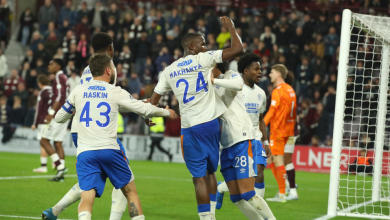
Then came Tynecastle. McInnes made one change from the side that beat St Johnstone, bringing Gassama in for Bouanani, and the result was a night when the right-sided player barely influenced the game. The numbers were damning. He touched the ball only nineteen times, completed four of seven passes and was substituted eight minutes into the second half. The replacement was Bouanani, and what happened next is the clearest argument of all. Bouanani gave the visitors a bigger threat in attack and delivered the free-kick from the left that Olwethu Makhanya headed home in the eighty-ninth minute. In effect, the man who had been left out produced the most important contribution of the night.
It would be wrong to build a case on one match, and I do not want to be unfair to Gassama. A single poor night does not define a player, and he has had plenty of good ones. The point is that the Tynecastle game fits a broader pattern. Rangers have a winger who works hard but produces little, and a substitute who keeps making an impact when he comes on. When that happens repeatedly, a manager has to ask whether the team would be better with the roles reversed. McInnes is a clever, pragmatic coach, and I suspect he has already asked himself that question.
There are tactical reasons for making the switch tonight as well. Aberdeen have been in poor form, losing three of their last four league games, including a 1-0 home defeat to Falkirk in midweek. A team in that position tends to be cautious, particularly in a cup semi-final, where the priority is not to lose. They are likely to defend in a compact shape, make themselves hard to beat and look to hit Rangers on the break. Against that kind of opposition, pace and direct running are useful, but they are not enough. What matters more is the ability to find pockets of space, to play incisive passes and to deliver quality balls into the box.
That is where Bouanani offers more than Gassama at the moment. He is a proficient dribbler who can beat a man in tight spaces, and he has shown that he can put a cross or a free-kick exactly where it needs to go. Against a team that is likely to defend deep, those skills are more valuable than raw speed. A winger who can drift infield, combine with the strikers and create overloads in the final third will cause more problems than one who simply runs down the touchline. It is not that Gassama cannot do those things, but Bouanani appears to do them more consistently right now.
The wider balance of the team also matters. The Rangers Review has suggested that McInnes is likely to stick with the 4-4-2 system he has used for the past couple of months, and that the choice on the flanks will be crucial. The same outlet argued that Gassama does not merit a start based on his Tynecastle showing, and that Minsu Kim, though also poor in Edinburgh, did enough in the win over St Johnstone to earn his place on the other side. That analysis makes sense, because it points to a team that wants to fine-tune its approach, not overhaul it. Swapping Gassama for Bouanani is a small adjustment, but it could have a major impact.
Consider what it would mean for the attack as a whole. With Kevin Kelsy and Ryan Naderi up front, Rangers have a partnership that blends power and movement, and both strikers need service. The best way to get the most from them is to provide quality delivery from the wings, with accurate crosses and clever passes into the box. Bouanani can offer that, whereas Gassama has been more of a carrier of the ball than a creator. If McInnes wants his strikers to get the chances they need, he should give them the wide player most likely to supply them.
There is also the question of confidence. Gassama is a young player who has had a difficult few weeks, and there is a risk that being hooked at Tynecastle may have affected his belief. Starting him in a cup semi-final, with all the pressure that entails, could be a gamble. Sometimes a manager does a player a favour by giving him time on the bench to reset, and a substitute appearance can be a better way back than a high-pressure start. That would also leave McInnes with an attacking option to bring on later in the game, and Gassama’s pace could be very useful against tiring defenders in the second half.
Of course, nothing about this is guaranteed. Bouanani could have an off night, Gassama could come on and score the winner, and the whole argument could look foolish by ten o’clock. That is the nature of football, and every opinion is a bet on probabilities. But the evidence at the moment points in one direction. The player on the bench has been more productive, more creative and more decisive than the player who has been starting, and a trophy is at stake. When the margins are this fine, it makes sense to pick the player in better form.
It is also worth remembering the manager’s own words. McInnes has been honest about Gassama’s need to add goals and assists to his game, acknowledging that he has carried the fight in recent weeks but that the numbers need to improve. That is the language of a coach who knows exactly where the shortfall lies, and who has not yet seen enough to settle the debate. The semi-final is an opportunity to resolve it, and playing Bouanani would be a sensible way to test whether his recent form can be sustained over ninety minutes in a high-pressure environment.
It would also send a message. McInnes has spent months emphasising that places are earned and that nobody is guaranteed a starting spot. Selecting a player who has done well when he has had his chance would reinforce that principle, and it would show the rest of the squad that performances count. That kind of meritocracy is important in building a winning culture, and it is one of the reasons why managers like McInnes are respected. If he wants to inspire a team to end a three-year drought, he needs to show that the best players will play.
Of course, there are other decisions that will shape the match. The choice at centre-back, where Emmanuel Fernandez has come under fire despite his manager’s strong defence, will be closely watched. The midfield balance, with Nicolas Raskin and Dan Neil likely to be involved and Tochi Chukwuani awaiting a scan on a knee problem, will also be important. And the question of who plays up front, whether Kelsy and Naderi together or a different combination, could be decisive. But the right flank is the area where a change would be most logical and most impactful, and it is the one that deserves the most attention.
Tonight, then, is a test of McInnes’s judgement as much as his players’ quality. He has built a team that has won ten of its last twelve matches, beaten Celtic 3-0 in the quarter-finals and shown real resilience in recent weeks. He has a squad full of options and a clear idea of how he wants to play. What he needs now is the courage to make the call that the evidence supports, even if it means leaving out a player who has been a regular. Managers who win trophies are rarely those who stand still, and they are usually the ones who are willing to adapt when the situation demands it.
If he does start Bouanani, he will be backing a player who has shown he can deliver. If the winger repeats his Dundee form, picks out his strikers and provides the creative spark that Rangers have missed, the Kent comparison will begin to look not just flattering but accurate. And if the result is a place in the final, the decision will be remembered as one of the key moments of the season. That is the sort of change that can alter a campaign, and tonight at Hampden, it could be the difference between another year of waiting and the first trophy of the McInnes era.
So start him. Give Bouanani the chance to be the creative force the team has been lacking, trust the evidence of what he has done when he has played, and keep Gassama as a weapon for the second half. It is not a criticism of one player so much as a recognition of what the occasion requires. Rangers need creativity, precision and belief to beat a stubborn Aberdeen side, and the player best equipped to provide them right now is sitting on the bench. McInnes knows it. Tonight is the time to act on i