Some footballers announce themselves with a goal. Others do it by being so dependable that, one day, the people who pick national teams cannot overlook them any longer. James Penrice belongs to the second category, and this week the reward arrived: the Rangers left-back has received his first call-up to the Scotland squad. For a player who spent much of the last year in a difficult spell abroad, it is a moment of vindication, and for a boy from Livingston who once dreamed of wearing the dark blue, it is the realisation of something he has talked about wanting for a long time.
The announcement, made by the Scottish FA on [DATE], named Penrice in the squad for [FIXTURES/COMPETITION]. [Insert details from the BBC article: the other call-ups, any withdrawals, who he is covering for, and any comments from the national team manager.] For the 27-year-old, it is the end of a long wait and, if the people who know him best are right, the start of something more permanent.
To appreciate what the call means, it helps to retrace the route he took to get here. Penrice grew up in Livingston, went to Meldrum Primary and, by his own account, found that football took over much of his school life. He came through the youth system at Partick Thistle and made his name in the Scottish game with a series of consistent displays. Livingston, managed by David Martindale, eventually signed him on a three-year deal, and Martindale spoke warmly at the time about the qualities he would bring and the pleasure of working with him again. It was the kind of signing that rarely makes headlines but that tells you something about how a player is regarded by the people who know his work.
At Livingston he developed into a left-back of real quality: energetic, technically sound and capable of getting forward to support attacks while still doing the basics defensively. Those attributes brought him to the attention of larger clubs, and in 2024 Hearts announced him as their first signing of the summer, having agreed a pre-contract deal. It was a significant step up, and it was one he took in his stride. His debut campaign in maroon was impressive enough that Hearts supporters began calling him one of the best in his position in the league, and he even earned a song from the Tynecastle faithful, which spread across social media.
The praise was not confined to the stands. Neil Critchley, then Hearts manager, spoke publicly about the full-back’s form, describing him as outstanding, driven and a player who brought energy and character to the team. He went further and suggested that Penrice should be looking towards a Scotland call-up. Penrice himself was careful not to get ahead of himself. He acknowledged that the competition at left-back for the national side was fierce, with Andy Robertson, Greg Taylor and Kieran Tierney ahead of him, but he said he would not give up on chasing a cap. He pointed to a former Livingston teammate, Nicky Devlin, who won his first call-up after turning thirty, as proof that patience can be rewarded.
Hearts, meanwhile, were bracing for interest. After a season of strong performances, clubs from outside Scotland began to take notice, and in the summer of 2025 Penrice moved to AEK Athens in Greece, a deal that gave him the chance to test himself in European competition and a new league. It was the first time he had played abroad, and it was not an easy adjustment. He later spoke candidly about how hard it had been to be away from his family for the first time in his career and how different life in Greece was from what he knew. On the pitch, opportunities were limited. Statistics from the 2025/26 Super League season show him playing around 920 minutes without a goal or assist, hardly the profile of a player in the thick of the action
It is a familiar story. A move abroad that looks attractive on paper can turn out to be harder in practice, particularly for a defender who relies on rhythm and consistent football. By the end of 2025, reports suggested that Penrice had not managed to secure regular first-team football and might be available for a return. Rangers showed interest in the January window, as the player later acknowledged, but nothing was completed. The following summer, with Middlesbrough and Blackburn Rovers also reported to be making enquiries, the situation became more competitive.
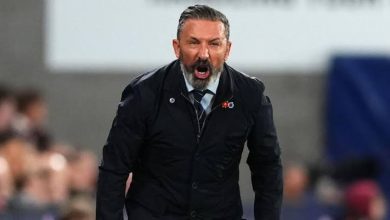
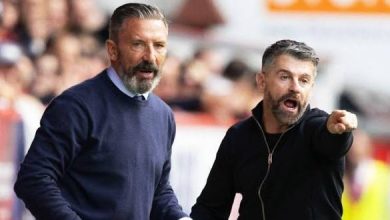
What tipped the balance was the intervention of Derek McInnes, who had taken over as Rangers manager in June 2026. According to reports at the time, McInnes made a direct phone call to Penrice to outline his plans and make the case for coming to Ibrox. Celtic were also said to have shown interest, though that apparently cooled, and Rangers moved decisively in the final forty-eight hours. In mid-August, the club announced the signing of Penrice on a season-long loan from AEK Athens, with an option to buy at the end of the campaign. He was Rangers’ tenth signing of the summer.
For Penrice, the move was personal as well as professional. In his first interview with the club, he described it as a dream moment, recalling that he had once walked through the Rangers Training Centre as a young academy player. That detail speaks to something that gets lost in the transfer-market noise: players are often connected to clubs in ways that go beyond contracts. A boy who passes through an academy and later returns to the first team carries a sense of unfinished business, and Penrice appeared to feel it.
His first weeks at Ibrox were not without difficulty. Rangers began the season in uncertain form, and by late August they were eliminated from Europe by Czech side FK Jablonec after a penalty shoot-out. Penrice was among those who missed from the spot. It is the sort of moment that can linger for a young player at a new club, particularly when the team is struggling for results. But he did not let it define his season.
The turning point, by most accounts, came when McInnes made a tactical adjustment. Rather than using Penrice strictly as a traditional left-back, the manager began to allow him to tuck into midfield at certain moments of matches, giving the team an extra body in the centre and allowing the left side to be more fluid. When a midfielder was substituted during one game in October, McInnes moved Penrice further forward, and he continued to impress. The change drew public praise from Andy Halliday, the former Rangers midfielder, who called it a really shrewd move on the BBC’s Sportsound programme. Halliday, a former Scotland international himself, went on to say that he believed Penrice had a bright future and that a national call-up was only a matter of time.
Halliday’s prediction, as it happens, has proved accurate. And it is worth considering why the tactical shift mattered so much. A full-back who can play as an inverted defender or a hybrid midfielder offers a manager flexibility. In the modern game, where systems are fluid and roles overlap, that versatility is highly prized. International managers, who often have only a few days with their squads, value players who can adapt to different demands without extensive coaching. A left-back who can cover several positions is a more useful squad member than one who can only do a single job.
That brings us to the competitive picture at left-back for Scotland. For years, the position has been dominated by Andy Robertson, the captain and one of the most decorated Scottish players of his generation. Kieran Tierney and Greg Taylor have provided strong alternatives, and Scotland have rarely been short of quality in the role. For a newcomer, the challenge is not simply to be good but to offer something different. Penrice’s range, his energy and his ability to play in more than one position may be exactly what a squad manager is looking for.
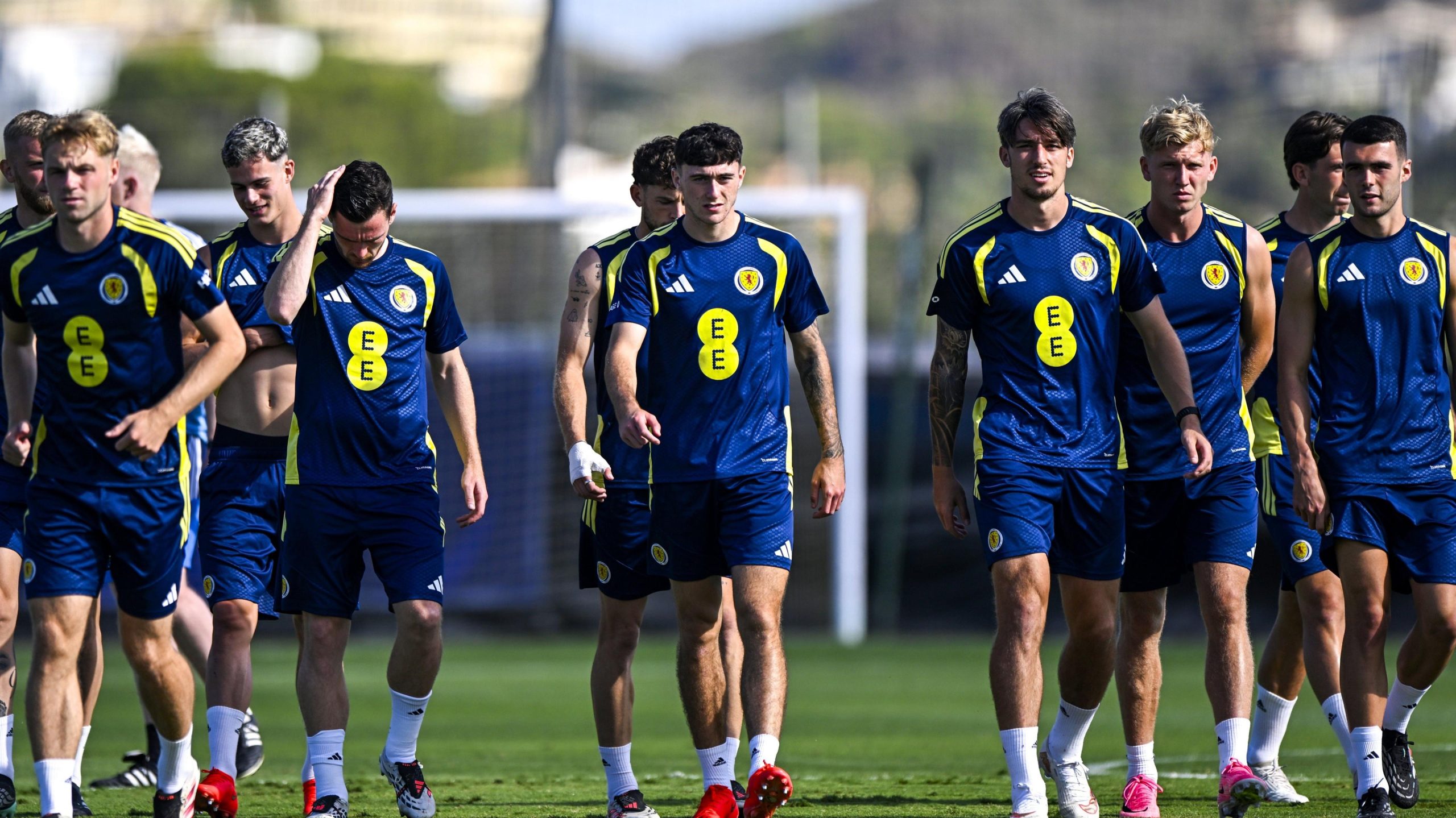
The timing also reflects broader conditions. Scotland’s squad is rarely static, and injuries, form and fixture congestion mean that opportunities arise for those on the fringes. [Insert details from the BBC article about the specific circumstances of the call-up, such as injuries or withdrawals, and any statement from the manager about why Penrice was selected.] A first call-up does not guarantee a cap, but it puts a player in the environment, working with the coaching staff and the other players, and it gives him a chance to make an impression.
It would be easy to see the call-up as a reward for his recent form, but it also reflects a longer trajectory. Penrice has been one of the more consistent left-backs in Scottish football for several years. His progression from Partick Thistle to Livingston to Hearts to Rangers, with a spell abroad in between, shows steady upward movement, even if it has not always been smooth. The Greek chapter, though frustrating, may have added to his maturity. Players who have faced adversity and come through it often return with greater resilience and clearer priorities.
There is also the symbolic dimension. The idea of a boy from Livingston, a place not always associated with producing international footballers, earning a place in the national squad has its own appeal. Penrice’s early dream, spoken of publicly in interviews with Hearts, was to make his mark in club football before one day pulling on the Scotland shirt. That sentence, which could have been a throwaway line, now looks like a plan that he has carried out step by step.
For Rangers, the call-up is a source of pride. A club that has invested in a loan signing with an option to buy can take satisfaction from seeing the player thrive and be recognised at international level. It also raises the question of the club’s long-term plans. If Penrice continues to perform and earns his first cap, the option to buy will look increasingly attractive, and the fee could rise. For the player, a successful season in a Rangers shirt, and a place in the Scotland squad, would strengthen his position both for the club and in the market generally.
Manager McInnes, too, will take credit. His call to Penrice in the summer was a small piece of personal diplomacy that paid off, and his decision to alter the way the player is used has unlocked a new dimension of his game. Managers like to be seen as developers of talent, and the progress of Penrice is a feather in the cap for the Rangers boss.
It is worth acknowledging, too, the human side of the story. Footballers spend their careers moving between clubs, cities and countries, and the personal cost is considerable. Penrice’s honesty about the loneliness of his time in Greece offers a glimpse of what that can be like. To return to Scotland, to a club he had dreamed of as a youngster, and to be rewarded with a national call-up within months, is a testament to character as much as talent. It is the kind of recovery that football loves to celebrate.
What happens next will depend on what he does with the opportunity. A first call-up is an invitation, not a guarantee. If he gets minutes, he will need to show that he can handle the pace and the demands of international football, where mistakes are punished and the margin for error is thin. If he does not, he will still gain from the experience of being around the squad, learning how the best players prepare and how the coaching staff work. Either way, he will return to Rangers with more to give.
In the meantime, there will be pride in Livingston, in Perth and Edinburgh where his earlier clubs are based, and in Glasgow. There will be congratulatory messages from former teammates and coaches, many of whom saw the potential long before the national selectors did. And there will, inevitably, be debate about where he fits in the pecking order, with pundits and supporters weighing his claims against those of the established options.
That debate is part of the fun of international football. Every squad announcement creates winners and losers, surprises and omissions, and the arguments that follow are a feature of the game’s culture. For Penrice, the arguments are, for once, in his favour. He has gone from being a talented club player with an uncertain future to a name that is being discussed in the context of the national team. It is a significant shift, and one that he has earned.
The story of James Penrice’s call-up is, in the end, a story about patience and persistence. He was not the most heralded youngster, nor was he the most expensive signing. He worked his way up through the leagues, made the most of his opportunities and endured a difficult period abroad without losing his ambition. The result is a player who now stands on the threshold of international football, with a good chance to make it count.
If he does, it will be a fitting reward for years of steady progress. And if he does not, at least not immediately, there will be other chances, as there were for Nicky Devlin, who waited until he was past thirty. For now, the focus is on the present: a first Scotland call, a season at Rangers still unfolding and the prospect of a career that has more chapters yet to write