View: Rangers predicted XI vs Motherwell – McInnes to leave out attacker due to injury worry

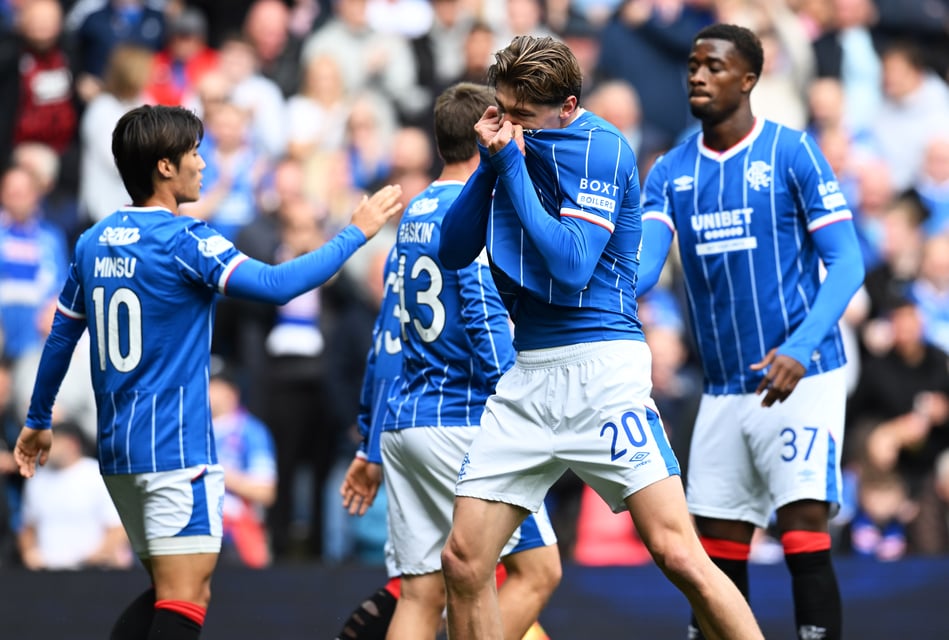
There is a particular kind of match that managers fear more than a visit from the league leaders, and it tends to arrive just after an international break. It is the away fixture at a compact ground, on a Saturday night, against a side that is well organised, physical and unbothered by reputation. Rangers go to Fir Park to face Motherwell with a 12-game unbeaten run behind them and a title race in front of them, and the story of the build-up, as it has been reported, is about how much a single precaution matters when everything else is going right.
Start with the run itself, because it frames everything. Rangers travel to Fir Park on Saturday, with the game scheduled to kick off at 8pm local time on 21 November, and they are on a 12-game unbeaten run in all competitions. Twelve games without defeat is not an accident. It is the product of a settled team, a clear way of playing and a manager who has stopped tinkering. That matters particularly because the season did not begin like this. Sports Mole recalled that Rangers endured a miserable start to the 2026-27 season under Derek McInnes, failing to win any of their opening four matches, including their elimination from the Europa League qualifiers. A team that began with four games without a win and a European exit, and then went a dozen matches unbeaten, has changed in some real way, and the way it changed is the interesting part.
The answer, according to those who watch Rangers closely, is stability. The Yahoo preview puts it plainly: stability has been key to Derek McInnes’ recent success at Rangers, and he could potentially make only one change to his starting lineup against Motherwell. That sentence sounds modest, but it describes a manager at the point where good results begin to feed themselves. When the same eleven play together week after week, they know each other’s movements, understand each other’s weaknesses and need less instruction. Selection becomes a matter of leaving well alone, which is harder than it sounds, because every manager is tempted to improve a winning side.
The backbone of that side is clear. Ivor Pandur has established himself as the number one, while Dujon Sterling, Olwethu Makhanya, Emmanuel Fernandez and James Penrice have been part of a solid backline. A settled back line is the quiet foundation of any unbeaten run. Goalkeepers and centre-backs are the positions where a manager most wants consistency, because communication between them cannot be rushed, and a mistake in those areas is punished more severely than anywhere else. If Pandur has made the position his own and the four in front of him have learned to defend as a unit, then much of the heavy lifting has already been done.
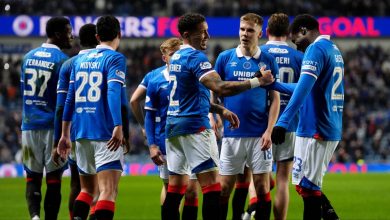
In attack, the picture is less conventional and more intriguing. Kevin Kelsy and Ryan Naderi complement each other perfectly at the Gers, and in the two strikers McInnes has found a winning formula at Ibrox. A pairing of two forwards is something of a throwback in a game dominated by single strikers supported by wide players, and it suggests that McInnes has built his attack around what his players do best, not around a formation chosen in advance. That is a mark of a pragmatic manager. He has two forwards who work well together, so he plays both, and arranges the rest of the team to support them.
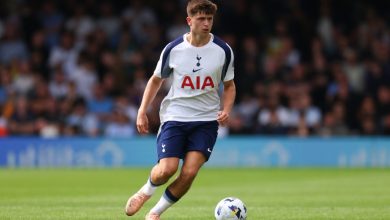
The reason this fixture draws attention is the question of who plays just behind them. The headline that prompted all this concerns an attacker who might be left out because of an injury worry, and the player in question is Minsu Kim. The facts, as reported, are limited but clear. Kim picked up an injury against St Mirren, and was subsequently excluded from South Korea’s Under-21 squad because of a calf issue. A calf problem is among the most irritating injuries for an attacking player, because it tends to recur if it is not managed properly, and because the muscle is heavily used in the sprinting and sudden changes of direction that define his role. The fact that he was withdrawn from international duty suggests that someone, whether the club or the national federation, decided that the risk of playing him was not worth it.
At the same time, the reporting is reassuring in tone. While the knock isn’t as bad as once feared and the former Girona player has had time to recover during the international break, McInnes may want to take a precaution with him. That wording balances two things. The injury is not as serious as it first looked, and the break has given him time to heal, but a careful manager might still hold him back. It is a judgement call, and it is the kind of call that separates good management from merely competent management. Rest him, and you lose a creative player in a match that Rangers would like to win. Play him, and you risk a recurrence that could cost you several weeks at the busiest part of the calendar.
There is evidence that the club itself is relaxed about the situation. Rangers News reports that Minsu Kim emerged as a concern after pulling out of South Korea Under-21 duty with a calf injury, but Chris Jack revealed at the time that it was only a minor problem and that he is expected to be available against Motherwell. That leaves the story with two layers. The medical view, as relayed, is that he should be fit. The tactical view, as predicted by one outlet, is that it might be sensible to hold him back anyway. Both can be true. A player can be available and still not be the right choice to start, particularly if the manager has capable alternatives and a calendar full of matches ahead.
That calendar is the heart of the matter. Sports Mole notes that Rangers head into the busy festive period in a strong position to challenge for silverware and close in on rivals Celtic in the Premiership title race. The weeks between now and the new year are the stretch in which title races are shaped, and the fixture list does not forgive a squad that runs short of fit players. A manager looking at that run has to ask what a single match at Fir Park is worth, and whether it is worth risking a player who may be needed for a dozen more. The answer depends on how much cover he has, and on that front the news is mixed.
The injury list is the part that makes the caution more understandable. McInnes will remain without Ross McCrorie, Cameron Devlin, Daisuke Yokota, Lawrence Shankland, Youssef Chermiti and Jose Cifuentes, although Chermiti is the only one of the injured players expected to remain sidelined into 2027. Six absentees is a substantial number, and the names include players with different roles, from midfield to attack. The encouraging part is that all but one of them are expected to be back before the turn of the year, which means the squad should gradually become fuller. But it also means that for the moment the margin for error is thin, and losing another attacking player to a calf strain would stretch the group further.
One small discrepancy is worth noting. Rangers News lists Ross McCrorie as a doubt for the trip, with it remaining to be seen what McInnes says about him at his pre-match press conference, whereas the Sports Mole preview treats him as unavailable. This is typical of pre-match reporting, where different outlets work from slightly different information and different timings. The sensible reading is that he is not expected to play but that his status has not been formally confirmed. The same applies to the Kim story as a whole. Until the manager speaks, every prediction of the starting eleven is an educated guess.
Rangers News offers the fullest guess. Its predicted XI is Ivor Pandur; Dujon Sterling, Emmanuel Fernandez, Olwethu Makhanya, James Penrice; Nicolas Raskin, Dan Neil; Badredine Bouanani, Minsu Kim; Ryan Naderi, Kevin Kelsy. It also says that with no fresh injuries to report, McInnes is expected to stick to his trusted starting lineup from recent weeks. If the Yahoo preview is right and Kim sits out, the likeliest change would be a swap in the attacking midfield, with another player taking his place alongside Bouanani. I have not seen a source that names the replacement, so I will not guess at one, but the structure of the team would otherwise stay the same.
Notice who is in the middle of that lineup. Nicolas Raskin, whose summer of transfer speculation was the subject of an earlier discussion, is expected to start in midfield alongside Dan Neil. It is a pairing that gives the team balance, with Raskin’s range of passing and Neil’s energy in front of the defence. The fact that Raskin has settled back into the team after a summer in which he wanted to leave is one of the quieter success stories of the season. A player who might easily have become a distraction has instead become a fixture, and that reflects well on both the player and the manager.
The opposition deserves attention too, because Fir Park is not a gentle place to visit. Motherwell are managed by Alfred Johansson, and the history between the sides is instructive. In the 2025-26 season Rangers played out some nervy matches against Motherwell, winning just once in four games. That is a poor return against a club that finished well below them, and it speaks to the particular difficulty of playing Motherwell. They defend in numbers, compete for every second ball and make matches physical and scrappy. Against a side that wants to play through midfield and create openings with clever movement, that approach can be uncomfortable.
But the more recent record favours Rangers. McInnes has already beaten Johansson, with the Gers winning 1-0 at Ibrox in September. A single-goal win is a reminder that these matches tend to be close, and that Rangers do not necessarily dominate them. It is also a reminder that the winning margin in such fixtures is usually a single moment, a set piece, a deflection or a lapse, which is why having your best players available matters so much. When a game is likely to be decided by one chance, you want the player most likely to take it on the pitch.
As for Motherwell’s own situation, the information available is limited, and I would rather say so than fill the gap with guesswork. Sports Mole reports that Motherwell could name the same starting eleven that drew 1-1 with Dundee United, although they remain without several first-team players through injury. A 1-1 draw suggests a side that is difficult to beat and not especially prolific, which fits the picture of recent meetings. It also suggests that they will go into the match with some confidence, because a draw away from home is a respectable result. Their approach at home is likely to be compact and direct, with the aim of frustrating Rangers and hoping for a counter-attack or a set-piece chance.
The tactical question, then, is how Rangers break down a deep and organised defence. This is where the strikers and the attacking midfielders matter. Kelsy and Naderi offer a physical presence and a degree of mobility that can unsettle centre-backs, and the players behind them are expected to supply the passes and the late runs that create space. Kim is exactly the kind of player who does that, a technically gifted attacker who can link play between the lines and drift into pockets of space. Losing him would not break the team, but it would remove one of the more creative options at a time when creativity is what the match demands.
That is the real cost of the precaution. A manager who rests a player gains safety, but he pays for it in options. If the alternative to Kim is a more defensive or more direct choice, the team may become slightly easier to defend against, and in a match against Motherwell, where goals are likely to be scarce, that could matter. The counter-argument is that a forward who is not fully fit may not perform at his best anyway, and that a fresh substitute with a point to prove can be just as effective. Football is full of games in which the replacement scores the winner, and McInnes will know that as well as anyone.
It is also worth considering the psychology of an unbeaten run. A streak of twelve matches creates its own pressure, in both directions. The players feel confident, but they also feel that the run is something to protect, and that can make a team slightly cautious. Managers deal with this in different ways. Some talk constantly about the streak, using it as motivation. Others refuse to mention it at all, treating each match as a fresh start. McInnes, as far as the reporting suggests, is the second type, focused on selection and routine instead of on the number. That approach tends to keep players grounded, and it fits with the emphasis on stability that has marked his recent work.
There is a broader point about how the early-season difficulties may actually have helped. A team that struggles at the start of a campaign has time to find its identity before the serious competition begins, and one that finds it is often stronger in the long run than one that began well and never had to adjust. Sports Mole’s comparison is instructive. At this stage last year the Gers were fourth in the table and had recently replaced Russell Martin with Danny Rohl, following another difficult managerial spell, while they had also been sitting third twelve months earlier. Viewed against that background, the current position, in the title conversation and close to Celtic, looks like real progress, and it explains why the mood around the club has changed so markedly.
That change in mood is not just a matter of results. It reflects a sense that the club has finally found a coherent approach after several years of managerial turnover. The supporters have seen three or four different bosses in a short period, each with a different philosophy, and the effect of that instability on the squad has been visible. A manager who has been given time, who has settled on a way of playing and who has the backing of the dressing room is in a much stronger position than one who is constantly trying to prove himself. McInnes appears to be in that stronger position, and the unbeaten run is the evidence.
None of this guarantees a comfortable evening at Fir Park. Title challenges are often decided by matches exactly like this one, in which the better team has to grind out a result in difficult conditions. The pattern in the Premiership over the years has been that the clubs who win it are those who take their points on bad nights, in awkward places, against opponents who make the game ugly. Rangers beat Motherwell once at Ibrox this season by a single goal, and a similar margin would be entirely in keeping with how these games usually go.
What should supporters watch for? The first thing is the team sheet, which will be announced shortly before kick-off and will settle the question about Kim. If he starts, it tells you that the medical staff are confident and that the manager sees him as important to the plan. If he does not, it suggests that the precaution reported by Yahoo was real, and it will be worth watching who takes his place and whether the team’s attacking rhythm changes. The second thing is the way Rangers manage the early part of the game, because against a side like Motherwell the first twenty minutes are often decisive. A team that settles quickly, keeps the ball and avoids early mistakes usually finds the space opening up as the match goes on.
The third thing to watch is the bench. When a manager has a long injury list, the quality of the substitutes becomes as important as the starting eleven, because matches like this are often won in the last half hour by players who come on fresh against tiring defenders. McInnes has options in attack and midfield, even with the absentees, and how he uses them will show how he views the match. An early change might suggest concern about a player’s fitness. A late one might suggest that the game is being managed carefully with the result in mind.
It is also worth keeping a sense of proportion. A predicted lineup is not a decision. It is a guess made by a journalist who has read the same reports as everyone else, and it can be undone by a single comment in a press conference. The Kim question, in particular, is the sort of thing that looks significant in a headline and turns out to be minor in practice. If he plays and scores, the story will be forgotten. If he sits out and Rangers win, the same will be true. The only version in which it matters is the one where he plays, aggravates the injury and misses a month, and that is exactly the risk that a cautious manager is trying to avoid.
In the end, the case for caution rests on a simple piece of arithmetic. A single match is worth three points, but a title race is decided over thirty-odd games, and a player who is available for the whole of the run-in is worth far more than one who plays a single match and then spends weeks on the treatment table. The case for playing him is that fit players improve with minutes, that a forward who has been out needs match sharpness and that a manager who rests a key man too readily can disturb the rhythm that has produced the run. Neither argument is wrong, and the decision depends on information that only the club’s medical staff and McInnes himself have.
What we can say with some confidence is that Rangers go into the match in good heart. They are unbeaten in twelve, they have a settled defence, an effective strike pairing and a midfield anchored by a player who is now committed to the cause. They also have enough depth, even with a long injury list, to cope with the loss of one attacker for one night. The match will be hard, as matches at Fir Park usually are, and the margin may be narrow. But a team that has found a way to win in difficult circumstances over twelve games has earned the benefit of the doubt, and McInnes has earned the right to make the call.
Whatever he decides, the match will say something about the state of the title race. A win would keep the pressure on Celtic and extend the run into the busy festive schedule. A draw would be a point gained, though it might feel like two dropped, given how often Motherwell have frustrated Rangers in the past. A defeat would end the run and raise questions about the squad’s depth, which is precisely why the manager has to weigh the precaution so carefully. It is a small decision with large potential consequences, and the best managers are those who make such decisions calmly, without letting the weight of the moment distort their judgement.
As ever with football, the truth will become clear soon enough. The team sheet will land, the match will be played, and the story will move on to the next fixture. For now, the sensible conclusion is that Rangers are in good shape, that the Kim question is a precaution and not a crisis, and that the real test is how a settled team copes with a difficult night in a place where it has often struggled. If McInnes gets it right, as he has been doing for a dozen games, the unbeaten run will continue and the title race will tighten. If he does not, the lesson will be learned, and the next match will offer another chance to put it right.