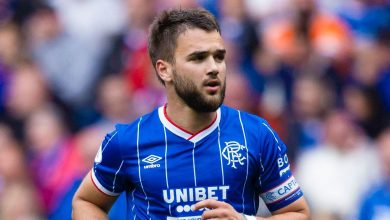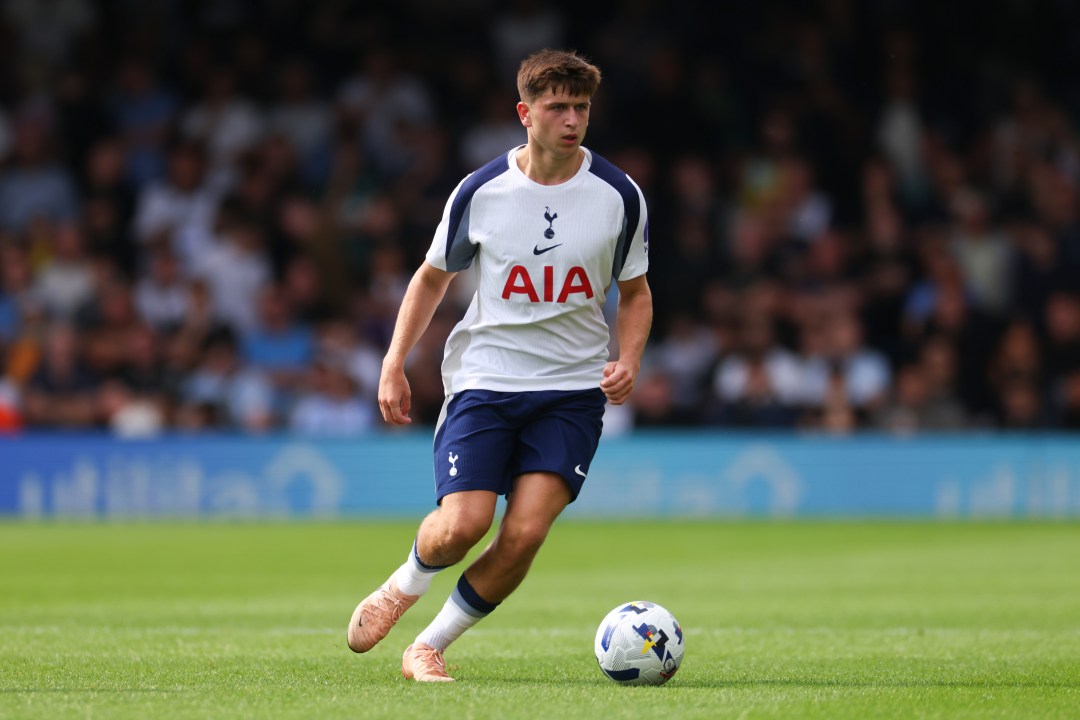
On August 1, 2025, a short Spurs blog item carried a simple headline: Mikey Moore had joined Rangers on loan. The writer was upbeat. At 17, Moore needed regular minutes against adults more than he needed a particular level of competition. A creative, attacking Rangers side would give him those minutes, and the physical demands of Scottish football would harden him.
More than a year on, that item reads like the first page of a longer story. The loan was a success, then an unfinished piece of business, and now the question is whether the next loan has gone wrong. Moore is 19, and decisions that looked simple in the summer of 2025 have become complicated.
The picture then was of a prodigy with a thin senior record. Spurs noted that he had made 21 senior appearances and scored once, a Europa League goal against Elfsborg in January, in a season that ended with the club winning the competition in Bilbao. That goal carried historical weight. It made him England’s youngest scorer in a major European competition, breaking a record held by Jimmy Greaves.
His pedigree was clear. He joined Spurs at seven and helped the Under-17 and Under-18 teams win the Premier League Cup double in 2022/23. He made his Under-21 debut at 15, and at 17 years and 77 days he became the club’s youngest league starter since 1993, against Crystal Palace.
Yet the breakthrough had come under a manager who was gone by the time the loan was arranged. Ange Postecoglou was the manager during his breakthrough season, and the new manager, Thomas Frank, approved a loan rather than keeping him in the squad. That is a common pattern with young players. A coaching change reshuffles the pecking order, and a teenager who was a pleasant surprise one season becomes a development project the next.
The move had several things going for it. Rangers were a club of scale, with big crowds, relentless expectation and a style that promised chances for attackers. Moore can play across the front line as a winger or a number ten. Sporting director Kevin Thelwell said there was significant interest from elsewhere, and that Moore had chosen Rangers. That is a useful detail, because it frames the move as a decision by the player, not just something done to him.
Moore himself spoke with obvious feeling. He said he had always loved Rangers as a club and that his family had always loved them too. That emotional bond matters more than it might appear. Loans fail when players feel like visitors. Moore arrived feeling like a supporter who had been given a chance.The structure of the deal was straightforward. It was a season-long loan without a buy option. That protected Spurs’ control over his future and left every decision about what came next with them
Rangers’ season was not a smooth one for anyone. The club began under Russell Martin, and the story of Moore’s year is partly the story of a managerial change. Moore only started coming into his own after Martin was replaced by Danny Rohl, who brought the best out of him.
The numbers show a player who made a real contribution. He made 33 appearances for Rangers across the season and scored seven goals, and finished by winning both the Rangers Young Player of the Year award and the PFA Scotland Young Player of the Year award. For a teenager in his first full season of senior football, that is an impressive return, and the individual honours say something about how he was regarded within Scottish football.
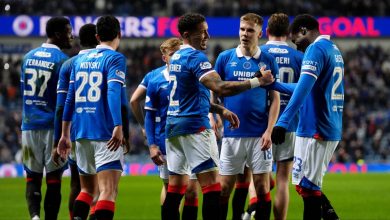
But the collective story was disappointing. Rangers finished the season without a trophy. Moore himself called it a special experience but acknowledged the demands of playing for the club and the expectation to perform consistently under pressure. One local assessment described a spell that showed promise but ended in collective disappointment.
That mix, individual success inside a team that fell short, is a useful way to understand what the loan did for him. He learned what it is like to play for a club where a good performance is not enough if the team loses, and where the crowd’s patience is short. That is valuable preparation for a Premier League career, perhaps more valuable than a trouble-free season at a smaller club.
One detail in the original Spurs blog item has aged well. The writer noted that no new contract had yet been announced, and explained why: age rules limit what a player under 18 can sign. The blog said to expect a deal once he turned 18.
That is what happened. Spurs announced that Moore signed a new long-term contract on his 18th birthday, while still on loan at Rangers. The timing was neat. Spurs secured their asset while he was away and proving himself, and Moore gained security without having to carry the pressure of a first-team squad.
The end of the loan brought the first real question. By May 2026, reports suggested Moore was likely to return to Tottenham, with a permanent move to Ibrox dashed, and that Spurs planned to assess him when he came back. He was expected to be looked at in pre-season by a new manager, Roberto De Zerbi, though he could still leave. The same reporting placed this against a backdrop of Spurs fighting a Premier League relegation battle, which says a good deal about how unsettled the club was.
Moore was frank about the uncertainty. He said his future depended on Tottenham’s new manager. That candour is characteristic of a young player who understands that he does not control his own pathway.
A second loan at Rangers was explored. His agent visited Glasgow to speak with the club’s owner about it. But the situation changed. Talks ended when Rohl left for RB Salzburg. One caution here: another outlet describes the same departure as a sacking. It said Moore’s interest in returning ended with Rohl’s sacking. Reports differ on how Rohl left, but they agree on the effect for Moore. The manager he credited with improving him was gone, and the reason to return went with him.
Moore’s own comments make clear he was not hostile to the idea. He said they spoke throughout the year, and that he misses being at the club. He said he did not speak personally with the new Rangers boss, Derek McInnes. The link to the club remained emotional, but it was tied to a person.
On the last day of August, Moore went to Germany. He joined 1. FC Köln on loan until the end of the 2026-27 season. On paper it was a sensible next step: a new country, a higher level and a different footballing culture.
The first couple of months have been mixed. He has made eight appearances for Köln without scoring. The reaction in Germany has been sharp. German media have been critical of his displays, with some describing the loan as a mess.
There are positives, too. Moore’s England career has moved forward. He played three times for England Under-20s in 2026, scoring twice, and has won an Under-21 cap. One report noted that things were going well at Köln after his first England Under-21 call-up. That is a more favourable reading: international recognition suggests the coaching staff in England still see a player on an upward path.
Reports on his Köln situaton conflict, and it is worth saying so plainly. One tells of a player struggling to establish himself. Another presents the loan as already paying off. The evidence points to a player who has had difficult moments and is still settling in. Eight appearances without a goal is a small sample, and wingers regularly go through spells like this when they change country.
The latest twist concerns January. TEAMtalk claimed Spurs would consider ending the loan then because he has struggled to establish himself at Köln, with a Rangers return being assessed. That report also said Rangers were not actively pursuing him.
On the day I’m writing, another outlet pushed back. Sources close to the player said he will not cut short the Köln loan in January and will see out the season in Germany. It added that his family visits often and that he has settled into an apartment. Köln’s head coach, René Wagner, has said he is desperate to see Moore catch fire.
These competing accounts are typical of transfer-window speculation, and I would not treat either as settled. The more reliable signal is that the people closest to the situation say the intention is to continue. A mid-season termination would be unusual for a player of his age and profile, and would probably need the consent of all three parties. For now, “will stay in Germany” is the better-supported reading, with the usual caveat that January can change things.
Looking back from today, the August 2025 blog item identified the right logic and a little less of the full picture. It argued that regular minutes against adults would help, and the evidence supports that: Moore played 33 times and earned two individual awards. It anticipated a physical education, and Scottish football provided one.
What it could not anticipate was the importance of the manager. Moore’s year improved sharply under Rohl, and the effect of Rohl’s departure has shaped everything since. The lesson for the club’s loan strategy is that a loan is not just a place but a relationship with a coach. Moore thrived where a manager trusted him and valued his skills. That may matter more to his development than league level, wages or prestige.
The second lesson concerns emotional fit. Moore arrived at Rangers as a fan, which gave him a motivation that carries a player through bad weeks. Köln, however sensible on paper, offers no such bond, and he is learning to adapt to a language, a city and a style at once. It is easy to underestimate how much of a young winger’s performance is psychological confidence.
Behind all of this sits an unresolved question about Tottenham’s plans. Moore signed a long-term contract, which is a statement of belief. But the club has been through managerial change, a difficult league season, and a shifting strategic picture. The reported plan after the Rangers loan was to assess him in pre-season under the new coach. The result of that assessment was another loan, which suggests the club still sees him as a player to develop rather than one ready for the first team.
That is not a criticism. At 19, most players are not ready to nail down a Premier League starting place, particularly at a club that is trying to stabilise itself. But it does raise the question of what the plan is. Is Köln a stepping stone to the Spurs squad next summer? Is it a showcase for a permanent move? Or is it a holding pattern? Reports do not make that clear, and it would be wrong to guess.
The most sensible approach for the club is probably to judge the Köln year against clear criteria: playing time, role, tactical development, and how he handles criticism. The reports about a “mess” and about struggles are early signals, not a verdict.
For Moore, success over the rest of this season is modest and concrete. It means getting regular minutes, improving his end product, and showing the adaptability that Rangers saw. A goal or two would help his confidence, but consistent involvement matters more.
It also means resisting the narrative trap. Young players who have a standout year are often judged by that standard, and a more difficult season seems like regression. In reality it is common for a player to have an excellent first loan, then a harder second one, as opponents learn his habits and the novelty fades. If he improves and adapts, a difficult stretch in Germany could be as useful as a smooth one.
Finally, it means the England pathway. His first Under-21 call-up this month matters because it shows that people outside Köln still rate him. A good run for England’s age groups can offset a slow start at club level and keep his profile hig
There is a human dimension that statistics do not capture. Moore says he still dreams of returning to Rangers one day to help them win a trophy. That is a heartfelt statement, and it suggests his time at Ibrox meant something to him beyond a good season.
But the practical reality is that the door looks mostly closed for now. The manager he thrived under is gone, the club is under new leadership, and reports say it is not actively pursuing him. A romantic return is possible in the long run, but not obviously in January.
The August 2025 headline said “Good luck, Mikey,” and the luck has been mixed. The Rangers year delivered what a loan should: minutes, goals, awards and growth. Spurs secured his future with a long-term contract. His international career is advancing. The rest is uncertain: a manager he trusted has left, a promising second Rangers chapter fell through, and Cologne has so far been harder than hoped.
The fair way to read this is as a career in progress, not a story with a verdict. Moore is 19 and has already played in a Europa League-winning squad, won a national young player award and earned an England Under-21 call-up. A difficult first few months in Germany is a setback, but not a crisis.
The question for the next few months is whether he can turn the experience of Scotland into a platform for Germany, bringing the confidence of a player who knows he can succeed at senior level into an environment that does not yet know him. If he does, the Cologne loan may be remembered as the harder year that made him. If not, the club and the player will need a more careful conversation about the next step.
Either way, the original instinct holds: for a young attacker, regular minutes, a manager who believes in you and a place that feels like home are worth more than a prestigious badge. Moore found all three at Rangers. Finding them again is the task now