Away Fans Banned for Every Celtic v Rangers Match This Season — How It Happened and What Comes Next

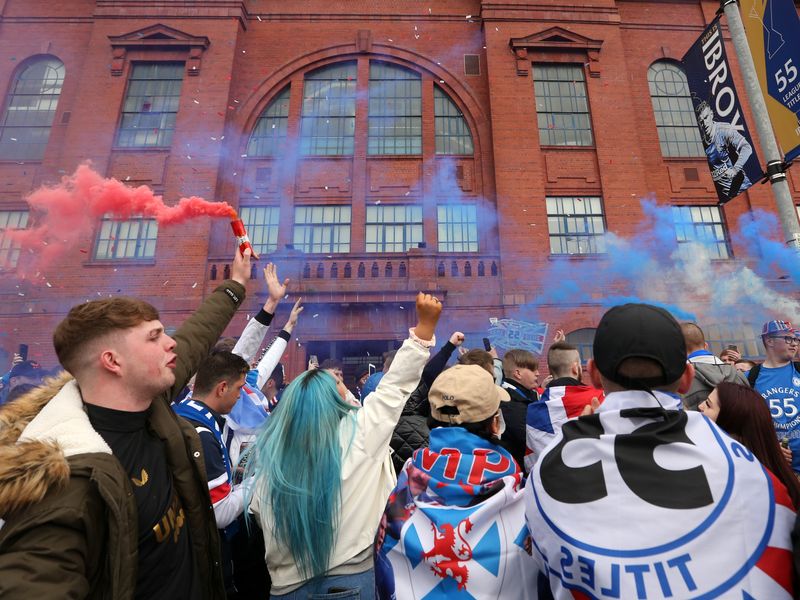
For the first time in three years, Scottish football’s biggest and most combustible fixture is heading into a season with no travelling supporters permitted at all, in any competition run by the SPFL. Celtic and Rangers have been told, in no uncertain terms, that away fans will not be welcome at Ibrox or Celtic Park for any league or League Cup meeting between the two clubs for the remainder of the 2026/27 campaign. It’s a decision with real consequences for two of the biggest away days in British football, and it’s the culmination of months of deteriorating relations between the clubs, capped by scenes of disorder that neither side can pretend were anything other than deeply damaging to the game’
The SPFL confirmed the decision in a statement issued this week, explaining that “after further discussions involving both clubs and the SPFL, agreement has been reached that there will be no away supporters for matches involving Rangers and Celtic in SPFL competitions for the remainder of the 2026/27 season.” The wording is carefully diplomatic, presenting the outcome as a jointly reached agreement rather than an imposition, but the reality of how the situation unfolded tells a slightly different story — one of two clubs unable to agree on ticketing terms, forcing the governing body to step in and make the call itself.
The timing could hardly be sharper. Rangers host Celtic in the Premier Sports Cup quarter-final on 13 September, before the sides meet again just a week later at Celtic Park in the William Hill Premiership on 20 September. Both of those fixtures, along with every other Old Firm league and League Cup tie for the rest of the season, will now be played in front of a stadium of exclusively home supporters. The one caveat is that the ruling doesn’t extend to the Scottish Cup, which falls under the jurisdiction of the Scottish FA rather than the SPFL, meaning a very different arrangement could technically apply if the two clubs are drawn together in that competition later in the campaign
The immediate trigger for the SPFL’s intervention was a straightforward disagreement over numbers. When the two clubs sat down to discuss ticket allocations ahead of the September fixtures, Rangers proposed handing Celtic just 300 tickets for the visit to Ibrox — a dramatic cut from the customary allocation of around 2,500 that away fans have typically received for Old Firm derbies in recent seasons. Celtic rejected that offer outright, declining to accept such a reduced allocation, and with neither side willing to move from their position, the matter was referred to the SPFL for a binding determination.
The governing body’s response was blunt: rather than trying to broker a compromise number somewhere between the two positions, it simply ruled that no away fans would be permitted at all, for any SPFL fixture between the clubs, for the rest of the season. The SPFL was explicit that this is intended as a temporary measure rather than a permanent change to how Old Firm fixtures are policed and ticketed, framing it as a chance for “both clubs, together with the SPFL, Police Scotland and other relevant stakeholders, to give proper consideration to the findings and recommendations of the Independent Review, take forward the necessary actions and ensure sufficient time is available to plan future fixtures thoroughly.” The statement also pointed to a secondary benefit — removing the recurring uncertainty around ticketing that has hung over Old Firm fixtures for years, giving supporters, stewards and police forces clarity well in advance rather than the last-minute scrambling that has characterised recent meetings.
None of this happened in a vacuum. The immediate catalyst tracing back through the chain of events is the scenes that marred the Scottish Cup quarter-final between Rangers and Celtic at Ibrox on 8 March, a fixture that ended in ugly scenes of fans clashing on the pitch after Celtic’s dramatic penalty shoot-out win. The match itself had been a fraught, error-strewn affair — Rangers finished the 120 minutes without registering a single shot on target despite piling forward with 24 attempts on goal in total, and had a goal ruled out by VAR for handball in extra time, before James Tavernier’s penalty miss and Djeidi Gassama’s effort blazed over the bar in the shoot-out sealed Celtic’s progress to the semi-finals. It was the kind of result that leaves a home support raw and frustrated, and in the chaotic aftermath, supporters from both sides ended up clashing on the pitch, with police required to intervene and restore order before the situation could be brought under control.
That night at Ibrox wasn’t an isolated flashpoint so much as the latest and most serious entry in a pattern of trouble that has repeatedly followed Old Firm fixtures for years. Away fans were banned from Celtic-Rangers derbies back in 2023 following previous incidents of hooliganism, before a phased return was permitted the following year on a reduced-capacity basis. The March quarter-final was, in effect, being treated as a test case for whether larger numbers of travelling fans could safely return to these fixtures — and the disorder that unfolded put an abrupt end to that experiment. Separately, the two clubs are also understood to be facing behind-closed-doors sanctions for their upcoming home Scottish Cup fixtures as an additional, distinct punishment tied to the March incident, underlining how seriously the governing bodies are treating what happened
In the aftermath of the pitch invasion, the Scottish FA commissioned an independent review into the events surrounding that Scottish Cup quarter-final, examining not just the disorder itself but the broader circumstances — policing arrangements, stewarding, ticketing decisions and matchday planning — that allowed things to escalate the way they did. The review, compiled by Mark Blackbourne, was published earlier this summer, and its findings and recommendations have effectively been driving the conversation between the clubs, the SPFL and Police Scotland ever since.
It’s worth noting the coincidence of timing that followed the review’s publication: shortly afterwards, Rangers and Celtic were drawn against each other in the Premier Sports Cup quarter-final, immediately putting the recommendations of the review to the test far sooner than anyone might have anticipated. Rather than resolving the ticketing question quietly in the background over the course of the summer, the clubs found themselves negotiating under real time pressure, with a concrete fixture date bearing down on them. That context helps explain why talks broke down as quickly and as completely as they did — there simply wasn’t the runway to work through a more nuanced compromise before the first ball needed to be kicked
Rangers’ rationale for slashing the allocation to 300 tickets, rather than sticking closer to the historical norm of 2,500, appears rooted directly in the safety concerns raised by the March disorder and by the broader findings of the independent review. It’s a pattern that has precedent: Rangers have, in the past, taken unilateral action to restrict or cancel away allocations when they’ve received specific intelligence about risk. During an earlier Old Firm derby, Rangers cancelled Celtic’s entire away allocation just 24 hours before kickoff after receiving what they described as credible intelligence that groups of supporters “perceived to pose a security risk” had purchased a significant number of tickets from within Celtic’s allocation. On that occasion, Rangers explained that after Celtic declined to cancel the tickets in question, Rangers felt they had no option but to cancel the whole allocation rather than allow a fixture without adequate policing in place to proceed with those particular individuals inside the ground.
That history illustrates the kind of brinkmanship that has increasingly characterised ticketing negotiations between these two clubs — safety concerns, mutual distrust, and a reluctance from either side to be the one making concessions, all compounding to produce exactly the kind of impasse that has now forced the SPFL to intervene directly rather than leave the clubs to sort it out themselves. It also isn’t the first time a scheduled Old Firm fixture has gone ahead with zero away fans present. Rangers played at Celtic Park in a December fixture in front of no travelling support after a separate ticketing dispute, with Rangers at the time expressing frustration that despite an SPFL sub-committee agreeing that Celtic’s position of offering zero tickets was “unreasonable,” the panel was ultimately unwilling to specify what a reasonable number would actually be, citing insufficient evidence submitted on the question. Celtic, for their part, maintained throughout that their position was rooted in genuine safety concerns arising from matchday issues at both grounds, rather than any wish to simply deny Rangers fans the chance to attend.
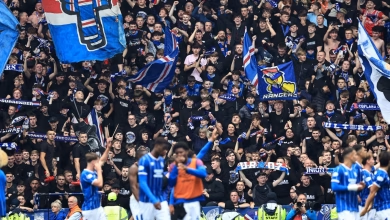
It’s easy, amid statements from governing bodies and quotes from club officials, to lose sight of what an away-fan ban actually means in practical terms for supporters. For thousands of Celtic and Rangers fans on both sides, an Old Firm away day is one of the genuine highlights of the football calendar — a fixture unlike any other in Scottish football, carrying a weight of history, rivalry and occasion that no amount of atmosphere from home fans alone can replicate. Removing travelling support doesn’t just deprive those fans of a ticket; it strips something distinctive out of the occasion itself, turning fixtures that are usually among the loudest and most intense of the season into games played in front of a noticeably different atmosphere, without the visual and vocal presence of the away end adding to the spectacle.
There’s a commercial dimension too. Away allocations at Old Firm fixtures, even at reduced capacity, represent meaningful ticket revenue for the host club, and a season-long ban removes that income stream entirely from four fixtures — two league games plus the League Cup quarter-final already scheduled, with the possibility of further meetings depending on how both sides progress in cup competitions. Neither club is going to be financially crippled by the loss, but it’s not a trivial sum either, and it comes at a time when both clubs are already navigating significant spending in the transfer market, with Rangers in particular having made major outlays this summer on rebuilding their attacking options.
The SPFL has been explicit that the measure is temporary and can be reviewed, which leaves open the possibility that away fans could return to Old Firm fixtures later in the season if the recommendations of the independent review are implemented to the satisfaction of all parties and if relations between the clubs and Police Scotland improve. But there’s no fixed timeline attached to that review process, and past experience suggests these disputes have a habit of dragging on far longer than anyone initially expects — the 2023 ban, after all, took the best part of a year to be partially lifted, and even then only on a reduced-capacity basis that has now been suspended again anyway.
For now, the immediate consequence is straightforward: both of this month’s Old Firm derbies, the Premier Sports Cup quarter-final at Ibrox and the Premiership meeting at Celtic Park, will be played out in stadiums missing one crucial ingredient of the fixture’s usual theatre. Both sets of players will be well used to performing in front of hostile away crowds throughout their careers, and there’s an argument that removing that element could, paradoxically, lead to slightly more controlled, less frenetic occasions on the pitch, without the extra edge that a raucous away end can inject into these games. But for the supporters who have made the trip to Ibrox and Celtic Park for Old Firm derbies for generations, it’s a genuine loss — one more consequence of a rivalry whose intensity, however central it is to the appeal of Scottish football, keeps finding new ways to spill over into problems the game as a whole has to spend its energy cleaning up.
## The Bigger Picture
Ultimately, this decision says as much about the state of governance in Scottish football as it does about the specific dispute between Celtic and Rangers. The fact that two of the country’s biggest clubs could not agree on a reasonable ticket allocation between themselves, and that the matter had to be settled by the SPFL imposing a blanket ban rather than negotiating a workable middle ground, reflects a level of mistrust between the two boardrooms that has been building for years and shows little sign of easing. Add in the recurring safety incidents — the pitch invasion in March being only the latest and most serious — and it becomes harder to see this as a one-off dispute rather than a structural problem that Scottish football’s authorities will need to address more fundamentally if fixtures between the country’s two biggest clubs are ever going to return to something resembling normality.
For McInnes and Rangers, and for whoever is guiding Celtic through this period, the immediate priority will simply be preparing their teams to perform in what will be, for all the missing away support, still two of the highest-stakes fixtures of the entire season. But in the background, the bigger question — of whether Celtic and Rangers can find a way to coexist as ticketing partners without every negotiation collapsing into a standoff resolved only by outside intervention — remains as unresolved as ever, and it’s one that will need answering long before the temporary nature of this latest ban is tested again.