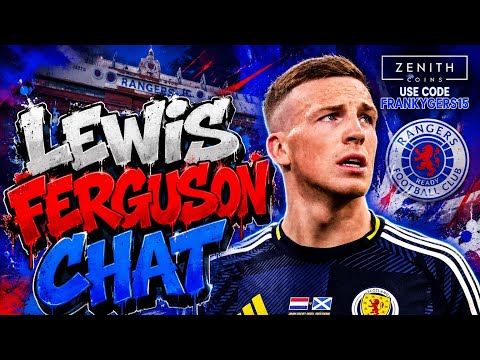
Barry Ferguson has always been one of the more forthright voices in Scottish football media, rarely shy of sharing an opinion on matters concerning the club he captained to a domestic treble and later managed on an interim basis. So it says something about the sensitivity of the subject that, when asked about the summer’s most persistent piece of Rangers transfer speculation, the former Ibrox skipper chose deliberately to step back rather than wade in.
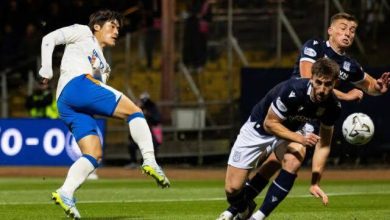
The speculation in question concerns his nephew, Lewis Ferguson, the Bologna captain and Scotland international who has been strongly linked with a move to Ibrox throughout the early weeks of this transfer window. Writing in his regular column for the Daily Record, Barry Ferguson addressed the noise surrounding his family member directly, but only to explain why he intends to stay out of it entirely. “I’m aware that lots of people have been talking this week about my nephew Lewis potentially moving to Rangers,” he wrote. “I also understand that people want to ask me about it, but I won’t be joining the discussion. Why? Because it’s not my business.”
It is a notably measured response from a man who has never struggled to find something to say about Rangers matters in the past, and it reflects both the complexity of the family ties involved and the genuine uncertainty still surrounding whether a deal for his nephew can actually be done this summer.
A family built around Ibrox
The Ferguson name carries a weight at Rangers that few others can match. Barry Ferguson made over 400 appearances for the club across two spells, captaining the side to a domestic treble in his first stint before returning years later to take charge as interim manager during a period of turbulence at Ibrox. His playing career also included spells at Blackburn Rovers and Birmingham City, and he earned 45 caps for Scotland, cementing his status as one of the most accomplished Scottish midfielders of his generation.
Lewis Ferguson’s connection to Rangers runs deeper still than his uncle’s storied history alone. His father, Derek Ferguson, was also a Rangers player, meaning Lewis represents the third generation of his family to be linked with the Ibrox club in some capacity — a lineage that gives the current speculation about his potential arrival an unusually personal dimension, even by the standards of Scottish football’s tightly knit, family-heavy footballing culture.
Despite that, Lewis Ferguson’s own path to prominence was not forged at Rangers. He was released by the club’s youth setup at just 14 years old, a rejection that could easily have ended a promising career before it had properly begun. Instead, he rebuilt his path through Hamilton Academical’s academy, using the West of Scotland club as a platform to relaunch his development and eventually break into senior football. It was there that Derek McInnes first worked closely with him, subsequently signing him for Aberdeen, where Ferguson would go on to establish himself as a genuine first-team regular before completing a move to Italian football with Bologna.
That switch to Serie A has proven to be the making of Ferguson’s career. He has spent four seasons at the Stadio Renato Dall’Ara, developing into one of the club’s most important and reliable performers, and it was under his captaincy that Bologna secured a historic Coppa Italia triumph in 2025, beating AC Milan in the final to end a 51-year wait for major domestic silverware. That achievement made Ferguson only the second Scottish player in history to lift the Coppa Italia, a genuinely significant marker in a career that has taken him from academy release at Ibrox to lifting one of Italian football’s biggest domestic trophies inside little more than a decade.
Barry Ferguson’s careful choice of words
Given all of that history — the family connection, the boyhood release, the eventual rise to prominence via a manager who now happens to be in charge at Rangers — it would have been entirely understandable for Barry Ferguson to express some kind of view on the speculation surrounding his nephew’s future. Instead, he was explicit about wanting to avoid even the appearance of influence.
“Of course I would love, at some stage in his career, for Lewis to pull on a Rangers jersey,” he acknowledged, making clear that his affection for the idea in principle was never really in question. “That’s obvious to anyone, I’ve said it before. But the last thing he needs is me putting my oar in.” He went further still in explaining his reasoning, emphasising his nephew’s independence as a decision-maker: “Lewis is his own man, he’s an intelligent young man and he’ll make the right decisions for his football career.”
That framing is a deliberate one. Rather than lending his voice to a swirl of speculation that has already reached fever pitch in the Scottish and Italian press, Barry Ferguson has chosen to draw a clear boundary between his role as an uncle and pundit, and his nephew’s role as a professional footballer navigating what is likely to be one of the most significant decisions of his career. It is a stance that also, implicitly, acknowledges the seriousness of the situation: with genuine transfer interest from elsewhere in Europe reportedly on the table, this is not a moment for family sentiment to complicate matters further.
The state of play: a Bologna captain considering his options
The broader context behind Barry Ferguson’s caution becomes clearer when the actual state of the transfer situation is examined. According to reporting from Bologna-based newspaper Il Resto del Carlino, Lewis Ferguson held discussions with the Serie A club’s hierarchy before departing for Scotland’s World Cup campaign this summer, using that meeting to formally request the opportunity to evaluate his options this July. That represents a significant development: rather than simply being the subject of speculation generated by interested clubs, Ferguson himself has taken the initiative in signalling to his employers that he wants the freedom to consider a move.
Bologna, for their part, appear to have accepted the reality of the situation rather than digging in to block any departure outright, but they have set a valuation that reflects both Ferguson’s importance to the club and his rising profile following a prominent World Cup campaign with Scotland. Figures reported across various outlets have varied slightly, with valuations ranging from around €17million (roughly £14.7-15million) up to reports of figures as high as £17.2million being floated as Bologna’s asking price. Whichever figure proves closest to accurate, the message from Bologna is consistent: they are willing to sell, but only for a fee that would represent a significant, potentially club-record outlay for Rangers.
Complicating matters further is the level of competition Rangers face for Ferguson’s signature. Reports have linked fellow Serie A sides Atalanta and AS Roma with serious interest, with Atalanta in particular said to be operating with what has been described as an “astronomical” transfer budget after banking two substantial sales to Premier League clubs earlier in the window. There has also been suggestion of Premier League interest emerging as Ferguson’s World Cup performances continue to raise his profile, adding yet another dimension of competition that Rangers will need to navigate if they are to have any realistic chance of completing a deal.
McInnes’ connection and Rangers’ complicated calculus
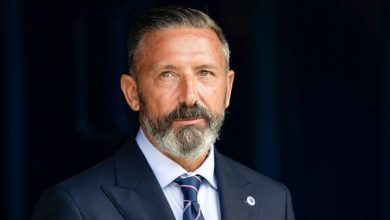
For Rangers and new manager Derek McInnes, the appeal of signing Ferguson extends well beyond the romantic notion of a homecoming for a player with such deep family ties to the club. McInnes worked directly with Ferguson during his time in charge at Aberdeen, giving the midfielder his senior breakthrough and helping shape him into the player who would go on to captain Bologna to major silverware. That existing relationship, allied to Ferguson’s evident openness to a return to Scottish football and reunion with a manager he trusts, gives Rangers a genuine point of leverage that few, if any, of his other suitors can claim to match.
Speaking to Sky Sports about the speculation, McInnes was careful not to be drawn into confirming specific interest in any individual player, though he did not deny the broader picture either. “All I want to do is bring players who have a high level, technical level, and ability to play for Rangers,” he said. “Obviously, there are a number of players that have been linked with us that do possess that, so I think it would be wrong for me to speak about any player individually.” It is a diplomatic non-answer, but one that leaves the door firmly open, consistent with reports elsewhere that Rangers have already made contact over Ferguson’s situation, even if formal negotiations with Bologna have yet to properly begin.
There is, however, a considerable financial hurdle standing between interest and an actual completed transfer. A fee in the region of £15million would not only represent a significant outlay relative to the modest sums Rangers have spent so far this summer on Ross McCrorie, Ben Godfrey and Ivor Pandur, but would likely stand as an outright club-record transfer fee, eclipsing anything previously paid for a single player in the club’s history. Given that Rangers have already committed resources to five incoming signings this window, stretching to a fee of that scale for a sixth would represent a considerable statement of financial intent from Andrew Cavenagh and the 49ers Enterprises ownership group — one that would need to be weighed carefully against other priorities still on McInnes’ recruitment list, including a first-choice right winger capable of accommodating his preferred 4-4-2 system, and further reinforcement at centre-back.
The Raskin factor
Central to how a Ferguson deal might realistically be funded is the ongoing uncertainty surrounding Nicolas Raskin’s future at Ibrox. The Belgian international has been a standout performer during Belgium’s World Cup campaign, and that form has intensified interest from elsewhere in Europe, including, notably, from Bologna themselves. Some reports have gone as far as suggesting that a swap-style arrangement — structured as two separate transfer deals rather than a direct player exchange, but designed to allow both clubs to negotiate terms that suit each party — could see Raskin move to Bologna in a deal that simultaneously eases the financial burden of bringing Ferguson to Ibrox in the opposite direction.
McInnes himself has acknowledged the reality of Raskin’s situation without shutting down the possibility of a departure. Asked directly whether he anticipated continued interest in the midfielder following his World Cup exploits, McInnes responded candidly: “Yes, possibly, but these are things that I don’t know, that you can’t control. The World Cup is a great stage and obviously Nico has done well. There will be natural progression for a lot of players. A lot of players aren’t going to get guaranteed game time here, and they might be better served going elsewhere to find that, but these discussions are ongoing.”
That kind of framing — acknowledging that a key player’s departure could be both likely and, in some sense, a natural consequence of a strong individual tournament — suggests Rangers’ hierarchy may already be preparing contingency plans that see Raskin’s exit fund, at least in part, a marquee incoming signing elsewhere in midfield. Given Ferguson’s proven quality, leadership credentials as a trophy-winning captain, and existing relationship with McInnes, he represents perhaps the most obvious like-for-like replacement profile available to Rangers this summer, even before considering the emotional resonance of his family history at the club.
A summer of statement signings
Whatever the eventual outcome of the Ferguson pursuit, it sits within a broader pattern of activity that has already reshaped Rangers’ squad significantly since McInnes’ arrival. Ross McCrorie, Ben Godfrey, Ivor Pandur, Lawrence Shankland and now Dan Neil have all arrived at Ibrox in the early weeks of this window, with Jack Butland’s departure to Hull City completing a reshuffle at goalkeeper that has run alongside the incoming activity elsewhere on the pitch.
It was Neil’s arrival, in fact, that formed the other major talking point of Barry Ferguson’s column, and his assessment of the free transfer signing was considerably more forthcoming than his careful sidestep on the subject of his nephew. “Rangers appear to have made five good acquisitions so far in this window and Dan is one who I’m delighted to see at Ibrox,” he wrote. “I’ve seen quite a lot of him… he was always one that gave me stood out for me in recent times.” He was equally effusive about the leadership qualities Neil brings to the dressing room, noting: “He was captain at 22 or 23 when Sunderland were trying to get into the Premier League, so that tells you something in terms of leadership.”
That assessment reflects genuine substance behind Neil’s arrival at Ibrox. Signed on a free transfer after his contract at Sunderland expired, the 24-year-old midfielder made over 200 senior appearances for the Wearside club having progressed through their Academy of Light setup, and it was under his captaincy that Sunderland secured promotion to the Premier League via the play-offs in 2025, ending an eight-year absence from the English top flight with a 2-1 win over Sheffield United at Wembley. Neil wore the armband throughout that promotion campaign before spending the second half of last season on loan at Ipswich Town, where he contributed to a second successive promotion, this time back to the Premier League itself. His arrival at Ibrox came at the expense of Southampton, who had also been in advanced talks over his signature before Rangers moved decisively to complete the deal.
For a player who captained a promotion-winning side while still only in his early twenties, Neil represents precisely the kind of experienced, battle-tested character McInnes has repeatedly emphasised wanting to bring into his squad this summer — a philosophy that appears consistent across all five of the manager’s incoming signings so far, from Shankland’s proven goalscoring pedigree to McCrorie’s homecoming after developing further afield, to Godfrey’s Premier League experience arriving on loan from Atalanta.
Cautious optimism from a club legend
Barry Ferguson closed out his column with a broader assessment of how Rangers’ summer business has unfolded so far, striking a note of guarded but genuine optimism about the direction the club appears to be heading under its new manager. “Early signs are positive in the market and, hopefully, this is the start of something where the foundations are put in place successfully, and Rangers can build from it going forward,” he wrote.
It is a measured statement befitting a figure with as much invested emotionally in Rangers’ fortunes as Barry Ferguson, and one that leaves the door firmly open for further optimism should his nephew’s situation eventually resolve itself in Rangers’ favour. But for now, with Bologna holding out for a substantial fee, competition from wealthier Italian and potentially English suitors still very much in play, and Rangers’ own resources already heavily committed elsewhere this summer, the Lewis Ferguson transfer saga remains exactly that: a saga, still some distance from any kind of resolution, and one that his own uncle has wisely chosen to watch unfold from the sidelines rather than attempt to influence from within.
Whether Lewis Ferguson ultimately ends up walking through the doors at Ibrox this summer, joining a manager he trusts and a club steeped in his own family history, or whether his next chapter takes him to another of Serie A’s leading clubs or into the Premier League itself, the situation stands as one of the more compelling subplots of Rangers’ rapid summer rebuild — a reminder that even the most sentimentally appealing transfer stories in football still ultimately come down to hard-nosed questions of valuation, competition, and financial capacity. As Barry Ferguson himself put it, his nephew is “his own man” who will make the right call for his career. Rangers, for their part, can only hope that call eventually points back toward Govan.