Cammy Devlin Ruled Out For Six Weeks As McInnes Delivers Mixed Team News Ahead Of Kilmarnock

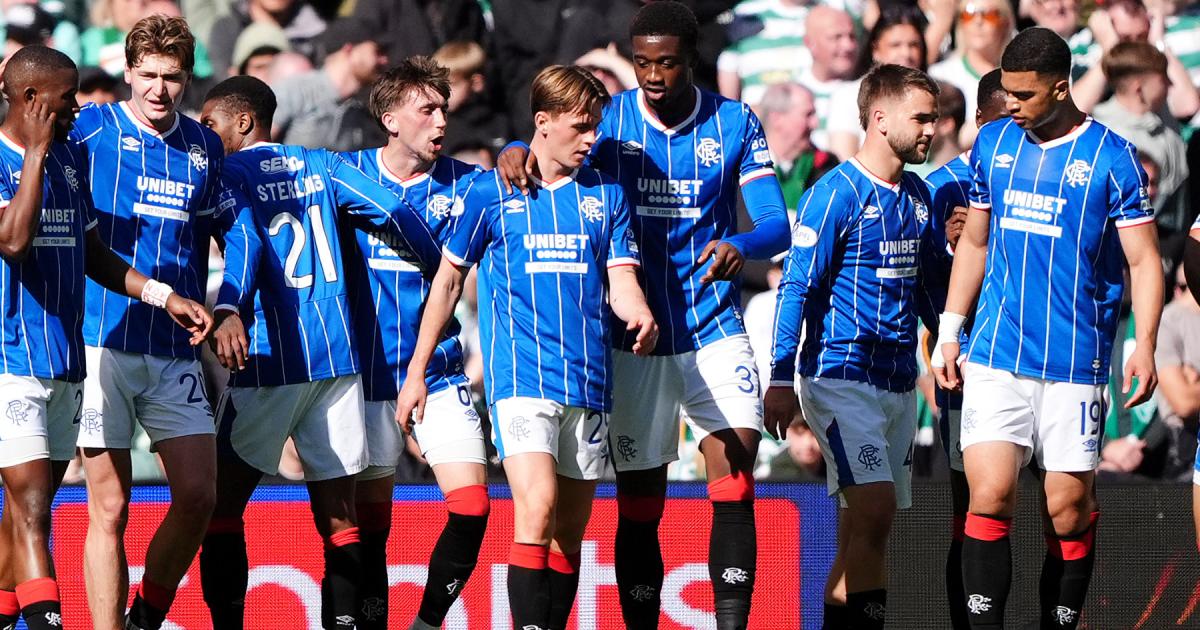
Derek McInnes did not want to spend his Thursday talking about injuries, but the first press conference after a long international break rarely gives a manager much choice. Rangers return to Premiership action on Saturday with the Kilmarnock game at Ibrox, a sixth straight league win already banked before the break and a Manager of the Month award for September sitting on the boss’s desk, and the picture painted in the pre-match briefing was a mixed one. There was good news in that all 13 of his players who travelled away on international duty came back without a scratch. There was good news, too, on Dujon Sterling, who has shaken off a minor hamstring problem and trained as normal. But the headline, and the line that will shape the next six weeks of Rangers’ season, concerned Cammy Devlin. The Australian midfielder is out for at least six weeks with a hamstring injury, and the manager’s frank assessment is that Rangers will have to find a way to keep their momentum going without him.
The detail of Devlin’s setback is worth setting out carefully, because it was not the injury anyone expected to be discussing. The midfielder came on as a late substitute in the 1-0 win over Celtic at Celtic Park on the last weekend before the international break, a result that gave Rangers back-to-back victories over their old rivals and extended the winning run to six games. Somewhere in those closing minutes, he felt his hamstring go. The initial fear was that the damage was serious enough to require surgery, which would have meant a much longer absence and a very different conversation. After a scan and a detailed consultation, the news was slightly better. McInnes explained that the club had thought he needed an operation, but he does not, and that the timescale is at least six weeks. The Scotsman reports that this is likely to take him past the next international break in November, which means the next time Devlin pulls on a Rangers shirt, the first half of the season will probably be nearly over.
It is the sort of injury that is cruel in its timing. Devlin joined Rangers over the summer on a free transfer from Hearts, signing a two-year contract, and the move was widely seen as sensible, low-cost business by a club rebuilding under a new manager. He has played in six league games so far, with four starts, which is a decent return given that the midfield has been one of the most competitive areas of the squad. Reports suggest he had struggled to hold down a regular starting place in recent weeks, and that makes this a difficult moment for him personally. A player who is fighting for his position, who has just come off the bench in the biggest game of the season to date, picks up a hamstring injury in the final minutes and loses two months of football. There is no way to dress that up. For Devlin it is a setback, and for a squad that wants to keep its depth, it is another name on a list the manager would rather not have to keep updating.
The Hearts connection is an interesting thread that runs through the whole story. McInnes spent last season at Tynecastle, where he built a team that played with the kind of intensity and organisation that made it a difficult opponent for anyone. When he arrived at Ibrox, he brought some of that thinking with him, and he also brought some of the players. Lawrence Shankland, the captain, followed him from Hearts, and so did Devlin. That means two of the manager’s most trusted men from his previous job are now both on the treatment table at the same time, one with a long-term hamstring problem following surgery and the other facing a six-week absence. It is a coincidence rather than a pattern, and nobody should read too much into it. But for a manager who values continuity and familiarity, losing players he knows well, in a squad where he is still building new relationships, is a bit more than just a personnel problem.
The good news, and there was some, centred on how the rest of the squad came through the break. McInnes confirmed that all 13 of his players who were away on international duty have returned injury-free, which is no small thing given the length and the intensity of the fixtures they have just played. The manager admitted that he had been nervous about it. In his words, the break had been too long, and he was clear that it had been unusually long, with this being the first time the new schedule had been implemented. He described the situation of players travelling across the world to work with different federations and different staff for nearly three weeks, playing four games, and then returning to his care. For a coach who works hard on detail and systems, it is a worry that the work done in the first part of the season could be disrupted by a stretch in which he had almost no control. The fact that every one of those players has come back fit is a relief, and it is a good sign for the Kilmarnock game.
The decision to criticise the length of the break was a pointed one, and it is a fair reflection of how frustrated managers across Scotland and Europe have become with the format. The international calendar was reshaped this season, with four Nations League matches bunched into a window in September and October, and the effect on club football has been significant. For Rangers, the break arrived at the worst possible moment, in the middle of a run in which they had won six games in a row. McInnes had spent the early weeks of his tenure fighting for momentum, fixing a squad that had struggled in European qualifiers and was still adapting to his methods. A win at Celtic Park was the kind of result that can transform a season, and to have it followed by a nearly three-week pause felt like having a good run interrupted by a referee. His comments about it were not an excuse, because the clubs all face the same schedule. They were an honest explanation of how he feels about the way the game is being run.
There was also good news on Sterling, who had been a concern ahead of the break. The defender picked up a minor hamstring strain and the manager confirmed that he has since recovered and trained, with the break having done him some good. That matters because Sterling has been one of the more versatile members of the squad, comfortable in a number of positions, and with Football Insider claiming that Premier League clubs have been monitoring him, he is clearly a player whose form is being watched closely. Having him available for Kilmarnock gives McInnes a bit more flexibility, particularly in defence, where the injury list has been long enough to make every available body valuable. It also means the manager does not have to worry about a second hamstring problem at a time when the club has already dealt with two long-term issues in attack.
The attacking injuries are the context that makes the Devlin news feel heavier than it might otherwise. Rangers have been without Lawrence Shankland since early September, when the captain suffered a 2c tear in a match against Motherwell and subsequently had surgery. Youssef Chermiti is out for the long term after a serious knee injury, which was the reason the club paid around £9 million for Kevin Kelsy on deadline day. That leaves the forward line leaning heavily on Kelsy, Ryan Naderi and Bojan Miovski, and it means the midfield has to take more responsibility for creating and scoring. Devlin was never going to be the main scorer, but his energy and his ability to break up play in the middle of the park gave McInnes the freedom to push others forward. Losing him, on top of everything else, tightens the squad at exactly the point at which the manager would like to be rotating and keeping players fresh.
There is some reassurance in the depth of the options available, even if the manager would prefer not to rely on it. Rangers’ summer business brought in a number of midfielders, including Dan Neil and Ross McCrorie, alongside Nicolas Raskin, who has been at the heart of the team’s improvement. Those players now carry more of the load, and they will be expected to cope with a busier schedule as the autumn fixtures build up. Raskin in particular is the type of midfielder who can dictate the tempo, and with Aston Villa among those who admired him in the summer, he has the profile of a player who can step up when needed. The question is whether the gaps behind him can be filled. A midfield that is functioning well is one of the main reasons Rangers have won six in a row, and anything that disrupts it needs to be managed carefully.
The Kilmarnock game itself is an interesting test in this context. The visitors are managed by Neil McCann, a man who knows Ibrox as well as anyone from his days as a player and pundit, and who will be hoping to take something from a team that has been in outstanding form. Kilmarnock have a recent history of being awkward opponents for Rangers, and some of that tradition was built by McInnes himself. He managed the Ayrshire club from January 2022, took them back into Europe with an attacking blueprint built around two wingers and two strikers, and won at Rugby Park against both Celtic and Rangers along the way. Now he faces them from the other side, with a squad whose depth is being tested, and the memory of those afternoons will not be far from his mind. He knows exactly how difficult it can be to beat a Kilmarnock side that is organised, determined and happy to make the game ugly.
That is why the manager’s comments about nervousness are so revealing. McInnes has spent a career building teams that rely on structure, fitness and attention to detail, and the international break took away the control he likes to have. He will have used the days since his players returned to rebuild the rhythm and to remind them of the standards that produced a six-match winning streak. But he cannot fully replace three weeks of training sessions in four days. For the Kilmarnock game, he will want to ensure the players who have been away are properly integrated into the team and that nobody is rushed. It is one of the reasons the news that everyone returned fit is so valuable. It means he can make decisions based on form and tactics rather than on whether a player is physically able to start.
For supporters, the realistic message is that Rangers have enough quality to cope. Losing Devlin for six weeks is a blow, but it is not a crisis, and the squad has already shown a willingness to adapt. A team that can beat Celtic twice in a month, and win six consecutive games under a new manager, is a team that believes in what it is doing. The manager has been honest about the challenges, and he has not tried to pretend the injury is more or less serious than it is. That frankness is part of why the group seems to trust him, and it will be tested again in the coming weeks as the fixtures come thick and fast. If the results continue to go well, the Devlin absence will be a footnote. If they do not, it will become part of a larger conversation about squad depth.
It is also worth considering what the next six weeks look like for Devlin himself. A hamstring injury that does not require surgery is, in the grand scheme of things, one of the more manageable problems a footballer can face, but six weeks is a long time at the start of a season. He will need to work carefully with the medical staff, rebuild his strength and then regain match fitness, and the timeline of at least six weeks is a minimum rather than a guarantee. McInnes said that once that period is over, the club will see where they are, which is a sensible way of avoiding promises. There is no need for anyone to rush the process, and the club will want him fully fit when he does return, because a recurrence would be far more damaging than a longer initial absence. The lesson of Shankland’s situation is that hamstrings need patience.
When Devlin does return, the landscape might look rather different. By mid-November, Rangers will have played a significant chunk of their league fixtures, and the table will have taken shape. Shankland may be edging closer to a return to training, the squad will have settled into a pattern, and the January transfer window will be just around the corner. Devlin’s performances after he comes back will determine whether he becomes a regular or remains a squad player. A midfielder who has had two spells out injured in a single season risks losing ground to rivals, and he will know that the next opportunity has to be taken. But he is also the type of player who tends to make himself useful, with a work ethic that managers value and a willingness to do the unglamorous jobs that help a team function.
In the meantime, the focus has to be on Saturday. Rangers will go into the Kilmarnock match as favourites, with home advantage, a settled squad and a winning run that gives them a real sense of purpose. McInnes will want a performance that shows the break has not taken the edge off his side, and that the work done in the first half of the season has not been lost. The injury news is a reminder that football is never entirely predictable, but it is also a reminder that Rangers have built a group capable of coping with setbacks. That is what separates teams that sustain a run from those that fade. If the players show the same intensity they did at Celtic Park, the manager’s worries about nervousness and the length of the break may turn out to be a passing concern.
The wider picture is encouraging. A manager who arrived in difficult circumstances, took over a team that had been knocked out of Europe early, rebuilt it with a mix of signings and tactical changes, and then won six in a row, has earned the right to be taken seriously. The loss of Devlin is a bump in the road rather than a roadblock. The test now is whether Rangers can maintain the standards that have brought them to this point, even as the injury list lengthens and the schedule gets tighter. With the international break behind them, the manager can finally get back to the part of the job he enjoys most, which is working with his players every day and preparing them for the next game. Saturday brings Kilmarnock, and with it the first chance to show that the momentum is still ther
Sourcing notes: the Devlin injury details come from the Scotsman and Rangers News (six weeks, no surgery, hamstring picked up as a late sub at Celtic Park), and the break comments and the 13 returning players from the Scotsman and STV. I couldn’t find a complete confirmed injury list for Saturday beyond Devlin and Sterling, so I kept the rest of the squad picture to Shankland and Chermiti, who are already established as out. The Scotsman’s Kilmarnock team-news piece has a “5 out” in its headline, so if you want a fuller list, check it before publishing. Kilmarnock’s current manager, Neil McCann, is per Rangers News, and McInnes’s earlier Kilmarnock record is per Daily Record coverage from 2024.








