He’s Finished: Why Souttar Already Looks Like A Rangers Man Heading For The Tennent’s Sixes

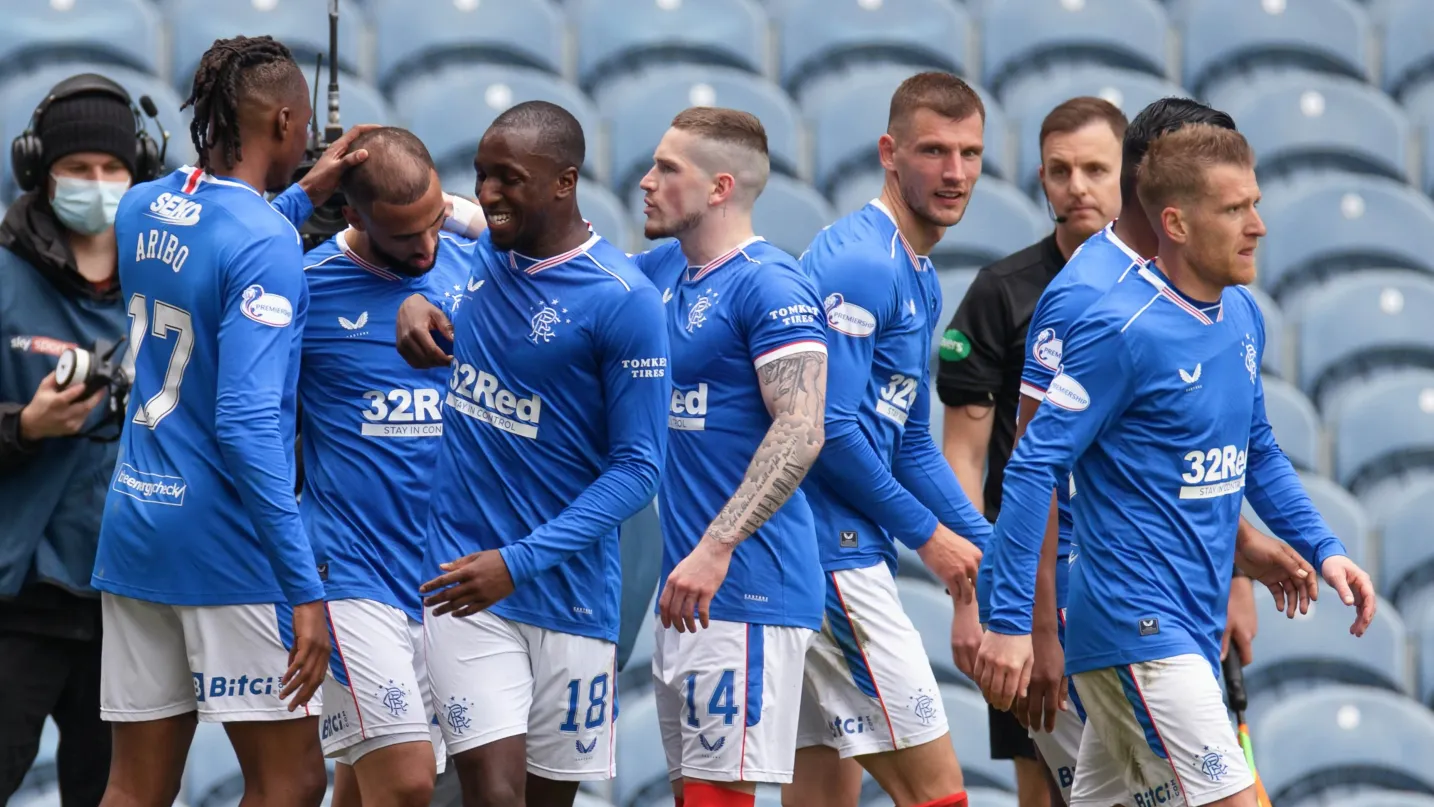
The best thing about the Tennent’s Sixes coming back after 33 years was the sheer silliness of it. Grown men who had once played in front of 50,000 people at Ibrox were suddenly sliding around a temporary pitch at Braehead Arena, pointing at each other, shouting about positioning and getting sin-binned like schoolboys. Barry Ferguson stood on the touchline in a Rangers tracksuit looking as if he had never been away. Charlie Adam still hit passes nobody else on the pitch had seen. Andy Halliday wore the armband and ran like a man who had been told the trophy was in the car park. Rangers beat Celtic 7-1 in the group, tore through Dundee and Hibs, and then lost the final 5-4 after leading, which in a Rangers-Celtic context is the kind of result that gets replayed in pubs until Christmas. It was glorious nonsense. And somewhere in the middle of all that nostalgia, a nastier thought started to creep in. Not about the old boys, who were doing exactly what old boys are supposed to do, but about one of the current Ibrox squad, who is only 30, and who already looks like he belongs on that pitch.
That player is John Souttar. It is not a pleasant thing to write about a Scotland international, a man with 132 Rangers appearances behind him and a career that has had more than its share of cruelty already. But the facts are the facts, and the facts say that Souttar is a centre-half who has not played a minute of competitive football for his club this season, who has not made a single matchday squad, and who has been told, in public, by his own manager, that his long-term future is best served elsewhere. When a defender in his prime is training every day but being left out of every squad, while the club tries to flog him for around £1 million, it is not a rotation issue. It is a verdict. And the verdict, at Ibrox, is that he is finished.
To understand how a player ends up here, it helps to remember how he arrived. Souttar signed a pre-contract agreement in the final months of the 2021-22 season, a free signing from Hearts, who had watched him become one of the finest ball-playing centre-backs in the country when he was fit. That was always the qualifier, because Souttar’s career has been shaped by his body as much as his ability. He ruptured a ligament in his knee at Hearts, had an ankle operation, and then tore his Achilles in a Scottish Cup tie against Rangers in February 2020, the kind of run of injuries that would break the resolve of most footballers. To come back from that and earn a move to Ibrox said a lot about his character. Rangers fans were told they were getting a Scotland international on a free. They were not told what the medical team already knew, which was that he had a body that had been through the wars.
The early years at Rangers followed the same stop-start pattern. Souttar suffered injury problems in his first season, 2022-23, and did not play for the club again until early March. When he was available, there were flashes of what Hearts supporters had seen, a composed defender who could play out from the back, step into midfield, and read danger before it arrived. But availability was always the issue, and availability is the most important attribute a centre-back can have at a club with Rangers’ ambitions. Over four seasons he has made 132 appearances and scored four goals, a record that looks respectable until you remember how many matches the club has played in that time. Those numbers describe a squad player who was occasionally excellent, not the defensive cornerstone the supporters were promised.
The odd thing is that 2026 looked as if it might be the year he finally put all that behind him. Reports from Rangers News suggest he started the calendar year strongly, strongly enough that the club agreed an extension keeping him at Ibrox until the summer of 2027. That deal, signed at a moment when he looked settled and in form, now looks like one of the more awkward pieces of contract business in recent memory. It tied a player to the club for another season at precisely the moment his place in the team was about to collapse. And it did not come with a World Cup either. When Scotland’s squad travelled in the summer, Souttar was not part of it, an omission that spoke volumes about how his standing had fallen in the months leading up to the tournament.
Then Derek McInnes arrived, and the decline became official. The new manager, with a clear idea of the squad he wanted, made a series of brutal calls in his first few weeks. James Tavernier had already left before he walked through the door, Jack Butland followed, and Souttar was told he would not feature in the plans for 2026-27. Football Insider reported that interest existed from clubs in England, and the club began actively looking at ways to move him on. The context matters too. Rangers had lost Nasser Djiga and Derek Cornelius from the back line, so centre-half was supposed to be a position of real concern. McInnes looked at the options, which included a player with 132 appearances and international experience, and decided he would rather bring in Ben Godfrey and Olwethu Makhanya and partner them with Emmanuel Fernandez. That is not a manager being careless. It is a manager making a clear and deliberate judgement about a footballer.
McInnes was unusually candid about it when he spoke on 8 September. He said the likelihood was that Souttar had been told his long-term future would be best served elsewhere, and that there were still a couple of windows open across Europe in which a move could happen. He added that he thought the defender could still make a contribution, which sounds generous until you notice that it came in the same breath as the news that the club was trying to sell him. McInnes also said that if nothing materialised, the contract would be honoured and Souttar would come back into the group. That is the fine print. Rangers do not intend to terminate his deal, but nor do they intend to build their side around him. In football, that kind of statement is as close as a manager gets to putting a player on the transfer list in neon letters.
The money tells the same story. Rangers News reported that the club would be looking for a fee in the region of £1 million to part ways with him, a figure that would have been laughable a couple of years ago for a Scotland centre-half in his prime. Transfermarkt, for what it is worth as a rough guide, values him at about €1.5 million, which is around £1 million and puts him among the least valuable players in the McInnes squad. That is lower than the €2.5 million the same site gives to Bojan Miovski, a striker who has himself struggled for minutes. A valuation is not gospel, and nobody should build a career obituary on a website’s algorithm, but it does give a sense of how the market sees a 30-year-old defender with a contract that ends in nine months. The English clubs that were reportedly sniffing around in the summer have gone. The options now are a Portuguese side or a Saudi club, which is not exactly where a player goes to extend his career at the top of the European game.
This is where the Sixes come in, and where the joke starts to feel uncomfortably close to the truth. The revived tournament was built around the idea of retired players, men whose best days were behind them, getting one more chance to play in front of a crowd. It is a celebration of what a footballer once was. The notion that a current professional might already belong in that category is, on the face of it, absurd, because Souttar is not retired and is not even old by modern standards. But the Sixes comparison is not really about age. It is about relevance. It asks whether a player is still part of the live story of the club, or whether he has become a reminder of what used to be. By that test, Souttar is closer to the Braehead squad than to the Ibrox matchday group. He trains with the first team, he turns up, and he is paid. But he does not play, he does not feature, and the supporters have largely stopped thinking about him.
It would be easy to dismiss all of this as cruelty, and it is worth stopping to deal with the counter-argument properly. Thirty is not old for a centre-back. Defenders routinely play into their mid-thirties, and some of the best performances of their careers come in their thirties, when experience compensates for a lost yard of pace. Souttar is a Scotland international who has played at the highest level in Scottish football, and McInnes himself said he could still make a contribution. There is also a reasonable argument that a manager who leaves a quality defender out of his squad, particularly while the team is dealing with injuries, is taking a risk. A readrangers piece on the situation noted the club’s growing list of absentees and the lack of cover, and asked why a man with 132 appearances was not being used. Those are fair questions, and anyone who wants to argue that Souttar has been harshly treated can point to them.
But I think the counter-argument loses its force when you look at how decisive McInnes has been. A manager under pressure, facing injuries, in need of every available body, who still chooses to leave a fit international out of every squad, is not being sentimental or careless. He is telling you something about what he thinks of the player. McInnes did not hedge or rotate; he set out a position and stuck with it even when the squad got thin. That kind of commitment suggests that the issue is not just numbers but trust, and trust is the one thing a defender cannot afford to lose. A centre-half who does not have the manager’s confidence is a liability, no matter how good his passing is. If the coach does not believe he can handle the demands of the system, the player’s reputation is irrelevant.
The most damaging consequence may be what his situation has done to the rest of the squad’s planning. One report suggested that Souttar’s unwillingness or inability to agree terms on an exit cost Rangers a transfer target, with Casper Widell’s name floated as a possible January arrival. Souttar remains on the wage bill, and his salary reflects his previous status in the squad, which means it has to be dealt with before a replacement can be brought in. That is a frustrating position for a club trying to refresh its defence, and it goes some way to explaining why the board and the manager are so keen to get the deal done. Whether or not the player has done anything wrong, the practical effect of his situation is that he has become an obstacle. Fair or unfair, that is a very hard label to shake off at a club like Rangers.
There is also the question of what the defence looks like without him, and the answer is that it looks perfectly healthy. Fernandez has been steady, Godfrey arrived with a Premier League pedigree, and Makhanya has made such a strong impression in a short time that Premier League scouts are reportedly watching him. That is a lot of competition for a player who is already behind in the pecking order. For Souttar to get back into the team, he would need an injury to one of the first-choice pairing and a performance good enough to convince the manager he has made a mistake. Both are possible, but neither is likely, and in football, likelihood is what counts. It is not enough to hope. A player in his position needs to force his way into contention, and he cannot do that from the stands.
None of this is to deny what Souttar gave the club at his best. There were afternoons when he looked like exactly the sort of defender Rangers needed, calm in possession, brave in the air and intelligent enough to know when to step up and when to drop. He battled back from injuries that would have ended other careers, and there is a toughness in that which deserves respect. He also did what most players cannot, which was to play at the top level for club and country for a decade despite an injury record that should have made it impossible. If the story of his time at Ibrox ends with a fee of around £1 million and a quiet exit through the side door, it will say more about how fast football moves than about his ability. But it will also say something about the cost of being unavailable, because supporters and managers remember that more than they remember the good days.
What happens next is fairly predictable. Football Insider reports that Souttar will leave in January because he has no chance of becoming a regular under McInnes, and a club in Greece, Portugal or Saudi Arabia may well be waiting. Aris were reportedly doing everything to sign him before the deadline, which suggests there is a market, even if it is not the one he would have wanted a year ago. Rangers will probably take the money, such as it is, and move on. Souttar will get regular football, which is what he needs, and the club will get a lighter wage bill and a clearer squad. It is not a tragedy. It is a transaction. But it is also the end of a chapter that began with real excitement and ended with a player waiting for a phone call.
The Sixes will be back next year, and Barry Ferguson has already said he wants to go again. By then, Souttar will be 31 and probably playing somewhere warmer or somewhere quieter. If he is lucky, he will have recovered his rhythm, rebuilt his reputation and earned another few seasons at a decent level. If he is not, he may find that his name is on the list of players the supporters remember fondly but without much urgency. That is a hard fate for a talented defender, and it is one nobody should wish on him. But as a verdict on his time at Rangers, the point stands. He is finished at Ibrox, not because of age, and not because of talent, but because the club has moved on and he has not been given a reason to stay. The Sixes are a celebration of men who gave their best years to the shirt. For now, he is still in the building. In every way that counts, he has already left it
Notes before you publish. First, I went with John Souttar because he is the only Rangers player in the Sixes-themed FootballFanCast series, and his situation matches your headline, but I couldn’t open that article (the site blocks automated access) or confirm your headline is about him. If it’s someone else, tell me and I’ll rewrite. Second, the factual spine comes from BBC Sport (McInnes’s 8 September comments), Football Insider (January exit, no competitive matchday squad), and Rangers News (the £1m fee and the 2027 extension). The Transfermarkt figures and the Aris interest are as reported in those pieces, and the claim that his situation cost Rangers a target comes from one outlet’s opinion, so I framed it as a report. The “finished” verdict is opinion, argued from the facts above, and I included the counter-argument so the piece reads as fair comment. Finally, sources give his age as both 29 and 30 depending on date, and he turned 30 on 25 September.









