Daniel Farke banned and fined by FA for red card against Man City as Leeds boss claims referee ’embarrassed me in front of the whole world’

A storm of controversy has erupted in the Premier League after Daniel Farke received a suspension and financial punishment from The Football Association following a heated incident during Leeds United’s clash with Manchester City. The decision has sparked debate among fans and pundits across the football world, especially after the Leeds manager publicly claimed that the referee’s actions “embarrassed him in front of the whole world.”
The dramatic moment came after a tense Premier League encounter between Leeds United and Manchester City at the historic Elland Road stadium. The match itself was a tightly contested battle where Leeds fought bravely against one of the strongest teams in English football. Despite their determined effort, the home side suffered a narrow 1–0 defeat after a late goal that ultimately decided the outcome of the match.
The winning strike came from Antoine Semenyo, who found the back of the net during first-half stoppage time. That single moment of quality proved enough to hand Manchester City all three points, leaving Leeds players and fans disappointed after what had otherwise been a disciplined and resilient performance.
However, the biggest talking point of the evening did not come from the goal itself. Instead, the spotlight shifted dramatically after the final whistle when Leeds manager Daniel Farke approached the match referee Peter Bankes. What began as a simple attempt to ask a question quickly turned into a major controversy that would lead to disciplinary action.
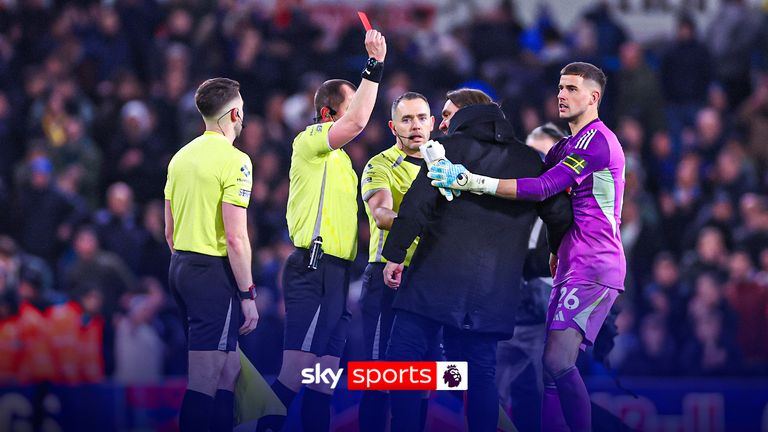
According to official reports, Farke ran onto the pitch shortly after the game ended to speak with the referee about the amount of stoppage time that had been added. The German coach believed additional time should have been played and wanted an explanation. However, before any proper conversation could take place, referee Peter Bankes immediately produced a red card and dismissed the Leeds manager.
The moment shocked many people inside the stadium. It was particularly surprising because it marked the very first time in Daniel Farke’s professional coaching career that he had ever been shown a red card. For a manager known for his calm and thoughtful personality on the touchline, the incident felt unusual and dramatic.
Following the match, the situation escalated further when The Football Association officially charged Farke with misconduct under the laws governing behavior toward match officials. The charge related to a breach of rules concerning how managers interact with referees, especially when entering the field of play after the final whistle.
Rather than contest the accusation, Farke quickly accepted the charge. As a result, the disciplinary process moved forward rapidly. The FA confirmed that the Leeds manager would receive a one-match touchline suspension along with a financial penalty of £8,000.
Although the punishment itself was relatively moderate compared to other cases, the controversy surrounding the incident continued to grow because of Farke’s emotional response afterward. The Leeds boss openly expressed frustration with the referee’s decision, insisting that his behavior had been misunderstood.
Speaking after the game, Farke explained that his intention was simply to ask a question about the stoppage time decision. According to him, there was no aggression, no insults, and no inappropriate language during the encounter.
He described the moment in detail, saying he jogged toward the referee only to seek clarification. In his view, the official reacted far too quickly by producing the red card without first allowing a conversation to take place.
Farke insisted that he did not shout, swear, or show any disrespect during the interaction. Instead, he claimed he calmly approached the referee hoping for a brief explanation about why additional minutes had not been added at the end of the match.
However, before he could even finish his question, the red card appeared. The suddenness of the decision left the Leeds manager stunned, and he later admitted that he felt humiliated by how the situation unfolded in front of the players, fans, and television audience watching around the world.
In one of his strongest comments, Farke suggested the referee’s decision had embarrassed him publicly. He explained that the moment felt extremely harsh, especially considering he believed he had done nothing wrong.
He also revealed that even some of the assistant referees appeared surprised when the red card was shown. According to Farke, the reaction from other officials suggested that the situation may have been misunderstood or exaggerated in the heat of the moment.
Despite his frustration, the Leeds manager made it clear that he still respects referees and the difficult job they perform every week. Managing matches at the highest level of football involves intense pressure, and referees often have to make quick decisions under challenging circumstances.
Farke acknowledged this reality and said he does not believe the referee intentionally tried to create a problem. Instead, he suggested the incident may simply have been a misjudgment made during an emotional moment at the end of a tense match.
The German coach even attempted to lighten the mood with a touch of humor. Reflecting on how the situation started when he jogged toward the referee, he joked that perhaps the lesson he learned was never to jog toward an official again.
Still, the disciplinary action from the FA highlights how seriously football authorities take interactions between managers and referees. Entering the field of play to challenge an official is considered a breach of professional conduct, even if the conversation itself remains calm.
The governing body has consistently tried to protect referees from pressure and confrontation, especially in an era when decisions are already heavily scrutinized by fans, media, and technology such as VAR.
By enforcing strict rules, the FA hopes to maintain respect for match officials and ensure that managers express concerns through the proper channels rather than during heated moments on the pitch.
For Leeds United, the punishment means their manager will temporarily be absent from the technical area during an important upcoming match. The suspension applies to their next fixture, which happens to be a special occasion for Farke.
Leeds are scheduled to face Norwich City in the fifth round of the FA Cup. The game carries extra emotional significance because Norwich City is a club where Farke previously enjoyed great success earlier in his managerial career.
During his time at Norwich, Farke guided the team to promotion to the Premier League and built a strong connection with the supporters. Returning to face his former club would normally have been a meaningful moment for him on the touchline.
However, due to the suspension, he will have to watch the match from the stands instead of directing his players from the sidelines. While assistant coaches will handle the tactical instructions during the game, the absence of the manager can sometimes influence the atmosphere around the team.
Fortunately for Leeds fans, the ban is only temporary. Farke will be allowed to return to the dugout when Leeds face Crystal Palace in their next Premier League fixture on March 15.
That match will be important as Leeds continue their campaign in the English top flight. The team has experienced mixed results throughout the season, and maintaining consistency will be key if they want to secure a comfortable mid-table finish.
The Premier League is known for its competitiveness, and even small disruptions such as managerial suspensions can affect a team’s rhythm. Leeds will need to remain focused during this period to ensure the controversy does not distract from their objectives.
For Manchester City, the match at Elland Road represented another important step in their season as they continue chasing trophies under the leadership of Pep Guardiola. City have built a reputation as one of the most dominant teams in European football, and every victory keeps them in the hunt for major silverware.
Semenyo’s winning goal demonstrated how even the smallest moments can decide matches at the highest level. Leeds defended strongly for much of the game, but City’s quality eventually proved decisive.
As the season progresses, both teams will aim to move forward from the incident. Leeds will hope the controversy fades quickly so attention can return to football rather than disciplinary matters.
Meanwhile, discussions about refereeing decisions and managerial conduct will likely continue across the Premier League. Moments like this remind everyone how emotionally charged the sport can be, especially when the stakes are high and the margins between victory and defeat are extremely small.
In the end, Daniel Farke’s suspension will only keep him away from the touchline for a short time. But the debate about whether the red card was necessary may linger much longer among fans who witnessed the dramatic events at Elland Road.