Derek McInnes Could Be in the Stand for First Old Firm Game as Rangers Manager

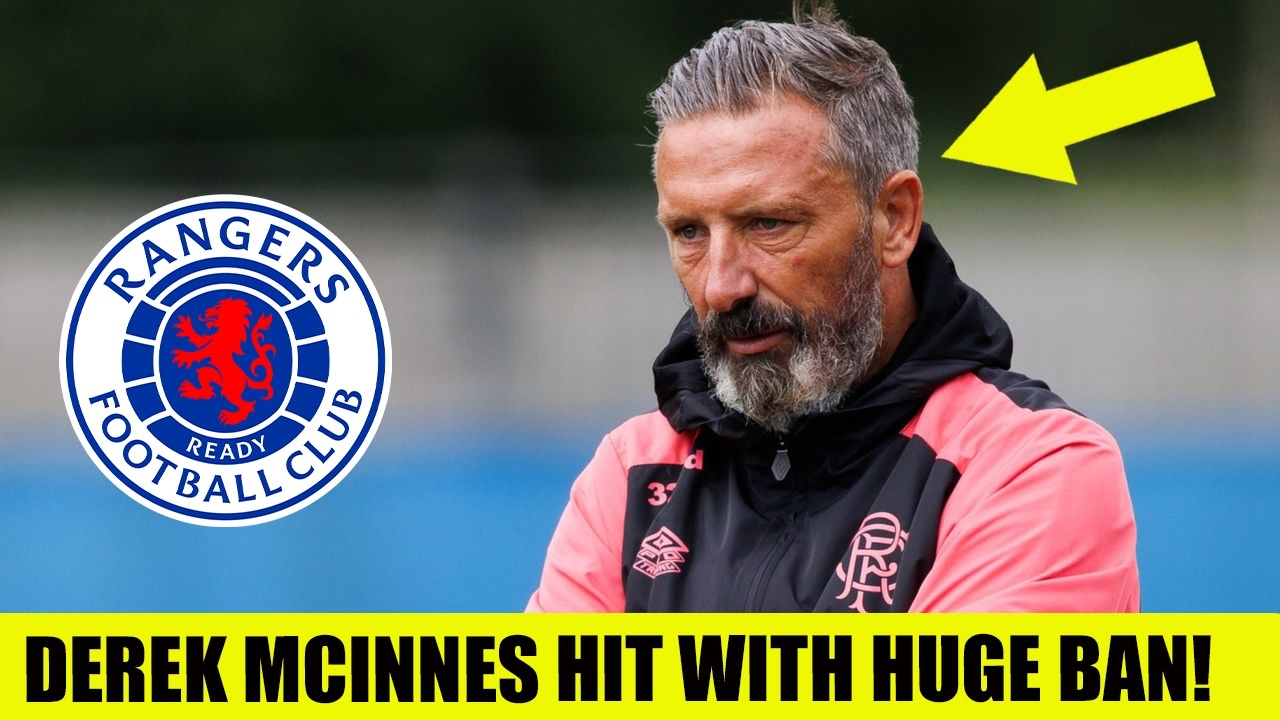
Derek McInnes’ first months in the Ibrox hot seat have already thrown up more than their fair share of drama, but the latest twist has nothing to do with results, team selection, or transfer business. Instead, the Rangers manager finds himself facing the very real possibility of watching his first Old Firm derby in interim charge from the stands rather than the dugout, after the Scottish FA set a hearing date for his appeal against a touchline ban stemming from comments he made while in charge of a different club entirely
To understand how McInnes has ended up facing this predicament so early into his Rangers tenure, it’s necessary to rewind to the closing weeks of last season — long before he had any inkling he’d soon be taking charge at Ibrox. Back then, McInnes was manager of Hearts, locked in a tense title race with Celtic that would ultimately go down to the final day of the campaign.
The moment in question came in the penultimate round of Premiership fixtures, with Celtic away at Motherwell. A stoppage-time penalty, awarded for a contentious handball decision reviewed by VAR, was converted by Kelechi Iheanacho to seal a 3-2 win for the Hoops at Fir Park. That victory kept Celtic within a single point of Hearts heading into the final round of matches — a race Celtic would go on to win outright a few days later on a dramatic final day.
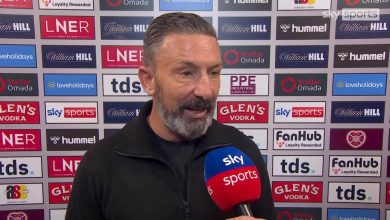
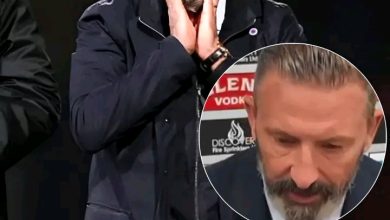
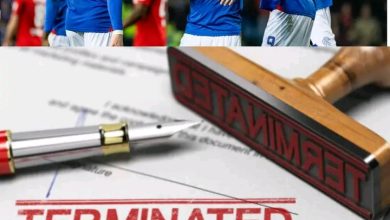
For McInnes, watching a rival’s controversial late spot-kick derail his own side’s title hopes proved too much to let slide diplomatically. He described the VAR decision to award the penalty as “disgusting” in the aftermath, comments pointed enough to draw the attention of the Scottish FA’s disciplinary process. In July, governing body compliance officers ruled that the remarks breached Scottish FA Rule 72, and McInnes was hit with what was originally reported as an immediate three-game ban, later clarified as part of a four-match touchline suspension with one of those four games suspended until the end of the season.
At the time the punishment was issued, it barely registered as a major story beyond Hearts’ own fanbase — a between-season disciplinary footnote for a manager whose immediate coaching future lay in Gorgie, not Govan. Everything changed, of course, the moment McInnes made the surprise switch to Rangers.
Once McInnes arrived at Ibrox, the touchline ban suddenly took on a far greater significance. Rather than simply serving out the suspension quietly at a mid-table Premiership club, McInnes was now facing the prospect of missing some of the biggest fixtures in Scottish football’s calendar in just his opening weeks in interim charge of one of the country’s two biggest clubs.
Rangers moved quickly to contest the punishment on their new manager’s behalf, lodging an appeal with the Scottish FA. The thrust of the club’s argument, according to reporting on the case, was that McInnes’ comments in the immediate aftermath of that Fir Park penalty were directed specifically at the officiating decision itself, rather than amounting to any broader or more sustained criticism of match officials as a group — a distinction that can matter significantly in how governing bodies assess the severity of individual disciplinary breaches.
A hearing date has now been confirmed for August 31, giving McInnes and Rangers a chance to present their case in the hope of having the ban overturned entirely, reduced in length, or converted into a fine instead of a touchline suspension. Until that hearing takes place and a verdict is delivered, McInnes’ immediate managerial fixture list remains genuinely uncertain — a strange position for any newly installed manager to find himself in, let alone one already contending with a difficult start to results on the pitch.
Should the appeal fail to overturn the ban outright, the timing could scarcely be worse for McInnes and Rangers. Reports on the situation have laid out precisely which fixtures would be affected if the suspension is upheld in its current form.
McInnes would first be forced to watch from the stands for a midweek Premiership trip to Falkirk, followed by a home league fixture against Motherwell on September 5. Then comes the fixture that would sting supporters most: Rangers’ home meeting with Celtic, scheduled for Sunday, September 13, at a 12pm kick-off — a game that has already been brought forward from its original date after both Glasgow giants advanced to the League Cup quarter-finals, setting up a mouth-watering derby double-header just a week before the sides were already due to meet again in the league.
Under the terms of the ban as they currently stand, McInnes would not be permitted back in the dugout until Rangers’ trip to Celtic Park on September 20 — the second half of that extraordinary week-and-a-bit stretch containing back-to-back Old Firm derbies. In other words, if his appeal doesn’t succeed, McInnes would be forced to sit out the very first Old Firm match of his Rangers reign entirely, only returning to his post in time for the away leg at Celtic’s home ground seven days later.
It’s a genuinely unusual scenario: a manager potentially barred from the touchline for his first taste of the fixture that, more than any other, defines a manager’s tenure at either Ibrox or Parkhead. Old Firm derbies are the games by which Rangers and Celtic managers are ultimately judged, for better or worse, and the idea of McInnes experiencing his first one from a seat in the stand, relaying instructions via phone or assistant rather than prowling the technical area himself, would represent an unwanted quirk of scheduling and disciplinary bureaucracy layered on top of an already challenging start to life at the club.
This latest development lands at a moment when McInnes’ start to life as Rangers manager is already under intense scrutiny. His opening weeks in interim charge have brought a mixed bag of results: a draw away at Dundee United, a home defeat to Hibernian that also cost the club Youssef Chermiti to a serious knee injury, and Europa League qualification elimination at the hands of Polish side Jagiellonia Białystok. A resounding 5-1 win over St Mirren in the League Cup offered some respite, and Rangers followed that up by edging past Jablonec in the first leg of their Conference League play-off — progress that hasn’t come without its own reminders of the work still to be done, given the injury list and disciplinary issues that have accumulated along the way in that competition too.
Rangers themselves have been candid in acknowledging the scale of the rebuilding job at hand, with McInnes stressing after the Jablonec win that there remains plenty of work still to do and describing his squad as very much a work in progress. Set against that backdrop, the prospect of the club’s first defining test of the season — an Old Firm derby, no less — arriving with its own manager potentially absent from the touchline only adds another layer of unpredictability to what was already shaping up to be a pivotal opening stretch of the campaign.
There is also a human dimension to the story that shouldn’t be overlooked. Old Firm week is, by common consent among those who have managed either Glasgow giant, one of the most intense examination periods in British football management. Losing the ability to be present pitch-side — to make in-game adjustments, to influence his players and coaching staff directly in real time, to be seen by supporters standing shoulder to shoulder with his team in the heat of the contest — would represent a significant handicap for any manager walking into his first taste of the fixture, let alone one still trying to establish his authority and identity so early into a new job.
None of this is McInnes’ first exposure to the unique pressures of Rangers versus Celtic, even if it would be his first taste of managing in the fixture from the Ibrox side of the divide. As a player, McInnes turned out for Rangers themselves in the late 1990s, giving him some personal understanding of exactly what the fixture means to the Ibrox support even before he took the reins as manager.
His managerial career, too, has repeatedly brought him into direct contact with both halves of the Old Firm, most notably across a long and largely successful spell in charge of Aberdeen, where matches against Celtic and Rangers were a regular fixture on the calendar throughout his tenure at Pittodrie. During that period, McInnes built a reputation for setting his teams up to compete toe-to-toe with Scotland’s two dominant clubs rather than settling for damage limitation — an approach that won him plenty of admirers even in seasons when results against the Old Firm pair proved difficult to come by.
That history will do little to soften the strangeness of potentially being unable to apply those same lessons and instincts from the touchline when the fixture finally arrives in his new job. Whatever guidance and philosophy McInnes has built up over the years about how to approach these occasions, the coming weeks could test his ability to communicate and implement that guidance from a considerable and uncomfortable remove
Cases like McInnes’ also tend to reignite a broader, recurring conversation in Scottish football about how touchline bans and disciplinary suspensions are handled when a manager switches clubs mid-punishment. It is not unheard of for coaches to carry unresolved disciplinary matters with them into a new job, but rarely does the timing align so awkwardly with a fixture as significant as an Old Firm derby. Governing bodies are generally reluctant to simply wipe the slate clean the moment a manager changes employer, since doing so would risk creating an obvious loophole — clubs facing a ban for their manager might be tempted to engineer a swift departure and re-appointment elsewhere purely to dodge the sanction. At the same time, there is an argument to be made that a comment made in the emotionally charged aftermath of a title-race-defining refereeing decision, at a different club entirely, shouldn’t necessarily follow a manager quite so rigidly into an unrelated new chapter of his career. It’s precisely that tension Rangers will be looking to exploit at the August 31 hearing, hoping the panel agrees that context and proportionality matter as much as the letter of Rule 72 itself.
There is also a question of precedent for how the Scottish FA treats similar cases going forward. Managerial changes mid-season or between seasons aren’t uncommon, and if disciplinary panels prove willing to look favourably on arguments about a comment’s original context and target, that could shape how future cases are argued by clubs finding themselves in comparable positions. For now, though, the specifics of McInnes’ situation remain the immediate priority, with Rangers keen to avoid becoming a cautionary tale for how not to manage a fresh appointment’s outstanding disciplinary baggage.
Reaction among Rangers supporters to the prospect of their new manager missing out on the club’s biggest fixture has been mixed, as might be expected. Some see it as an unfortunate but ultimately minor administrative headache that will resolve itself one way or another without materially affecting results on the pitch, pointing out that plenty of managers have successfully directed teams to derby wins from restricted vantage points before, whether through injury, illness, or previous disciplinary matters of their own. Others view it as an unwelcome distraction at precisely the moment McInnes should be devoting his full attention to steadying a side that has shown only patchy form since his arrival, rather than fighting a legal battle over comments made in an entirely different job months earlier.
There is also a degree of intrigue from the wider Scottish football media about how a touchline-banned McInnes would actually operate during the derby itself, were the ban to be upheld. Modern technical-area regulations typically prevent a suspended manager from being present pitchside, in the tunnel, or in dressing-room areas during the match itself, meaning any input would likely have to be relayed via assistant coaches either before kick-off or through indirect means during the game — a workaround that has become increasingly familiar across European football in recent years as touchline bans for various offences have grown more common, but one that still represents a significant departure from a manager’s usual matchday routine.
Regardless of how the disciplinary situation resolves, the fixtures themselves carry significance well beyond the immediate optics of where McInnes happens to be sitting. A League Cup quarter-final and a Premiership league match packed into an eight-day span represents about as demanding an introduction to Old Firm management as it’s possible to design. Even for managers with years of experience in the fixture, back-to-back derbies in such a condensed period test squad depth, mental resilience, and tactical adaptability all at once — two matches against the same opponent, with the second offering a direct opportunity either to avenge a poor first result or build on a positive one.
For McInnes specifically, the outcome of those two games could go a long way toward shaping the broader narrative around his start to life at Ibrox. A strong showing across both fixtures would offer a timely and much-needed reset after a stuttering opening stretch of results, while a difficult week could compound existing pressure at a moment when patience among supporters is already being tested by the club’s uneven form. Whether he experiences that week from the technical area or from a seat in the stands, the results themselves will be scrutinised just as closely either way — perhaps even more so, if the ban is upheld and questions inevitably follow about how much of an impact his enforced absence had on the outcome.
It’s worth stepping back to appreciate just how much has happened in the short time since McInnes took charge. A new manager typically hopes for a settling-in period free of major distractions, time to implement ideas on the training ground, assess his squad properly, and build relationships with players before the fixture list starts throwing up genuinely consequential occasions. McInnes has enjoyed none of that luxury. Between an injury list that has already claimed several key first-team players for extended spells, a Europa League exit that reshaped the club’s entire European trajectory for the season, and now a disciplinary case threatening to keep him out of the technical area for the club’s most scrutinised fixture, the opening months of this Rangers reign have offered barely a pause for breath.
Yet there is also something to be said for how a manager responds to exactly this kind of turbulence. Old Firm history is littered with examples of bosses who used a difficult start, or an unusual challenge, as the catalyst for building the resilience and unity that later came to define a successful reign. Whether McInnes ends up watching his first Glasgow derby from the stands or the dugout, how he and his players respond to the noise surrounding this disciplinary saga may prove just as revealing about his suitability for the Ibrox job as the eventual results themselves.
For now, all eyes turn to August 31 and the outcome of Rangers’ appeal hearing. Should the club succeed in having the ban overturned or reduced to a fine, the entire situation resolves itself and McInnes will be free to take his place in the Ibrox dugout for both halves of the upcoming Old Firm double-header without complication. Given the scale of what’s riding on the outcome — not just for McInnes personally, but for how those two pivotal derby fixtures unfold from a Rangers perspective — it’s unsurprising that the club has moved to fight the case as vigorously as it has.
If the appeal fails, however, Rangers will need to plan carefully for exactly how a touchline-banned manager continues to exert influence over his side during the most examined week of the season so far. Assistant coaches would need to be trusted with matchday responsibilities they might not otherwise have carried this early into the working relationship, and supporters would be left with the unusual sight of their new manager watching alongside them from the stands rather than pacing the technical area as normal.
Either way, the saga adds yet another unpredictable subplot to what has already been an eventful start to Derek McInnes’ time in charge at Ibrox. Between injury crises, a shaky opening run of results, ongoing squad rebuilding, and now a disciplinary case with genuinely significant stakes attached, the early weeks of this Rangers reign have offered barely a moment’s pause for the new manager to settle into the job. How the August 31 hearing resolves may well go a long way toward determining just how smoothly — or otherwise — McInnes is able to navigate the first truly defining fixtures of his young Ibrox tenure.