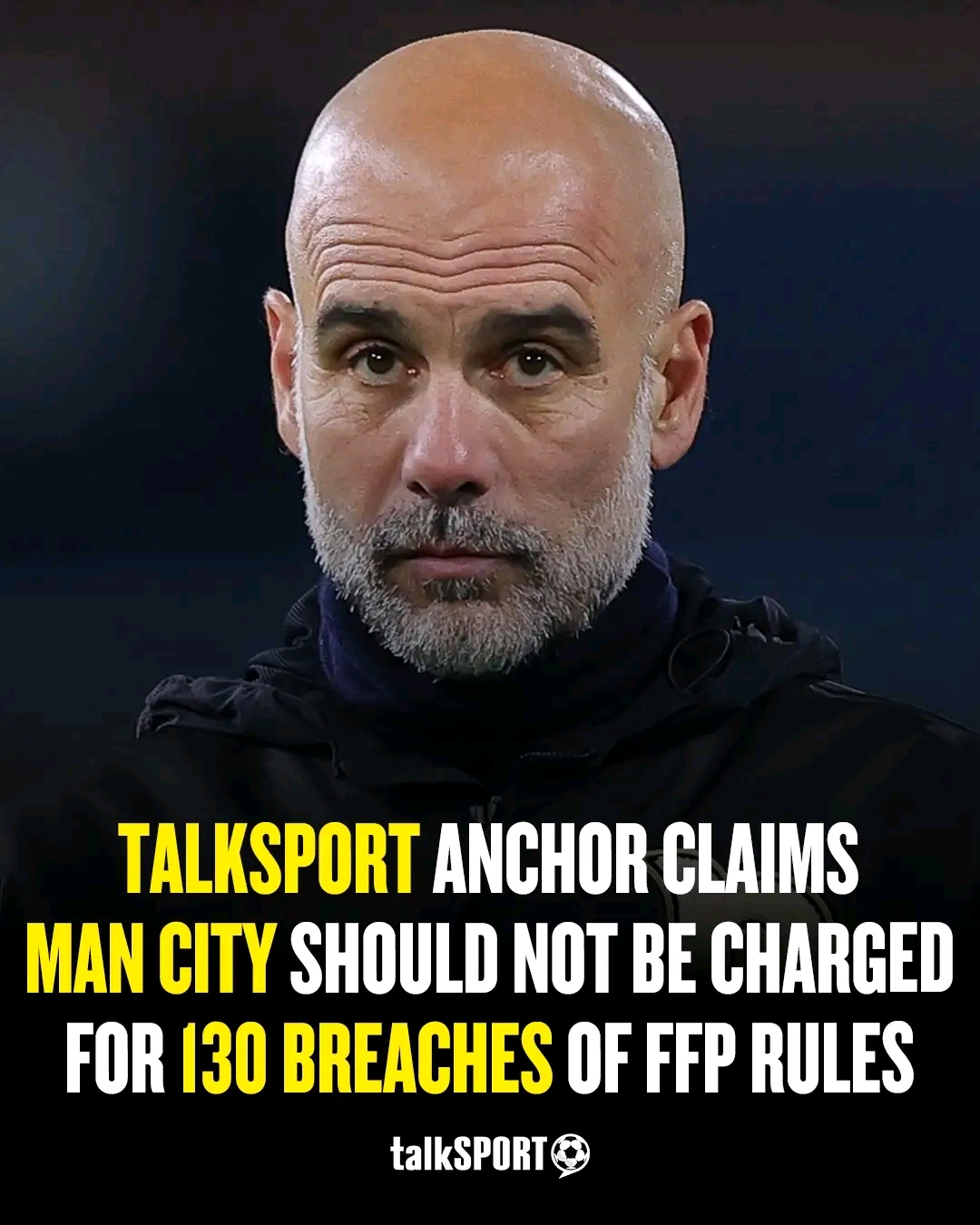
The noise around Manchester City and their financial charges has refused to go away. It has been building for years, growing louder, more dramatic, more emotional with every passing month. Fans argue, pundits debate, rivals accuse, and supporters defend. But in the middle of all the chaos, one voice has stood out strongly, boldly, and without fear — Adrian Durham.
He did not whisper. He did not hesitate. He said it clearly: Manchester City should not be punished. Not now. Not ever. According to him, the entire situation is being blown out of proportion, turned into something far bigger than it really is. And for many, those words felt shocking. For others, it felt like someone had finally said what they were thinking all along.
To understand why this story has become so big, you have to go back to the beginning. In February 2023, the Premier League dropped a bombshell. They charged Manchester City with more than 100 breaches of financial rules, covering a period between 2009 and 2018. At first, the number was reported as 115. But as time went on, the total rose to 130 charges.
One hundred and thirty.
That number alone is enough to scare any football club. Enough to damage reputations. Enough to create fear. Because the possible punishments are serious — very serious. If found guilty, Manchester City could face heavy fines, points deductions, loss of titles, or even expulsion from the Premier League. Imagine that. One of the most dominant teams in modern football suddenly removed from the league they helped define.
For nearly a decade, Manchester City have been at the top. Winning titles, breaking records, playing beautiful football. Under the leadership of Pep Guardiola, they have become a machine. A team feared across Europe. A team admired and hated at the same time.
But now, everything hangs in the balance.
The case itself is complicated. Not just a simple yes or no situation. It is what many experts are calling a “legal minefield.” And that word is not an exaggeration. This is not one charge. Not two. But 130 different accusations, spread across years, involving financial documents, sponsorship deals, and internal club structures.
The hearing finally began in September 2024. It took months. Long, exhausting months filled with documents, arguments, legal battles, and detailed explanations. By December 2024, the hearing had ended. Many expected a quick decision after that. But football does not always move quickly, especially when law is involved.
Now, even in 2026, there is still no final verdict.
And that is where frustration begins to grow.
Fans are tired. Clubs are waiting. Players are uncertain. And the football world feels stuck in a story with no ending.
This is exactly why Adrian Durham spoke out.
He believes the entire situation has gone too far. According to him, Manchester City’s actions — even if proven — are not the worst thing happening in football. In fact, he argues there are far bigger problems in the game that people seem to ignore.
His main argument is simple: Manchester City invested money into their club. They spent to improve. They spent to compete. They spent to entertain fans. And in modern football, is that really a crime?
Durham points to the past. Before the takeover, Manchester City were not the giants we see today. They were behind rivals like Manchester United, Arsenal, and Liverpool. They needed to catch up. Fast.
And the only way to do that was through heavy investment.
So they spent. Big.
They signed top players. Built world-class facilities. Developed one of the best academies in football. Created a strong women’s team. Improved everything around the club.
And it worked.
But now, years later, that same success is being questioned.
Durham believes this is unfair. He compares Manchester City’s situation to other clubs who also benefited from financial backing. He mentions Wrexham, whose rise has been celebrated globally. When their owners invested heavily, people called it a beautiful story. A Hollywood journey. No outrage. No anger.
But according to Durham, that investment also affected wage structures in lower leagues. It changed the balance. Yet, no one seemed to care.
Then there is Leicester City. A club loved by many for their incredible Premier League title win in 2016. A fairytale story. The underdog that shocked the world.
But before that success, Leicester had their own issues with financial rules. They were found guilty of breaches during the 2013/14 season. And yet, that part of the story is often forgotten.
Why?
Because it does not fit the narrative people want to believe.
Durham’s frustration grows from this inconsistency. He sees a double standard. When some clubs spend, it is romantic. When others do it, it becomes scandal.
And then he goes even further.
He lists what he believes are bigger problems in football than Manchester City’s charges.
He talks about rising ticket prices at Liverpool, which make it harder for real fans to attend matches. He criticizes ownership decisions at Chelsea, saying they show a lack of respect for supporters. He points at Mikel Arteta and Arsenal’s time-wasting tactics, arguing it reduces the entertainment value of the game.
He even mentions VAR, the technology meant to improve fairness, but which many fans feel has made football more frustrating.
In his eyes, these issues damage football more than financial breaches.
Because they directly affect the fans. The experience. The emotion of the game.
Meanwhile, he argues, Manchester City’s spending has actually helped football. The money flows through the system — to other clubs, to youth development, to women’s football. Transfers benefit selling clubs. Smaller teams receive financial boosts.
So why punish that?
It is a question that divides opinion sharply.
Of course, not everyone agrees with Durham. Many believe rules are rules. If a club breaks them, there must be consequences. Otherwise, what is the point of having regulations at all?
And that is where the real tension lies.
On one side, you have those who see Manchester City as innovators, pushing boundaries, building something extraordinary.
On the other side, you have those who see them as rule-breakers, gaining an unfair advantage.
In the middle, there is uncertainty.
Another voice that adds context to this situation is Ben Jacobs. He explains just how complex the case really is.
According to him, these charges are not simple. They are grouped into categories. If Manchester City successfully defend one category, dozens of charges could disappear instantly. This means the number 130 might look huge, but in reality, it could shrink quickly depending on the outcome.
He also explains why the decision is taking so long.
After the hearing ended, both sides had to prepare detailed written explanations. These documents can run into thousands of pages. Every argument, every piece of evidence, every legal point must be carefully reviewed.
Then comes the possibility of appeals. Either side — Manchester City or the Premier League — can challenge the outcome.
And it does not stop there.
There is also the chance that the case could move beyond football, into regular courts. Or that both sides could reach a settlement, similar to what happened in other cases.
All of this adds layers of complexity.
This is not just a football story anymore. It is a legal battle. A financial investigation. A test of governance in modern sport.
And that is why there is still no final answer.
As the wait continues, speculation grows. What will happen if Manchester City are found guilty? Will they lose titles? Will they be relegated? Or will the punishment be lighter — fines, transfer restrictions, maybe just warnings?
No one knows.
Even Jacobs admits that some of the most extreme punishments, like expulsion or stripping titles, are unlikely. Possible, yes. But not expected.
Still, the uncertainty remains.
For Manchester City, the club continues as normal. They play. They win. They compete. Publicly, they maintain their innocence. They insist they have done nothing wrong. And they are ready to fight until the very end.
For their fans, it is a strange situation. Celebrating success while waiting for a possible storm.
For rival fans, it is a waiting game filled with hope and suspicion.
And for football itself, it is a defining moment.
Because whatever the final decision is, it will set a precedent. It will shape how financial rules are enforced in the future. It will send a message to every club — big or small.
Adrian Durham may believe the charges should simply be dropped. That people are tired. That the whole situation has dragged on for too long.
But others will argue that justice takes time. That such a serious case cannot be rushed.
And so, the story continues.
No ending yet.
Just questions.
Big questions.
Is Manchester City being unfairly targeted?
Or are they finally being held accountable?
Is this about protecting football?
Or controlling it?
One thing is certain — when the final verdict comes, it will shake the football world.
Until then, the debate will rage on.