Ex Rangers and Wolves star could secure Mohamed Salah link up as talks ‘ongoing’ over summer transfer move

I get that you want more depth, but I want to be straight Football transfer windows tend to have a gravitational center — one deal so significant that everything else that follows gets pulled into its orbit, discussed and framed in relation to it. For Trabzonspor this summer, that deal is Mohamed Salah.
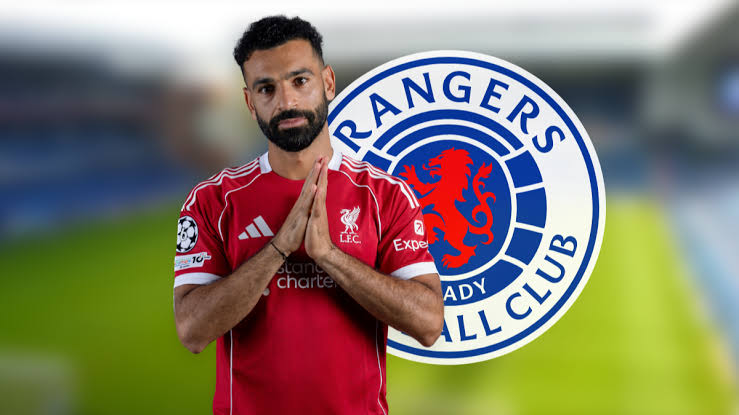
Salah’s departure from Liverpool marked the end of a genuinely historic run on Merseyside: nine seasons, 257 goals in 442 appearances, a Premier League title, a Champions League triumph, and a legacy as one of the most feared attackers of his generation. When his contract wasn’t renewed and he became a free agent, the noise around his next destination was enormous — Saudi Arabia’s Pro League circled, as they had done in previous windows; MLS clubs were mentioned, with reports linking him to Inter Miami and suggesting San Diego was the most likely landing spot if he did cross the Atlantic; and there was even a stretch where a Rangers adviser’s throwaway comment about having “discussed” Salah’s situation sparked a wave of speculative stories linking him to Ibrox, however unlikely that always seemed in practice.
In the end, it was Trabzonspor who won the race, confirming a deal for Salah on a reported two-year contract. For a Turkish Super Lig club, landing a player of Salah’s stature — even at 34, and even past his absolute physical peak — is a statement signing in the truest sense. It’s the kind of move that reshapes a club’s ambitions overnight, not just for the season ahead but for how it’s perceived as a transfer destination going forward.
That’s the backdrop against which the Fabio Silva links need to be understood. This isn’t a club making an isolated, opportunistic move for a squad player — it’s a club in the middle of an aggressive, ambition-driven rebuild, using the gravitational pull of a genuine global name to attract further
To understand why a move to Trabzonspor makes sense for Silva at this stage, it’s worth tracing the shape of his career so far, because it’s been anything but a straight line.
Silva arrived in English football with enormous hype. He joined Wolverhampton Wanderers from FC Porto as a teenager, for a fee that made him one of the most expensive teenage signings in the club’s history at the time. The expectation attached to that kind of fee and that kind of profile — a young, technically gifted Portuguese forward — was substantial. But like a lot of highly-touted teenage strikers who move to a new country and a physically demanding league before they’re fully the finished article, Silva struggled to consistently deliver end product in his early Wolves career.
What followed was a period of loan moves designed to help him find rhythm and regular football away from the pressure of a Premier League starting berth. That period included a stint in Scotland, joining Rangers on loan in 2024. His time at Ibrox lasted six months, and by most assessments, it didn’t go the way either party hoped — the general characterization from those covering the Rangers side of the story is that he “flattered to deceive,” showing moments of quality without ever fully cementing himself as a first-choice attacking option or delivering the kind of consistent output a club like Rangers needs from a striker.
That’s a familiar pattern for young forwards who move between clubs and leagues while still developing — flashes of the talent that justified the original transfer fee, mixed with the inconsistency that comes from adapting to new systems, new teammates, and new expectations repeatedly in a short space of time. It’s also a reminder that loan spells, particularly short ones, often aren’t long enough to fairly judge a player’s ceiling — six months is a small sample size against the backdrop of a career
What makes Silva’s story notable now is the trajectory since leaving Rangers. Rather than his Ibrox spell marking a low point that stuck to his reputation, Silva’s career took a significant upward turn once he moved to Borussia Dortmund.
Dortmund is one of European football’s biggest clubs, with a well-established reputation for developing young attacking talent and for playing an expansive, attacking style that tends to suit forwards who thrive on movement and directness. Silva has made 40 appearances for the club since his move, a substantial number that suggests he’s become a genuine rotational, if not entirely first-choice, option within Dortmund’s attacking setup — a marked change from a player who couldn’t nail down a place in Wolves’ side or during his loan spells.
His recent form underlines that improvement. He came off the bench to score in the DFL Super Cup against Bayern Munich — Germany’s traditional season-opening fixture between the Bundesliga champions and the DFB-Pokal winners — netting a consolation goal in what ended as a 2-1 defeat. That followed an earlier goal in the German equivalent of the Community Shield fixture. Scoring against Bayern Munich, even in a losing effort and even off the bench, is a meaningful marker for any forward — Bayern’s defense and squad depth mean goals against them tend to be earned rather than gifted.
Taken together, this represents a genuine career revival: a player written off by some after a difficult loan spell in Scotland has re-established himself at one of Europe’s most storied clubs, and is now attracting interest from a top-flight Turkish side building around a genuine global superstar.
There’s a reasonably clear logic to why Trabzonspor would move for a player like Silva at this point in the window, even having already landed their marquee name in Salah.
First, there’s squad construction. Landing a player of Salah’s profile changes a club’s identity and ambitions — suddenly, a Trabzonspor side that qualifies for continental competition and pushes for domestic honors needs squad depth and quality that matches those raised ambitions throughout the team, not just in one position. Attacking reinforcements who can support and rotate around a marquee forward are a natural next step.
Second, there’s the market reality of a club that’s just spent significant resources (whatever Salah’s exact package looks like, contracts and wages for players of his caliber are substantial even as free transfers) potentially needing to balance the books elsewhere. That’s part of why there’s been separate reporting suggesting Trabzonspor might be more open to letting go of existing forwards, such as Nigerian striker Paul Onuachu, who had a productive season for the club, scoring 22 goals in 30 league appearances. If a marquee arrival like Salah makes selling on an existing frontline player more palatable — either because he’s now surplus given the improved overall attacking options, or because his sale helps fund further incomings — that opens space and, potentially, budget for bringing in players like Silva.
Third, there’s simple opportunity. A 24-year-old forward who’s shown a genuine upward trajectory at Dortmund, who’s still young enough to have significant sell-on value or long-term utility, and who may be available at a fee more moderate than a fully established Bundesliga starter, is exactly the kind of value-driven signing that ambitious but budget-conscious clubs outside Europe’s top five leagues often pursue. It’s a bet on continued development rather than a bet on the finished product — lower risk, potentially high reward.
One detail that adds a layer of narrative interest, even if it has no real bearing on the football logic of the move, is that Silva wouldn’t be walking into an entirely unfamiliar dressing room if the transfer goes through. Former Rangers midfielder John Lundstram already plays for Trabzonspor, having completed his own move from Ibrox back in June 2024.
Lundstram’s path since leaving Rangers has itself included a loan spell — he spent time at Hull City in the English Championship last season, where he played a part in helping the club secure promotion to the Premier League, before returning to his parent club in Turkey to continue his career there.
Should Silva’s move go through, it would create a small but notable cluster of former Rangers players now plying their trade at the same Turkish club, alongside one of the most recognizable footballers on the planet in Salah. For a Rangers fanbase that tends to follow former players’ careers with interest regardless of how their Ibrox spell went, that’s a storyline with some pull — even if neither Silva nor Lundstram remain directly relevant to Rangers’ present-day squad-building
As things stand, the reporting describes talks between Trabzonspor and Dortmund as “ongoing” — which is a meaningfully different state from an agreed fee or a medical being scheduled. Several things would need to happen for this to move from transfer speculation to a completed deal:
Dortmund would need to be willing to sell, which isn’t guaranteed given Silva’s improved form and his apparent standing within the squad, evidenced by his recent appearances against Bayern Munich. Clubs are often reluctant to sell players just as they’re beginning to deliver on earlier investment and hype, particularly a player still just 24 with what should be some of his best years ahead.
A fee would need to be agreed that works for both sides — likely more than Dortmund paid to sign him from Wolves, if his value has genuinely increased, but not so high that it puts off Trabzonspor given they’ve presumably committed significant resources to the Salah deal.
Personal terms and Silva’s own willingness to make the move would need to align — a transfer to Turkish football represents a different competitive level and profile than the Bundesliga, and it’s worth considering whether, at this stage of a career recovery, a player would prioritize regular football at a slightly lower level over fighting for minutes at one of Europe’s true giants.
Ultimately, this story sits at an interesting intersection of several football narratives: a superstar’s late-career move reshaping a club’s ambitions, a young forward’s redemption arc after a difficult loan spell, and the increasing financial pull of certain non-“big five” leagues in attracting talent that might once have stayed exclusively within Europe’s traditional power structures.
For Rangers specifically, there’s limited direct relevance — Silva’s Ibrox chapter is closed, and nothing here changes anything about the club’s current squad or transfer business. But stories like this tend to resonate with supporters anyway, partly out of curiosity about “what happened to” a player who once wore the jersey, and partly because it offers a data point on how loan spells that don’t work out in the moment don’t necessarily define a player’s broader trajectory.
Until Dortmund and Trabzonspor either reach an agreement or the talks quietly fade — which is the fate of a large percentage of transfer stories reported as “ongoing” at any given point in a window — this remains speculative. If it progresses, the next milestones to watch for would be reports of an agreed fee, then a medical, then official confirmation from one or both clubs.
If new details emerge — a fee, a medical date, official confirmation, or a collapse in talks — I’ll be glad to dig into the fresh reporting and give you a properly sourced update rather than filling space with things I can’t verify.