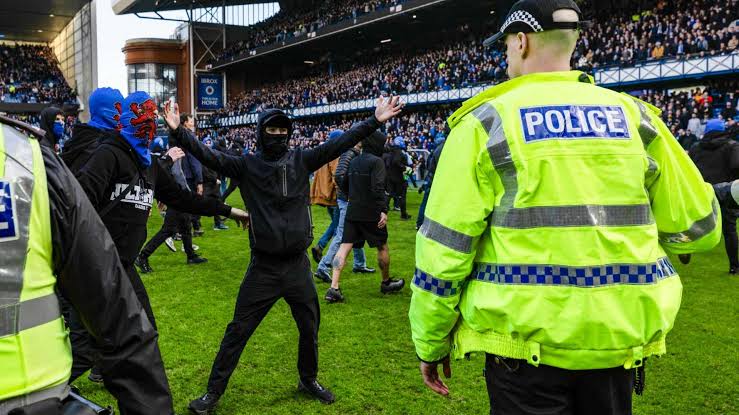
Sunday’s Premier Sports Cup quarter-final between Rangers and Celtic ended in a comprehensive 3-0 victory for the home side, but the result has done little to settle the storm of debate surrounding referee Nick Walsh and his VAR team, with a string of contentious decisions leaving supporters on both sides furious and demanding answers in the hours that followed the final whistle. From a tightly checked offside call to a mistaken free-kick and a controversial yellow card shown in the aftermath of an ugly flashpoint, Sunday’s derby has once again put Scottish football’s officiating under the microscope.
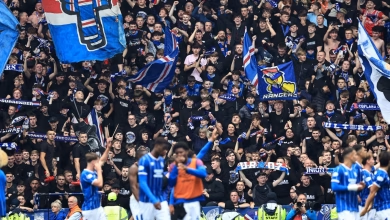
On the pitch, there was little to date about the overall outcome. Dan Neil scored twice either side of a Kevin Kelsy goal as Derek McInnes’s Rangers side thoroughly outplayed Celtic at Ibrox, booking their place in the semi-finals of the Premier Sports Cup in the process. By most independent assessments, Celtic never really looked like getting a foothold in the game, with Rangers dominant for long periods of an occasion played out in front of a stadium containing only home supporters following this season’s away-fan ban on all Old Firm fixtures.
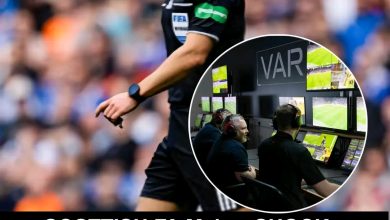
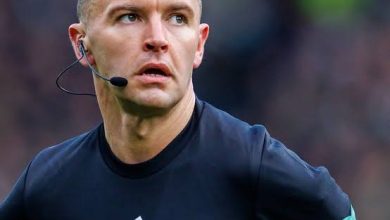
Yet for all Rangers’ dominance, it is the handling of several key moments by referee Nick Walsh, working alongside VAR official Andrew Dallas and assistant Steven McLean, that has generated the most discussion in the aftermath. With emotions already running high given the history between the two clubs, and an on-field flashpoint adding further fuel to the fire, Sunday’s derby has become as much a talking point for its officiating as for the resul
One of the most tense moments of the afternoon arrived just before the hour mark, when Ryan Naderi fired home from close range at the near post to give Rangers what appeared to be a crucial second goal. With the home crowd already celebrating, the goal was subjected to a lengthy VAR check for offside in the build-up, sparking booing and whistling from inside Ibrox as replays were scrutinised by the officials. After a nervous wait, the goal was eventually allowed to stand, with Naderi judged to have been marginally onside during the passage of play that led to the finish.
While the goal ultimately counted, the length of the delay and the tightness of the call left both sets of supporters on edge, and it has since become one of the central talking points in discussions of the officiating on the day. For Rangers fans, the relief of seeing the goal stand was tempered by frustration at how close the decision had been; for Celtic supporters, the moment has been cited as symptomatic of a day in which several marginal calls, in their view, went against them at key moments.
Elsewhere in the game, Rangers had cause for their own complaints over the officiating. In the 65th minute, Naderi was involved in what was described as an innocuous moment when he appeared to slip, only for Celtic’s Mika Baur to catch him on the ankle. Despite replays suggesting it was Baur who made contact first, the free-kick was awarded in Celtic’s favour rather than to Rangers, a decision that has been highlighted by several outlets reviewing the game’s officiating as one of Walsh’s clearer errors on the day.
That decision, coming from a Rangers perspective, undercuts the narrative that Sunday’s officiating uniformly favoured the home side. Instead, the picture that has emerged in the aftermath is one of a referee who made mistakes in both directions over the course of the match, rather than a one-sided pattern of decisions benefiting either team specifically.
The most heated moment of the afternoon came in the 77th minute, when Celtic’s Haissem Hassan looked to run down the line as O’Neill’s side searched for a way back into the match. Hassan was fouled by Dujon Sterling, but it was James Penrice who ended up being shown a yellow card in the aftermath of the passage of play. Before the foul was given, Penrice had gone to win the ball back and, in doing so, inadvertently kicked it directly into Hassan’s direction, striking the grounded Celtic winger. Hassan reacted angrily to the incident, and the confrontation quickly drew in players from both sides, including Celtic’s Colby Donovan and Rangers midfielder Nicolas Raskin, who became involved in a heated exchange before order was restored.
Several observers reviewing the incident afterwards felt it was harsh for Penrice to be booked given that he had simply been attempting to win back possession rather than deliberately aiming the ball at Hassan, with the confrontation itself appearing to be started by the Celtic player’s reaction rather than by any clear act of aggression from the Rangers full-back. That assessment has added to the sense among some Rangers supporters that, in isolated moments, the officiating did not fall in their favour, even amid an overwhelmingly dominant overall team performance.
The volume of contentious incidents packed into a single fixture has predictably sparked strong reaction from supporters, pundits and commentators alike. On social media and phone-in shows in the hours following the match, fans from both clubs have pointed to specific moments, the lengthy VAR check on Naderi’s goal, the free-kick controversy, and the flashpoint involving Hassan and Penrice, as evidence that Scottish football’s officiating and video assistant referee system remain a persistent source of frustration regardless of which side of the Old Firm divide supporters find themselves on.
That frustration exists against a backdrop of broader, longer-running debate over refereeing standards and consistency in Scottish football. Rangers themselves have previously and publicly campaigned for improvements to video assistant refereeing technology and processes, citing what the club has described in the past as glaring errors in officiating during high-profile matches. Celtic, for their part, have had their own recent grievances, with manager Martin O’Neill this week revealing he had attended a meeting with the SFA’s head of referee operations, Willie Collum, to discuss a number of contentious calls from earlier in the season, including one incident O’Neill himself acknowledged Celtic had gotten fortunate with.
Given the strength of feeling among some supporters in the aftermath of Sunday’s derby, questions have understandably been raised about whether the match could, or should, be replayed. However, based on the nature of the incidents in question, such an outcome appears highly unlikely. Unlike the sides’ Scottish Cup meeting back in March, when crowd disorder and safety concerns led to significant sanctions against both clubs, Sunday’s controversies relate solely to on-field officiating decisions, a category of dispute that Scottish football’s governing bodies have historically treated very differently from matters of crowd safety or misconduct.
Refereeing errors, even significant ones, are not typically grounds for a match to be replayed under SFA or SPFL regulations, and with Rangers having won by a three-goal margin in a performance widely described as one-sided, it would be a considerable stretch to argue that any of the specific incidents identified, the marginal offside check, the mistaken free-kick, or the contentious yellow card, materially altered the outcome of the match. Historically, replays in Scottish football have been reserved for cases involving serious breaches of safety, ineligible players, or extreme referereeing malpractice rather than the kind of marginal, split-second calls that have characterised discussion of Sunday’s
Rather than a replay, the more realistic outcome from Sunday’s controversies is likely to be further discussion and scrutiny of Nick Walsh’s performance, and potentially renewed calls from supporters and pundits for greater transparency around VAR decision-making in Scottish football more broadly. Given that similar debates have already been simmering throughout the season, including O’Neill’s own admission of a meeting with SFA officials over previous contentious calls, Sunday’s derby is likely to be added to a growing list of examples cited whenever discussions about the standard of officiating in the Scottish game resurface.
For Rangers, the priority now shifts to their Premier Sports Cup semi-final against the winner of Hearts, Hibernian and Aberdeen at Hampden Park, along with a rematch against Celtic in the Scottish Premiership at Celtic Park just a week later. For Celtic and O’Neill, Sunday’s defeat, their first of the domestic season, will prompt reflection not just on the officiating decisions that have dominated the post-match conversation, but on a performance that saw them well beaten regardless of the marginal calls that have generated so much discussion since the final whistle.
Ultimately, Sunday’s derby fits a familiar pattern in Old Firm football: a match settled convincingly on the pitch, only for the post-match conversation to be dominated by contested officiating decisions rather than the broader story of the result itself. With VAR checks, disputed free-kicks and flashpoint confrontations all featuring prominently in the aftermath, it is perhaps unsurprising that emotions have run high among supporters demanding accountability. But with the balance of contentious calls appearing to cut both ways rather than uniformly favouring one side, and with Rangers having won so clearly on the day, the prospect of any formal action beyond continued debate and scrutiny of the officials involved appears slim. What is far more likely is that Sunday’s derby becomes another entry in the long-running conversation about the standard and consistency of refereeing in a fixture that, perhaps more than any other in Scottish football, magnifies every contested decision under an intense and unforgiving spotlight.