FIFA Suspends Nepal From International Football Following Governance Dispute

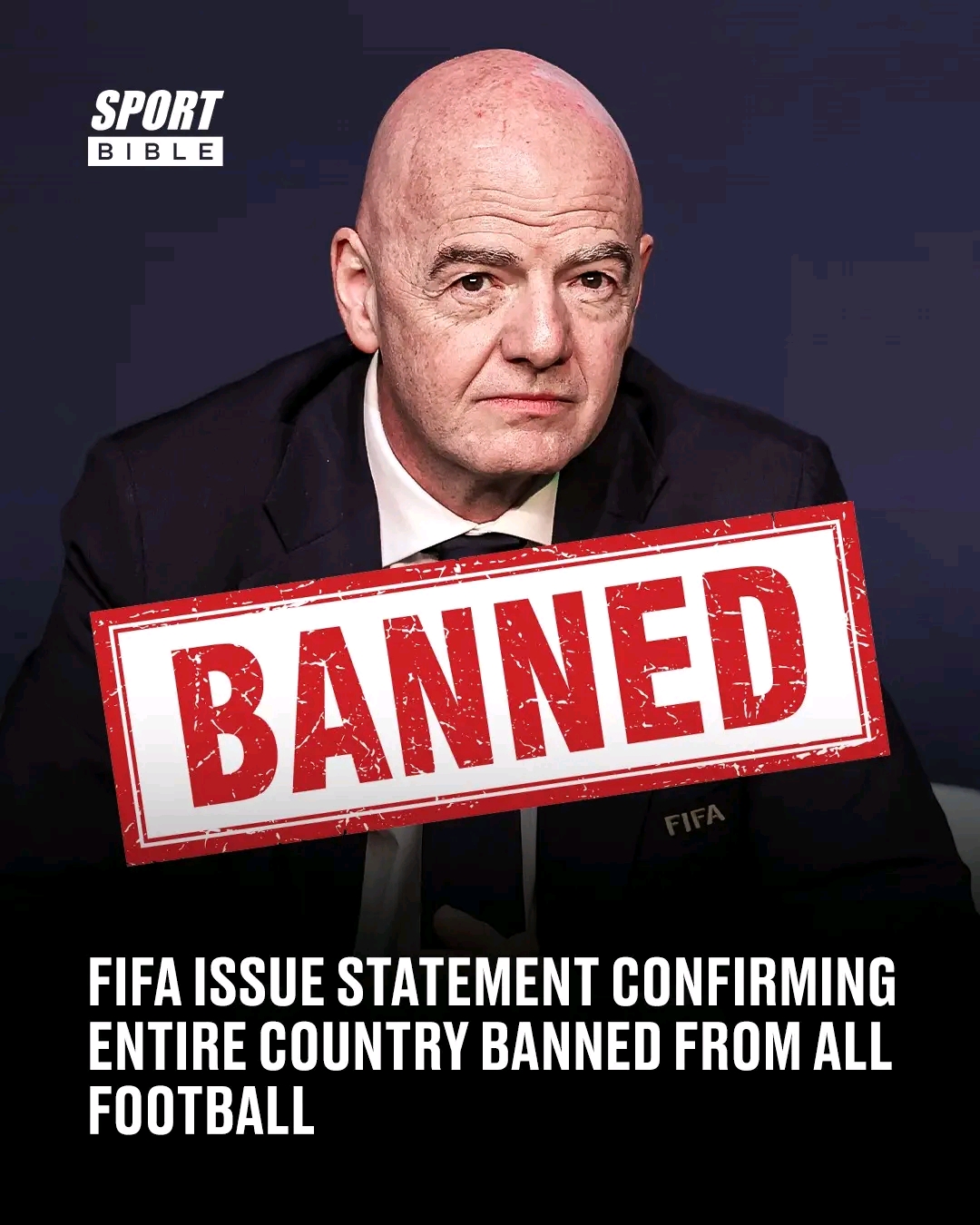
FIFA has confirmed that Nepal has been suspended from international football following what the world governing body described as serious breaches of its statutes involving third-party interference in the administration of the game within the country.
The decision has sent shockwaves through Asian football and represents one of the most significant disciplinary actions taken by FIFA in recent years. The suspension affects all levels of football in Nepal, from the national teams to club sides, and immediately prevents the country from participating in international competitions until further notice.
For players, coaches, supporters and football officials across Nepal, the announcement marks a difficult moment for a nation that has spent years attempting to develop its football infrastructure and improve its standing within the global game.
The suspension stems from concerns surrounding the governance of the All Nepal Football Association (ANFA), the organization responsible for overseeing football activities throughout the country. FIFA has long maintained strict regulations regarding the independence of national football associations and has repeatedly warned member nations against political or external interference in football administration.
According to FIFA, the latest decision was taken after what it described as significant violations relating to third-party involvement in the affairs of the national federation.
The governing body announced that Nepal’s football association would immediately lose the rights and privileges associated with FIFA membership.
As a result, Nepalese national teams and clubs are no longer eligible to participate in FIFA-recognized or AFC-recognized competitions.
The consequences are extensive.
International fixtures involving Nepal have effectively been frozen. Clubs hoping to compete in continental tournaments can no longer participate. Development programs supported by FIFA have also been suspended, meaning football projects that depend on international assistance could face uncertainty.
The decision highlights FIFA’s continued determination to protect the autonomy of football associations worldwide.
For decades, FIFA has insisted that football federations must operate independently from government interference and external political influence. The organization views this principle as essential to maintaining fairness, integrity and stability throughout the sport.
Whenever concerns emerge that governments or other outside bodies are attempting to control football associations, FIFA often responds aggressively.
This policy has resulted in multiple suspensions over the years.
Several countries have faced temporary exclusion from international football after disputes involving governance, elections, administration or political involvement.
Nepal now joins that list.
The controversy reportedly developed following actions involving the country’s football administration and the relationship between football authorities and national sporting institutions.
Although specific details continue to be discussed within football circles, FIFA concluded that the situation warranted immediate intervention.
The governing body’s statement made clear that the suspension would remain in place until conditions required by FIFA are satisfied.
Importantly, the punishment is not necessarily permanent.
History shows that FIFA suspensions are often lifted once national associations implement reforms and demonstrate compliance with international regulations.
That possibility will likely offer some hope to Nepal’s football community.
Players, supporters and administrators will now focus on finding a pathway toward reinstatement.
For the Nepal national team, the timing is particularly disappointing.
The squad had been working toward future qualification campaigns and international fixtures that were viewed as opportunities to continue developing on the global stage.
Those ambitions have now been placed on hold.
Footballers who dreamed of representing their country internationally must wait for the suspension to be resolved before returning to competitive action under the Nepal flag.
The impact extends beyond senior football.
Youth teams are also affected.
Young players who hoped to compete in international tournaments face uncertainty regarding future opportunities. Development pathways that rely on international competition may be disrupted, potentially affecting an entire generation of football talent.
This is one reason FIFA suspensions often attract significant attention.
While the decisions are aimed at football administrators and governance structures, the consequences are often felt most strongly by players and supporters.
Many athletes have little involvement in political or administrative disputes but still experience the effects of sanctions imposed on their federations.
Supporters across Nepal have reacted with disappointment.
Football has grown steadily in popularity throughout the country despite competition from other sports. National team matches frequently generate enthusiasm among fans eager to see Nepal establish itself more strongly within Asian football.
The suspension threatens to interrupt that momentum.
Without international matches, opportunities to inspire supporters and attract new audiences become limited.
Commercial consequences may also emerge.
Sponsors generally prefer certainty and visibility. Long periods without international competition can make football investment less attractive, potentially affecting revenue streams and development initiatives.
For football officials within Nepal, restoring FIFA membership will now become the primary objective.
The pathway back is likely to involve negotiations with FIFA and the Asian Football Confederation, alongside reforms designed to address governance concerns.
Previous examples suggest that solutions are possible.
Other nations have faced similar sanctions and eventually returned to international football after satisfying FIFA’s requirements.
Pakistan, for example, has experienced FIFA suspensions linked to governance disputes. Similar situations have occurred elsewhere across the football world.
In many cases, suspensions were lifted once football authorities implemented reforms and demonstrated compliance with FIFA statutes.
That precedent suggests Nepal could eventually follow a similar route.
However, achieving that outcome requires cooperation and commitment from all parties involved.
The situation also serves as a reminder of FIFA’s enormous influence over global football.
With more than 200 member associations, FIFA operates one of the largest sporting networks in the world. Membership provides access to international competitions, development funding, coaching programs and administrative support.
Suspension effectively removes those benefits.
That reality gives FIFA considerable leverage when enforcing its regulations.
Critics sometimes argue that the organization exercises too much power.
Supporters of FIFA’s position, however, contend that strict enforcement is necessary to protect football from political interference and maintain consistent standards across all member nations.
The debate is unlikely to disappear.
Questions about governance, accountability and independence remain central issues throughout world football.
What is clear is that FIFA continues to view third-party interference as one of the most serious violations possible.
The organization has repeatedly demonstrated its willingness to suspend federations regardless of their size, reputation or competitive standing.
Nepal’s current FIFA ranking places the nation outside football’s traditional powerhouses, but that status did not influence the decision.
The same rules apply to all member associations.
That principle forms a key part of FIFA’s governance framework.
The suspension also raises broader questions about football development in emerging nations.
Many countries rely heavily on FIFA support to improve facilities, train coaches and expand grassroots participation.
Interruptions to those programs can have long-term consequences.
Development projects often require consistent funding and planning over several years.
When that process is disrupted, progress can slow significantly.
For Nepal, maintaining momentum at grassroots level may become an important challenge during the suspension period.
Football leaders will need to ensure that local development continues despite international restrictions.
Supporters will hope that current difficulties prove temporary rather than permanent.
The nation has experienced memorable moments in football before.
One of the most notable achievements came with victory in the AFC Solidarity Cup, a success that demonstrated the country’s ability to compete effectively on the regional stage.
Such achievements remain important reminders of football’s potential within Nepal.
The current suspension may represent a setback, but it does not erase years of effort by players, coaches and supporters.
Across Asia, reactions to FIFA’s decision have been mixed.
Some observers view the punishment as necessary to protect football governance.
Others express sympathy for players and fans affected by circumstances beyond their control.
Both perspectives highlight the complexity of such situations.
Maintaining strong governance is essential.
At the same time, the human impact of suspensions cannot be ignored.
Football ultimately belongs to players and supporters as much as administrators.
As discussions continue, attention will increasingly shift toward possible solutions.
FIFA has indicated that the suspension can be lifted if conditions are met.
That statement provides a clear incentive for reform and dialogue.
The coming months are therefore likely to prove crucial.
Football officials in Nepal will need to work closely with international governing bodies to address concerns and restore confidence.
Success in those efforts could pave the way for a return to international competition.
Failure would risk extending the suspension and increasing its consequences.
For now, however, the reality remains unchanged.
Nepal is suspended from international football.
National teams cannot compete.
Clubs cannot participate internationally.
Development support has been halted.
The country’s football future now depends on resolving the governance issues that led to FIFA’s intervention.
While the road ahead may be challenging, history suggests that recovery is possible.
Other nations have returned from similar situations stronger and more stable than before.
Nepal will hope to follow that example.
Until then, one of football’s most significant recent disciplinary decisions will continue to dominate discussions throughout Asian football and beyond, serving as another reminder of the importance FIFA places on independent governance and compliance with its statutes.