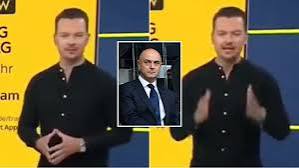
I don’t even like Arsenal but that goal is WRONG!” – Didier Drogba SLAMS Erling Haaland winner vs Arsenal 😱 Claims it should have been DISALLOWED as VAR controversy rocks Manchester City clash 🔥 Fans FURIOUS as title race drama explodes

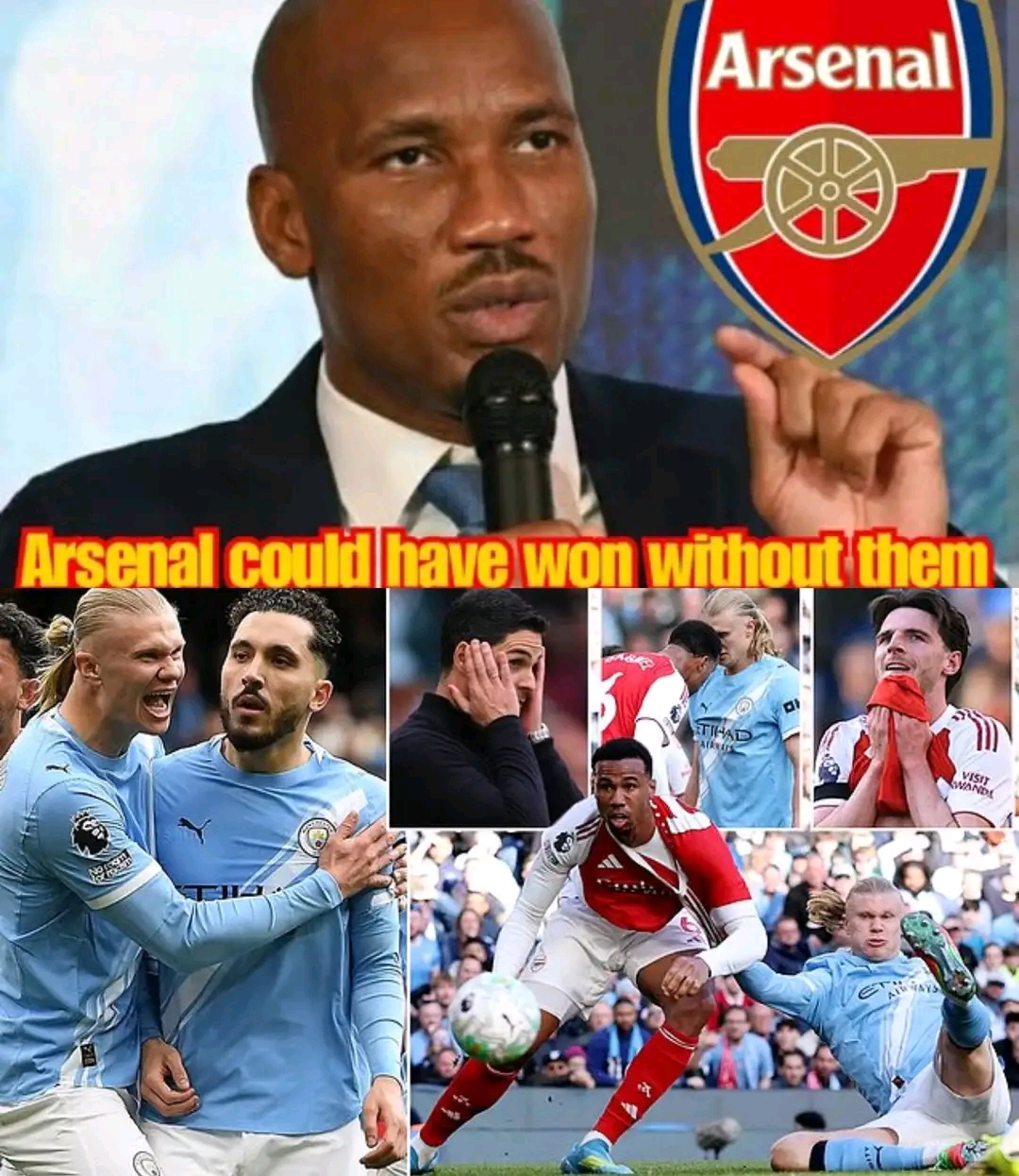
The moment the ball hit the back of the net, the stadium exploded. Noise filled every corner, players ran in celebration, and one side believed they had just taken a massive step toward glory. But almost immediately, something felt off. The cheers were loud, but the reactions were mixed. Some players hesitated. Some fans looked confused. And within seconds, the focus shifted from celebration to controversy.
This was not just another goal. This was a moment that would shake the title race, divide opinions across the football world, and drag VAR back into the center of a never-ending storm.
At the heart of it all was Erling Haaland, the unstoppable striker who has built a reputation for scoring goals in the biggest moments. And once again, he delivered. But this time, the goal was not just about finishing ability or positioning. It became something bigger. Something messy. Something that left fans arguing long after the final whistle.
And then came the reaction that sent everything into overdrive.
“I don’t even like Arsenal, but that goal is wrong.”
Those words came from Didier Drogba, a man who knows what it means to score big goals and win major trophies. A legend of the game. A player respected across generations. And when someone like Drogba speaks so strongly, people listen.
His message spread quickly. Social media exploded. Fans from different clubs, different countries, and different backgrounds all jumped into the debate. Because this was not just about one goal anymore. It was about fairness. It was about rules. It was about whether football is losing its soul.
The match itself had already been intense. Manchester City and Arsenal were battling not just for three points, but for control of the Premier League title race. Every pass mattered. Every tackle carried weight. Every decision could define the season.
You could feel the tension from the first whistle. City moved the ball with their usual calm confidence, while Arsenal pressed with energy and belief. It was a clash of styles. A clash of ambitions. And as the game went on, it became clear that one moment could decide everything.
That moment came when the ball found Haaland.
It happened quickly. A pass into the box. A movement that defenders could not stop in time. A finish that looked simple, but was executed with deadly precision. The kind of goal Haaland has made look routine.
But as the celebrations began, Arsenal players immediately protested.
They surrounded the referee. Arms in the air. Faces full of frustration. They were not celebrating. They were questioning. Something, they believed, had gone wrong.
The referee paused. And then came the signal everyone now recognizes. The hand to the ear. The wait. VAR was checking the goal.
And just like that, the stadium atmosphere changed.
Fans who had been shouting in joy now stood in nervous silence. Arsenal supporters held onto hope. City fans waited anxiously. Players looked toward the screen. Managers stood still, trying to hide their emotions.
VAR, once again, had taken control of the moment.
Replays began to circulate almost instantly. Different angles. Slow motion. Zoomed-in clips. Everyone was looking for the same thing. Was there a foul? Was there an offside? Was there something that should cancel the goal?
Some angles seemed to show a possible infringement. A slight push. A movement that could be interpreted in different ways. Other angles made it look clean. Fair. A perfectly good goal.
And that is where the problem began.
Because football is supposed to be clear. A goal should be a goal. A foul should be a foul. But in moments like this, everything becomes subjective. Everything depends on interpretation.
The VAR check felt long. Too long. Every second increased the tension. Every replay added fuel to the debate.
And then, finally, the decision.
Goal given.
The referee pointed to the center circle. The stadium erupted again, but this time the noise was different. It was louder, but also more chaotic. Cheers mixed with boos. Celebration mixed with anger.
Arsenal players were furious. They could not believe it. They argued. They demanded answers. But the decision had been made.
And that is when the real drama began.
After the match, the conversation was no longer about tactics or performance. It was about that moment. That one decision. That one goal.
Fans took to social media immediately. Some defended the decision, saying there was nothing wrong. Others attacked it, calling it a clear mistake. Arguments spread everywhere. Videos were shared. Opinions clashed.
And then Drogba’s voice cut through the noise.
“I don’t even like Arsenal, but that goal is wrong.”
It was a powerful statement. Not because of what he said, but because of who said it. Drogba has no reason to defend Arsenal. No connection that would make him biased in their favor. If anything, his history would suggest the opposite.
But that is what made his words so important.
He was not speaking as a fan. He was speaking as someone who understands the game at the highest level. Someone who has been in those moments. Someone who knows how much is at stake.
And he believed the goal should not have stood.
That opinion added weight to the growing frustration around VAR.
Because this is not the first time. And it will not be the last.
VAR was introduced to bring clarity. To reduce mistakes. To make the game fairer. But instead, it has created a new kind of controversy. A slower, more complicated kind. One where decisions are still debated, but now with even more frustration.
Fans feel disconnected. Players feel confused. Managers feel powerless.
Moments like this highlight the biggest issue. Even with technology, football decisions are still not always clear. And when they happen in big games, the impact is massive.
For Arsenal, this felt like more than just a goal. It felt like a turning point in the title race.
Every point matters. Every decision matters. And when something like this goes against you, it is hard to accept.
For Manchester City, it was the opposite. It was a moment of advantage. A moment that could push them closer to another title.
And in the middle of it all was Haaland.
The striker who did what he always does. Scored. Delivered. Made the difference.
But this time, instead of pure praise, his goal came with controversy.
Some fans defended him. They said he did nothing wrong. That he simply finished the chance. That the decision was not his responsibility.
Others pointed to the build-up. They argued that something illegal happened before the goal. That it should have been stopped.
And so, the debate continued.
Pundits joined in. Former players shared their views. Analysts broke down every second of the play. Still, no clear agreement.
That is the reality of modern football.
Even with all the technology, all the cameras, all the slow-motion replays, the game still finds a way to create uncertainty.
And maybe that is why moments like this feel so powerful.
Because they remind everyone that football is not perfect. It is emotional. It is unpredictable. It is sometimes unfair.
As the dust began to settle, attention slowly returned to the bigger picture.
The title race.
This was not just about one match. It was about what comes next. About who will handle the pressure. About who will respond stronger.
Arsenal must now recover. They must use the anger as motivation. They must stay focused.
Manchester City will look to build on the moment. To use the momentum. To keep pushing forward.
And Haaland will keep doing what he does best. Scoring goals. Leading the line. Creating headlines.
But this goal will not be forgotten anytime soon.
Because it was not just a goal.
It was a moment that divided fans.
A moment that questioned technology.
A moment that brought legends like Drogba into the conversation.
A moment that showed, once again, that football is as much about controversy as it is about brilliance.
And somewhere, right now, fans are still arguing about it.