‘Just Have To Deliver’ – Ex-Striker Warns Derek McInnes Following Rangers’ Spending

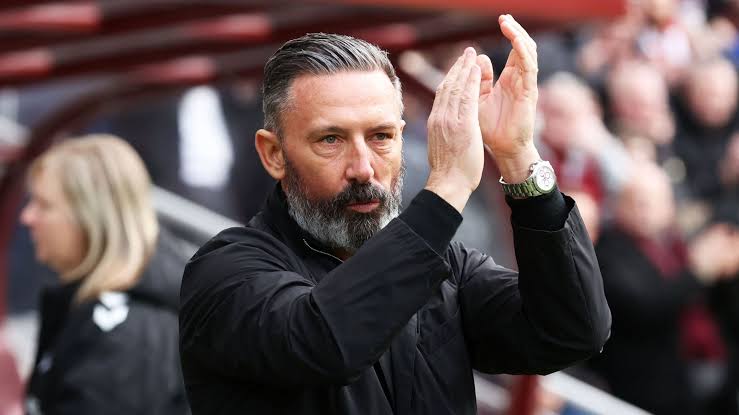
There’s a particular kind of scrutiny that comes with spending the way Rangers have spent this summer, and it’s the sort of scrutiny that doesn’t care how good your reasons were for doing it. Derek McInnes oversaw fourteen new arrivals at Ibrox across a transfer window he himself described as feeling “like I’ve been to war,” headlined by a club-record-adjacent £9.5m outlay on striker Kevin Kelsy and further significant investment in the likes of Kim from Girona and a deadline-day loan swoop for Badredine Bouanani. That level of spending buys a manager plenty of things — strength in depth, competition for places, the raw materials to challenge on every front — but it does not buy patience. And with early results at Ibrox failing to match the ambition of the outlay, the warning being sounded by former Rangers strikers and pundits alike is a simple, blunt one: McInnes has been given the tools, and now he simply has to deliver.
To understand why that warning carries the weight it does, it’s worth looking honestly at how McInnes’ Rangers reign has actually begun. His first game in charge, away to Dundee United, ended in a 1-1 draw after Lachlan Rose’s opener was cancelled out by a Thelo Aasgaard equaliser, with a glorious late chance to snatch a winner going begging. That was followed by defeat in the first leg of a Europa League third-round qualifying tie against Jagiellonia Bialystok, a result that immediately raised eyebrows given Rangers’ European pedigree and the expectation that a club of their size should be negotiating that stage of continental competition comfortably. Perhaps most damagingly, a home Premiership fixture against Hibernian ended in a sucker-punch defeat, Rangers conceding an early penalty before Youssef Chermiti was stretchered off with what would go on to be confirmed as a serious ACL injury, and then having what looked like a hard-fought point snatched away by a stoppage-time winner that stunned Ibrox into silence.
McInnes, to his credit, has no tried to dodge the difficulty of that opening spell. “It’s not been a good start for us, we understand that,” he admitted candidly after the Hibernian defeat, while also pushing back against the idea that his team is playing as badly as the results suggest: “There are little things going against us at the minute, but we have to stay strong, we’re not as bad as people think.” It’s the kind of measured response you’d expect from an experienced manager who knows better than to panic three or four games into a new job. But measured responses only buy so much time at a club like Rangers, particularly when the manager in question has just been backed with the kind of transfer budget that leaves absolutely no excuse for a slow start being explained away by a lack of resources.
It’s genuinely hard to overstate just how much money and squad turnover Rangers have got through this summer under McInnes. Fourteen new signings arrived at Ibrox across the window, an extraordinary volume of incoming business that reshaped almost every area of the pitch. Kelsy’s £9.5m arrival from Portland Timbers makes him the second-most expensive signing in the club’s history, behind only Tore André Flo’s £12m move from Chelsea back in 2000, while further significant fees were committed to bringing in Kim from Girona in an £8.5m deal and completing a loan swoop for Stuttgart winger Bouanani on transfer deadline day. Layer in the returning presence of Ross McCrorie from Bristol City and new captain Lawrence Shankland’s move from Hearts, and it becomes clear that this has been one of the most aggressive rebuilding jobs the club has undertaken in years.
McInnes has been open about the scale and the demands of that rebuild, describing it as the longest transfer window of his managerial career and admitting that even with all that activity, the club never quite got everything it wanted, with additional cover at left-sided centre-back and in central midfield still on his wish list heading into the season. That kind of honesty is admirable, but it doesn’t change the fundamental equation facing him: when a club spends this much money, this quickly, on this many new faces, the tolerance for a slow start shrinks dramatically. Supporters and pundits alike are entitled to ask why a squad assembled with that level of financial backing should need any adjustment period at all.
This isn’t the first time in recent years that a former Rangers striker has used exactly this kind of language to warn the club’s hierarchy about the dangers of spending heavily without the structure to match. Kris Boyd, one of the most prolific forwards in the club’s modern history, has been vocal in the past about Rangers’ tendency to lurch from one summer rebuild to the next without ever building the kind of stable footballing infrastructure that would allow a new manager to succeed regardless of who’s occupying the post. “There has been so much money wasted at Ibrox over the years,” Boyd said in comments reflecting on the club’s recruitment patterns, arguing that Rangers need “a proper structure in place” rather than simply handing whoever is in the dugout “the keys to the castle” to spend as they see fit.
That kind of critique lands with particular force now, at the start of the McInnes era, because it cuts to exactly the tension at the heart of this transfer window. Rangers have, by any reasonable measure, handed their new manager the keys to the castle — fourteen new faces, a club-record-adjacent fee for a striker, significant investment across multiple positions. If the returns on the pitch don’t materialise quickly, the natural conclusion many will draw is not that McInnes was under-resourced, but that the resources were spent without the early results to show for it, repeating a pattern of expensive rebuilds that Boyd and others have warned about for years. The message from that corner of Ibrox’s history is consistent and blunt: spending this much money removes almost every excuse, and a manager backed this heavily simply has to deliver, and quickly.
It would be remiss not to acknowledge the genuine mitigating circumstance sitting at the heart of Rangers’ slow start: the loss of Youssef Chermiti to a serious ACL injury against Hibernian effectively wiped out the club’s first-choice centre-forward option for the bulk of the season, just as McInnes was trying to establish an attacking identity for his new side. That single moment reshaped the entire second half of the transfer window, forcing Rangers into the urgent, expensive pursuit of Kelsy as a direct replacement and adding Bouanani on loan to bolster attacking options further, rather than allowing the club to execute a more considered, pre-planned recruitment strategy.
It’s a legitimate point of context, and one that any fair assessment of McInnes’ start needs to weigh carefully. But it also cuts both ways: if Rangers’ recruitment department and ownership were willing to spend close to £10m on a direct replacement mid-window, in response to a single injury, that only reinforces just how significant the financial commitment to this squad has been. An injury crisis met with that scale of spending isn’t the kind of thing that buys a manager more patience — if anything, it raises the stakes further, because it demonstrates the lengths the club was willing to go to in order to give McInnes every possible
For a club with Rangers’ history and expectations, the definition of “delivering” is rarely ambiguous. It means competing seriously for the Scottish Premiership title against Celtic, progressing deep into cup competitions, and giving a credible account of the club on the European stage rather than exiting at the qualifying stages to sides that wouldn’t traditionally be considered Rangers’ equals. Early setbacks in the Europa League qualifiers against Jagiellonia Bialystok, and a stumbling start domestically that has included a home defeat to Hibernian, put pressure on every one of those fronts simultaneously, at a moment when McInnes would ideally have wanted the extensive summer rebuild to be bedding in smoothly rather than generating exactly the kind of “under fire” headlines that have already started to appear.
There is, encouragingly for McInnes, some evidence that things have started to turn in the right direction. Rangers have followed their difficult opening weeks with back-to-back Scottish Premiership victories, and the manager has spoken positively about the mood inside his dressing room, describing it as “so strong and so together” in recent weeks despite all the disruption of the transfer window. New arrivals like Kim and a rejuvenated Djeidi Gassama have shown promising signs on the left flank, while young winger Findlay Curtis has forced his way into contention through genuine form rather than reputation. Those are exactly the kind of green shoots a club needs to see if a summer of heavy spending is eventually going to translate into the kind of results that justify th
Nowhere is the pressure to deliver felt more acutely than around Kelsy himself. A 22-year-old striker with a modest, if promising, MLS scoring record commanding a fee in the region of £9.5m is always going to face an intense level of scrutiny, and even those closest to him have been careful to manage expectations. Phil Neville, who managed Kelsy at Portland Timbers, was refreshingly candid when the move was completed, describing a player who “does the little things incredibly well” and possesses genuine star quality in terms of his runs, his arrogance and his self-belief, while also stressing that Kelsy is “not the finished product” and still has “a long way to go” before he can be relied upon to deliver consistently at this level. That’s an honest, considered assessment from a manager who clearly rates the player — but it’s also an implicit acknowledgment that whatever Kelsy produces in his opening months at Ibrox is unlikely to match, in the short term, the scale of the fee that brought him there.
That mismatch between fee and immediate expected output is precisely the kind of dynamic that tends to generate exactly the “just have to deliver” framing being aimed at McInnes right now. Supporters, understandably, don’t calibrate their expectations to a player’s long-term development curve — they calibrate them to the size of the cheque the club wrote to sign him, and to results on the pitch in the here and now. If Kelsy needs time to adapt, as Neville suggests he will, that time comes directly out of the patience McInnes has to work with as his own results are
Rangers’ situation needs to be understood, too, against the backdrop of everything else going on around the club this summer — a saga around Nicolas Raskin’s future that ran past the Scottish transfer deadline due to continued interest from Beşiktaş, a list of significant departures including John Souttar, Bojan Miovski, Clinton Nsiala and Lyall Cameron, and a broader pattern of the club selling talented players like Fashion Sakala only to watch them thrive elsewhere. Taken together, it paints a picture of a club in a state of significant flux, trying to simultaneously modernise its squad, manage its wage bill, and compete seriously on every front — all while adapting to a new manager who inherited the job only months ago after an impressive spell at Hearts
None of that context excuses a slow start, but it does help explain why the margin for error around McInnes feels so thin right now. A club that has committed this heavily to reshaping its squad, while simultaneously managing so many moving parts elsewhere, cannot afford a prolonged period of underperformance without serious questions being asked — not just of the manager, but of the recruitment strategy and financial decision-making that got the club to this point in the first place.
The warning being sounded around Ibrox right now is not really about Derek McInnes’ ability as a coach — his track record at Hearts, where he came within minutes of ending a 66-year wait for a top-flight title, speaks for itself, and few would seriously question his credentials for a job of this magnitude. The warning is about timing and accountability. Rangers have spent an extraordinary amount of money and turned over an extraordinary proportion of their squad in a single summer, and that level of investment fundamentally changes the calculus around how much patience McInnes can reasonably expect to be afforded if results don’t quickly start to match the outlay.
Every mitigating factor is real — the Chermiti injury, the disruption of an unusually long and demanding transfer window, the natural adjustment period any new manager needs at a new club. But mitigating factors and patience are two different currencies, and Rangers’ summer spending has, in effect, spent down much of the patience that might otherwise have been extended to a manager finding his feet. McInnes understands this as well as anyone; his own comments about the dressing room finding its togetherness, and his insistence that his team is “not as bad as people think,” suggest a manager who knows exactly what’s being asked of him and is trying to build the foundations to deliver it. Whether that foundation-building translates into results quickly enough to satisfy a support that has already watched their club spend close to its record transfer fee this summer remains the central question hanging over Ibrox as the season moves into its next phase. The spending has been done. Now, as the warning goes, McInnes just has to deliver.