Lawrence Shankland’s Rangers Return: The Latest Update on a Boyhood Dream Interrupted

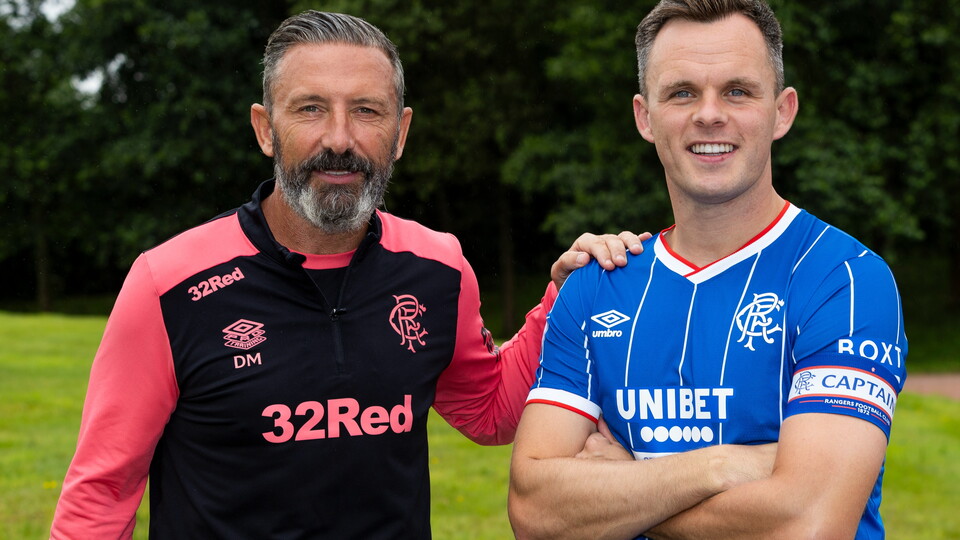
When Lawrence Shankland finally pulled on a Rangers shirt as a first-team player, it was supposed to be the start of a story fans had waited years to read. He was a lifelong supporter finally signing for the club he loved, a proven goalscorer arriving in the Scottish Premiership just as the club was trying to rebuild, and a leader who would soon be handed the captaincy. Instead, a few weeks into the season, the story took a painful turn. A hamstring injury has left him sidelined, and the newest reporting from sources close to the club suggests the wait to see him again will stretch into the new year. The update is a mixture of reassurance and realism, and it says a good deal about how Rangers are managing a difficult stretch of the campaign.
The most important detail, as reported by Football Insider, is that Shankland is progressing well in his recovery, with Rangers expecting him back in early 2027. The injury is a grade 2c hamstring tear, suffered during the Premiership win over Motherwell on 5 September. That classification is generally a sign of a significant layoff, and the early reports at the time of the injury suggested around twelve weeks on the sidelines. The newer information fits that picture. Rather than bringing him back before the end of this calendar year, the club is understood to be planning for a return after the turn of the year, which would mean Shankland missing a large portion of the autumn programme. The tone of the reporting is cautiously optimistic: the recovery is on track, but there is no rush.
The scale of the setback is easier to appreciate when you remember what preceded it. Shankland had only just begun to show what he could do in a Rangers shirt, with two goals in a midweek win over Falkirk before the Motherwell game. In a league where Rangers have often struggled to find a reliable finisher, those goals were exactly what supporters had hoped to see. His manager Derek McInnes, who had worked with him at Hearts, spoke afterwards about how disappointing it was for the player and the club, given that he had been leading the line and scoring in the games leading up to his injury. The timing could hardly have been crueller for a striker who had waited most of his career for this opportunity.
It is worth recalling how long Shankland waited and how unusual his path to Ibrox has been. He began his career at Queen’s Park and spent time at Aberdeen, including a series of loan spells, before establishing himself as a prolific scorer at Ayr United, where he hit fifty goals in two seasons. A big move to Dundee United followed, and his twenty-nine goals helped them win promotion to the top flight. A difficult spell in Belgium with Beerschot came next, and for a time it looked as though his career might drift. Then came Hearts, where he rebuilt his reputation as one of the most dangerous forwards in the country, scoring eighty-eight goals in a hundred and seventy-one appearances over four seasons. By the time Rangers came calling, he was one of Scotland’s most proven finishers.
His signing was announced as the first addition of the summer, on a two-year deal with an option for a further year, for an undisclosed fee. He joined from Hearts as the transfer window opened on 15 June, having captained the Edinburgh club in recent campaigns and scored twenty goals in the season before. It was also a moment that carried real emotional weight, because Rangers was his boyhood club, and he said on signing that playing for them had always been a dream. Supporters who had previously wanted him in a title push the winter before, only to see the move fail to materialise, took the news as a belated reward. There was a sense that the deal had been waiting to happen for years, and that circumstances had finally allowed it.
The timing of the move added another layer. Hearts had come within ninety minutes of the title the previous season, before losing at Parkhead on the final day, and Shankland had been central to that run. He had even scored against Rangers after the league split to help end their own title hopes, which gave the transfer a certain irony. A player who had been a thorn in the club’s side was now one of its biggest signings. The deal also arrived at a time when the club was looking for experience and leadership, qualities that a captain of a title-chasing side could provide. In that sense, the move made sense on both a football and a personality level, which is part of why the injury has stung so sharply.
There was a brief delay before he could properly start. Shankland was away at the World Cup with Scotland during the summer, so he joined up with the Rangers squad only after the tournament had finished. When he finally arrived at the training ground, it was described by supporters and fan sites as the arrival of the prodigal son everyone had been waiting for. He also arrived to find his former Hearts manager in charge, as McInnes had taken over at Ibrox in the interim, which smoothed his adaptation. The familiarity was a clear advantage, and the early signs were encouraging. His quick start on the pitch, including the goals against Falkirk, suggested that the partnership between player and manager was already bearing fruit.
Then came the injury. Shankland was forced off early in the Motherwell game, and the initial reports suggested a lengthy absence. McInnes later explained that the new problem felt similar to the hamstring injury Shankland had suffered at Hearts the previous January, when he had been out for around three months. That comparison was a worrying one, because it suggested a recurrence of a problem he had known before. It also complicated the picture around his availability for the club’s fixture at Tynecastle on 28 October, which would have been a personal highlight, given his history with Hearts. As it turned out, the reunion was always unlikely to happen, and the latest information about his recovery timeline confirms that.
The most recent personal update came from Shankland himself, who travelled to Dubai to continue his rehabilitation and shared a message with supporters. He confirmed that he is in the early stages of his rehab and is recovering well, which was the sort of reassurance fans were hoping to hear. Rangers News reported that he is not expected to play again in 2026, and that a medical expert had suggested individual training would be unlikely before November or December. His family has been with him, and he remains in contact with teammates and staff. It is a reminder that rehabilitation is as much a mental process as a physical one, and that visible progress, even in small steps, matters.
The role of the international breaks is an interesting wrinkle. Rangers have a three-week break in the calendar, with another to come in November, and that means the number of matches Shankland will actually miss is lower than the length of his injury might suggest. The calendar helps the club in two ways: it limits the number of competitive fixtures lost, and it gives the squad time to regroup between demanding spells. For a manager trying to manage a strong run of results while one of his best forwards is absent, those breaks are not a trivial detail. They mean that the time between now and Shankland’s return is shorter in match terms than in calendar terms, and that the club can plan with a clearer sense of what the gap will cost.
What matters most is how the rest of the squad has reacted. Since Shankland was injured, Ryan Naderi, Kevin Kelsy and Bojan Miovski have all scored in the three games that followed, which is exactly what a manager wants to see. Miovski’s contribution, a late winner against St Mirren, was particularly significant given how uncertain his place had looked. Kelsy, signed on deadline day and given his debut against Motherwell, has shown early signs that he can handle the pace of the league. Naderi has been a constant source of goals and creativity. Together, they have helped the team absorb the loss of its captain without dropping its form, which has bought Shankland the time to recover without pressure.
The situation up front is made more complicated by the fact that Shankland is not the only forward on the treatment table. Youssef Chermiti suffered an ACL injury in August that is expected to keep him out for the entire campaign. That is a heavy blow in its own right, and the two injuries combined have reduced the club’s options at the top of the pitch. Yet the club has not panicked. Sources told Football Insider that Rangers are not planning a new move for Aribim Pepple in January, and that McInnes is content with his current forward options, particularly with Shankland expected back in the new year. That decision reflects confidence in the squad and in the timeline for the captain’s return.
This confidence is worth examining, because it shapes how the January window might unfold. A club that believes its best forward will be back in the first weeks of the new year is less likely to rush into a signing out of anxiety. That does not mean the club will stand still, but it does mean that any activity will be driven by planning rather than panic. There are risks in that approach: injury timelines can slip, and a setback in rehabilitation could push the return date back. But the club’s position is that the information it has is encouraging, and that the safest course is to trust the process. If that trust proves justified, Shankland will return in the new year to a squad that has remained competitive in his absence.
There is also the question of what the injury means for Shankland’s role as captain. He has since been handed the armband, a sign of how highly McInnes rates his leadership, and a captain who is injured cannot lead from the front in the usual way. Leadership, however, is not confined to the pitch. A captain who is visible in the dressing room, who offers support to teammates and who sets standards in training can still be a powerful presence, even when he cannot play. Shankland’s decision to share his progress with fans and to remain connected with the squad suggests that he understands this. His recovery is as much about preserving his influence as about restoring his fitness.
The comparison with his previous hamstring problem deserves some care. McInnes noted that the new injury felt similar to the one Shankland suffered at Hearts the previous January, when he was out for about three months. That is a useful guide to the likely timeline, but it is not a guarantee. A grade 2c tear is a different clinical picture from a milder strain, and recovery depends on many factors, including the quality of rehabilitation, the stress placed on the muscle and the body’s own response. The fact that Shankland is in the early stages of rehab, with individual training not expected until later in the autumn, suggests a careful and structured approach rather than a rushed one. That patience is likely to benefit him in the long run.
The mood among supporters has been a mixture of disappointment and perspective. Nobody wanted to see their new captain injured so early in his Rangers career, particularly after he had begun to score. But there is also a sense that the club has handled the situation well. The manager has been honest about the injury, the player has communicated openly, and the squad has responded with results. That combination is rare in football, where injuries often lead to confusion, mixed messages and rushed returns. The current approach feels measured and sensible, and it suggests that the club has learned from past experiences about the cost of bringing players back too quickly.
Looking ahead, the key question is what Shankland will look like when he returns. Strikers who suffer serious hamstring injuries sometimes find that their sharpness takes time to return, and a player who relies on movement, timing and positioning must rebuild his confidence in his body. Shankland’s style is not based on raw pace, which may help, but the physical demands of the Premiership, and of a Rangers shirt in particular, are considerable. The staff will need to manage his workload carefully, perhaps reintroducing him through substitute appearances before restoring him to the starting line-up. The goal will be to ensure that he is available for the decisive part of the season, rather than rushing him back for the sake of a headline.
That decisive stretch is where his return could matter most. The second half of a Scottish season is typically shaped by cup runs, derby matches and the pressure of a title race, and a fit Shankland would be a significant asset in all three. His record at Hearts shows that he scores in big games, and his boyhood connection to the club gives him a motivation that few players can match. If he returns in the new year as planned and finds his rhythm quickly, the injury may come to be seen as a bump in the road rather than a defining moment. That is the hope, and the latest reporting suggests it is a realistic one.
The managerial change behind all this deserves a moment, because Shankland’s Rangers story has had an unusual number of beginnings. He was signed under Danny Röhl, who described him at the time as a player of proven quality, leadership and work ethic, and who counted him as his first summer signing. By the time Shankland actually joined up with the squad, the man in charge was McInnes, the manager who had guided him through a prolific spell at Hearts. In football terms, that is an unusually smooth handover, because the player was recruited for one set of ideas and arrived to find another manager who already knew exactly how to use him. It is a good example of how transfers can outlive the people who start them.
The planned trip back to Tynecastle, where Rangers visit on 28 October, would have been a charged occasion for him in any circumstances. Hearts supporters watched him lead their team to within touching distance of the title, and the sight of him returning in blue as captain of their rivals would have guaranteed an emotional reception, whichever way it went. His absence takes some of the drama out of the fixture, though it also spares him a difficult evening on a ground where he is both a hero and, for some, a departed hero. The reunion will happen eventually, and when it does it will carry all the more weight for the delay.
There is a practical question that the club’s medical staff will be weighing quietly, which is how a player who spent a summer at the World Cup with Scotland and then began a demanding new season is best managed on his return. Nobody has suggested that the tournament caused the injury, and it would be wrong to draw that line without evidence. But it is reasonable to say that a long run of high-intensity football followed by a rapid start to a new campaign places a heavy load on any player’s body, and that a careful return is more sensible than a hurried one. The reporting suggests that the club understands this, and that the January timeline has been set with that in mind.
Perhaps the most encouraging element of the update is the absence of any suggestion of a setback. Recoveries from hamstring injuries can be unpredictable, and the fact that the reporting describes steady progress rather than complications is a good sign. It does not remove the risk, and the medical expert quoted in coverage was clear that it remains early in the process. But in a situation where the club could easily have been forced to rethink its plans, the news that Shankland is still on course for a return in the new year allows everyone, from the manager to the supporters, to plan with a little more confidence than they might otherwise have had.
For now, the picture is one of patience. Shankland is recovering in Dubai, the squad is winning without him and the manager is content with the options available. The latest update does not change the broad outline of the story, but it does add clarity, confirming that the wait will be measured in months rather than weeks and that the club has planned accordingly. In a season that has already had its share of turbulence, that clarity is valuable. It allows the manager to plan, the supporters to manage their expectations and the player to focus on the work in front of him, without the distraction of a countdown to a return date that cannot be guaranteed.
In the end, this is a story about waiting, in more ways than one. Shankland waited most of his career to play for Rangers, and now he must wait again, this time for his body to heal. The club has waited years for a striker of his quality and is now waiting for him to return. Supporters are waiting for the goals that were promised in those first few games. None of that waiting is easy, but it is shaped by hope rather than doubt. If the recovery goes as planned, the new year will bring the return of a captain, a goalscorer and a lifelong fan who has only just begun to write his chapter at Ibrox.








