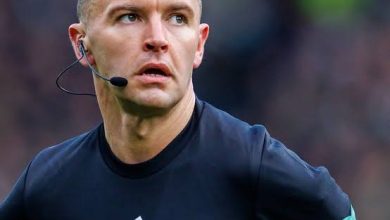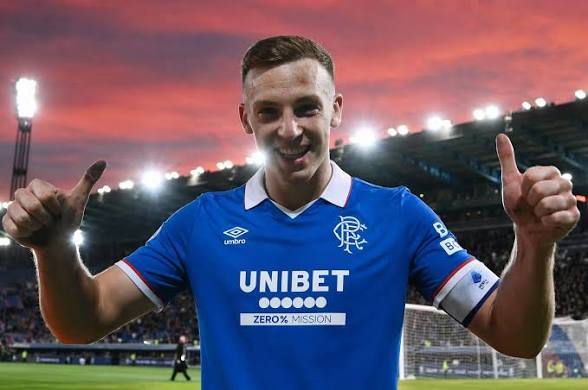
Lawrence Shankland has opened up on the true circumstances behind his controversial summer move from Hearts to Rangers, confirming for the first time in detail that a specific clause built into his Tynecastle contract paved the way for him to leave for his boyhood club. The Scotland international, who had been at the centre of one of the most talked-about transfer sagas in recent Scottish football, addressed the situation directly, shedding light on a deal that left Hearts supporters stunned and opinion divided over how his four years in maroon should ultimately be remembered.
Shankland’s switch to Ibrox was, in many ways, the culmination of a longstanding personal ambition rather than a decision taken on the spur of the moment. As a lifelong Rangers supporter, the striker had made no secret of his affection for the Ibrox club long before the move materialised, and it later emerged that Rangers had actually passed up an opportunity to sign him as far back as the previous summer, when he had been available as a free agent. At that time, no formal approach was made, and Shankland instead committed his future to Hearts by signing a new three-year contract at Tynecastle.
That decision to stay in Edinburgh proved to be anything but a step back for either player or club. Shankland went on to enjoy an outstanding campaign in maroon, scoring 20 goals with six assists as Hearts mounted a genuine and sustained challenge for the Scottish Premiership title, a competition they had not won in 66 years. It was a season that saw him further cement his status as one of the most prolific forwards in Hearts’ modern history, continuing a run of form that had already established him as the club’s most lethal number nine since the days of John Robertson
Central to the eventual transfer was the revelation that Shankland’s new contract, signed the previous summer, contained a specific clause allowing him the opportunity to leave Tynecastle under certain conditions. Speaking publicly about the arrangement for the first time, Shankland was careful not to go into excessive detail, citing the private nature of the agreement between himself and the club, but he did confirm that such a clause did indeed exist and had been central to how the move unfolded.
According to his own account, the clause was not written specifically with Rangers in mind, but rather constructed more broadly to give him the option of pursuing a move away from Hearts should the right opportunity present itself, whether that came from Rangers or another interested party. Even so, Shankland made clear that his personal priority throughout had always been a return to Ibrox, the club he had supported since childhood, and that once he communicated that preference to the relevant parties, the process of finalising his exit moved forward with relatively little friction. He described the situation as having become straightforward once his intentions were made known, characterising the entire process from that point onward as smooth and clearly understood by everyone involved.
Reports close to the situation suggested a more specific arrangement lay beneath the surface: that Shankland had effectively signed what amounted to a short-term extension with a further two-year option attached, structured in a way that would allow him to depart for either a nominal fee or entirely for free if Rangers, or potentially another club of significant interest, came calling. Shankland’s own account left open the possibility that other suitors could theoretically have triggered the same clause, though he was unequivocal that Rangers had always represented his first and only real preference once the possibility became available to him
The decision to allow such a clause into Shankland’s contract in the first place, and subsequently to honour it when Rangers came calling, was not without controversy inside Tynecastle. Hearts sporting director Graeme Jones was moved to publicly defend the call, explaining that the situation facing the club a year earlier had, in his words, been a relatively simple calculation over whether or not to retain their captain and talisman on those particular terms. That defence came against a backdrop of considerable surprise among supporters, many of whom had believed Shankland’s decision to sign a fresh three-year contract the previous summer represented a long-term commitment to the club, only to see him leave for a fierce rival twelve months later.
Hearts’ formal statement confirming the move struck a gracious tone despite the circumstances, thanking Shankland for his contribution over four years in Gorgie and confirming that he would complete his switch to Ibrox on undisclosed terms once the transfer window opened. That the departure came without a transfer fee changed hands only added to the sense of frustration among sections of the Hearts support, who felt their club’s title challenge, and prior investment in extending their captain’s contract, had ultimately been undermined by a mechanism that allowed their best player to walk straight into the arms of their fiercest rivals.
Whatever the controversy surrounding his exit, there was little dispute over the scale of Shankland’s contribution to Hearts during his time at the club. Having arrived from Belgian side Beerschot back in the summer of 2022, he wasted little time endearing himself to supporters, eventually racking up 88 goals in 171 competitive appearances across four seasons in Edinburgh. That record made him comfortably the most prolific number nine the club had produced in decades, and he was rewarded with the captaincy in December 2022, stepping into the role following goalkeeper Craig Gordon’s serious double leg-break earlier that season.
Shankland’s final season in maroon proved to be his most significant contribution yet to the club’s modern history, finishing with 21 goals in 36 appearances for club and country as Hearts came agonisingly close to landing a first league title in 66 years. That challenge ultimately fell short on the final day of the season, with a 3-1 defeat away at Celtic Park confirming that the title would go to their rivals by a margin of just two points. The disappointment of that afternoon was compounded by unsettling scenes at full time, when Shankland had to be ushered off the pitch by stewards after a mass pitch invasion raised concerns for player safety, bringing a dramatic and chaotic conclusion to what had otherwise been a landmark campaign for the Edinburgh club.
For Rangers, the swift capture of Shankland fit into a broader strategy being pursued by the club’s hierarchy at the time, with chairman Andrew Cavenagh having made clear his desire to prioritise domestic talent as part of the rebuild taking shape at Ibrox. Speaking around the time of the transfer, Cavenagh outlined what he described as a pro-Scottish bias running through the club’s recruitment thinking, explaining that when comparing players of broadly similar quality, preference would be given to those with Scottish nationality. That approach placed Shankland, along with other targeted domestic talents at the time, firmly in line with the direction the new ownership wanted the football department to take.
Shankland’s arrival was completed on a two-year contract with the option of an additional year, giving Rangers long-term control over one of the most productive strikers in the Scottish game. The move also reunited him with figures from his time at Tynecastle, with then-incoming head coach Derek McInnes, who had also left Hearts that summer following the club’s second-placed finish, later following him to Ibrox, along with midfielder Cammy Devlin. That web of connections between the two clubs added further intrigue to an already eventful summer of transfer business, with McInnes eventually taking permanent charge of Rangers and immediately turning to Shankland as a central figure in his new-loo
Given the timing of events, and the close professional relationship between Shankland and McInnes forged at Tynecastle, plenty of speculation followed the transfer regarding just how involved the incoming Rangers boss may have been in facilitating his old captain’s move. While no concrete evidence was presented to confirm any direct involvement on McInnes’ part in the mechanics of the transfer itself, there was widespread belief that he was unlikely to have stood in the way of a player he knew wanted the move so badly, given how clearly established Shankland’s desire to join Rangers had become by that point.
Whatever the precise nature of any behind-the-scenes involvement, what remained clear was that Shankland’s priority throughout had always been a return to Ibrox rather than any other suitor, and that the clause negotiated into his Hearts contract the previous summer proved to be the mechanism that ultimately made his dream move possible. For a player who described the chance to represent the club he had supported since childhood as a lifelong ambition, the specifics of the legal mechanism mattered far less to him personally than the outcome it eventually delivered.
Since completing his transfer, Shankland has gone on to become an important figure at Ibrox, being appointed club captain by McInnes ahead of the new season and continuing to represent Scotland on the international stage, including featuring at the FIFA World Cup during the same summer as his move. His early performances in a Rangers shirt suggested the switch had the potential to be a significant success for both player and club, even as questions lingered in some quarters, particularly in Edinburgh, about the manner in which his Hearts career had come to such an abrupt end.
For Hearts, the loss of their captain and record goalscorer represented a significant blow just months after they had come so close to ending their long wait for a league title, and it left the club needing to reshape their attacking options heading into the new campaign. For Rangers and their supporters, however, the arrival of a proven, prolific Scottish striker with genuine boyhood connections to the club represented exactly the kind of statement signing the new ownership had been targeting as part of their broader push to reshape the football department in a more domestically focused
Looking back, the Shankland transfer stands as one of the most consequential pieces of business conducted by either Rangers or Hearts in recent memory, not simply because of the player’s importance on the pitch, but because of what it revealed about the mechanics increasingly at play in modern football contracts. A carefully negotiated clause, built into an extension signed under entirely different circumstances a year earlier, ultimately proved decisive in allowing one of Scottish football’s most productive strikers to complete a move to the club he had dreamed of playing for since childhood, without a transfer fee changing hands and with what both player and club have since characterised as a smooth and mutually understood process once his intentions became clear.
Whether the finer details of that clause are ever fully disclosed, its consequences are already evident: a title race that ended in painful near-miss for Hearts, a fresh start under new stewardship for Shankland at the club he always wanted to play for, and a reshaped rivalry between two clubs now more closely linked than at almost any point in recent memory, given the number of key figures who have made the same journey from Tynecastle to Ibrox over the course of a single, eventful summer.