Martin O’Neill Celtic future decision dissected as Derek McInnes and Rangers set firm challenge

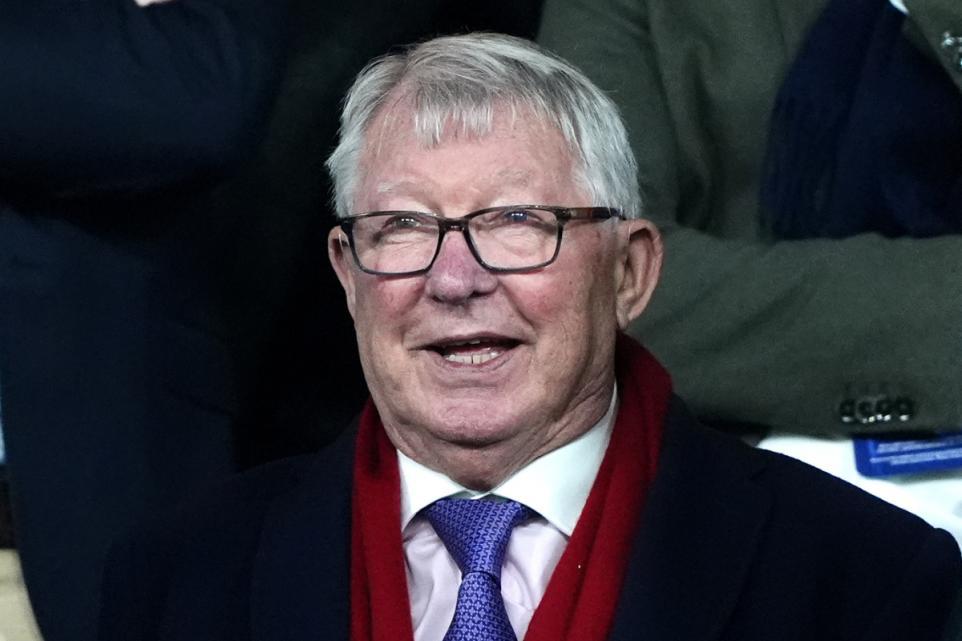
Martin O’Neill’s future at Celtic has become an increasingly important talking point as questions continue to emerge about the club’s direction, ambitions, and ability to maintain its position at the top of Scottish football. With Rangers determined to close the gap and Derek McInnes facing the challenge of making his team more competitive, the situation at Celtic has attracted growing attention.
For Celtic supporters, the question is not simply whether O’Neill should remain involved with the club. It is about what his future could mean for the team’s immediate ambitions and long-term plans. The club has spent years building expectations around domestic success, European progress, and a style of football capable of keeping rivals at a distance. Any uncertainty surrounding the manager’s position inevitably raises questions about whether Celtic can continue meeting those expectations.
O’Neill is a familiar figure to Celtic supporters, and his experience gives him a significant place in discussions about the club’s future. His previous involvement with Celtic has helped shape how fans view his potential contribution, particularly when the team needs leadership, confidence, and a clear sense of direction.
However, football rarely allows decisions to be made on reputation alone. The demands of the modern game mean that every manager must be judged on the circumstances surrounding the team, the resources available, the performances being produced, and the expectations of supporters. O’Neill’s future therefore represents a wider discussion about what Celtic need at this stage of their development.
At the same time, Rangers cannot afford to ignore the situation unfolding at their biggest domestic rival. Any uncertainty at Celtic could create an opportunity, but Rangers must first demonstrate that they have the consistency and quality required to take advantage. Derek McInnes will understand that challenging Celtic requires more than waiting for mistakes. His team must deliver strong performances, collect points regularly, and show that they can handle the pressure of a title race.
That is what makes the debate surrounding O’Neill particularly interesting. Celtic are considering questions about leadership and direction, while Rangers have their own challenge to address. The balance of power in Scottish football will not be determined by one managerial decision alone, but the decisions made by both clubs could influence the course of the season.
For the Saturday Jury, the central question is whether Celtic should continue with O’Neill or consider a different direction. There are reasonable arguments on both sides, and the answer depends on what the club believes it needs most: immediate stability, a longer-term rebuilding project, or a combination of the two.
One argument in favour of O’Neill is the value of experience. Managers who understand the pressures of Celtic are not always easy to find. The club operates in an environment where winning is expected, and even a short run of disappointing results can lead to intense criticism. The manager must deal with demanding supporters, scrutiny from the media, and the constant pressure of competing for trophies.
O’Neill has experience of that environment. He understands that Celtic supporters want more than occasional victories. They expect the team to compete strongly, play with confidence, and demonstrate the determination required to win important matches. Familiarity with those expectations can be valuable, especially during periods when the team needs to regain its confidence.
Experience, however, does not automatically guarantee future success. The game has changed considerably over the years, with clubs investing in recruitment departments, performance analysis, sports science, and more sophisticated tactical systems. Managers must adapt to those developments while maintaining the ability to motivate players and make important decisions under pressure.
Celtic must therefore assess O’Neill according to what he can offer now, rather than relying exclusively on what he achieved in the past. If the club believes he can improve performances, provide leadership, and help establish a clear plan for the future, there is a strong argument for continuing with him.
If the club instead believes that a different manager would be better equipped to lead a longer-term project, that possibility must also be considered. The decision should be based on a realistic assessment of the team’s needs rather than an emotional reaction to a few results.
This is where the discussion becomes more complicated. Celtic are not operating in isolation. Rangers remain a major competitor, and the threat posed by their rivals makes every decision at Celtic more significant.
For much of the recent history of Scottish football, Celtic have been accustomed to entering seasons with considerable expectations. Their financial resources, squad quality, and ability to attract players have often placed them in a strong position. Nevertheless, those advantages must be translated into results on the pitch.
Rangers know that a title challenge becomes more realistic when Celtic experience uncertainty. However, the Ibrox club cannot assume that any questions surrounding O’Neill will automatically lead to a decline at Celtic. A rival may be experiencing a difficult period without necessarily losing the ability to win matches.
Rangers must concentrate on their own performances. If McInnes wants to establish his team as a serious threat, he needs to create a side that is disciplined, organised, and capable of delivering results against different types of opponents.
The biggest test for Rangers will be consistency. A team can produce an impressive performance in a major fixture and still struggle to maintain momentum in the following weeks. Title challenges are often decided by how clubs perform when expectations are high but the matches themselves attract less attention.
Dropping points against teams expected to finish lower in the table can prove just as damaging as losing a direct encounter with Celtic. Every result matters, and the ability to recover quickly from disappointment is essential.
McInnes must also ensure that his players understand their responsibilities. Rangers need a reliable defensive structure, creativity in midfield, and enough attacking quality to turn promising performances into victories. Tactical discipline will be important, but the players must also demonstrate the confidence to take responsibility in difficult moments.
If Rangers can achieve those objectives, they will have a stronger foundation for challenging Celtic regardless of who is in charge at Parkhead.
That is an important distinction in the O’Neill debate. Celtic’s decision may attract the headlines, but Rangers’ progress will depend on what happens inside their own dressing room and on the training pitch.
For Celtic, the possibility of maintaining O’Neill’s involvement also raises questions about continuity. Changing managers can bring new ideas and renewed enthusiasm, but it can also introduce uncertainty. A new appointment may require time to understand the squad, assess the strengths and weaknesses of individual players, and establish a preferred tactical approach.
There is no guarantee that a new manager would immediately improve the team. Even highly regarded appointments can struggle when faced with an unfamiliar league, an unbalanced squad, or expectations that exceed what the available players can realistically deliver.
Celtic would therefore need to be certain that any alternative offered a clear improvement on the existing arrangement. Simply changing the person in charge would not solve problems involving recruitment, squad depth, player confidence, or the club’s broader football strategy.
This is particularly important if Celtic believe that the squad needs adjustments. A manager can only work with the players available, and the club’s recruitment decisions will influence what is possible on the pitch. If the team lacks depth in important positions, replacing the manager may not address the underlying issue.
The relationship between the manager and the people responsible for recruitment is equally significant. Celtic need a structure in which decisions about transfers, contracts, and squad development support a common objective. Disagreement over those matters can make it difficult for any manager to deliver consistent results.
O’Neill’s future should consequently be considered alongside the club’s wider plans. If Celtic want him to continue, they must establish what responsibilities he would hold and what support would be available. If they intend to appoint someone else, they must identify the qualities required and ensure that the new manager fits the club’s long-term strategy.
Supporters are entitled to demand clarity. They want to understand the direction in which their club is moving, particularly when rivals are working to improve their own positions.
However, clarity does not necessarily mean rushing into a public announcement before every detail has been settled. Important football decisions require careful consideration, and the consequences can extend well beyond a single season.
The Saturday Jury debate also highlights the difference between short-term results and long-term planning. A manager may produce an immediate improvement without necessarily being the best person to oversee the next several years. Equally, a promising long-term appointment may require patience before the benefits become clear.
Celtic must decide which objective matters most in the current circumstances. If the immediate priority is to maintain stability and compete for trophies, O’Neill’s experience could be an important advantage. If the priority is to build a new team around a particular tactical identity, the club may decide that a different appointment is more appropriate.
One of the strongest arguments for continuity is the possibility that a team can improve through familiarity. Players who understand their manager’s expectations may perform with greater confidence as they become more comfortable with the system. A settled environment can also make it easier to identify the positions that genuinely require reinforcement.
Nevertheless, continuity becomes less attractive if performances remain inconsistent or the team repeatedly struggles to solve the same problems. At a club with Celtic’s ambitions, there must be clear signs that the current approach is capable of delivering the required results.
The same principle applies to Rangers. McInnes must demonstrate that his methods can produce sustained progress. A promising start would be encouraging, but supporters will ultimately judge the project on results, performances, and the ability to compete for major honours.
Rangers also need to make sensible decisions in the transfer market. Recruitment can determine whether a manager has the tools needed to execute his plans. Signing players who suit the intended system is often more effective than collecting individuals based on reputation alone.
A balanced squad gives a manager options when injuries, suspensions, and difficult fixtures arrive. Without that depth, even a well-organised team can struggle during demanding periods of the season.
For McInnes, managing expectations will be another important task. Rangers supporters want to see progress, and they will expect the team to approach major matches with ambition. However, a successful challenge requires patience as well as urgency.
The manager must build confidence without allowing his players to become complacent. He must demand high standards while maintaining a positive atmosphere. He must also be willing to adjust his approach when opponents expose weaknesses.
These responsibilities become even more important when Celtic are viewed as the benchmark. Rangers cannot build a convincing title challenge simply by comparing every performance with what Celtic have done. They need their own identity and a clear understanding of how to win matches.
If Celtic retain O’Neill, Rangers will still have an opportunity to challenge them. If Celtic appoint a new manager, Rangers will still have to prove that they can compete consistently. In either scenario, McInnes must focus on building a team capable of delivering results.
For Celtic supporters, meanwhile, the debate over O’Neill is likely to remain connected to the club’s ambitions. They will want assurances that the manager’s position is being considered carefully and that the club is not allowing uncertainty to undermine its preparations.
There is also a question of how players respond to managerial uncertainty. Professional footballers must continue preparing for matches regardless of speculation, but a lack of clarity can sometimes affect confidence. Clear communication from the club can help maintain focus and ensure that attention remains on performances.
If Celtic decide that O’Neill is the right person to continue, the club should communicate the reasoning behind that decision as clearly as appropriate. Supporters may not agree with every aspect of the plan, but they will want to understand the objectives and the standards by which progress will be measured.
If the decision is to move in another direction, Celtic must have a credible replacement strategy. The club should avoid allowing speculation to become a substitute for planning. Identifying the right manager requires an understanding of the squad, the competition, the financial circumstances, and the footballing identity the club wants to establish.
A new appointment would also need the backing of the board. Managers cannot be expected to deliver sustained success without sufficient support in recruitment and the resources necessary to address weaknesses.
The challenge is particularly significant because Rangers are not standing still. McInnes and his team will be looking for every opportunity to improve their league position, build momentum, and make life more difficult for Celtic.
That competition is part of what makes Scottish football compelling. The rivalry between the clubs places enormous pressure on their managers, but it also provides a clear measure of progress. Each side knows that strong performances against the other can influence the mood around the club and shape perceptions of the season.
Yet the title race is rarely decided by rivalry matches alone. Consistency across the entire campaign remains essential. Celtic could win a major encounter and still face difficulties if they repeatedly drop points elsewhere. Rangers could perform well against Celtic but fall short if they fail to take advantage of more manageable fixtures.
McInnes must ensure that Rangers do not become distracted by developments at Parkhead. Monitoring a rival is natural, but the most effective response is to improve the team’s own performances.
Likewise, Celtic must not make decisions purely because Rangers appear to be improving. Their strategy should be based on their own requirements, not simply on an attempt to react to the latest development at Ibrox.
This is where experienced leadership becomes valuable. Football clubs need people capable of distinguishing between temporary pressure and deeper structural problems. They need to recognise when patience is justified and when decisive action is necessary.
O’Neill’s future should be assessed through that lens. The question is not whether he is a respected figure or whether his name carries historical significance. The question is whether his involvement offers Celtic the best chance of achieving their current objectives.
That assessment should include tactical performance, the development of younger players, communication with the squad, the management of experienced individuals, and the ability to adapt when matches do not follow the expected pattern.
It should also consider whether the club has a realistic alternative. A change may be justified if a suitable replacement is available, but a poorly planned transition could create more problems than it solves.
For Rangers, the equivalent assessment concerns McInnes and the progress of his team. If the club wants to challenge Celtic seriously, it must provide a stable environment, recruit intelligently, and maintain high standards throughout the season.
The rivalry adds another dimension to the debate because both clubs know that momentum can change quickly. A strong sequence of results can transform confidence, while a series of disappointing performances can increase pressure on managers and players alike.
However, one should be cautious about treating speculation as confirmation. Questions surrounding O’Neill’s future do not, by themselves, establish that Celtic have made a final decision. Similarly, the possibility of Rangers mounting a challenge does not guarantee that they will finish ahead of Celtic.
The most useful approach is to examine the options available to both clubs and consider what each must do to achieve its ambitions.
For Celtic, continuity would make sense if O’Neill has the confidence of the people making football decisions, the support needed to improve the squad, and a convincing plan for the team’s development. A change would make sense if the club has identified a stronger alternative and can explain why that appointment better serves its objectives.
For Rangers, the priorities are more straightforward. McInnes must produce consistent results, build a competitive squad, and ensure that the players approach every fixture with the concentration expected of a team seeking major honours.
The coming weeks and months could provide important evidence for both sides. Performances against difficult opponents, responses to setbacks, and the ability to manage pressure will reveal far more than speculation about managerial futures.
Celtic supporters will want to see a club that acts decisively but intelligently. Rangers supporters will want to see evidence that their team is moving closer to the standard required to compete for the title. Both sets of expectations are understandable.
Ultimately, O’Neill’s future is about more than one individual. It is about Celtic’s willingness to define its priorities and commit to a coherent footballing strategy. His experience may offer valuable stability, but the club must determine whether that stability is enough to meet the demands ahead.
For McInnes, the situation offers a reminder that opportunities in football must be earned. Even if Celtic face difficult decisions, Rangers will need to demonstrate their own quality before they can turn uncertainty at their rivals into a genuine advantage.
The Saturday Jury debate therefore has no simple answer. Keeping O’Neill could be the right decision if continuity is supported by convincing performances and a clear plan. Moving in another direction could be justified if Celtic believe a different manager offers a stronger route forward.
What matters most is that the club makes its decision for the right reasons. Reputation alone should not guarantee a manager’s position, just as short-term disappointment should not automatically lead to a change.
Rangers, meanwhile, must concentrate on becoming a team capable of sustaining pressure throughout the campaign. McInnes needs to turn ambition into results, and his players must show that they can compete consistently against both the strongest teams and the sides they are expected to defeat.
The wider Scottish football picture will depend on how both clubs respond to their respective challenges. Celtic must settle their direction, while Rangers must continue building the foundations of a serious challenge.
If Celtic get their decision right, they could strengthen their position and reduce uncertainty around the club. If Rangers get their own decisions right, they could become much more difficult rivals to overcome.
That is the real significance of the discussion surrounding O’Neill. It is not simply a question of whether a familiar face remains at Celtic. It is a test of planning, leadership, recruitment, and ambition at two clubs that understand the importance of winning.
For now, the decisive factor will be what happens next. Celtic must determine the best course for their manager and their squad, while Rangers must demonstrate that their challenge is based on performances rather than the circumstances of their rivals.
One thing is clear: no managerial decision can replace the hard work required on the pitch. Celtic will need strong performances to protect their ambitions, and Rangers will need sustained consistency to threaten them.
Whether O’Neill remains central to Celtic’s plans or the club eventually chooses another direction, the pressure will not disappear. The expectations at Parkhead will remain high, and Rangers will continue looking for opportunities to close the gap.
McInnes now has his own task: make sure Rangers are ready to take advantage of any opening that emerges. If he can build a disciplined, confident, and consistent team, the contest at the top of Scottish football could become even more demanding.
For Celtic, the challenge is to make a decision that balances experience with future planning. For Rangers, it is to prove that their ambitions can be matched by results.
The outcome of this debate will ultimately be judged not by speculation or reputation, but by the decisions made behind the scenes and the performances delivered in front of supporters.
That is why Martin O’Neill’s Celtic future remains such an important subject. It touches on the direction of one of Scotland’s biggest clubs while offering Rangers a reminder that the opportunity to challenge a rival means little unless the team is prepared to seize it.
As the season develops, the focus will return to the football. Celtic will need to demonstrate that their leadership decisions are producing the required results, and Rangers will need to show that McInnes can turn his plans into a genuine challenge.
Until then, the debate remains open, with both clubs facing decisions that could have a lasting influence on their ambitions.








