McInnes, Fotheringham and the Parkhead Touchline Flashpoint: What the Cameras Showed, and What They Did Not

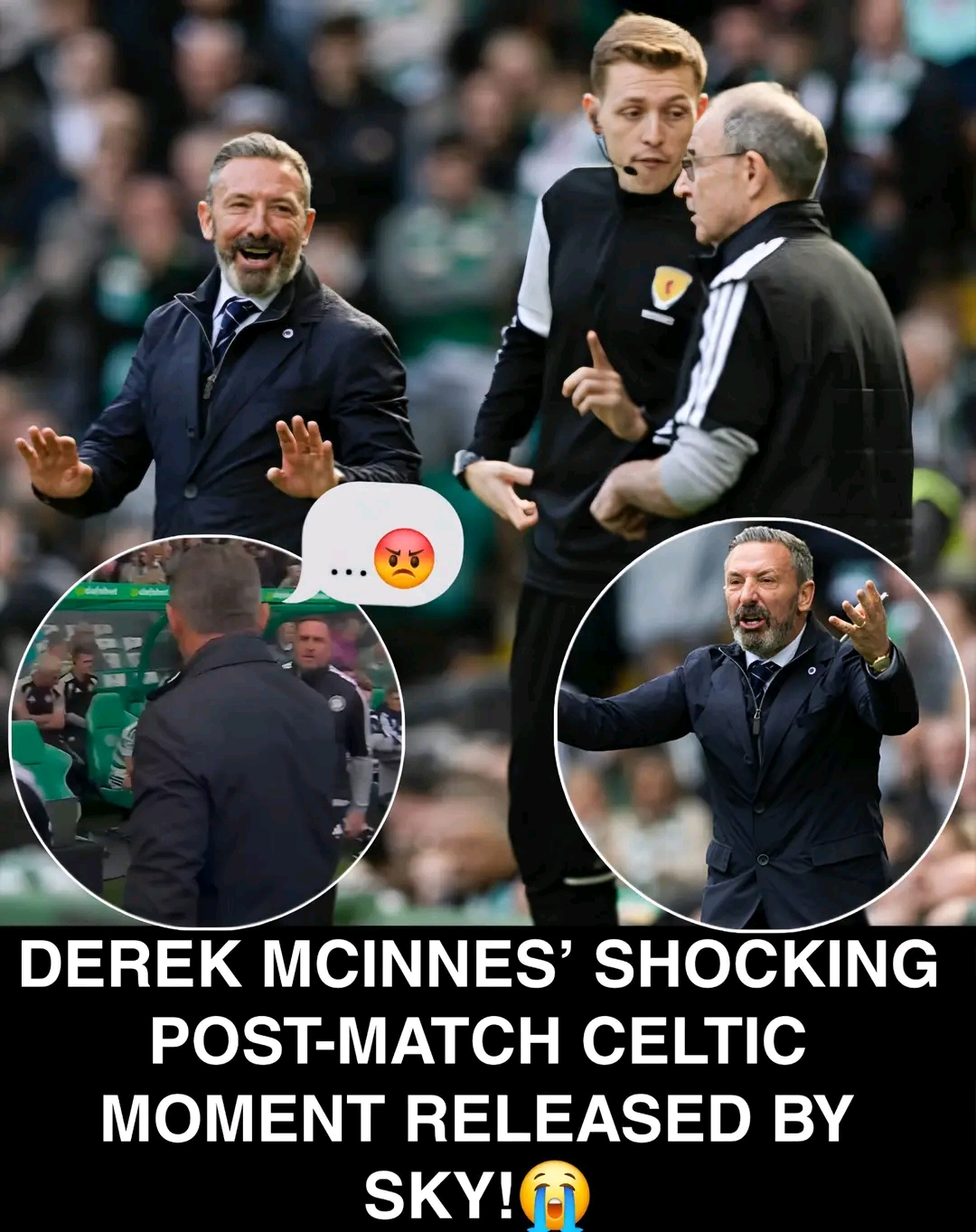
Old Firm matches are rarely played in a spirit of quiet cooperation, but even by the standards of Glasgow derbies, one moment from Celtic Park on 20 September has stuck. Early in the first half, with Rangers and Celtic still feeling each other out, the television cameras caught Derek McInnes and Celtic coach Mark Fotheringham squaring up in the technical areas, the two men separated by officials and then both shown a yellow card by referee John Beaton. Rangers went on to win 1-0, and by full time the argument had become one of the talking points of an already loaded afternoon.
Since then, the clip has done what all clips do. It has been replayed, slowed down, captioned and argued over, and in some corners of social media it has been inflated into something much bigger than what the footage actually shows. It is worth being precise about that, because the reality is both less lurid and more interesting than the overheated versions. What the cameras captured was a heated, public confrontation between a manager and an opposing coach. What they did not capture, at least in any form that has been reported, is what was said. The exchange was visible; the words were not.
That gap matters, and it is where this piece begins. Rather than invent a line of dialogue to fit a dramatic headline, it is more useful to set out what is actually known: what happened on the touchline, what McInnes said afterwards, what history lies behind his relationship with Fotheringham, and what it all says about a manager who has spent his first months at Ibrox under constant scrutiny.
The most solid account comes from the broadcasts and from the match reports. Sky Sports’ cameras were focused on the technical areas when McInnes was seen in a heated discussion with the fourth official. He appeared to be signalling to the fourth official, making a point about something that had gone on in the match, when Fotheringham became involved. From there, the situation escalated into a shouting match along the touchline. Martin O’Neill, on the Celtic bench, was seen trying to usher Fotheringham away while he and McInnes continued to trade words, and the officials stepped in to keep the two apart.
Beaton’s response was to book both men. Fotheringham, by most accounts, was clearly unhappy with McInnes’s behaviour but accepted the caution, while the Rangers manager protested that the balance of decisions was not fair. It was, in the end, a yellow card each, which in a match of this intensity is a fairly measured outcome. Sky Sports Scotland shared the footage during the game with a caption noting that things were already getting heated on the touchline, and it quickly spread.
The reports are consistent on one important point: it is unclear what sparked the clash. Coverage of the incident repeatedly notes that nobody outside the technical areas could say exactly what had been said, and that the cameras did not provide clear audio. That means any claim about the specific content of the exchange, particularly any claim that it contained a shocking insult, goes beyond what has been established. The visual evidence shows two men in a furious disagreement. It does not show, and no credible report has confirmed, a particular line that was hurled across the touchline.
After the match, McInnes was asked about the booking, and his answer is revealing. He did not claim that Fotheringham had provoked him with a particular remark, and he did not apologise for confronting him. Instead he explained his anger in terms of the way the game was being refereed. By his count, the fouls were running three to one against his side, and only two bookings had been shown, a ratio he clearly believed was unfair. He summed up his own behaviour by saying he was probably just sticking up for his team.
That is a very McInnes-like response. It frames the confrontation as a matter of principle rather than personality, an attempt to protect his players from what he saw as an imbalance in how the game was being managed. Whether supporters of either club find that persuasive depends largely on which end of Glasgow they come from, but it is a coherent explanation, and it is a long way from the cartoonish version of events that has circulated online.
None of this means the clash was trivial. A manager and a rival coach squaring up in front of a full house at Celtic Park, with the game barely under way, is a significant moment, and it reflects the tension that surrounded the fixture. Rangers had arrived at the ground fresh from a 3-0 cup win over Celtic at Ibrox a week earlier, and the sense of rivalry was running unusually high. In that atmosphere, an argument at the touchline was almost predictable.
It also helps to understand that this was not the first time McInnes and Fotheringham had crossed paths in an unfriendly way. Coverage of the incident points back to a match at Tynecastle last season, when McInnes was manager of Hearts and Celtic scored a goal. On that occasion, the Hearts manager was reported to have made a beeline for the Celtic dugout, accusing Fotheringham of an inappropriate celebration. McInnes later spoke about it publicly, complaining about one of Celtic’s inexperienced coaches and saying he had not liked his reaction to scoring. He was careful to say it had nothing to do with the other senior figures in the Celtic staff, describing it as just a poor reaction.
That earlier episode puts the Parkhead flashpoint in context. There is a history here, a sense that McInnes finds something in Fotheringham’s touchline manner that irritates him. Whether that is fair or not is a matter of opinion, and Celtic supporters will no doubt argue that it is McInnes who is the one prone to overreaction. But the pattern suggests that the September argument did not come from nowhere. It was the continuation of an existing friction, replayed on a bigger stage and in front of bigger crowds.
The wider backdrop is McInnes’s relationship with Celtic and with officials more generally, and here too the record is worth setting out accurately. Last May, while manager of Hearts, he was widely discussed after Celtic were awarded a stoppage-time penalty to win at Motherwell in the penultimate round of league fixtures. Speaking to Sky Sports, he called the decision disgusting and said he did not believe it was a penalty. Celtic then beat Hearts on the final day, denying them what would have been a first top-flight title in sixty-six years.
Those comments had consequences. After taking over at Rangers, McInnes was cited by the Scottish FA’s compliance officer over his remarks about the officiating, and he initially faced a four-match touchline ban, three games of which were to be served immediately. Rangers appealed, and the punishment was reduced to two matches immediately. It was an awkward start for a new manager, and it meant he began his Ibrox career watching from the stands rather than the technical area.
That history is relevant because it shows how closely McInnes is now watched whenever Celtic are involved. A manager who has already been disciplined over his reaction to a Celtic decision, and who has a recorded dispute with one of their coaches, will inevitably attract attention when a touchline row breaks out. The footage from Parkhead was always going to be examined through that lens, and it is easy to see why some of the commentary has been so heated.
There is a longer story too. McInnes has been through Old Firm confrontations before, and not always comfortably. In an Aberdeen spell, he was sent to the stand during a Scottish Cup semi-final against Celtic after making a gesture towards a section of the Celtic support who had directed sectarian chants at him. Afterwards he said he should not have reacted the way he did and that he should be better than that, adding that he had heard the song many times and had never responded before. It was an unusually candid acknowledgement, and it showed a manager who recognises when his emotions have got the better of him.
That self-awareness is worth keeping in mind when judging the Fotheringham clash. McInnes is clearly a passionate man who feels deeply about the matches he is involved in, and that passion occasionally spills over. But he has shown in the past that he can reflect on those moments and take responsibility for them. The question is whether the Parkhead booking belongs in that category, or whether, as he suggests, it was a justified defence of his players.
For Rangers supporters, the answer is probably the latter. They saw a manager standing up for his team in the most hostile environment in Scottish football, and they saw him walk away with a win. For Celtic supporters, the picture is different. They saw an opposing manager losing his composure and confronting one of their coaches, and some of the coverage from Celtic-leaning outlets has leaned into that, with one headline suggesting that Celtic had watched McInnes lose control before hearing his excuse. Those competing narratives are exactly what you would expect from a derby, and neither is a neutral description.
What can be said fairly is that the incident reflects the temperature of the fixture. Both teams were under pressure, both benches were invested, and the stakes were high. A defeat would have stretched the gap at the top of the table to eight points at a very early stage, as McInnes himself pointed out, and a Rangers win closed the distance and gave a young squad a significant boost. In that context, it is not surprising that tempers frayed on the touchline.
It is also worth thinking about what the incident tells us about the dynamics inside a Glasgow derby. Technical areas are cramped, and the people in them are often only a few feet apart. Managers and coaches are acutely aware of every decision, and the fourth official is the person they all turn to when they feel something has gone wrong. Fotheringham’s involvement suggests that at least one member of the Celtic staff felt the Rangers manager was out of line, while McInnes’s decision to confront the fourth official in the first place suggests he felt his side was being treated unfairly. Put those two instincts together in a cauldron like Celtic Park and an argument becomes almost inevitable.
The referee’s decision to book both men was, in a sense, the neutral outcome. Beaton gave each of them the same punishment, which treated the incident as a mutual flare-up rather than the fault of one individual. That approach has its critics, because McInnes argued that the wider pattern of fouls was not being reflected in the cards, but as a response to a touchline confrontation it was a reasonable one. It allowed the match to move on without removing either figure from the dugout, which probably served everyone’s interests.
There is a broader point about how this kind of footage travels. Clips from derby matches are shared and reshared within minutes, and every outlet and account adds its own framing. A dispute that lasted perhaps half a minute can become the dominant story of a weekend, and a vague description of an argument can be transformed into an alleged insult, a meltdown or a scandal. That is not necessarily dishonest, but it is a reminder to read behind the caption. The factual record here is a yellow card for each man, a visible row, and a manager’s explanation afterwards. Anything beyond that is inference or embellishment.
For McInnes himself, the incident has been absorbed into a season that has otherwise gone better than many expected. Rangers have won their last six matches, including both games against Celtic, and the manager has talked openly about the importance of belief and confidence in a young squad. The touchline row was a small drama within a much bigger improvement, and there is little sign that it has affected the team’s performance. If anything, the 1-0 win at Parkhead suggests that the manager’s willingness to fight for his side can be an asset, giving his players a visible sign that he is on their side.
That said, there is a risk in treating every flare-up as harmless. A manager who is repeatedly in the headlines for disputes with officials and rival staff can find that his behaviour becomes the story, overshadowing the football. McInnes has already faced a disciplinary process over his comments about officiating, and he is aware that the Scottish FA is watching. Another cautioned incident is unlikely to lead to serious sanctions, but a pattern of confrontations would eventually draw attention. He will want to be careful that the passion that serves him well on the touchline does not tip into something that damages his authority.
For Fotheringham, too, there is a lesson. Coaches on the touchline have a role to play in supporting the manager and the team, but they are also visible, and reactions that seem natural in the heat of the moment can be turned into storylines. His acceptance of the caution suggests he understood that, and there has been no suggestion that Celtic were looking to escalate. The club, like Rangers, will probably prefer that the matter is allowed to fade.
What, then, should we make of the headlines that promised an unseen, unbelievable insult? The answer is that they say more about the economy of online attention than about the events at Celtic Park. There is no verified evidence of a secret remark that was suddenly revealed in newly released footage. There is, instead, a widely reported touchline argument, a pair of yellow cards and an explanation from the Rangers manager that he was defending his team. If new footage with clear audio emerges, the story may change, and it would be right to report on it carefully when it does. Until then, the responsible approach is to describe what is known and to be honest about what is not.
That honesty matters beyond this one incident. Football supporters deserve accurate accounts of what happens on the pitch and on the touchline, particularly when the people involved are real individuals with reputations that can be damaged by careless claims. A manager shouting at a coach is a legitimate subject for debate and criticism. An invented insult is not. Keeping the two apart is a basic discipline of good sports journalism, and it is one worth defending even when the clickbait alternative is far more tempting.
Looking ahead, the rivalry between McInnes and Celtic’s staff is likely to continue. There will be more Old Firm matches this season, in the league and potentially in the cup, and each of them will bring its own tensions. The Parkhead flashpoint will be remembered, and if the two men find themselves in the technical areas again, the cameras will be waiting. Whether the next meeting passes peacefully or produces another confrontation will depend on how both sides manage their emotions under pressure.
For now, what we have is a small, human moment in a very large match. Two men who clearly do not see eye to eye had a public argument, were booked by the referee and went back to their seats. One of them won the game. The other will have another chance. The rest, including the alleged insult that has so gripped the internet, remains unproven.
And perhaps that is the most useful conclusion. The best derby stories do not need embellishment. A win at Celtic Park, a manager fighting for his side, a coach who bristled, and a referee who tried to keep order are all dramatic enough on their own. The facts, set out plainly, tell a good story. They also have the advantage of being true.








