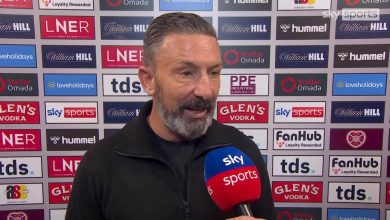
No Longer Wearing The Armband: Where Lewis Ferguson’s Bologna Story Stands As Rangers Talk Rumbles On

For the best part of two years, Lewis Ferguson was more than just Bologna’s best-known Scottish export — he was the man with the captain’s armband wrapped around his sleeve, the symbol of a Serie A club’s remarkable rise from mid-table obscurity to Champions League football and a first major trophy in half a century.
That is no longer the case. As a new Bologna season gets under way under a fresh head coach, and as talk of a dream move to Rangers refuses to go away, Ferguson finds himself in an unfamiliar position at the club he has called home since 2022: no longer the man Bologna hand the armband to as a matter of course.
Ferguson’s rise at Bologna was as fast as it was unlikely. A boyhood Rangers supporter who was let go by the Ibrox academy at 14 — a decision his family and representatives have never stopped bringing up — he rebuilt his career through Hamilton Academical and then Aberdeen, where six years and 37 goals across nearly 170 appearances established him as one of the most promising Scottish midfielders of his generation.
His move to Italy in the summer of 2022 raised eyebrows, given how few Scots have made a genuine success of Serie A down the decades. But Ferguson adapted quickly, learning the language, forcing his way into the side under then head coach Thiago Motta, and becoming, in short order, one of the first names on the team sheet. By October 2023 he had been entrusted with the captaincy — a striking show of faith from an Italian institution towards a player who had barely been in the country eighteen months, and a rarity for a foreign, English-speaking arrival from Scottish football.
The armband suited him. Ferguson set the highest Serie A goal tally by a Scottish player in more than sixty years, was named Serie A’s midfielder of the season for 2023–24, and helped drive Bologna to a top-four finish that delivered Champions League football for the first time in the modern era. Off the back of that form, he signed a new contract that summer, committing his future to the club until 2028 with an option for a further year.
Then, in April 2024, everything stalled. A ruptured cruciate ligament ended his season overnight, cost him a place in Scotland’s Euro 2024 squad, and kept him out of action for the best part of seven months. It was the cruellest possible blow for a player who had just been voted the best midfielder in Italian football, and it forced him to reinvent himself physically and tactically once he did return.
Ferguson’s comeback, when it arrived in November 2024, was gradual and hard-won. Further muscular setbacks disrupted his rhythm through the winter, and by the time Bologna reached the business end of that season, he was still working his way back to full sharpness. Even so, he found the personal and professional courage to lead his team through the closing stages of a historic Coppa Italia run, captaining Bologna to their first major trophy in 51 years with a 1-0 win over AC Milan in Rome in May 2025 — a night that saw him play much of the second half with a bloodied, swollen face after a clash with Rafael Leão, and one he later described as among the best of his career.
It is what has happened since that triumph, though, that explains the “no longer captain” headlines now doing the rounds. Behind the scenes, Bologna’s captaincy picture altered through the 2025–26 season under new head coach Vincenzo Italiano, who succeeded Thiago Motta after his move to Juventus. Veteran Italian right-back Lorenzo De Silvestri — a dressing-room elder statesman in his late thirties with more than a century of appearances for the club — was increasingly recognised as the club’s senior leadership figure, and by the turn of the year Italian reporting was describing Ferguson as the on-field captain only in De Silvestri’s absence, rather than the automatic first-choice armband wearer he had been under Motta.
That shift was reflected formally in how Bologna’s official squad information listed its leadership group for the 2025–26 campaign, with De Silvestri rather than Ferguson recorded as captain. It was a quiet change rather than a dramatic public falling-out — there has been no suggestion of any rift between Ferguson and the club, and he continued to be talked of as one of Bologna’s most important players throughout the campaign — but it marked a definite change in status from the days when the armband was his by default.
Persistent fitness problems played their part in that shift, too. Between the long ACL lay-off, subsequent muscle injuries, and a habit of picking up yellow-card suspensions and a red card at inconvenient moments, Ferguson has found it difficult to string together the kind of uninterrupted run of appearances that first won him the captaincy. Managers understandably lean on availability and consistency when handing out leadership responsibilities, and De Silvestri’s reliability, allied to his standing as one of the most experienced professionals in the Bologna dressing room, made him a natural senior voice even while Ferguson remained central to the team’s football on the pitch
The picture has shifted again this summer. Bologna have moved on from Italiano and appointed Domenico Tedesco as their new head coach for the 2026–27 campaign, a managerial change that brings fresh uncertainty over squad roles, tactical systems and, inevitably, leadership structures. Reports from Italy in the summer suggested Tedesco intended to find Ferguson’s best position and build around him as a key contributor, even if the captaincy itself was not guaranteed to return to the Scot.
Bologna’s opening Serie A fixture of the new season, a narrow home defeat to Lazio, offered an early look at life under Tedesco, with much of the post-match discussion centred on team selection in attack rather than on any specific leadership announcement. Whatever the final decision on the armband under the new regime, the broader picture is clear: Ferguson’s status at Bologna has evolved from undisputed captain to senior squad player competing, like everyone else, to establish himself under a new manager.
None of this has done anything to quiet the noise linking Ferguson with a return to Scotland. If anything, the transfer speculation has intensified this year, fuelled by his heritage as much as his ability: his father Derek and his uncle Barry both played for and captained Rangers, and Ferguson has spoken openly and repeatedly about his boyhood support for the Ibrox club and his hope of playing for them before his career is finished.
That backdrop has made every transfer window since his emergence in Italy an occasion for Rangers speculation, but 2026 brought it closer to the surface than ever. Reports in the early summer suggested Rangers had made contact with Bologna to explore the terms of a deal, though sources close to the situation were quick to stress this amounted to an informal enquiry rather than a concrete bid — a way of establishing Bologna’s valuation and Ferguson’s own openness to the move rather than the opening exchange of formal negotiations.
There was even talk, at one stage, of Rangers using the captaincy itself as an incentive in any approach, dangling the armband that had recently become vacant at Ibrox following James Tavernier’s departure as a way of tempting Ferguson home. Whether or not that idea ever amounted to anything concrete, it captured the emotional pull that a Rangers return clearly holds for a player who was released by the club’s academy as a teenager and has never hidden his ambition to wear the jersey his family made their name in.
For all that noise, Bologna have given no obvious signal that they see him as available. The club’s sporting hierarchy has consistently pointed to his importance to the squad, his contract running to 2028, and a valuation understood to sit somewhere in the region of £13 million to £20 million — comfortably enough, most observers agree, to make Rangers’ interest a long-term project rather than an imminent transfer. Ferguson himself, speaking over the summer, confirmed no formal offers had been tabled for his services and stressed his focus had been on returning from his World Cup involvement with Scotland before resuming pre-season with Bologna.
Even his own father has publicly questioned whether Rangers’ interest was ever likely to translate into anything meaningful given the financial gap between the two clubs’ positions, describing prior contact between the parties as having achieved little in practical terms. That has not stopped Ferguson’s representatives continuing to frame any future move in ambitious terms, insisting he would only leave Bologna for a club in one of Europe’s top five leagues — a category that, as things stand, does not include the Scottish Premiership, whatever the emotional pull of Ibrox.
All of this leaves Ferguson in a genuinely interesting position as the new Serie A season gets going. No longer certain to captain Bologna, playing for a manager just beginning to work out his best position and role, and continuing to be talked about — however speculatively — as a dream signing for the club he grew up supporting, the 26-year-old finds himself at something of a career crossroads.
There is no sense that his standing within Italian football has diminished. He remains one of the most recognisable Scottish players outside Britain, a full Scotland international who represented his country at the 2026 World Cup, and a player Bologna’s own staff continue to describe as fundamental to their plans. Losing the captaincy, in that context, looks less like a demotion and more like the natural consequence of shifting squad dynamics, De Silvestri’s continued excellence, injury interruptions, and a change of head coach rather than any loss of faith in Ferguson as a footballer.
But it does add another layer to the ongoing Rangers narrative. A player who has spent much of the past two years as the on-field embodiment of Bologna’s modern history — its record Scottish goalscorer in Serie A, the man who lifted a 51-year-wait trophy, the face the club put forward as it broke into the Champions League — enters this season without the armband that once defined his time in Italy. Whether that subtly shifts his own calculations about the future, or whether it simply reflects one manager’s rotation of leadership responsibilities that will have no bearing on his long-term plans, is something only time — and perhaps a January or summer transfer window still to come — will tell.
For now, the reality is straightforward enough: Lewis Ferguson is no longer Bologna’s captain, Rangers’ interest remains a matter of persistent speculation rather than concrete negotiation, and a player who has always insisted an Ibrox return will happen “one day” continues to wait for the moment when boyhood dream and footballing reality finally align.