One Rangers Stat vs Motherwell Suggests Shankland Injury Has Come at the Worst Ti

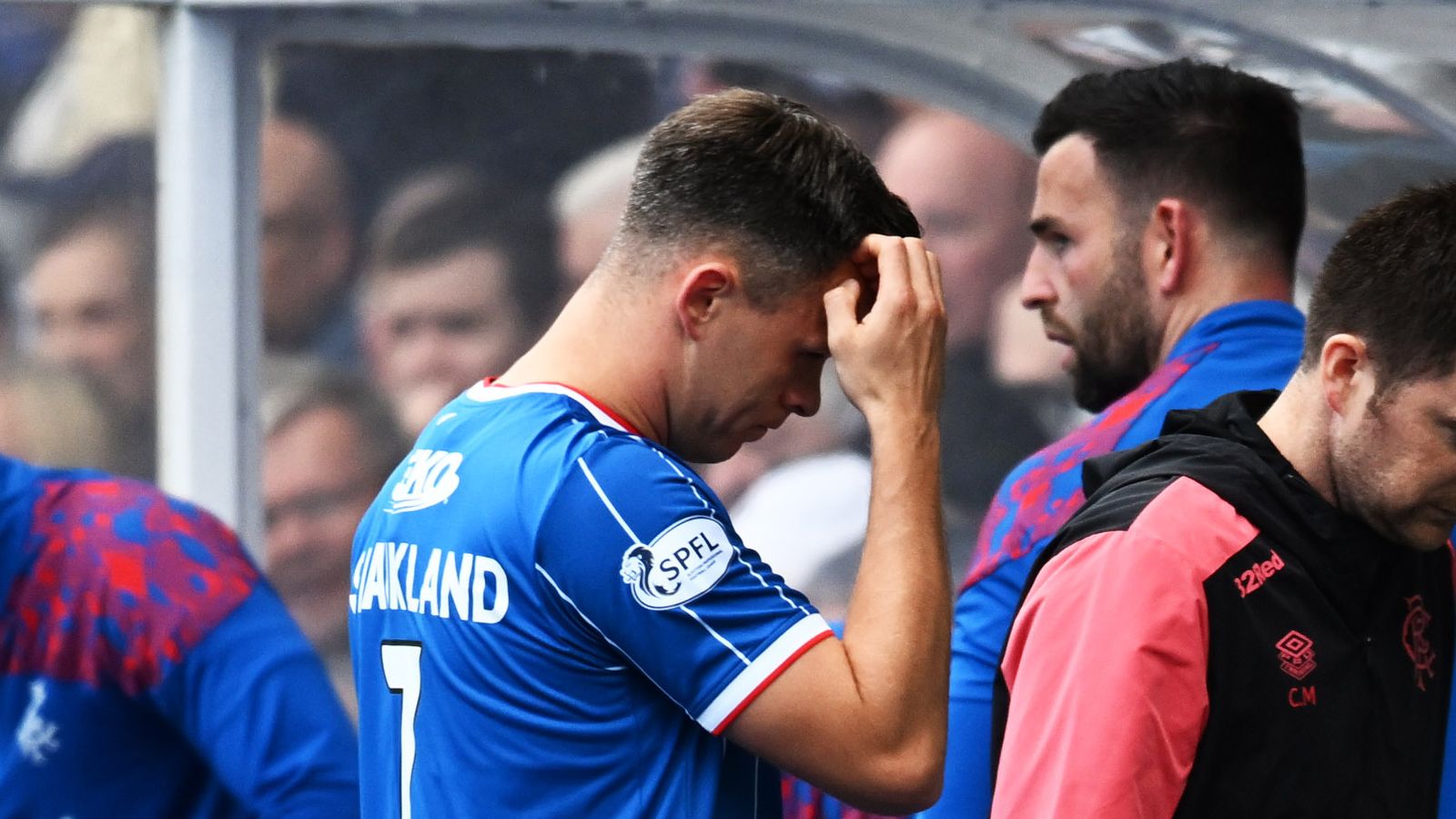
Buried underneath the celebration of a third straight win, and overshadowed almost entirely by the sight of Lawrence Shankland limping off inside the opening ten minutes, sits a single statistic from Rangers’ 1-0 victory over Motherwell that captures the cruelty of the timing better than anything else. According to Sofascore’s underlying numbers from the match, Rangers finished the game with an expected goals figure of 3.93 — despite holding just 41 per cent of possession — and created five clear-cut big chances against a Motherwell side that managed an xG of only 0.51 and failed to fashion a single big chance of its own.
That gulf, nearly eight times the underlying quality of chance created compared to their opponents while seeing less of the ball, is precisely the kind of statistical marker that suggests a team playing with genuine attacking purpose rather than simply grinding out a result. And it’s exactly the kind of number that makes Shankland’s injury sting all the more, because for the first time this season, Rangers finally looked like a team capable of consistently generating the sort of chances a in-form striker thrives on finishing.
It’s been a difficult attacking watch for Rangers supporters for large parts of the campaign so far, with a lack of creativity and end product up front a recurring source of frustration in the stands at Ibrox. That’s what makes the Motherwell performance such a notable data point — not the scoreline itself, which was a narrow 1-0 built on an early Ryan Naderi tap-in after a Motherwell goalkeeping error, but the sheer volume and quality of the chances created around it. Five big chances and an xG approaching four goals represents comfortably one of Rangers’ most incisive attacking displays of the season, arriving with almost perfect symmetry alongside the exact moment their in-form frontman was forced off the pitch
Shankland himself had arrived at the Motherwell game full of momentum. The 31-year-old had scored three goals in his previous two matches, including a brace against Falkirk, and had only recently been handed the club captaincy — form and status suggesting a player finally settling into life at Ibrox after a mixed start following his summer move from Hearts. Instead, he lasted just eight minutes before pulling up with a hamstring problem, leaving him to watch from the sidelines as his teammates produced arguably their most convincing 90 minutes of the season without him
The underlying stats also hint at something more specific about the system Derek McInnes appears to be settling on. Rather than chasing dominance of possession for its own sake, McInnes’s approach seems geared toward maximising moments — content to cede the ball for long stretches, as Rangers did against Alfred Johansson’s Motherwell side, provided the team is ruthlessly efficient in the moments that matter. A 41 per cent possession share paired with a near-4.0 xG return is a genuinely unusual split, and one that suggests Rangers are creating high-value chances in transition or from set pieces rather than through patient, possession-based build-up play.
That’s a system that, in theory, should suit a penalty-box predator like Shankland extremely well — a player whose best work, by most assessments, comes from getting on the end of exactly the kind of clear-cut chances Rangers were generating against Motherwell, rather than from dropping deep to help build attacks. The tragedy of the timing is that just as McInnes appears to have found a structure capable of consistently creating those opportunities, the striker best equipped to finish them has been ruled out for what could be an extended period.
Derek McInnes has been candid about how serious the injury looks. Speaking after the match, he confirmed it “looks quite significant” and drew a direct parallel with the hamstring injury that sidelined Shankland for around ten weeks while he was still at Hearts last season. A scan scheduled for Monday should provide firmer clarity, but with McInnes already framing the worst-case scenario publicly, Rangers appear to be preparing for the possibility of losing their captain for a significant chunk of the season — precisely the period during which the underlying numbers suggest his side has started to build an attacking framework built to get the best out of him.
If there’s a silver lining in the numbers, it’s that Rangers’ output didn’t collapse the moment Shankland left the pitch — quite the opposite. Ryan Naderi, introduced inside the opening ten minutes, needed only a couple of minutes to make his mark, capitalising on a Motherwell goalkeeping error to open the scoring in the 12th minute. It was enough to suggest McInnes has a credible option to at least maintain output in Shankland’s absence, even if replicating the specific movement and penalty-box instincts that had made the captain such a asset over his last two outings remains a taller orde
The frustrating reality for Rangers is that Saturday’s performance offered genuine grounds for optimism about the direction McInnes is taking the team, just as it delivered a significant blow to the player that system appeared to be clicking around. A near-4.0 xG return with five big chances created is the kind of underlying number that, over a full season, tends to translate into results — but only if there’s a reliable finisher on the end of those opportunities. With Shankland facing a lengthy spell out and Kevin Kelsy still finding his feet after a whirlwind deadline-day move from Portland Timbers, the coming weeks will test whether Saturday’s numbers were the start of a sustainable pattern, or a one-off flourish that happened to coincide with the worst possible moment for Rangers’ most in-form forward to go down injured.