Pundit claims Rangers star has played his last game at Ibrox and he’s better than £25m-rated Celtic ace

The summer transfer window has witnessed Rangers finding themselves at a crossroads over one of their most influential midfield operatives, as Belgian international Nico Raskin continues to generate significant speculation regarding his long-term future at Ibrox. What began as routine rumors of interest from continental clubs has evolved into one of the most pressing debates among the Rangers support base, with serious questions being asked about the club’s direction and whether they possess the ambition to retain their most consistently performing players. The situation surrounding Raskin encapsulates the fundamental challenge facing modern Scottish football clubs: the struggle to retain elite talent while competing against wealthier European leagues and their vast financial resources.
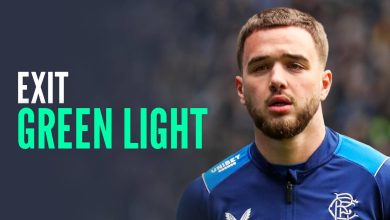
When Nico Raskin arrived at Rangers, the midfielder carried expectations alongside his reputation as a talented prospect capable of performing at the highest level. However, expectations and delivering under the intense pressure of Scottish football’s most demanding environment are two entirely different propositions. Raskin, however, has managed to exceed the considerable expectations placed upon his shoulders, establishing himself not merely as a squad contributor but as an integral component of Rangers’ midfield architecture. His journey at Ibrox has been marked by a remarkable consistency that has rarely been witnessed in recent seasons, with the Belgian demonstrating the maturity and application typically associated with far more experienced professionals.
The cornerstone of Raskin’s success at Rangers rests upon his ability to balance multiple facets of modern midfield play. His composure in possession stands as one of his defining characteristics, providing Rangers with a stabilizing influence during periods when matches become contested and opponents press intensely. This technical quality, combined with his excellent positional sense and defensive awareness, has transformed him into the type of midfielder every elite club seeks: a player who can shield the defense while simultaneously contributing to constructive play and transitional moments. Furthermore, his relentless work rate demonstrates a dedication to his craft that transcends mere statistical measurement, visible in every interaction he makes across ninety minutes of competitive football.
The emergence of substantial transfer speculation surrounding Raskin’s future stems directly from his consistent performances attracting attention from clubs across Europe’s major leagues. While Scottish football continues to provide a competitive environment, the allure of matches against stronger European opposition, more lucrative commercial opportunities, and the prestige associated with competition in Europe’s elite competitions holds considerable appeal for ambitious young players. Raskin, at a crucial stage of his career development, represents precisely the type of player that ambitious continental clubs target: young enough to develop further while already demonstrating sufficient maturity and technical ability to contribute immediately.
The reported interest from multiple European clubs underscores the genuine quality that scouts and technical directors have identified in the Belgian midfielder. This represents far more than the typical transfer market noise that surrounds any player performing at a reasonable level in a prominent position. Instead, it suggests a genuine conviction among multiple clubs’ recruitment teams that Raskin possesses the technical and mental attributes required to compete successfully at the highest levels of European football. For Raskin himself, such interest naturally creates uncertainty about his career trajectory and whether remaining in Scotland represents the optimal decision for his continued development.
The discussion surrounding Raskin’s future was significantly intensified when former Rangers midfielder Andy Halliday offered a striking assessment of the situation. Halliday suggested that Raskin may have already featured in his final match wearing a Rangers shirt, advancing the argument that if a substantially lucrative offer materialized, Rangers should seriously consider accepting it. This perspective, coming from someone with genuine understanding of the club’s dynamics and the demands of performing at Ibrox, carries considerable weight within Rangers discussions.
Halliday’s controversial stance extends beyond simply advocating for Raskin’s departure under appropriate financial circumstances. He ventured into comparative analysis, suggesting that he personally rates Raskin more highly than fellow Belgian midfielder Arne Engels, a statement that inherently raises questions about Rangers’ broader midfield philosophy and the recruitment decisions that have shaped the current squad composition. Engels, who has himself attracted significant transfer attention from clubs across the continent, represents an interesting counterpoint in discussions about Rangers’ midfielder quality and potential transfer strategy.
The comparison between these two Belgian midfielders reveals the complexity of modern football assessment. Engels possesses different attributes from Raskin, with perhaps a greater emphasis on ball progression and creative contribution, while Raskin’s strengths concentrate more explicitly on defensive solidity and positional intelligence. That Halliday rates Raskin higher than Engels provides an interesting perspective that contradicts some conventional wisdom and perhaps suggests that Rangers supporters and observers place excessive emphasis on certain qualities while undervaluing others that ultimately prove more fundamental to consistent team success.
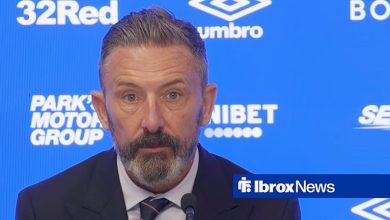
New manager Derek McInnes inherits a complex situation at Rangers, one in which he must simultaneously establish his managerial identity while confronting genuine uncertainty about the squad’s composition and future direction. The decision regarding Raskin’s future transcends mere individual player considerations and speaks directly to McInnes’s strategic vision for the football club. Retention of Raskin would signal an emphasis on midfield stability and the development of established players, whereas accepting a competitive offer would suggest a philosophy prioritizing financial resources being reinvested across multiple positions to strengthen the squad’s overall depth and capability.
The practical reality of modern football management means that McInnes cannot ignore the financial implications of Raskin’s potential departure. Transfer funds generated through the sale of a genuinely valuable asset could be strategically deployed across several areas of apparent weakness, potentially strengthening the squad in multiple positions where depth remains questionable. Rangers have already been linked with various midfield targets, suggesting that the recruitment team has conducted thorough analysis of potential replacements and alternatives, should circumstances dictate that Raskin’s services become available.
This preparatory approach demonstrates a level of professional rigor that reflects well on the club’s operational structure, yet it also highlights the uncertainty permeating current discussions. Why prepare alternatives for a key player unless there exists genuine possibility—or perhaps recognition—that departures remain feasible? The recruitment team’s apparent readiness to explore midfield alternatives simultaneously suggests confidence in potential replacements while acknowledging the reality that no player, regardless of quality, remains absolutely irreplaceable.
The question of whom Rangers might pursue as potential replacements for Raskin remains open to considerable speculation and debate. The market for midfielders of elite quality rarely presents straightforward options, particularly for players with Raskin’s specific skill set combining defensive intelligence with technical composure. Many superior candidates would demand significantly elevated financial compensation compared to Raskin’s likely transfer value, while other potential targets might require extended development periods before delivering the consistency that has become associated with the Belgian’s performances.
Rangers must carefully weigh whether the recruitment market offers genuinely better alternatives within reasonable financial parameters or whether Raskin’s sale would necessitate compromise regarding the quality of his replacement. This calculation becomes even more complicated when considering the integration period required for any new arrival to develop familiarity with McInnes’s tactical preferences and the specific demands of Scottish football’s accelerated pace and physical intensity.
The broader context of supporter sentiment cannot be ignored when discussing potential Raskin departures. Rangers supporters have endured challenging periods in recent seasons, during which retaining elite talent has proven difficult. The prospect of losing another genuinely valuable player inevitably generates frustration and questions about the club’s competitive ambitions. Supporters naturally desire evidence that Rangers possess sufficient resources and attractiveness to retain their standout performers, yet they simultaneously acknowledge financial realities and the genuine challenge of competing against wealthier foreign clubs offering substantially superior compensation packages.
This tension between supporter desire for continuity and recognition of financial limitations characterizes discussion surrounding Raskin’s future. Few Rangers supporters would begrudge Raskin a lucrative opportunity that advances his career prospects; however, the cumulative effect of losing multiple quality players creates an accumulated disadvantage that impacts competitive performance and threatens to undermine the club’s standing within Scottish football.
Derek McInnes faces a decision that will significantly influence his managerial tenure at Rangers. Accepting a substantial offer for Raskin would provide financial flexibility but might create short-term instability as a new manager seeks to establish authority and tactical identity. Conversely, persuading Raskin to commit to Rangers’ project would provide stability and demonstrate confidence in the club’s direction, yet it would also constrain available financial resources that could be deployed elsewhere.
The former Aberdeen manager’s experience suggests someone accustomed to working within financial constraints while maximizing squad efficiency. This background potentially positions McInnes well to navigate Raskin’s situation thoughtfully, perhaps finding creative solutions that allow the club to retain genuine value while also improving squad depth in other areas. However, his experience also demonstrates that indefinitely retaining players against their wishes typically generates complications that ultimately undermine team cohesion and performance.
Speculation regarding Raskin’s future will almost certainly intensify as the summer transfer window progresses and European clubs formalize their interest into concrete offers. If Rangers receive a genuinely substantial proposal—one that significantly exceeds the Belgian’s market value by meaningful margins—the financial logic of acceptance might prove irresistible, particularly if McInnes identifies viable replacement options. Conversely, if European interest remains theoretical rather than translating into specific bids, the situation may resolve through natural progression, with Raskin remaining at Rangers by default.
The third scenario involves Raskin committing to a new contract and explicitly reaffirming his commitment to Rangers, thereby removing uncertainty and providing the midfielder with improved financial security. Such a development would provide clarity for all parties and signal confidence in Rangers’ competitive trajectory under McInnes’s management.
Nico Raskin’s future at Rangers represents one of the summer transfer window’s most significant storylines, encapsulating the broader challenges facing Scottish football’s elite clubs in an increasingly competitive global market. The Belgian midfielder’s established quality and consistent performances have created genuine uncertainty about whether remaining at Ibrox represents his optimal career trajectory, yet Rangers’ genuine need for midfield stability and quality creates compelling reasons for retention.
The decision ultimately rests with Derek McInnes and Rangers’ executive leadership, requiring careful evaluation of financial circumstances, replacement options, and the broader implications for squad development and competitive performance. Whether Raskin remains at Rangers or departs for continental opportunities, the manner in which the situation is resolved will send important signals about the club’s direction and ambitions. Until official confirmation arrives, speculation surrounding Raskin’s future will undoubtedly persist, reflecting supporters’ justified concerns about maintaining competitive standards while acknowledging the financial realities that constrain Scottish football’s capacity to retain elite talent indefinitely.