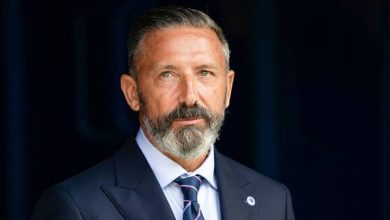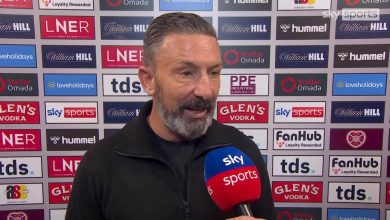
Rangers have once again shown they can go toe-to-toe with clubs south of the border in the transfer market, seeing off interest from Watford to land Ben Godfrey on a season-long loan from Atalanta, with reports on 24 August confirming the Ibrox club had to fend off the Hornets to get the deal over the line, with Sky Sports reporting the Glaswegian outfit had to beat Watford to win the race for Godfrey’s signature. It is a small but symbolic victory for Derek McInnes and his recruitment team, because for years the accepted wisdom in Scottish football has been that English clubs, even those outside the Premier League, hold the financial whip hand whenever a transfer battle breaks out. Watford, chasing promotion back to the top flight and backed by Gino Pozzo’s willingness to spend, are exactly the kind of club Rangers might once have expected to lose out to. Instead, it is Ibrox that got its man, and Vicarage Road that has been left to go back to the drawing board.
The context matters here. Watford are not short of transfer activity of their own this summer. Alessio Dionisi’s side have made a strong start to the Championship season, but that hasn’t stopped the Hornets working through an extensive list of defensive targets as they look to add at least two new centre-backs before the window slams shut, with the club working through a shortlist that includes former loanee Stephen Mfuni, Al Gharafa’s Mason Holgate, and Nottingham Forest duo Tyler Bindon and Zach Abbott. Reports also link them with QPR’s Jake Clarke-Salter, Sheffield United’s Mark McGuinness and Soumaila Coulibaly, while Coventry’s Sam Woolfenden has been floated as another possible target given Coventry are unlikely to stand in his way this summer. It is a scattergun approach that tells its own story: Watford know they need reinforcements at the back, they know the market is moving fast, and losing out on Godfrey clearly stung enough that they have widened the net rather than narrowing it.
For Rangers, Godfrey’s arrival was confirmed back at the end of June as their third signing of the summer, following the arrivals of Lawrence Shankland from Hearts and Ross McCrorie from Bristol City, with Sky Sports News having revealed that the 28-year-old had completed a Rangers medical ahead of his move from the Serie A side. What has changed in the weeks since is the clarity around just how competitive that race for his signature actually was. At the time, the move looked like a fairly natural piece of business: an experienced centre-back who had fallen out of favour in Italy, arriving on loan with the Ibrox club carrying an option to make it permanent. Now, with Watford’s pursuit laid bare, it looks like a deal Rangers had to fight for and win rather than one that simply fell into their lap.
Godfrey’s career path is worth revisiting in full, because it explains exactly why a club of Watford’s stature was so determined to get him. Born in York in January 1998, he came through the youth ranks at his hometown club before spells with Middlesbrough and back at York City, eventually breaking into senior football with Norwich City in 2016. It was at Carrow Road that he first caught the eye, playing a key role as the Canaries won promotion to the Premier League, and a loan spell at Shrewsbury Town along the way only added to the sense of a defender learning his trade the hard way. That form was enough to convince Everton to move for him in the summer of 2020, and the Toffees paid a fee reported to be in the region of £20 million to £25 million to bring him to Goodison Park, a substantial outlay that underlined the level of promise he was showing at the time.
Godfrey went on to make more than 90 appearances for Everton across four seasons, establishing himself as a regular in a Premier League defence and even earning international recognition, with two caps for England in 2021 after progressing through the Under-20 and Under-21 set-ups, having represented England from youth level through to the senior side. Those are not the credentials of a squad filler. They are the credentials of a defender who, at his peak, was considered among the better young centre-backs English football had to offer. It is precisely that pedigree that makes his subsequent slide down the football pyramid such a curious story, and it is precisely that pedigree that had Watford so keen to get him in the building.
The move to Atalanta in the summer of 2024 was supposed to be the next step forward. Instead, it triggered what Godfrey himself has since described as a turbulent period in his career. Reports vary slightly on the exact fee, with some pegging the transfer at around £10 million and others closer to £11 million, but whichever figure is accurate, it represented a serious investment from a club that had just won the Europa League and had genuine European ambitions of their own. That investment simply never translated into game time. Godfrey made only a handful of substitute appearances in Serie A, a stark contrast to the near-ever-present he had been on Merseyside, and Atalanta moved quickly to farm him out on loan in search of regular football elsewhere
What followed was a tour of English and European football that reads almost like a cautionary tale about a talented player unable to find the right platform. Ipswich Town took him in on loan, but he made only a handful of appearances at Portman Road. Sheffield United followed, with Godfrey returning to his native Yorkshire and speaking at the time about how much it meant to be back home, telling the Blades’ website he was a Yorkshire lad who was brilliant to be back and was looking forward to getting started, and referencing training hard at Atalanta before the move. Even that spell, though, did not fully reignite his career, and last season saw him head out on loan once more, this time to Danish Superliga side Brøndby, where he finally found something closer to consistent football, making around a dozen appearances in the second half of the campaign as the Danish club finished fourth in their domestic top flight.
It is against that backdrop of stalled progress and repeated loan moves that Rangers’ pursuit of Godfrey has to be understood, and it is against that same backdrop that Watford’s interest makes complete sense. This is a 28-year-old still young enough to have plenty of football left in him, still carrying senior England recognition, and still, by his own admission, driven to get back to the level he reached at Everton. When he completed his move to Ibrox, Godfrey did not try to disguise how much the previous two years had taken out of him, describing the period since leaving Everton as turbulent while insisting he believes he can now offer leadership as well as game time, saying that at his current age and with the experiences he has had, he feels able to be a leader and help the younger players in the squad. He went further, drawing a direct line between his own character and the identity of the football club he was joining, suggesting the values that run through Rangers match him as a person and that he believes this will be a successful year for the club, before adding that there have been heights in his career where he has performed at a good level and that he is desperate to get back there.
Speaking directly after the move was confirmed, Godfrey also touched on the scale of what he was joining, telling the Rangers website he was buzzing and really happy to be at the club, aware of its size and viewing it as a massive honour to wear the shirt this season, while adding that he was looking forward to meeting his new teammates and hoped to help the club achieve the silverware and exciting times it deserves. It is the kind of statement plenty of new signings make on arrival, but coming from a player who has spent the last two years bouncing between loan clubs trying to rebuild his career, it carries a little more weight than the usual boilerplate unveiling quote.
Derek McInnes, for his part, was similarly effusive when the deal was rubber-stamped, framing Godfrey’s experience as exactly what his rebuilding squad needed. The Rangers boss described him as a player who has competed at a very high level throughout his career, pointing to his Premier League appearances and his involvement with England as evidence of the calibre he is bringing into the dressing room, and characterising him as a strong, athletic defender with good qualities on and off the ball who the club believes can add plenty to the group, adding that the club was pleased to get the deal done and that he was looking forward to working with Godfrey across the season ahead. For a manager tasked with reshaping a Rangers defence that has looked short of leadership and know-how at times in recent seasons, landing a centre-back with Premier League pedigree, even one whose career has stalled somewhat, is exactly the profile McInnes has been chasing.
Beating Watford to that signature is also a useful marker of where Rangers currently sit in the pecking order when it comes to competing for players. It is easy to forget, amid the frustrations that can come with life north of the border, that Rangers remain a genuinely big club with European pull, and Andrew Cavenagh’s willingness to back the football department financially this summer has clearly not gone unnoticed by players weighing up their next move. The chairman has not been shy about backing McInnes in the market, and the fact that a club fighting for promotion in the English Championship, with all the financial advantages that traditionally brings, still lost out on a target to Rangers is the kind of story the Ibrox hierarchy will be happy to have doing the rounds. It offers a small but meaningful signal to other potential targets that Rangers can go up against English clubs and win.
Godfrey’s arrival was announced as Rangers’ third signing of an increasingly busy summer, and the volume of business done since underlines just how aggressively McInnes and his recruitment staff have gone about reshaping the squad. Shankland arrived from Hearts to address a long-standing need for a reliable goal threat, while Ross McCrorie’s return from Bristol City brought versatility across the back line and midfield. Since then, the incomings have kept coming, with Kim Min-su, Kosta Nedeljkovic and Nicolas Raskin all having been added to the group at various points, alongside Kim Min-su’s Girona move also generating fresh reports linking the South Korean winger with a switch to Ibrox as what would become the club’s twelfth signing of the summer, continuing a rebuild that has now touched almost every area of the pitch. Central defence, though, has remained a particular focus, with Emmanuel Fernandez attracting serious interest from Borussia Dortmund, a situation that would leave a sizeable void at the heart of the Rangers defence if it were to be resolved in the German club’s favour, and John Souttar continuing to be linked with a host of English clubs including Leicester City, while Rangers have been reported to be holding out for a seven-figure fee before sanctioning any exit.
That is precisely why the Godfrey deal carries extra significance. If Fernandez does eventually depart for Dortmund, and if Souttar’s future away from Ibrox becomes clearer before the window shuts, Rangers will need every ounce of defensive depth and experience they can muster, and a Premier League-tested centre-back arriving with a point to prove is about as sensible a piece of business as McInnes could have hoped for. It also fits a wider pattern in how this Rangers rebuild has been conducted: rather than simply chasing the most eye-catching names available, the recruitment team has repeatedly targeted players with proven top-flight pedigree whose stock has dipped through circumstance rather than a genuine drop in ability, betting that the right environment and regular football can restore some of that lost value. Godfrey fits that mould as neatly as anyone signed so far this summer.
There is also a broader football-politics angle to consider. Watford’s frustration at missing out will not have gone unnoticed within the corridors at Vicarage Road, and it is worth noting that Godfrea’s situation is not the first time the two clubs have found themselves on opposite sides of a transfer tussle involving a player with Yorkshire and Scottish connections. Watford have long had an eye on players developed north of the border, and Championship clubs generally have shown an increasing willingness to dip into the Scottish market for value, whether that is Rangers’ own players or targets the Ibrox side themselves are chasing. Losing out to a Scottish Premiership club, even one with Rangers’ history and European aspirations, is not the kind of story a club aiming for an immediate Premier League return wants attached to its name, and it goes some way to explaining why Dionisi’s side have widened their search to as many as seven separate centre-back options rather than pursuing a single alternative target.
For Rangers supporters, the immediate takeaway is straightforward: Godfrey adds proven senior quality to a defensive unit that will be tested by both a demanding Premiership title race and continued European involvement this season. His versatility across a back three or back four, his physical profile, and his experience of high-pressure football in England should all serve him well in Scotland, provided he can rediscover the consistency that made him such a coveted young defender in the first place. The loan structure, with Rangers holding an option to make the deal permanent next summer, also gives both parties useful breathing room. Should Godfrey settle quickly and rediscover his best form under McInnes, Rangers have the mechanism in place to secure him on a longer-term basis without having to commit fully upfront. Should things not work out as hoped, there is no lasting financial burden attached beyond this season.
What happens next in Rangers’ defensive rebuild will go a long way to determining how significant this piece of business ultimately proves to be. With Souttar’s situation still unresolved and interest in Fernandez showing no signs of cooling, McInnes may yet need to add further defensive reinforcements before the window closes, and the club’s recent pattern of business suggests they will not be shy about doing so if the right opportunity presents itself. Watford, for their part, look set to press on with their own defensive rebuild regardless of the Godfrey setback, working through their extensive list of alternative targets in the hope of getting at least two fresh faces through the door before deadline day. Whether any of those moves prove as significant, in the long run, as Rangers’ successful pursuit of a player with Ben Godfrey’s pedigree remains to be seen, but for now, Ibrox can point to a genuine transfer-market victory over an English club with real financial muscle behind it, and that is a statement result in itself regardless of how Godfrey’s season eventually unfolds on the pitch