RANGERS’ EUROPEAN NIGHTMARE: HOW JAGIELLONIA EXPOSED MCINNES’ STRUGGLING SIDE — AND WHAT COMES NEXT

There are results that simply sting, and then there are results that feel like a diagnosis. Rangers’ exit from the Europa League at the hands of Jagiellonia Białystok belongs firmly in the second category. A 1-1 draw at Ibrox, played out in front of a support desperate for something, anything, to cling onto in the opening weeks of the Derek McInnes era, was enough to send the Light Blues out 3-2 on aggregate to a Polish side many outside Scotland would struggle to locate on a map. It is Rangers’ earliest European exit since 2017, and it landed with the kind of thud that reverberates well beyond one night’s football. For a club that reached a European final as recently as 2022, tumbling out of continental competition before August is out feels less like misfortune and more like confirmation of something supporters had already begun to suspect: this Rangers team, as currently constructed and currently managed, is simply not ready for the level it is supposed to be competing at.
The tie itself told the story in miniature. Rangers had gone to Poland a week earlier and lost 2-1, a result that already had alarm bells ringing given the gulf in resources and reputation between the two clubs. Back at Ibrox, with the crowd roaring them on, Rangers at least gave themselves a route back into the contest. Captain Lawrence Shankland levelled the aggregate scoreline with a penalty inside the opening 20 minutes, and for a spell it looked as though the composure and quality that convinced Ibrox to appoint McInnes in the first place might carry the team through. But Jagiellonia are not a side who simply absorb pressure and hope; they are a well-drilled, physically imposing outfit who have made a habit of causing upsets in continental qualifiers, and on 65 minutes their forward Nik Prelec did exactly what good European sides do to shaky hosts. He punished a lapse, finished with conviction, and sent the tie to away goals and then to full time with Rangers unable to find the second goal they needed. The away side deserved their passage to the play-off round, and even McInnes, in the raw aftermath, was not about to pretend otherwise.
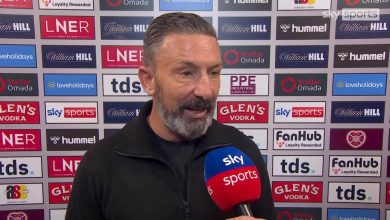
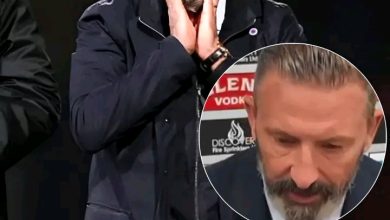
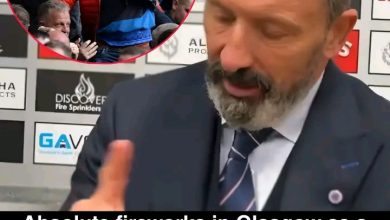
What made the night especially painful was not just the scoreline but the manner of it. This was not a Rangers side undone by a moment of individual brilliance from an opponent, nor were they the victims of a refereeing controversy that Ibrox could point to and say “if only.” This was a Rangers team that, by their own manager’s admission, simply were not good enough over the two legs. McInnes did not hide from that reality when he spoke to Rangers TV immediately after full time. “I’m disappointed that we’ve exited the Europa League,” he said. “The opportunity is gone and we have to say we haven’t done enough over both legs to merit getting through.” It is the kind of honesty supporters will respect in the long run, even if in the moment it does little to soften the blow of watching a famous old European name make its earliest exit from continental competition in the better part of a decade.
McInnes went further, breaking down exactly where the game slipped away from his side. “I thought we were good value for 1-0,” he explained. “I thought they had a few scary moments but I just think where we are at the moment, as a team, I thought the goal would help us.” The problem, as McInnes saw it, was what followed. In an attempt to add more penetration once Rangers had drawn level on aggregate, he reshuffled his side’s structure, pushing Djeidi Gassama and Daisuke Yokota into more advanced, wing-back-style roles to try to stretch Jagiellonia and create overloads out wide. On paper it was a reasonable idea against a side sitting in a mid-block, but in practice it unbalanced Rangers just as much as it threatened the visitors. “We stopped playing into our strikers and lost a bit of control of the game,” McInnes admitted. “At 1-0 the game is in the balance, we’ve still got it all to do. We had to step it up to go and get the next goal, and we never did.” It is a familiar lament for anyone who has watched Rangers over the past month: a team capable of good moments in isolation, but without the control, the game management, or the ruthlessness to see out matches at the level the club’s history demands.
Perhaps the most damning line of the night, though, was McInnes’ assessment of the goal itself, and what it represented. “The goal was systematic of the types of goals we’ve lost throughout pre-season,” he said, and it is worth sitting with that phrase for a moment. This was not, in the manager’s own words, a freak moment or bad luck. It was a pattern, a recurring defensive fragility that had shown itself repeatedly in the weeks building up to the competitive season proper, and one that Jagiellonia simply exploited when it mattered most. For a club that prides itself on defensive solidity as much as attacking flair, hearing the manager describe a European exit as symptomatic of a deeper, ongoing issue is about as concerning a soundbite as supporters could have been served.
Then there was the small matter of the crowd’s reaction, and McInnes’ response to it. Boos rang around Ibrox at full time, an unmistakable message from a fanbase that has watched their club stumble through a difficult start under a new manager still searching for his first win. Rather than push back on the criticism, as some managers might instinctively do to protect a fragile group of players, McInnes chose to validate it. “I think it was justified to be honest,” he said of the fans’ reaction. It was a striking moment of candour from a manager only a matter of weeks into the job, but it also spoke to the wider situation McInnes finds himself in. He inherited a Rangers side mid-rebuild, with a summer transfer window still very much in motion around him, and he is being asked to deliver instant continental results while simultaneously trying to integrate a raft of new faces and settle on a system that suits the raw materials he has been given. It is not an enviable position, and to his credit, McInnes has not once hidden behind excuses publicly, even when there would have been an obvious temptation to do so.
The most eye-catching admission of all, however, came when McInnes was pressed on where Rangers currently stand relative to the level of competition the Europa League represents. “The club’s built for the Europa League and Champions League,” he said, before adding the qualifier that will have made for uncomfortable reading among the Ibrox hierarchy: “But I’m not sure the team is quite ready for it at the moment and it pains me to say that, to be honest, it does.” That is about as blunt an assessment as any Rangers manager has offered in recent memory, an acknowledgement that the gap between the club’s ambitions and its current on-pitch reality is real, and that closing it will take time, patience, and further reinforcement in the transfer market rather than a quick fix.
It is worth remembering the context McInnes walked into. He arrived at Ibrox from Hearts over the summer, taking the reins of a Rangers side that had finished third in the William Hill Premiership the previous season, some distance off the pace set by Celtic. Expectations at Ibrox rarely allow for a lengthy honeymoon period, but McInnes’ start has been about as difficult as it could have been. Going into the Jagiellonia second leg, he was still searching for his first win in charge, with four matches gone and not a single victory to show for it. That is an alarming statistic by any Rangers manager’s standards, let alone one operating in the current, increasingly unforgiving climate around Scottish football management. The Europa League exit did not create that pressure, but it undeniably intensified it, dialling up the scrutiny on a manager who is having to build a plane while flying it.
Injuries have not helped matters either. Rangers went into the second leg without left-back Tuur Rommens and striker Youssef Chermiti, two players McInnes would ordinarily have leaned on, forcing him into five changes from the side beaten by Hibernian just days earlier. The switch to a back three was, in part, a response to those absences as much as a tactical statement of intent, and it is a reminder that McInnes is currently managing not just a squad in transition but one being reshaped week to week by fitness concerns as well as recruitment. Rangers have become the sixth permanent managerial appointment since Steven Gerrard’s departure from Ibrox back in 2021, a statistic that speaks to the churn and instability that has characterised the post-Gerrard era, and one that adds extra weight to every stumble a new manager makes in his opening weeks.
Yet if the immediate story is one of gloom, it would be wrong to write off the McInnes era before it has properly begun. Football, and Rangers’ recent history in particular, has a habit of turning quickly, and the days that followed the Jagiellonia exit offered at least some evidence that this squad has more to give than four winless matches suggested. Just days after that European heartbreak, Rangers finally delivered for their long-suffering support, thumping St Mirren 5-1 to register McInnes’ first win in charge at the fifth time of asking. It was the kind of response supporters will have wanted to see: a manager and a group of players hitting back immediately rather than allowing the disappointment of Europe to spiral into a deeper crisis of confidence. Five goals, whatever the level of opposition, is a statement, and it will have gone some way to easing the mood around Ibrox heading into the club’s next continental assignment.
That assignment came in the form of Jablonec, of the Czech Republic, in the Conference League play-off round, Rangers’ consolation route back into Europe after falling short at the higher Europa League level. It has not been entirely straightforward there either. The first leg at Ibrox finished 1-0 to the home side, Ryan Naderi scoring the only goal of the game in the 50th minute, but the performance either side of that strike did little to fully banish the doubts raised against Jagiellonia. Rangers were booed off at half-time once again after an uninspiring opening 45 minutes, a sign that patience among the Ibrox support remains in short supply even amid an improving run of results. Matters were complicated further when substitute Cammy Devlin was sent off in the 78th minute for a high tackle, leaving Rangers to see out the closing stages with ten men and the tie still finely balanced ahead of the second leg in the Czech Republic. McInnes, reviewing the red card afterwards, was measured rather than furious in his assessment. “Having seen it again, it is a red card and there’s no debate,” he said, before offering some context on Devlin’s intent. “I think it looks a hell of a lot worse than it actually was. I’ve seen him doing this before when he’s trying to buy fouls. He’s trying to just get his leg up and put his body in to be fouled because he’s in the penalty box.” It was a rare moment of dry humour from a manager who has otherwise had precious little to smile about since taking the job, and it suggested a coach who, while demanding, is not looking to throw individual players under the bus in public.
More telling than the result itself was McInnes’ post-match message to his squad, one that carried echoes of his post-Jagiellonia honesty. Despite securing the win, he made clear he was not simply satisfied with three points and a clean scoresheet in the “for” column. “I want us to be a team nobody really likes to play against, but there’s two sides to that,” he said, a pointed reminder that dogged, difficult-to-beat football has to come alongside quality and control, not replace it. Reports from Ibrox on the night described McInnes as visibly frustrated on the touchline for large stretches of the first half, reportedly “screaming” instructions at his side to move the ball wide more quickly as Rangers struggled to break down a well-organised Jablonec side. It is the sort of detail that will resonate with supporters who have watched recent Rangers performances lack fluency and tempo in buildup play; the manager sees it too, and he is clearly working in real time to coach it out of his players even as results start to arrive.
There were individual subplots worth noting from the Jablonec first leg as well. Nicolas Raskin was named among the substitutes due to what McInnes described as an injury concern, a worry given the Belgian’s importance to Rangers’ midfield going forward, particularly with a second leg and a busy autumn schedule on the horizon. Devlin’s introduction from the bench, ending in a red card inside a matter of minutes, will also raise questions about squad depth and in-game management as Rangers look to rotate a group still bedding in new arrivals. On the recruitment front, McInnes has already been busy reshaping the squad in his own image, having sanctioned the arrivals of 11 new players since taking charge, with the manager himself indicating there is more incoming before the transfer window shuts. Names like Kim Min-su, Kosta Nedeljkovic and Mikey Moore have already been part of the summer rebuild conversation around Ibrox, and how quickly that new-look group can gel together may ultimately determine whether this current bumpy spell is remembered as a rocky opening chapter or the start of a much longer decline.
Zooming out, the broader picture for Rangers this season is one of a club and a manager still trying to find their level and their identity simultaneously. The William Hill Premiership campaign began with a draw away at Dundee United, 1-1, another result that failed to fully answer questions about McInnes’ start, though it did at least offer some early signs of resilience on the road. Layer on top of that the Europa League exit to Jagiellonia, the bounce-back thrashing of St Mirren, and now a scratchy but ultimately successful first leg over Jablonec, and a picture emerges of a Rangers side capable of real highs and worrying lows within the same fortnight. Consistency, more than raw quality, appears to be the missing ingredient, and consistency is often the hardest thing for a new manager to instil while simultaneously overhauling a squad.
It is also worth pausing on just how far Rangers have fallen, at least in continental terms, from where they stood only a few years ago. This is a club that reached the Europa League final in 2022, going toe to toe with Eintracht Frankfurt in Seville in a night that will live long in the memory of anyone connected to Ibrox, regardless of the eventual outcome on penalties. That run represented the high-water mark of Rangers’ recent European adventures, proof that the club could still compete with serious continental opposition when the structure, the belief, and the squad depth were all aligned. Falling out of Europe’s second-tier competition before the group stage has even begun, at the hands of a side from Poland’s top flight rather than one of the continent’s traditional heavyweights, is a jarring contrast to that Seville night, and it is precisely that contrast which explains the depth of frustration among supporters. Nobody at Ibrox expects a final every season, but there is a reasonable expectation that a club of Rangers’ stature should, at minimum, be navigating third qualifying round ties against sides like Jagiellonia comfortably rather than being eliminated by them.
There is also a financial dimension to all of this that should not be understated. European qualification, and progression once there, is not simply a matter of pride for a club like Rangers; it is a meaningful revenue stream that helps fund the very recruitment drive McInnes has been overseeing this summer. Missing out on the group stages of the Europa League, and instead having to fight through yet another qualifying round in the Conference League simply to guarantee some form of continental football and broadcast revenue, is a blow that will be felt in boardroom budgets as much as on the pitch. It adds an extra layer of context to why the Jablonec tie matters so much, even if, on paper, it represents a significant step down from where Rangers hoped to be playing their European football this autumn. Successfully negotiating that tie is not just about pride or momentum; it is about securing income that could ultimately determine how much further business McInnes is able to do before the transfer window shuts, and how competitive his squad looks come the business end of the season.
None of this is to say the situation at Ibrox is beyond repair, or that McInnes should be judged solely on a handful of results accumulated in the opening month of a rebuild. New managers, particularly those inheriting a squad mid-overhaul, are almost never afforded the platform to hit the ground running, and the pattern of a shaky European exit followed swiftly by a five-goal domestic response suggests a group of players who are capable of far more than they have shown in their worst moments so far. What matters now is whether Rangers can turn Jablonec into a springboard, using the second leg to book safe passage into the Conference League proper, and use that platform, along with continued additions to the squad, to build some semblance of rhythm heading into the heart of the season. The alternative, another stumble in Europe compounding an already sluggish domestic start, would sharpen the scrutiny on McInnes considerably, and Rangers fans, patient as they have tried to be so far, will not tolerate a prolonged run of results like the one that defined his opening month in the job.
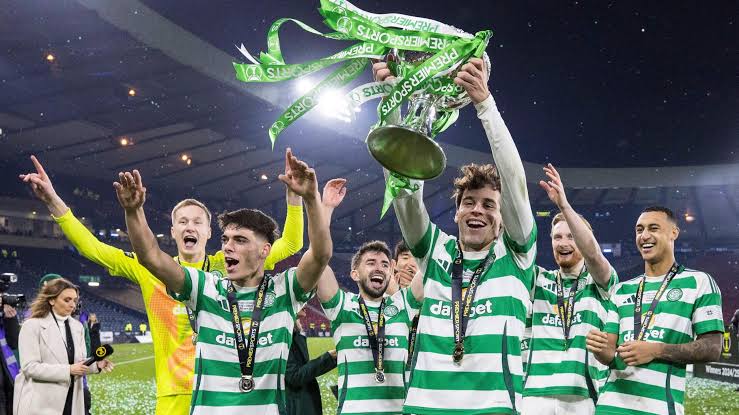
For McInnes personally, the stakes could hardly be higher. Scottish football’s managerial landscape has become notoriously unforgiving in recent years, and a slow start at a club with Rangers’ history and expectations rarely buys much time. What he has shown in these opening weeks, though, is a willingness to speak honestly to supporters rather than retreat into corporate platitudes, an approach that, handled correctly, can build the kind of goodwill that carries a manager through a difficult opening spell. Admitting his side “aren’t ready” for the Europa League, accepting that fan frustration is “justified,” and openly challenging his players to “take a bit of ownership” are not the words of a man looking to hide from scrutiny. Whether that honesty translates into results over the coming weeks, starting with the second leg in the Czech Republic and continuing into a Premiership campaign already shaping up to be another uphill battle against Celtic, will define the next chapter of the McInnes era at Ibrox. For now, Rangers fans are left with a familiar, uneasy mixture: genuine concern about the level of performance on the continental stage, tempered by flickers of encouragement domestically, and a manager who, whatever else can be said about his start, has at least been honest enough to admit exactly where his team currently stands.