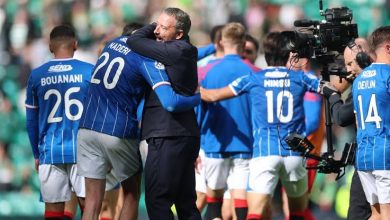
The pressure at Rangers is unlike anything most managers experience in football. Every match is analysed, every decision is questioned, and every result carries enormous consequences. Success is expected, not celebrated. Winning is considered normal. Anything less quickly becomes a crisis.
That reality once again came into focus after a difficult season left Rangers searching for answers and looking toward another new era.
When Russell Martin arrived at Ibrox, there was optimism that a fresh chapter was beginning. The club had undergone significant changes behind the scenes. New ownership had arrived. New ideas were being introduced. Supporters hoped a clear football identity would emerge and that Rangers could once again establish themselves as the dominant force in Scottish football.
Martin spoke confidently about his vision. He wanted attractive football. He wanted a clear style of play. He wanted a team that could control possession and dictate matches rather than simply react to opponents.
The appointment generated mixed reactions.
Some supporters welcomed the ambition and modern approach. Others questioned whether Martin was the right man for a club with expectations as demanding as Rangers. While he had achieved success in gaining promotion with Southampton, critics pointed to his struggles in the Premier League and wondered whether he was ready for the challenge waiting for him in Glasgow.
As pre-season began, the atmosphere around the club was one of cautious excitement.
Several new players arrived.
The recruitment team worked aggressively in the transfer market, bringing in fresh faces designed to fit Martin’s tactical ideas. Rangers invested heavily, spending significant sums in an attempt to reshape the squad.
There was a belief that a new cycle was beginning.
Fans wanted signs of progress.
They wanted performances that suggested Rangers were moving in the right direction.
Instead, problems appeared almost immediately.
Results failed to match expectations.
Matches that supporters expected Rangers to win comfortably suddenly became difficult. Opportunities were missed. Points were dropped. Confidence began to disappear.
The early warning signs became impossible to ignore.
While Rangers struggled domestically, European competition provided an even greater challenge.
The team entered crucial qualification matches hoping to secure a place among Europe’s elite. Instead, they suffered a series of painful defeats that left supporters shocked.
The manner of those defeats was particularly worrying.
The defensive organisation looked fragile. Mistakes became common. Opponents appeared capable of creating chances with alarming ease.
Each setback increased the pressure.
Each disappointing result intensified the scrutiny surrounding Martin and his coaching staff.
At a club like Rangers, patience rarely lasts long.
Supporters understand rebuilding projects in theory, but they also expect visible progress.
When progress is absent, frustration grows rapidly.
The atmosphere inside Ibrox became increasingly tense.
Fans who had initially offered support started asking difficult questions.
Why were performances deteriorating?
Why did the team appear vulnerable defensively?
Why were players struggling to adapt?
Why was there little evidence that the tactical approach was working?
Those questions became louder every week.
As autumn approached, Rangers found themselves in an unfamiliar position.
Instead of challenging near the top of the table, they were looking up at rivals.
The gap between Rangers and the league leaders continued to grow.
Every dropped point felt more damaging than the last.
The supporters knew that title races are often decided long before spring arrives.
Allowing rivals to build an early advantage created enormous concern.
Meanwhile, the players appeared trapped in a cycle of uncertainty.
When confidence disappears in football, even simple actions become difficult.
Passes go astray.
Finishing becomes rushed.
Defenders hesitate.
Goalkeepers lose assurance.
Entire teams can suddenly look like shadows of themselves.
That seemed to be happening at Rangers.
Individual mistakes were costing valuable points.
Collective performances lacked consistency.
The team would occasionally show flashes of quality before collapsing back into familiar problems.
The pressure intensified after every match.
Pundits debated the future of the manager.
Former players questioned the direction of the project.
Supporters expressed their anger on social media, phone-ins, and fan forums.
The criticism was relentless.
For Martin, the challenge became not only improving results but also protecting the dressing room from growing negativity.
That is one of the hardest tasks any manager faces.
Football clubs operate on confidence.
Once doubt begins to spread, it can infect every corner of an organisation.
Players start second-guessing themselves.
Managers become more cautious.
Supporters become impatient.
The atmosphere becomes toxic.
As Rangers continued to struggle, it became increasingly clear that something needed to change.
The biggest concern was not simply the results.
It was the lack of signs that improvement was imminent.
Supporters can forgive setbacks when they see a clear direction.
What worried many fans was the feeling that the team appeared stuck.
The performances were not evolving.
The defensive weaknesses remained.
The attacking play lacked consistency.
Matches followed similar patterns week after week.
That made it difficult for supporters to remain optimistic.
As criticism increased, Martin continued to defend his methods.
He spoke about long-term development.
He emphasised the importance of maintaining belief.
He insisted that progress would come with time.
Unfortunately, football often refuses to provide managers with unlimited time.
The modern game moves quickly.
Expectations move even faster.
At Rangers, where every season is judged by trophies, the margin for error is incredibly small.
The club’s leadership faced a difficult decision.
They had invested in a vision.
They had backed a manager.
They had committed resources to a major rebuild.
Walking away from that plan would be expensive and embarrassing.
Yet continuing without results carried its own risks.
Eventually, football reached its familiar conclusion.
Results spoke louder than promises.
The decision was made to move in a different direction.
For Martin, it marked a disappointing end to a chapter that had begun with optimism.
For Rangers, it represented another reset.
Another search.
Another attempt to find the right formula.
The situation highlighted a deeper issue facing the club.
Managerial changes can provide temporary solutions, but they rarely solve structural problems on their own.
Every new coach arrives with ideas.
Every new coach requests players.
Every new coach promises improvement.
Yet sustained success requires more than simply changing the person standing on the touchline.
It requires stability.
It requires alignment throughout the organisation.
It requires patience combined with smart decision-making.
Those qualities are difficult to maintain when expectations are so intense.
The challenge facing Rangers now is not simply finding another manager.
It is finding someone capable of rebuilding belief.
The next appointment must unite supporters.
The next manager must improve performances quickly.
The next manager must maximise the talent already available within the squad.
That squad still contains quality.
There are experienced internationals.
There are talented young players.
There are individuals capable of competing at a high level.
The problem has not been a complete lack of ability.
The problem has been turning that ability into consistent results.
Whoever takes charge next will inherit significant pressure.
Expectations will remain enormous.
Supporters will demand immediate improvement.
Rivals will sense vulnerability.
Every decision will be scrutinised.
Every match will feel important.
That is the reality of life at Rangers.
Yet with pressure also comes opportunity.
Few clubs offer the chance to compete for major honours every season.
Few clubs possess such passionate support.
Few clubs generate the emotional intensity that surrounds Rangers.
For the right manager, success can create legendary status.
For the wrong manager, failure arrives quickly.
As Rangers look ahead, the focus will shift toward rebuilding confidence.
Players must recover from disappointment.
Supporters need reasons to believe again.
The club must demonstrate that lessons have been learned.
Transfers will play an important role.
Recruitment decisions must be smarter.
Every signing must fit a clear strategy.
The next manager must have players capable of executing his ideas.
At the same time, the club cannot afford to lose sight of long-term planning.
Constant change creates instability.
Stability creates success.
Finding the balance between urgency and patience will be crucial.
The coming months could define the future direction of Rangers.
Get the next appointment right, and optimism can return quickly.
Get it wrong, and another cycle of frustration could begin.
That is why the next decision is perhaps one of the most important the club has faced in years.
Supporters are desperate to see Rangers competing at the top again.
They want performances that inspire confidence.
They want players who fight for the badge.
They want a team capable of challenging for every trophy available.
Most importantly, they want evidence that the club is moving forward.
Football history shows that difficult periods do not last forever.
Every successful era is usually preceded by setbacks.
Every great team experiences moments of uncertainty before finding its identity.
Rangers will hope that this difficult chapter ultimately becomes part of a larger story.
A story about recovery.
A story about rebuilding.
A story about learning from mistakes.
And perhaps, eventually, a story about returning to the summit of Scottish football.
For now, however, the reality is simple.
A club with huge ambitions finds itself at a crossroads.
The supporters are waiting.
The players are waiting.
The football world is watching.
The next chapter has not yet been written.
But everyone connected with Rangers knows that what happens next could shape the future of the club for many years to come.