The story is not just about football. It is about pain, shock, courage, and the long shadow that one moment can cast over a player’s life. It is about how something said in a few seconds can stay in the mind for months, even years. And it is about a player who is still trying to move forward while carrying the memory of what happened.
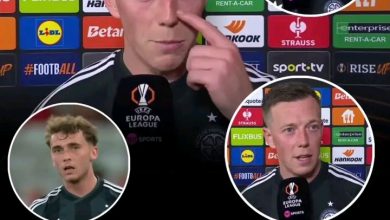
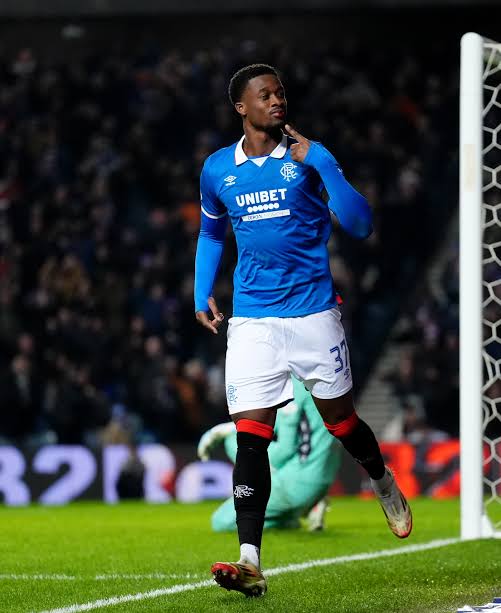
In an emotional and honest conversation with Sky Sports, Glen Kamara opened up about the incident that shocked football fans around the world. The moment came during a Europa League match between Rangers and Slavia Prague in March 2021, when he clashed with Ondrej Kudela.
It was a night that started like any other European game. Big stage. High tension. Players fully focused. Fans watching closely from home. But by the end of that match, football was no longer the main story.
What happened in those final moments changed everything.
Kamara described the situation in a calm but deeply emotional way. He explained how the incident began with a normal football moment. A foul. Players gathering. Voices raised. That is something that happens in almost every match. Players argue, they shout, they try to gain advantage. It is part of the game.
He said he told Kudela to be quiet, just simple football talk. Kudela responded. There was nothing unusual at first. It felt like normal banter between players.
Then everything changed.
Kudela came close to him, covered his mouth, and whispered something into his ear.
Kamara said that moment is something he will never forget.
He did not repeat the exact words fully in a way to glorify them, but he made it clear that it was a racial insult. A deeply offensive statement that went beyond football, beyond competition, beyond anything acceptable on a pitch.
The reaction was instant.
Shock.
Confusion.
Anger.
But also something he did not expect to feel: embarrassment.
That feeling stayed with him. Even as he explained it, you could sense how difficult it was for him to understand why he felt that way. He kept asking himself why he should feel embarrassed for something that was not his fault.
He was just there to play football.
Like everyone else.
But in that moment, everything became different.
He said it felt unreal. Like something that should not happen, especially not at that level of football. Not in a European competition. Not on live television. Not in front of millions of people watching around the world.
And yet, it happened.
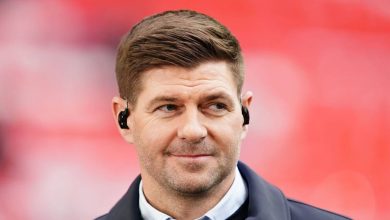
He described how his mind went blank. His manager at the time, Steven Gerrard, tried to speak to him, even asked if he wanted to come off the pitch. But Kamara said he could not even hear him properly. It was like everything around him disappeared.
Tunnel vision.
Just one moment stuck in his head.
“What just happened?”
He kept thinking about his family watching. His friends watching. Everyone seeing it live. That made it even harder to process.
After the match, things did not calm down.
Instead, they got worse.
The situation continued in the tunnel, where emotions were still high. Kamara later received a ban for reacting physically, while Kudela was given a 10-match ban by UEFA for racist behaviour.
Kudela denied the accusation for a long time. But later, he dropped his appeal and issued an apology. However, that apology did not fully address the racial abuse itself, which left many people feeling that justice was incomplete.
For Kamara, the damage had already been done.
One year later, when he sat down to reflect, it was clear that the incident was still with him.
He spoke about how it affected him emotionally.
He spoke about the confusion of feeling embarrassed.
He spoke about the anger that comes when someone crosses that line.
And he spoke about how different racial abuse feels compared to normal insults in football.
Players call each other names all the time during matches. Words like “idiot” or “stupid” are common and usually forgotten quickly. But Kamara explained that racial abuse is completely different.
It hits deeper.
It stays longer.
It brings a mix of emotions that are hard to explain.
Anger.
Disappointment.
Shock.
And something heavier that sits inside you.
He made it clear that unless someone has experienced it, it is difficult to fully understand that feeling.
After the match, when he returned to the dressing room, the support started coming in.
Messages.
Calls.
Voices from all over the football world.
Players from different clubs reached out to him. Friends and family stood by him. Even people he did not know sent messages of support.
That support meant a lot.
But it did not erase what happened.
One of the most emotional moments came when he spoke about his mother.
He said she called him that night. She was upset. She wanted to make sure he was okay. She tried to comfort him, telling him he had made her proud.
That moment showed the human side of the story.
It was not just about a player on a pitch.
It was about a son, a family, people who care deeply, all affected by something that should never have happened.
He admitted that knowing his mother was hurt made it even harder for him.
That is where the feeling of embarrassment came back again.
Not because he did anything wrong.
But because someone else’s actions had created a situation that affected his loved ones.
As time passed, football moved on.
Matches continued.
Seasons progressed.
But for Kamara, the memory did not disappear.
He said he sometimes thinks about it, especially when people remind him. Sometimes, when he goes out, people recognize him not for his football, but for that incident.
He shared a moment when someone approached him and said, “You are the player who was racially abused.”
That is a powerful and painful reality.
To be known not for your talent, not for your performances, but for a moment of discrimination.
That is something he now has to live with.
Even on social media, the situation has not completely gone away.
He said that from time to time, people still send messages or comments related to the incident. Some of them are abusive. Some of them try to bring back that moment again.
It is less than before, but it still happens.
And that shows how long-lasting the impact of such incidents can be.
Looking back, Kamara admitted that he sometimes wishes he had made a different decision in that moment.
He said he wishes he had walked off the pitch.
His manager had given him the option.
If he had done it, it could have forced a stronger reaction from the authorities. It could have created a situation where football had to stop and confront the issue immediately.
But in that moment, everything was happening too fast.
Now, with the benefit of time, he says clearly that if something like that happens again, he will walk off.
No hesitation.
That is a powerful statement.
It shows how much the experience has changed his mindset.
It also sends a message to football: players should not have to tolerate abuse of any kind.
There were also moments of support that stood out to him.
Before a match against Celtic, their captain Scott Brown came over and showed respect. That small gesture meant a lot. It showed unity. It showed that some things are bigger than rivalry.
Another important moment came when Arsenal, a club Kamara has a connection with, showed support during their Europa League match against Slavia Prague. The players took the knee and made it clear they stood with him.
Those actions mattered.
They showed that football can come together against discrimination.
They showed that players are not alone.
Back at Rangers, the support was strong as well. Fans created banners. Teammates stood by him. The club supported him fully.
He said he appreciated all of it.
Because in moments like that, support can make a difference.
It cannot erase what happened, but it can help someone feel less alone.
The story of Glen Kamara is not just about one incident.
It is about the ongoing fight against racism in football.
It is about how far the game has come, but also how far it still needs to go.
Organizations like Kick It Out continue to work towards equality and inclusion. Campaigns speak out against hate. Clubs and players take a stand.
But incidents like this remind everyone that the problem is not fully solved.
There is still work to be done.
There are still lessons to be learned.
And there are still voices that need to be heard.
Kamara’s story is one of courage.
He chose to speak.
He chose to share his experience.
He chose to stand strong, even when it was difficult.
And by doing that, he has helped keep the conversation alive.
Football is more than just a game.
It is a global community.
And that community must continue to grow in the right direction.
Because no player should step onto a pitch and face abuse.
No player should feel embarrassed for who they are.
And no moment like that should ever be repeated.
But if it is, voices like Glen Kamara’s remind us that silence is not the answer.
Standing up is.
Speaking out is.
And making sure it never happens again must always be the goal.