Scotland 1-2 Slovenia, Croatia 1-2 Spain, and more: Nations League football – as it happened

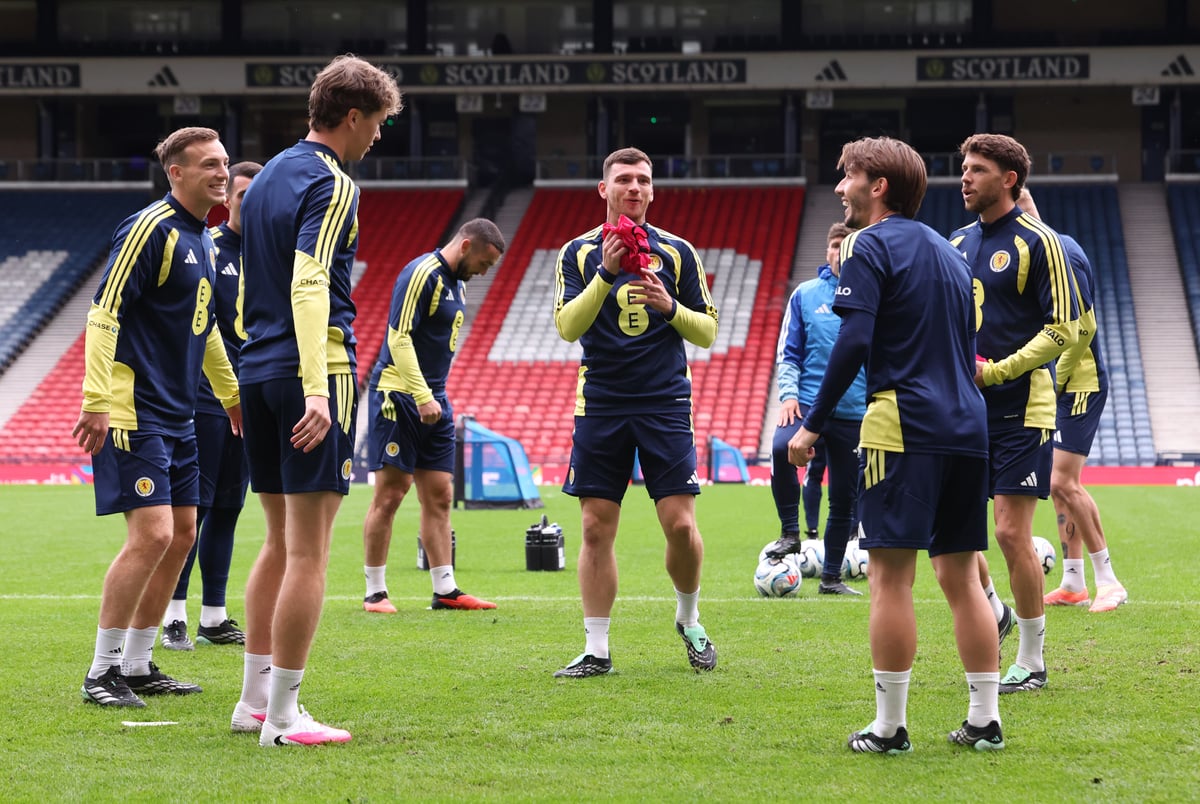
A night that began with a sense of renewal at Hampden Park ended in boos, silence and some uncomfortable questions. Scotland, who had been ahead at half-time and who had a chance to move up to second place in Group B1 with a second successive win, lost 2-1 at home to Slovenia in the Nations League, and in doing so turned a promising weekend into a hard evening for Sebastien Pocognoli. The defeat ended his first international window as Scotland head coach on a sour note, and it carried more weight than a single result in a competition of this kind usually does, because of the way it happened and what it revealed about the team’s second-half resilience.
The context made the manner of the loss more painful. Pocognoli had earned his first win as Scotland manager on Saturday, a 2-0 victory away to North Macedonia that ended a run of four matches without a goal and lifted the mood around the camp. Many supporters travelled to Hampden expecting to see that momentum carried forward, and the early stages seemed to bear them out. The home side went into the break in front, the crowd was in good voice and the group table was about to tilt in Scotland’s favour. Instead, the second half turned into one of the most disappointing 45 minutes of the new regime so far, and the lead that had looked secure disappeared with startling speed.
The first half offered encouragement, if not total control. Scotland scored to lead 1-0 at the interval, with Ryan Christie later confirming that he was the scorer, and although his own assessment of the opening period was that it was not particularly great, the scoreboard gave the team a platform. The Slovenian side, managed by former defender Boštjan Cesar, were organised and compact, as expected, and it took a moment of quality to separate the teams before the break. For a side that had struggled to score in recent weeks, getting the first goal was a significant step, and it seemed to confirm that Pocognoli’s ideas were beginning to take root.
The mood in the stadium at half-time was one of cautious optimism. Elsewhere in the Nations League, Switzerland led North Macedonia 1-0 in the other fixture in Scotland’s group, which meant that the home side were heading for a potentially strong position at the end of the evening. A win would have taken them to seven points, level with Slovenia on points and ahead on the head-to-head basis, and would have turned a difficult start to the campaign into a promising one. That scenario was in the minds of everyone in the ground as the teams returned to the pitch, and it makes what followed all the more stark.
By the account of those who watched it, the opening ten minutes of the second half were the best spell Scotland produced after the interval. Christie himself said the team felt a lot better in that period, and there was a sense that the home side might push on and kill the game. Instead, the momentum shifted at precisely the moment when it needed to hold. In the 57th minute, from a Scotland throw-in, Slovenia worked the ball to the right, and Aljosa Matko ran infield with room to shoot. Luis Binks tried to close him down but could not get close enough to stop the effort, and the shot deflected off him, took a slight change of direction and found the bottom corner past goalkeeper Angus Gunn.
That equaliser was a soft one in several respects. It came from a throw-in, a situation in which Scotland should have had control, and it was the result of a deflection that wrong-footed the keeper. Yet it also exposed a deeper issue, because the visitors had been growing into the game before the goal arrived. The Slovenian players looked fresher and sharper, particularly in the wide areas, and Scotland’s defensive shape had begun to look stretched. After the goal, the home team never quite regained its composure, and the match tilted decisively towards the side in white.
The warning signs multiplied quickly. Slovenia ripped through the Scotland defence down their left, and Vipotnik was played into acres of space, galloped into the penalty area and, with only Gunn to beat, curled his shot well over the crossbar. It was an astonishing miss, and the sort of chance that normally leads to a goal. A little later, Sturm rolled a pass along the edge of the box to two unmarked teammates, and Zabukovnik’s first-time effort was poor enough to hit a defender and spare Scotland further punishment. The pattern was clear: Slovenia were finding gaps with alarming ease, and only wasteful finishing was keeping the score level.
Pocognoli reacted with changes at around the 70-minute mark, and there was a double substitution that saw Che Adams’s usual understudy Lyndon Dykes’s absence felt, though the actual changes were Hickey and Bowie replacing McBurnie and Welsh. The intention was clearly to inject energy and balance, but the shift did not have the desired effect. A few minutes earlier, Slovenia had even had a goal ruled out for offside, when Matko slid the ball under Gunn and into the net after a header was knocked on, only for the replay to show he had been behind the last defender. That decision kept Scotland in the game, but it did nothing to improve their performance.
The second goal arrived in the 71st minute and it was the result of exactly the sort of movement that had been troubling the hosts throughout. Great work on the right sent Matko clear again, and he delivered a low cross to the far post, where Danijel Sturm swept the ball home with no mistake. The stadium, which had been uneasy for ten minutes, erupted in boos, and the Scotland players looked dejected as the visitors celebrated. It was a goal that said a great deal about the contest: Slovenia, who had been described as no better than functional, were comfortably winning the key battles and had found a simple way to exploit a team that was not working well together.
The final stages offered little relief. Pocognoli threw on Josh McPake and Findlay Curtis, taking off Christie and Ben Gannon-Doak, and the Rangers attacker made his way onto the pitch at the stage where Scotland needed a lift. The live commentary at the time noted that they simply needed a few minutes without threatening to self-destruct, and they largely got that, but without creating enough to change the outcome. There was a chance when McPake sent in a low cross from the left and Kieron Bowie took one touch and shot, but the effort lacked venom and Jan Oblak made the save. McPake also went down in the area after contact from Karnicnik, but the referee saw nothing and the home side’s appeals were waved away.
As the clock ran down, Scotland won a free-kick about ten yards outside the penalty area, and Billy Gilmour got it over the wall well enough but also over the bar, which seemed to sum up the evening. When the final whistle blew at 9.38pm UK time, the boos rang out again, a reflection of how far the performance had fallen below the standard supporters had hoped for. Slovenia’s players celebrated a victory that had looked comfortable for much of the second half, and the Scotland squad trudged off with the manager and his staff looking grim.
The post-match comments were blunt. Pocognoli admitted that Scotland got what they deserved, which is a rare and honest acknowledgement from a manager immediately after a defeat. He did not hide behind the offside decision or the deflection, and he did not seek to pin the blame on bad luck. Instead, he accepted that his team had not done enough to win the match, and that the loss was a fair reflection of the performance. That kind of honesty can be valuable, because it shows that he understands what went wrong and is not trying to hide it, but it also underlines the scale of the task ahead.
Andy Robertson, the captain, went further in his assessment. He said the performance was not good enough, that the team had not done the things that had worked so well on Saturday and that he could not explain why. He said Slovenia looked fresher, hungrier and better, and that Scotland had been outfought, something he thought people did not accept easily. It was a candid admission from a senior figure, and it carried real weight because of who delivered it. When a captain says that a team was beaten for desire, it points to something that goes beyond tactics and into attitude, and that is a much harder problem to solve.
Christie’s own reflections were more measured but equally frank. He described the night as frustrating, said the first half was not particularly strong and noted that the team had felt better in the early part of the second period. The trouble, he said, began when Slovenia scored, after which the team struggled to find its shape. He also pointed to the lack of creativity from the forwards, including himself, saying they had not created enough during the match. It was a thoughtful analysis that identified both the collapse in organisation after the equaliser and the broader weakness in attack that has hung over the team for some time.
The match report by Ewan Murray in the Guardian was harsher. He called it a rocky start for Pocognoli, noted that four points from three games had been adequate until Slovenia inflicted this defeat and highlighted what he saw as the abject nature of the display. In his view, Scotland were comprehensively outplayed by a side that were themselves merely functional. He argued that November feels significant for the manager and that Scotland had been far too easy to play against, which is a difficult verdict for any coach to hear. Whether that assessment is fully fair or not, it captures the mood among those who watched.
The mathematics of the group make the defeat even more costly. After four matches, Switzerland lead with a perfect twelve points and a goal difference of plus ten, Slovenia are second with seven points, Scotland are third with four, and North Macedonia are bottom with none. The Swiss beat North Macedonia 3-0 on the same night, with Ndoye adding the third, which means they are firmly in control at the top. For Scotland, the loss is made worse by the fact that head-to-head record is the first method of separating teams that finish level on points, and Slovenia now hold that advantage after taking four points from the two meetings with the Scots, having drawn the first match 0-0.
The remaining fixtures make the picture no easier. In November, Scotland host North Macedonia and travel to face Switzerland, while Slovenia do the opposite, hosting the Swiss and travelling to Skopje. The home match against North Macedonia is the one that Scotland must win, and the trip to Switzerland looks daunting, especially against a team with a perfect record. Slovenia’s schedule gives them a home game against the leaders, which will be difficult, and an away game against the bottom side, which should be more manageable. That means Scotland probably need to win both of their games and hope for a slip from Slovenia to climb into second place, which is a tall order given the way the group has developed.
It is worth remembering the wider context of the night’s Nations League action, because it shows how other nations are faring. In League A, Group 3, Croatia lost 1-2 to Spain after leading at half-time, with Mikel Merino scoring twice, once in the 61st minute and again in the 89th, after Ivan Perisic had been sent off for a second yellow card. Spain have now officially qualified for the quarter-finals. England beat Czechia 3-0 at Wembley, with Harry Kane scoring twice on the occasion of his 125th cap, which took him level with Peter Shilton at the top of England’s all-time list and moved him to 91 goals for his country. In League C, Albania beat San Marino 2-1 with a penalty in the 93rd minute, and Belarus beat Finland 1-0.
Against that backdrop, Scotland’s performance looks even more disappointing. The leading nations in the competition are handling difficult situations with confidence, while Scotland have taken a lead against a modest opponent and let it slip. That does not mean the team is without quality. The first half showed that there are players capable of producing good football, and the win in North Macedonia demonstrated that the squad can respond to pressure. But it does underline the importance of consistency, and the need for the team to maintain its intensity over ninety minutes rather than in short bursts.
Pocognoli’s challenge is therefore one of mentality as much as tactics. The questions he faces include how to prevent a collapse after conceding, how to ensure that the team defends set pieces and throw-ins properly and how to create more chances against organised opposition. He has an opportunity in November to put things right, but the margin for error is small. The home game against North Macedonia is a must-win fixture, and the manager will want to see a team that plays with the energy and conviction that was missing against Slovenia.
There is an argument that the defeat could prove useful in the long run. Early results in a manager’s reign rarely tell the full story, and a setback after a first win can sharpen focus and bring problems into the open. The honesty from Pocognoli and the senior players suggests that they have recognised what went wrong, which is the first step towards fixing it. If the squad responds with a strong performance in November, the loss to Slovenia may be remembered as a lesson rather than a turning point. If it does not, the questions will only grow louder, and the patience of the supporters, already tested at full-time, may wear thin.
For now, the sensible conclusion is that Scotland had a chance to build and failed to take it. They led at half-time, lost their grip after the interval and were beaten by a team that wanted it more. The boos at the end were a sign of disappointment from supporters who had expected better, and the quotes from the manager, the captain and Christie showed that the players shared the frustration. The next window will be a test of character and of the manager’s ability to galvanise a group that has shown glimpses of promise but has not yet found a consistent identity










