Slovenia v Scotland LIVE: Sebastien Pocognoli begins new era for Tartan Army in Nations League

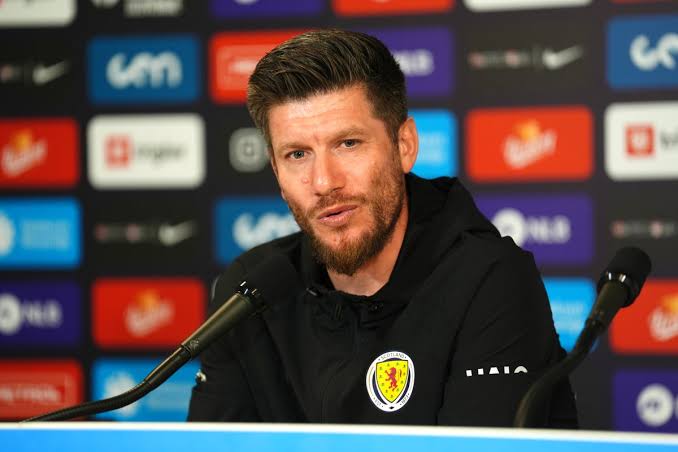
Some matches carry more meaning than their position in a calendar suggests, and Scotland’s Nations League meeting with Slovenia at Hampden Park is one of them. On paper it is the fourth round of a group in League B, a competition that does not command the global attention of a World Cup or a European Championship. In reality it is the first home game of a new era, a chance for Sebastien Pocognoli to show the Tartan Army what his team can become, and a direct contest for second place in a group where Switzerland have already set a punishing pace at the top. Kick-off is at 18:45 UTC, which means a 7:45pm start in Glasgow, and for the supporters who fill the old stadium it promises to be one of those evenings where the atmosphere will shape the story.
The context starts with the manager. Pocognoli replaced Steve Clarke in August, becoming Scotland’s first non-Scottish manager since 2004, and the early weeks of his reign have been difficult. The Belgian, who is 39, inherited a squad that had just endured a disappointing World Cup, where the team went out in the group stage, and he arrived with a mandate to freshen things up without discarding the experience that had carried the country to major tournaments. A fresh voice, a new tactical outlook and a handful of new names were always going to take time to bed in, and the results reflected that, with the team going four matches without scoring a goal.
That dry run ended on Saturday in the most welcome way possible. Scotland won 2-0 away to North Macedonia in Skopje, and in doing so they earned Pocognoli his first victory as head coach. Previews of the Slovenia game describe a sense of relief around the camp, and it is easy to understand why. A new manager can survive a few awkward results, but every extra match without a win intensifies the questions, and a first success changes the tone of everything that follows. It brought three points, a first goals-for column worth the name and a degree of freedom that the manager did not have a week earlier.
The win also altered the shape of the group. After Saturday, Scotland sit level on four points with Slovenia, who occupy second place, and both trail Switzerland, who have won all of their matches and lead the table with a perfect nine points from nine. That means Tuesday’s game is essentially a straight contest for the runner-up position, and with the group likely to be decided over six rounds, every point carries weight. A home victory would lift Scotland above Slovenia and give them a clear advantage in the battle for second, while a defeat would leave them behind and under renewed pressure.
The history of the fixture beween these two sides adds a layer of intrigue. Scotland and Slovenia met earlier in this campaign in Ljubljana, where the match ended goalless, a result that offered little to either camp beyond a point apiece. That draw was a frustrating one for Scotland, who missed chances in the second half and left with the sense that a better finish could have changed the story. It is also a reminder that Slovenia are a difficult team to break down, well organised and disciplined, and not the sort of opponent that gives away goals cheaply.
An older meeting between the countries gives some perspective on how these games tend to go. In a World Cup qualifier at Hampden some years ago, Scotland beat Slovenia 1-0 thanks to a late goal from substitute Chris Martin, who scored in the 88th minute after a quiet and anxious evening. Slovenia that night were described as all work rate and little flair, and they happily held on for a point until the very late breakthrough. The Slovenian captain that evening, Boštjan Cesar, was booked for time wasting, and the home crowd jeered him loudly. It is a neat twist that Cesar is now on the touchline as Slovenia’s manager, returning to a stadium where he once played a very different role.
Cesar’s presence matters because it hints at the kind of team Slovenia are likely to be. A former defender who captained his country is liable to value structure, concentration and teamwork, and the visitors have shown those qualities consistently. They held Scotland to a draw in the opening match, and they have been competitive in the group despite a heavy loss to Switzerland, a game in which one preview said they caved once the Swiss turned up the pressure. The lesson from that match is that Slovenia can be pushed out of their shape if the opposition is sharp and relentless, and that may well shape the way Pocognoli approaches the game.
The home side’s selection is shaped by a couple of absences and returns. Scott McKenna, the Dinamo Zagreb centre-back, is suspended following his red card against North Macedonia, which robs Scotland of one of their more reliable defenders. In his place, Jack Hendry is expected to return after serving a suspension of his own for a red card, and he will join Stephen Welsh and Luis Binks in a three-man defence. It is a back line that has some experience and some rawness, and it will need to work as a unit against a Slovenian attack that has shown it can create chances even when it lacks its biggest names.
The preview material also points out that Slovenia will be without their star forward, a significant loss for a team whose goals do not come in great numbers. That absence takes away their most obvious threat and may force Cesar to rely on a more collective approach. It could also encourage Scotland to be bolder than they might otherwise be, pushing the full-backs forward and pressing higher up the pitch, because the danger of a clinical counter-attack is reduced. Of course, a team that is missing its main striker can still be dangerous if it manages to produce a moment of quality, and Scotland will have to remain alert.
In midfield, the home side have something to build on. Previews highlighted the engine room of Gilmour and Ferguson as a key strength, pointing to the way they can apply pressure and dictate tempo. Billy Gilmour has long been admired for his composure and passing ability, and Lewis Ferguson brings energy, ball-carrying and a willingness to get forward. Together, they give Scotland a balance of control and drive that could be decisive against a compact opponent. If they are allowed to dominate the central areas, they can feed the forwards and set the rhythm of the game, while if they are pressed into mistakes, the whole team can be unsettled.
Attack is where the questions are largest. A team that has gone four games without scoring, even if it has since found the net twice, will be aware of how fragile confidence can be, and the forwards will want to build on what happened in Skopje. One of the intriguing selection stories is the presence of young Rangers attacker Findlay Curtis, who was recalled to the senior squad after being sent to the under-21s for a European qualifier. Curtis produced four assists in a 5-2 win for the youth side, and Pocognoli explained that he had been brought back because he deserved it. He has one goal in five senior caps and became the youngest Scotland player at a World Cup finals, so there is no doubting his potential, even if he remains at an early stage of his international career.
Whether Curtis starts, comes off the bench or remains an unused member of the squad is something that will become clear when the team sheet is released. What is certain is that his inclusion sends a message about the manager’s philosophy. Pocognoli has said he wants to build bridges between the under-21 setup and the senior team, and a young player earning a promotion on the strength of his performances is the most visible example of that approach so far. Supporters tend to warm to a manager who gives youth a chance, particularly when the results are beginning to turn, and a good moment from a youngster at Hampden would be warmly received.
The Hampden factor is itself worth dwelling on. The stadium can hold nearly 52,000 people, and on a night like this it rarely feels quiet, according to one preview. The Tartan Army has a way of turning a modest fixture into an occasion, and the supporters will be keen to see how the new regime performs in front of them for the first time. That brings both encouragement and pressure. A bright start could lift the crowd and drive the team forward, while a flat first half could produce the kind of anxious murmuring that makes players tighten up. Pocognoli will know that how his team starts could shape the entire evening.
Tactically, the contest could be a fascinating one. Scotland are likely to use a back three, as they did under previous management, with wing-backs providing width and a pair of central midfielders controlling the middle. Slovenia, under Cesar, will probably look to stay compact and make it hard for Scotland to find space between the lines. The key battle may be between Scotland’s creative players and Slovenia’s defensive block, with the home side needing to find ways to pull the visitors out of position. Quick combinations, overlapping runs and well-timed crosses all offer routes to goal, and set pieces could prove important in a tight game.
There is also the question of patience. Scotland’s recent history includes matches in which they dominated possession but failed to convert it into goals, and the temptation against a deep-lying opponent is to force the issue too early. The best approach is likely to be a measured one, moving the ball at pace, probing for gaps and avoiding the kind of rushed shots and misplaced passes that hand the initiative back to the visitors. If the first goal arrives, the dynamic changes, because Slovenia would have to open up and the spaces would appear. If it does not, the home side must resist the urge to panic and keep trusting the plan.
For Pocognoli personally, the match offers an opportunity to consolidate. A win would give him back-to-back victories for the first time, lift Scotland above Slovenia in the table and provide a platform for the remaining matches. It would also quiet some of the scepticism that surrounds any new manager, particularly one who is both a foreigner and a relative newcomer to the international game. A draw would be less damaging than a defeat but might leave a sense of missed opportunity, while a loss would deepen the questions that surrounded the early weeks. It is a high-stakes evening for a manager who is still introducing his ideas.
His first win came with some good fortune in terms of timing, and he has spoken about how pleased he is with the response of the players. He has also been candid about the need to improve finishing, noting that the team creates chances and that the quality of the forwards and wingers is there. That attitude is sensible. A team that creates opportunities but does not take them is usually one bad run away from success, and the answer is often as much about confidence as about technique. By giving young talents a chance and rewarding good form, he is trying to create an environment in which that confidence can grow.
The wider group picture explains why the result matters beyond the immediate. Switzerland are well ahead and look strong favourites to win the group, which means the battle for second place is likely to be decisive in terms of avoiding any relegation threat or securing a good seeding for the next phase of the competition. With only a few rounds left, every point is precious, and a team that falls behind the other contenders can find itself in difficulty. That is why the match has an edge, and why both teams will treat it as a vital step rather than a routine international.
There is another dimension in the way Scottish football is following the story. This week has been busy for the domestic game, with the Premiership generating its own storylines, and several Scottish clubs have players in the national squad. Rangers’ Curtis is one example, but the broader pool of talent from Celtic, Hearts and others contributes to the team’s character. The national side’s fortunes affect the mood around the whole league, and a good result at Hampden tends to lift the wider conversation about the health of the game in Scotland. For those who follow the club game, it is a reminder that the two levels are connected.
On the pitch, the likely outcome is a tight contest decided by small details. Both teams have shown they can defend well, and both are capable of dull matches in which the margin is a single goal or a single mistake. The bookmakers have made Scotland favourites, which reflects home advantage, form and the absence of Slovenia’s best forward, but favouritism has never guaranteed anything in this fixture. If the history of Scotland against Slovenia teaches anything, it is that the visitors are experts at making life uncomfortable and that the hosts may have to wait for their moment.
Whatever happens, the evening is an important step in the process of defining what Pocognoli’s Scotland will look like. The squad he picked blends experienced players with newcomers, the system he uses reflects his European background and the group is still learning how to play together. It takes time for a new manager’s ideas to take hold, and a few matches are rarely enough to judge. What the supporters want to see is progress, a sense that the team is moving in the right direction and that the Saturday win was the beginning of something rather than a one-off.
Seen in that light, the Slovenia match is less about three points and more about identity. The supporters are looking for a team that plays with courage, shows unity and gives them reasons to believe that the next qualification campaign will be better than the last one. A convincing performance, even if the result is narrow, can do a great deal to build that belief, while a limp display would raise doubts again. That is the weight that rests on a Nations League fixture in October, and it explains why the build-up has been so closely scrutinised.
By the time the final whistle blows, the story will be told in one of three ways. It will be a victory that confirms Pocognoli’s early progress, a draw that leaves the battle for second place still open or a defeat that sends the team back to the drawing board. Each outcome has its own narrative, and each will shape the conversation in the days that follow. For now, the stage is set at Hampden, the crowd is gathering and a new era is about to be tested in front of its most important audience










