Steven Gerrard has finally given Rangers supporters a proper insight into exactly why he stepped away from the chance to return to Ibrox for a second spell as manager, revealing that the decision ultimately came down to a combination of genuine recruitment concerns and deeply personal family considerations that he simply could not overlook, however strong his emotional pull back towards the club remained. The former Liverpool captain, who guided Rangers to their first Scottish title in a decade during his first spell in the Ibrox dugout, had been the clear frontrunner to take charge again after Russell Martin’s dismissal, with talks between Gerrard and the club’s hierarchy reportedly progressing constructively before he ultimately chose to withdraw from the process.
For a support that has never stopped holding a special place in its heart for Gerrard given everything he achieved during his first spell in Govan, the prospect of a Round 2 always carried an emotional charge that went well beyond ordinary managerial speculation. Gerrard’s first stint at Ibrox remains one of the defining chapters in the club’s recent history, culminating in the 2020-21 title triumph that ended Celtic’s pursuit of ten consecutive championships and restored a sense of pride and momentum to Ibrox after years of turmoil following the club’s financial implosion. That achievement alone has ensured Gerrard’s status as a genuine Ibrox icon, and it is precisely that history which explains why the possibility of him walking back through the door generated such intense excitement among supporters when Martin’s exit opened the door to a potential reunion.
Speaking candidly about the process that led to his eventual decision, Gerrard made clear that his affection for Rangers had never been in question and that the emotional side of the equation had pulled heavily in favour of a return. He described feeling a genuine sense of connection to the club that had never faded since his departure for Aston Villa back in 2021, and explained that he continues to follow every Rangers result closely from afar, still invested in the club’s fortunes even from a distance. That ongoing emotional attachment, by his own admission, meant he came remarkably close to saying yes to the opportunity when it was formally presented to him, with reports at the time suggesting discussions between Gerrard and Rangers’ ownership had gone well and that both parties had approached the conversations in good faith.
Yet for all that emotional pull, Gerrard was equally candid in explaining the practical doubts that ultimately convinced him the timing was not right for a second stint at Ibrox. Chief among those concerns was the question of recruitment, with Gerrard revealing he harboured genuine uncertainty about how effectively the club would be able to support him in the transfer market were he to take charge again. Having experienced first-hand during his initial spell just how important smart, well-resourced recruitment can be to building a title-winning squad, it is easy to understand why any lingering doubts on that front would have weighed heavily on his thinking. A manager returning for a second spell at a club the size of Rangers arrives with heightened expectations attached from the very first day, and Gerrard appears to have concluded that without complete confidence in the recruitment framework being put in place around him, the risk of falling short of those expectations was simply too great.
Compounding those footballing reservations was a separate and, in many ways, even more significant obstacle rooted in Gerrard’s family life. Since leaving his post in charge of Saudi Pro League side Al-Ettifaq, Gerrard’s wife and children have remained settled in Bahrain, and a return to management in Scotland would have meant reopening the difficult question of how to balance his professional ambitions against his responsibilities and commitments at home. Gerrard was unusually open in discussing just how significant an upheaval it had been for his family when they first relocated to the Middle East, explaining that convincing his wife and children to embrace that move, including changing schools and adjusting to an entirely different way of life, had not been a straightforward or easy process. Having already asked so much of his family once, the prospect of asking them to uproot again, or alternatively of spending long stretches away from them while they remained settled in Bahrain, was clearly not something Gerrard was prepared to do lightly.
That tension between professional opportunity and family stability is one that plenty of high-profile managers have grappled with over the years, but few have spoken about it as openly and honestly as Gerrard did in explaining his Rangers decision. He was clear that he did not want to simply disappear on his family in pursuit of a return to Ibrox, framing the decision not as a rejection of Rangers itself but as a recognition that the circumstances surrounding his personal life made the timing fundamentally wrong, regardless of how much the football side of the equation continued to appeal to him.
Beyond the recruitment concerns and family considerations, Gerrard also touched on a broader unease about what a second spell in charge would realistically look like in terms of expectations and timescale. He acknowledged that going in for a second stint would inevitably be viewed through the lens of needing to win immediately, rather than being afforded the kind of patient, longer-term rebuilding period that had allowed him to gradually construct a title-winning side during his first spell. That is an entirely understandable dynamic in modern football, where fans and boardrooms alike tend to expect an experienced, previously successful manager returning to a club to hit the ground running rather than requiring an extended bedding-in period. Gerrard’s recognition of that reality, and his honest admission that he had doubts about whether the conditions were right for him to deliver success on that accelerated timeline, speaks to a level of self-awareness that ultimately shaped his final decision.
Taken together, those various doubts and insecurities left Gerrard, by his own estimation, somewhere in the region of 80 to 90 per cent convinced that a return made sense, but crucially not fully there. He was explicit in stressing that the eventual decision came down to respect, both for the football club itself and for the supporters who had elevated him to legendary status during his first spell, as well as an honest acknowledgement that he might simply not have been the right man for the job at that particular moment in time. That final framing is a significant one, distinguishing clearly between a permanent rejection of any future involvement with Rangers and a considered, circumstance-specific decision that the second stint could not go ahead under the conditions on the table at that time.
Importantly, Gerrard was careful to leave the door firmly open for a possible future return, making clear that his decision not to take the job now should not be read as ruling out any prospect of managing Rangers again further down the line. That sentiment has been echoed in previous comments he has made since turning down the role, including suggestions that he remains hopeful of one day being in a position where the timing, the family circumstances and the footballing project all align in a way that would allow him to say yes without the reservations that held him back this time around. For a fanbase that has never stopped dreaming of Gerrard’s eventual return to Ibrox, that lingering possibility offers at least some consolation, even as the club moves forward under new management in the here and now.
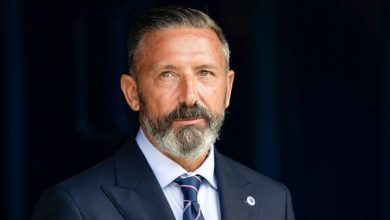
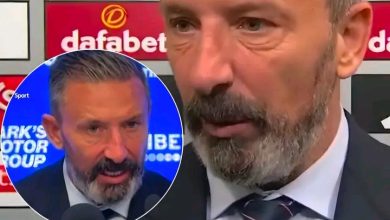
Indeed, one of the most striking elements of Gerrard’s comments was the warmth and generosity he showed towards Derek McInnes, the man who ultimately did take charge at Ibrox following the search that Gerrard himself had been at the centre of. Rather than expressing any lingering regret or awkwardness about a job that so nearly could have been his, Gerrard spoke enthusiastically about McInnes’s prospects heading into the new season, framing the new manager’s arrival as a fresh start that deserves full backing from the club as the summer transfer window continues to unfold. He expressed hope that McInnes would receive further support in the market before the window closes, and offered his personal well-wishes for the season ahead, striking a tone that was entirely supportive rather than in any way bitter or wistful about the path not taken.
That gesture speaks to the broader class and perspective Gerrard has consistently shown in how he discusses Rangers in the period since his own departure from the club. Rather than positioning himself as a rival or a shadow hanging over whoever occupies the Ibrox dugout, Gerrard has repeatedly framed himself as simply a supporter watching from afar, someone who continues to care deeply about the club’s fortunes without needing to be directly involved in shaping them. That stance has helped preserve the deep well of goodwill that exists between Gerrard and the Rangers support, ensuring that even in turning down the chance to return, he has done so in a manner that reinforces rather than damages his standing as one of the most cherished figures in the club’s recent history.
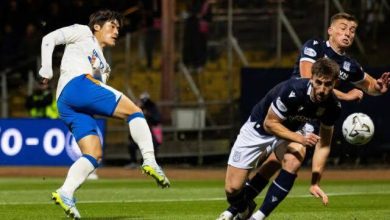
For Rangers themselves, the process of parting ways with the possibility of a Gerrard reunion and instead turning to Derek McInnes represents a significant moment in the club’s ongoing effort to rebuild momentum after a difficult period under Russell Martin. McInnes’s task now is to prove that the club made the right call in moving forward without Gerrard, building his own legacy at Ibrox rather than existing in the shadow of what might have been. Early signs from pre-season and the opening weeks of the new campaign, including a hard-fought draw away at Dundee United on the opening day of the Scottish Premiership season, suggest McInnes is approaching that challenge with the kind of measured, incremental building process that Gerrard himself referenced when discussing why a second stint under different circumstances would have felt so different from his first.
There is also a wider point to be made here about the unique pressures facing any manager, however accomplished, who considers returning to a club where they previously enjoyed enormous success. Second spells in football carry a well-documented history of disappointment, with numerous examples across the game of managers struggling to recapture the magic of their first stint once circumstances, squads and expectations have shifted in the intervening years. Gerrard’s own honesty about the heightened pressure to win immediately, rather than being given time to build, reflects a broader truth that clubs and supporters alike often underestimate when clamouring for a beloved former manager to return. His willingness to walk away rather than risk tarnishing the legacy he built during his first spell, even when the emotional pull to say yes was clearly so strong, ultimately reflects a maturity and self-awareness that will likely only enhance his reputation among Rangers supporters rather than diminish it.
As the new Scottish Premiership season continues to take shape under Derek McInnes, the story of Gerrard’s near-return will likely remain a recurring talking point among supporters, pundits and journalists alike, particularly whenever results take a difficult turn and the inevitable what-ifs resurface. But based on the clarity and honesty with which Gerrard has now explained his reasoning, it seems clear that this was never a decision taken lightly, nor one driven by any diminished affection for the club that made him a hero. Instead, it stands as a considered, deeply personal choice shaped by genuine footballing concerns and an unwillingness to compromise on his responsibilities to his family, delivered with the kind of respect for Rangers and its supporters that has defined Gerrard’s relationship with the club since the day he first walked through the Ibrox doors.
It is worth revisiting the circumstances that brought Gerrard back into the conversation in the first place to fully appreciate just how close Rangers came to landing him for a second time. Russell Martin’s tenure at Ibrox had unravelled quickly and painfully, with the club managing only a single victory across their opening seven Scottish Premiership fixtures before the board decided a change was necessary. Martin’s final match in charge ended in a draw at Falkirk, and his exit was followed by scenes that underlined just how fraught the atmosphere around the club had become, with police required to escort the team bus away from the stadium after frustrated supporters attempted to block its departure. It was against that turbulent backdrop that Rangers moved swiftly to identify a successor, and Gerrard’s name emerged almost immediately as the standout candidate, given both his history with the club and comments he had made in a podcast interview, recorded before Martin’s dismissal but released shortly afterwards, in which he spoke of having unfinished business in management and a desire to work at a club capable of competing to win.
Those comments only intensified speculation that Gerrard was genuinely open to a return, and reports at the time suggested talks between the two parties were progressing on a positive footing. There was also considerable debate at the time about the structural changes that had taken place at Ibrox since Gerrard’s departure, with the club having moved towards a model in which a head coach operates within a broader footballing structure overseen by a sporting director, rather than having the full managerial autonomy Gerrard enjoyed during his first spell. When pressed on whether that shift in structure had played any part in his eventual decision, Gerrard was candid in acknowledging that he had to weigh up carefully whether such a framework would suit him, alongside the other footballing and personal factors already weighing on his mind. He stressed that taking on a challenge of that scale and importance demanded conditions that felt entirely right, and that he had to honestly assess whether the situation on offer represented that ideal fit before committing to anything.
Ultimately, those layered doubts, spanning recruitment confidence, structural fit, and the deeply personal question of family stability, combined to tip the balance away from an immediate return, even as Gerrard’s emotional connection to the club remained as strong as ever. That combination of factors offers a useful reminder that decisions of this magnitude are rarely shaped by a single, clear-cut reason, but rather by an accumulation of smaller considerations that together create either the confidence to proceed or the hesitation to step back. In Gerrard’s case, it was clearly the latter, but his repeated insistence that his heart remained fully committed to Rangers throughout the process suggests this was one of the more difficult professional decisions he has had to make in recent years.
The timing of Gerrard’s decision also meant Rangers were forced to continue their search for a permanent successor to Martin, with other names having been mentioned in connection with the vacancy before Derek McInnes was eventually appointed. Reports at the time referenced interest in figures including former Rangers player Kevin Muscat and ex-Everton boss Sean Dyche as the club worked through its process of identifying the right candidate once it became clear Gerrard would not be walking back through the Ibrox doors. That period of uncertainty, however brief in the grand scheme of the club’s history, underlined just how significant Gerrard’s decision was in shaping the subsequent direction of the club, with McInnes ultimately emerging as the man trusted to lead the rebuild that Gerrard himself had once been the clear frontrunner to oversee.
Looking back on that period now, with McInnes having overseen his first competitive fixture in charge and the new Scottish Premiership season well underway, it is easier to appreciate just how pivotal Gerrard’s choice turned out to be for the direction of the club. Had he said yes, Rangers supporters would currently be watching their returning hero navigate the opening weeks of a second spell laden with nostalgia and heightened expectation. Instead, they find themselves backing a different project entirely under McInnes, one built without the emotional baggage, for better or worse, that would inevitably have accompanied a Gerrard reunion. Whether that represents the better path for the club in the long run remains to be seen, but Gerrard’s honesty in explaining his reasoning has at least given supporters a clearer understanding of why the reunion many had hoped for never came to pass.
It is also worth reflecting on how this episode fits into the broader pattern of Gerrard’s career since leaving Ibrox the first time around. His subsequent spells at Aston Villa and then at Saudi Pro League side Al-Ettifaq did not deliver anywhere near the same level of success he enjoyed during his time at Rangers, and it would have been entirely understandable had he viewed a return to Ibrox as a straightforward opportunity to rebuild his managerial reputation on familiar and favourable terms. That he chose instead to walk away, despite the obvious appeal of returning to a club where he remains adored, says a great deal about his refusal to take shortcuts or make emotionally driven decisions purely to reboot his career. Gerrard appears determined that whenever he does return to management, whether at Rangers or elsewhere, it will be on terms that genuinely give him the best chance of succeeding, rather than simply the most sentimentally appealing option available to him at the time.
That approach may frustrate some supporters who would have welcomed an immediate second coming regardless of the surrounding circumstances, but it also reflects a manager who has clearly learned lessons from the less successful chapters of his post-Rangers career. Gerrard’s spell at Aston Villa ended without the trophies many had expected given his early promise in the role, while his time in Saudi Arabia, though financially rewarding, never fully allowed him to demonstrate the kind of sustained success he achieved in Scotland. Against that backdrop, his caution in weighing up a Rangers return, rather than simply seizing the emotional pull of the opportunity, looks less like hesitation and more like a manager determined not to repeat past mistakes.
For now, Rangers move forward with Derek McInnes at the helm and Gerrard cheering the club on from a distance, with the door to a future reunion left deliberately ajar rather than firmly shut. Whether that reunion ever materialises remains to be seen, but Gerrard’s own words suggest it is a possibility he has not entirely ruled out, one that could yet resurface again at some point down the line should the circumstances finally align in the way they were unable to this time around.