Steven Gerrard Set for Talks with Rangers: A Year On, the Meeting That Shaped Ibrox and the Door That Never Quite Closed

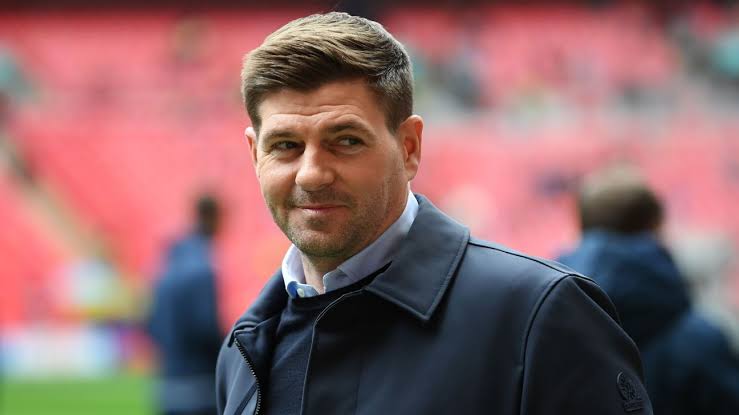
It is almost exactly a year since the headline that briefly stopped Scottish football in its tracks: Steven Gerrard was set for talks with Rangers that week. On the morning of Wednesday 8 October 2025, Sky Sports reported that the man who had ended a ten-year league title drought at Ibrox was preparing to sit down with the club’s American owners in London, as part of a search for a successor to Russell Martin. Martin had been sacked only days earlier, following a 1-1 draw at Falkirk that left the club eighth in the Scottish Premiership, eleven points behind leaders Hearts and nine adrift of Celtic. The mood around Ibrox was somewhere between despair and disbelief, and then, almost overnight, it became something far more charged. Gerrard was coming back to the table, and for a few days a tired and anxious support allowed itself to imagine the return of the most popular manager the club had had in a generation.
To understand why that single line of reporting landed with such force, it helps to remember how bruising the preceding months had been. Martin had lasted just 123 days in the job, a tenure so short that it barely registered as a project at all. The football had been laboured, the results in Europe had been poor, and the home crowd had grown restless long before the final whistle at Falkirk sealed his fate. A club that spends its life measuring itself against Celtic had instead found itself looking up at a gap of nine points in early October, with a title challenge already feeling like a distant memory. In that atmosphere, a name like Gerrard did not simply represent a candidate. He represented a feeling, a reminder of the period between 2018 and 2021 when Rangers believed they had stopped being a club in recovery and had become a club in contention again.
The details of the report matter because they show how carefully the situation was being handled on both sides. Gerrard, then 45, was living in Bahrain after leaving Saudi side Al Ettifaq earlier in the year, and Sky Sports described him as open to discussions without being desperate for them. He was reportedly seeking reassurances that the Rangers project matched his ambitions at this stage of his career, which is a polite way of saying that he wanted to know what he would be walking into before he agreed to walk into it. Talks were expected to take place before the weekend, and the meeting with the owners in London was framed as the most concrete step yet in a managerial search that had, until then, been a swirl of speculation. Rangers were also said to be speaking to other credible candidates that week, so the Gerrard conversation was never presented as a coronation, only as the most emotionally resonant item on a longer list.
The timing of that report also reflected something about how Gerrard himself had been talking in public. In the months before, he had admitted that he felt he had unfinished business in management, and he had described Rangers as a perfect match during his previous spell in charge. Those were not throwaway lines, because they came from a manager whose career since leaving Glasgow had delivered far less than the Ibrox years. His time at Aston Villa had ended without the kind of lasting success many expected, and the move to Al Ettifaq, a lucrative but obscure step out of the European mainstream, had not rebuilt his standing. For a man who made his name as a captain who dragged teams over the line, the suggestion that he might want to go back to the one managerial job where it had unquestionably worked was both understandable and, in hindsight, very human.
Support for the idea arrived quickly from people who had lived inside his dressing room. Former midfielder Ryan Jack publicly backed a Gerrard return, praising his leadership and his ability to motivate players, and his words carried weight because Jack was part of the squad that won the league in 2021. Sky Sports pundit Gordon Duncan described the talks as a significant step in the club’s rebuild, a phrase that captured the sense that even entering a conversation with Gerrard changed the club’s posture. Rangers had spent much of the previous year looking reactive, and the idea that they could reach for a name of that stature suggested ambition. Supporters on social media were quick to say that they did not care about the details, only about the symbolism of the club trying to bring back a figure associated with success rather than a fourth or fifth choice with a strong CV and little emotional pull.
There was, however, a counter-argument that the more sober voices put forward almost immediately, and it deserves to be remembered fairly. With Rangers languishing in mid-table and struggling in Europe, Gerrard would have required serious financial backing and a convincing long-term vision to justify going back. The squad had been built in a hurry, the wage structure was a source of tension, and the owners had shown a tendency to change direction quickly. A manager of Gerrard’s profile does not typically accept a job that he cannot control, and his previous tenure had ended with a departure to Villa that many supporters had never entirely forgiven. Going back to a club he had left, in a crisis rather than at the height of his powers, carried real risk to a reputation that had not been helped by the Saudi chapter. So even as the headlines filled with excitement, the underlying question was whether the thing everyone wanted was actually the thing that made sense.
That question was answered on the Friday. After what Sky Sports described as open and constructive discussions on the Thursday and Friday, Gerrard stepped away from the process and confirmed that he did not want to continue. The reasoning, as relayed at the time, was disarmingly simple: he felt the timing was not right for a return at that stage. Talks were understood to have been positive throughout, and both sides agreed to leave the door open for the future. Gerrard expressed his gratitude for the continued support of the Rangers fans and wished the club every success for the season ahead, which was the kind of statement that managed to be gracious and final at the same time. For supporters who had spent days quietly rehearsing a homecoming, it was a sharp drop, though the tone of the exit left no one feeling betrayed.
What came next, in the immediate term, was the rise of Danny Rohl. Sky Sports noted at the time that the German had impressed Rangers bosses in talks and was among the candidates in contention for the role, and he went on to take the job. In some ways, his appointment represented the opposite of the Gerrard option. Where Gerrard offered familiarity, emotional connection and a proven record in Glasgow, Rohl offered a modern coaching profile, a clean slate and a reputation as a tactician who had shown he could improve teams in the English game. Rangers had effectively chosen between going back and moving forward, and the owners opted for the latter. Whether that choice was right is a question that was debated for months afterward, because the early optimism of the Rohl era gave way to a more complicated picture as the season progressed and the club was forced to reckon with the limits of the squad.
The Gerrard question did not go away, because in football it never does. By May 2026, with the season winding down and the owners weighing their options, reporter Darrell Currie said on the Scottish Football Social Club that Gerrard would have spoken to Rangers again had they ed. Currie described him as available and as the manager the club had wanted the first time around, and he framed the owners’ decision to stick with Rohl as a significant one. Rangers chief Andrew Cavenagh, as the report put it, had a massive decision to make, and in the end he chose continuity over a second attempt at a romantic reunion. It was a reminder that the October talks had not closed the file so much as put it in a drawer, and that every managerial wobble at Ibrox would carry the same ghost: what if the man who won the league had been persuaded to come back?
Then the story moved again, because Rangers changed course and appointed Derek McInnes. The former Rangers midfielder, who had spent the previous season at Hearts after a long and successful career managing Aberdeen and Kilmarnock, arrived at Ibrox as a very different kind of figure from Gerrard. He did not carry the glamour or the global profile, but he carried a reputation for building organised, hard-working sides and for getting the most from limited resources. He was also, crucially, a man with a connection to the club, having played for Rangers in the 1990s, and that gave him a kind of credibility that does not depend on trophies. The decision to turn to McInnes closed the question of whether Gerrard would be the next permanent manager, and it did so without any of the drama that had surrounded the October talks, which is perhaps exactly why the supporters were willing to give him a chance.
The early weeks of McInnes’s reign were rough. A home draw with Dundee United on the last day of July set an uneasy tone, a defeat to Hibernian at Ibrox followed, and the European exits against Jagiellonia and Jablonec put the manager under real scrutiny before the league season was a month old. This is the sort of start that, at a club like Rangers, can turn into a crisis very quickly, and the old question of whether the club should have pushed harder for Gerrard in October 2025 was never far from the surface of fan discussion. But McInnes steadied things with a run of wins, and the squad he assembled in the summer, including players such as Dan Neil, Kevin Kelsy and Ross McCrorie, began to show the kind of structure and energy that had been missing in the weeks before. The turnaround was neither dramatic nor glamorous, but it was real, and it changed the tone around the club.
The most striking moment of that turnaround, and the one that brings the Gerrard story full circle, came in the middle of September. On Sunday 13 September, Rangers beat Celtic 3-0 at Ibrox in the quarter-final of the Premier Sports Cup, with Dan Neil scoring twice and Kevin Kelsy adding his first goal for the club. It was a statement performance, dominant from the first whistle to the last, and it handed McInnes the first Old Firm win of his tenure. And in the stands, quietly and without announcement, was Steven Gerrard. Reports described a low-key return to Ibrox, with the former manager watching from the seats before joining in the celebrations afterwards. The symbolism could hardly have been more pointed: the man who had walked away from the job eleven months earlier was now watching his old club beat their greatest rival under someone else.
Gerrard did not stay in the shadows for long. He met former players Scott Arfield and Andy Halliday after the game, two men he had coached during his time in charge, and he posted a photograph to Instagram showing the three of them together at the stadium. The picture came with a musical accompaniment that Rangers fans picked up on immediately: Roy Orbison’s Penny Arcade, the terrace favourite that had become even more familiar around Ibrox in recent days after McInnes was filmed enthusiastically joining the supporters in singing it following a win over St Mirren. Whether the choice was a deliberate nod to the new manager remained open to interpretation, as the coverage noted, but what was beyond doubt was that Rangers supporters were delighted to see their former boss back at Ibrox and celebrating another memorable victory over Celtic.
That image, of Gerrard happily soaking up a derby win from the stands, tells you a lot about how the October 2025 episode ultimately resolved itself. If the talks had ended in acrimony, he could not have walked back into Ibrox without controversy, and the club would have been forced to treat him as a figure to be managed rather than a legend to be welcomed. Instead, the way the discussions ended, with warmth, mutual respect and an open door, meant that he could return as a supporter in all but title. The fans responded accordingly, and the reaction on social media was full of affection rather than resentment. It was a reminder that the best way to leave a job you might want to return to is to leave it gracefully, and that sometimes saying no is the cleverest way of staying close to something you love.
The week that followed gave Gerrard another platform. Open Goal, the popular Scottish football podcast hosted by Si Ferry, Andy Halliday and Paul Slane, confirmed that he had recorded an episode, and it was due to air on Sunday morning at eight o’clock. The booking came about in a lighthearted way, with Gerrard having joined an earlier show by FaceTime and vowing to appear in person if Halliday could hit the crossbar with his right foot. Halliday completed the challenge, and Gerrard kept his promise. It is the sort of story that would have seemed unthinkable in the tense October days when his name was the subject of anxious speculation, and it says something about how relaxed the relationship between Gerrard and the Rangers world has become. The discussions in London, once a source of tension, have turned into the foundation for an easy and affectionate reunion.
It is also telling that Gerrard’s name keeps surfacing in the wider conversation around the club. Former defender Connor Goldson, a title winner under Gerrard, sat down with Open Goal in late September for an interview that touched on Ibrox, Gerrard and much more, and it was another sign of how deeply the former manager remains woven into the story of the modern club. That does not mean there is any prospect of another approach, and McInnes, who has now won both of his first two Old Firm derbies in charge, an achievement no Ibrox manager had managed in 36 years, is firmly in control of the project. But it does mean that the Gerrard era has not been consigned to history. It sits in the background of every conversation about what the club could be, and it will continue to do so for as long as the memories of that 2021 title remain fresh.
So what should we make of the original headline now? In one sense, it was a story about a manager and a club who briefly came together and then moved apart, and the facts are simple enough: talks were planned, talks took place, and Gerrard decided that the timing was not right. But in another sense, it was a story about what Rangers wanted to believe about themselves in October 2025. The idea of Gerrard returning was an expression of hope, a belief that the club could reach back into its recent past and pull out the answer to its present problems. That hope was understandable, but it was also a sign of how unsettled the club had become, and how much it craved a figure who could restore certainty. The decision not to proceed forced Rangers to look for solutions elsewhere, and in the long run, that may have been healthy.
The counterfactual is tempting, of course. Had Gerrard said yes, would the club have avoided the instability that followed? Would the squad have been built differently, and would the owners have given him the backing he reportedly wanted? Nobody can answer those questions with any confidence, and it is a mistake to assume that a return would have gone smoothly simply because the first spell did. Managers who go back to former clubs often find that the circumstances have changed and that the magic cannot be recaptured. The Rangers of late 2025 were not the Rangers of 2018, and the demands on a manager were different. It is entirely possible that Gerrard recognised this, and that his instinct about the timing was a form of self-awareness rather than caution, a recognition that the project in front of him was not one he could shape.
For Gerrard himself, the year has been a quiet one in managerial terms, with no new job and no obvious next step. Yet he has remained visible, appearing at Ibrox, joining podcasts and keeping himself in the conversation. That visibility is not accidental, and it suggests a man who is still thinking about his next move and who knows that a high-profile return to the dugout could come at any time. His comments about unfinished business have not been withdrawn, and the experience of the October talks may well have sharpened his sense of what he wants from a future role. Whatever comes next, it is likely to be on his terms, and the lesson of the Rangers discussions is that he will not be rushed into a decision that does not feel right.
In the end, the story of Steven Gerrard’s planned talks with Rangers is a story about timing, and about the unusual grace with which a difficult decision was handled. A club in crisis reached for its most famous ormer manager, and a manager who might have been tempted by the chance to go home decided that it was not the moment. Both sides said the right things, both left the door open, and a year later, the evidence suggests that they were right to do so. Gerrard is back at Ibrox as a welcome guest, McInnes is building a team that has already beaten Celtic twice in a week, and the supporters have a sense of calm that would have been hard to imagine on that anxious Wednesday morning in October 2025. It is not the ending anyone predicted, but it may be the one that suits everyone best.








