Pep Guardiola had just finished one of those afternoons that only football can produce, the kind where everything feels heavy at the start and then suddenly explodes into life at the end.
Manchester City had done it again. They had been pushed, tested, frustrated, and even shocked by Southampton in the FA Cup semi-final at Wembley Stadium. For long periods, it looked like the underdogs were about to pull off something special, something that would be talked about for years. Southampton had taken the lead, they had defended with everything they had, and they had made City look uncomfortable in ways not many teams manage.
The clock was moving slowly into the final phase of the game, the last 15 minutes, and tension inside the stadium was rising. City fans were anxious, Southampton fans were dreaming, and neutrals were watching closely because this was exactly the kind of FA Cup drama people love.
Then came the moment that changed everything.
Jeremy Doku, with his pace and direct running, found a way through. One moment of skill, one burst of confidence, and suddenly Manchester City were level. The stadium shifted immediately. The pressure that had been sitting on City’s shoulders started to lift.
But they were not finished.
Nico González, calm and composed when it mattered most, struck in the final minutes to complete the comeback. From 1–0 down, City turned it into a 2–1 victory. Just like that, they booked another trip to an FA Cup final under Pep Guardiola, continuing a long run of success that has become normal for the club in recent years.
Yet even after such a dramatic win, the conversation after the match did not stay only on the football.
Instead, it moved quickly to something else entirely.
Wembley Stadium, once again, became part of the debate.
This was Manchester City’s 23rd visit to Wembley since Guardiola arrived in 2016. In that time, they have become regulars in finals, semi-finals, and major domestic showpieces. They have lifted the FA Cup multiple times, won the League Cup repeatedly, and added Community Shield titles along the way. They have built a culture of winning that few clubs in England can match over the same period.
But success always brings attention. And sometimes, criticism.
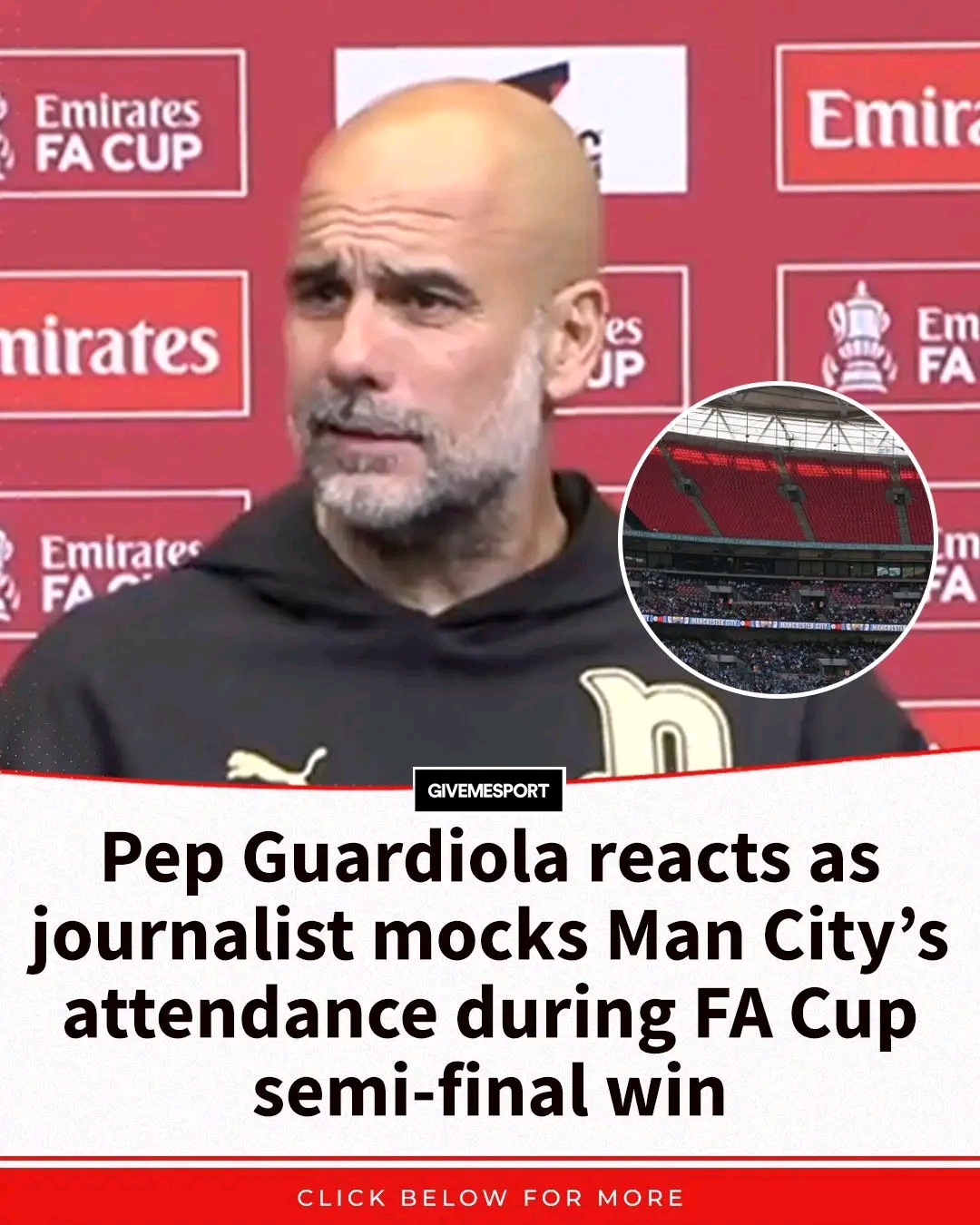
On this occasion, one detail caught the eye of a journalist inside Wembley. A section of seats in the stadium was not filled. An entire block remained empty, and that image quickly became a talking point. For some, it was a simple observation. For others, it became a chance to question Manchester City’s fanbase.
After the match, during the press conference, Pep Guardiola walked into the room still carrying the emotion of the game. His team had just survived a scare and delivered another comeback. Normally, managers expect questions about tactics, performance, and players.
Instead, Guardiola was met with something slightly different.
The atmosphere in the room had a strange tone. There was lightness at first, even some jokes. Guardiola himself started by making a comment about the number of journalists present. It was a small, playful remark, suggesting that the game might not have been seen as important by everyone.
Then he said something that opened the door to a much sharper exchange.
“The game looks like it’s not important. But the good ones are here, right?”
It was said with a smile, but in football press rooms, smiles can change direction quickly.
One journalist responded almost immediately, turning the conversation towards Manchester City’s own support.
“Like your support!” the journalist said.
The room shifted slightly. These moments are always delicate. Guardiola is known for being thoughtful, sometimes emotional, and very aware of perception around his club.
He has spoken many times before about Manchester City fans, sometimes praising them, sometimes challenging them. So this was not unfamiliar territory for him. Still, the timing made it interesting. His team had just reached another final, yet the focus was suddenly on attendance and fan support.
Guardiola paused for a moment. He did not react with anger. He did not shut down the question. Instead, he gave a mixed but controlled response.
“Yeah, yeah, maybe, yeah, you’re right. They will come to the final, you will see.”
It was calm, slightly reflective, and open-ended. Not defensive, not aggressive, but not fully dismissive either. Just Guardiola acknowledging the comment while still backing his supporters in his own way.
But the exchange quickly spread beyond the room.
Because this was not the first time Manchester City’s fan attendance or atmosphere had been discussed. And Guardiola himself has, in the past, made comments about the supporters at the Etihad Stadium.
One of the most memorable moments came in 2023 during a Premier League match against Tottenham. City had gone into half-time losing 2–0, and as the players walked off, boos could be heard from the stands. City eventually came back to win 4–2, but Guardiola did not forget the reaction.
After the match, he said something that sparked debate.
“They were silent for 45 minutes,” he said, referring to the crowd. He also suggested that success over the years might have created a sense of comfort or expectation among supporters.
Those comments stayed in public memory, and every time attendance or atmosphere is questioned, they resurface.
So when the journalist made the remark at Wembley, it was not just about one game. It was part of a larger ongoing discussion about Manchester City’s identity as a fanbase, especially compared to older, traditionally established clubs in England.
But not everyone agreed with the way the situation was presented.
After the press conference exchange spread online, many fans and journalists began defending City supporters. One of the strongest responses came from Amos Murphy, a Manchester City supporter and writer, who criticised the tone of the journalist’s comment.
He pointed out that covering football as a professional comes with privilege. Journalists are paid to attend matches, travel, and report. Meanwhile, fans are the ones paying for tickets, transport, and accommodation, often at significant cost.
His argument was simple. It is easy to make jokes about attendance from a press seat inside Wembley, but much harder to understand the financial and logistical reality for supporters.
This is especially true for FA Cup semi-finals and finals held at Wembley in London. For fans travelling from Manchester, the journey is long and expensive. Train tickets can cost around £100 or more. Hotels add even more pressure. And scheduling is not always friendly to working-class supporters who need time to plan and afford the trip.
Because of that, empty sections in stadiums are not always about lack of support. Sometimes, they are about access, cost, and timing.
Many fans online echoed this point. They argued that Manchester City’s away support and travelling fans remain strong, but repeated trips to London over the years can become financially difficult, even for loyal supporters.
Others also pointed out that City’s success has actually increased demand for tickets, making them harder to obtain for regular fans. The situation is more complex than simply saying “fans did not show up.”
Still, the image of empty seats is powerful. In football, visuals often shape narratives faster than context.
Meanwhile, the football itself deserved more attention than it received in the immediate aftermath.
Southampton’s performance was brave and disciplined. For most of the match, they frustrated Manchester City. They took their chance when it came and believed they could hold on. For a long time, it looked like they might.
But City’s experience and depth eventually told.
Jeremy Doku’s equaliser was a moment of individual brilliance. His ability to beat defenders and change the rhythm of a game has made him one of City’s most dangerous attacking options. His goal changed the emotional balance of the match completely.
Then Nico González stepped up in the final stages, showing composure under pressure that comes from playing in a team used to big moments. His goal sealed the comeback and sent City into another final.
For Guardiola, it was another step in a long journey of dominance in English football. Since arriving in 2016, he has turned Manchester City into a machine built for trophies. Finals have become normal. Semi-finals are expected. Winning is the standard.
But even for a team like City, every match still carries tension, and this one showed that nothing can be taken for granted in knockout football.
Southampton pushed them close. The fans experienced frustration, then relief, then joy. It was a full emotional cycle packed into 90 minutes.
After the match, Guardiola’s focus remained on his team’s mentality. He knows that these types of comebacks are not just about skill but about belief. And in cup competitions, belief often decides everything.
However, the conversation outside the dressing room tells a different story. Football today is not just about what happens on the pitch. It is also about perception, media narratives, social reactions, and fan identity.
Manchester City sit at the centre of many of those discussions because of their success. When you win consistently, people look for other angles to talk about you. Attendance, atmosphere, spending power, and fan culture all become part of the wider debate.
And that is exactly what happened after this FA Cup semi-final.
A dramatic comeback victory was quickly followed by questions about empty seats, journalist comments, Guardiola’s reaction, and fan responses online.
In the end, it became more than just a football match. It became another chapter in the ongoing conversation about modern football, where success on the pitch and perception off it are constantly linked.
But on the pitch, the reality was simple.
Manchester City are in another final.
And no matter what is said about attendance, atmosphere, or opinions in the media, they continue to find a way to win when it matters most.