This is a 𝐉𝐎𝐊𝐄, it leaves the referee is in a no-win situation, unable to take a risk.

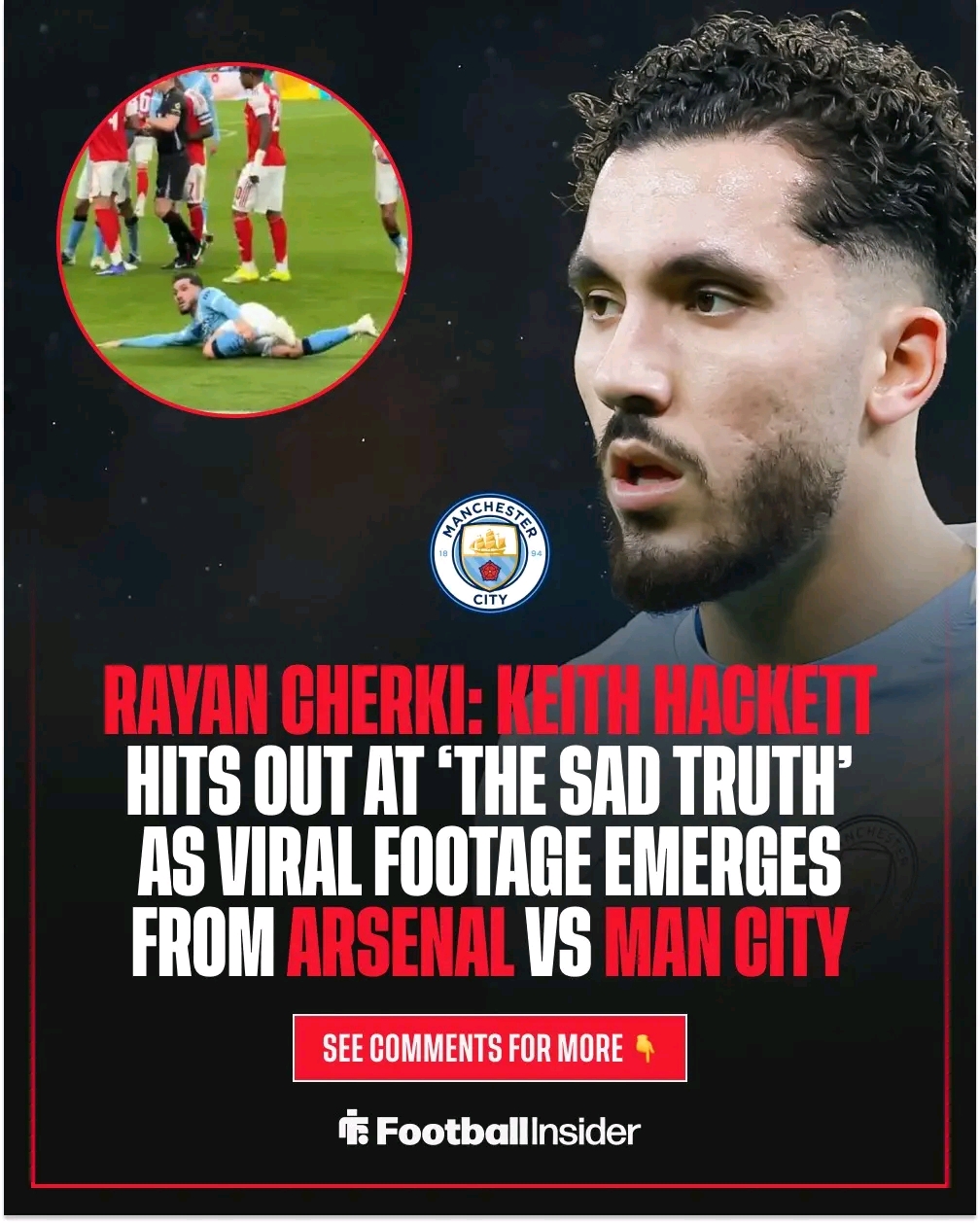
The atmosphere inside Wembley Stadium on that night was electric, the kind of energy that only a major final can produce, the kind of tension that builds from the first whistle and never truly disappears until the very last second. Fans of Arsenal and Manchester City filled every corner of the stadium, their voices rising, their emotions constantly shifting as the game unfolded in front of them.
It was not just any match. It was a final. A moment where every action matters, where every decision carries weight, where even the smallest incident can turn into something much bigger. And on this particular night, one moment involving Rayan Cherki would go on to dominate conversations long after the final whistle had been blown.
At first, it looked like a normal piece of play. Cherki, full of confidence and flair, had been enjoying himself on the pitch, showing off his technical ability, his creativity, and that fearless style that makes him such an exciting player to watch. At one point, he began doing keepy-ups in the middle of the game, a move that immediately caught attention. Some saw it as skill, others saw it as disrespect, especially given the intensity of a final.
Standing nearby was Ben White, a defender known for his composure and discipline. But in football, moments like this can trigger reactions. The tension, the pressure, the emotions of a big match can sometimes push players to respond in ways they normally would not. And that is exactly what happened.
White moved in, the challenge came, and contact was made. It was not the cleanest moment, not the calmest reaction, and the referee quickly stepped in, showing a yellow card. In that instant, the focus should have stayed on the foul, on the decision, on the flow of the game. But what happened next changed everything.
Cherki went down.
At first, it seemed like a genuine reaction. Players go down all the time after contact, especially in high-stakes matches where the physical and emotional intensity is at its peak. But then something unusual happened. As he lay on the ground, rolling, reacting, something caught the attention of the crowd, the cameras, and eventually, the entire football world.
He smiled.
Not just a small reaction, not just a brief moment, but a clear, cheeky smile directed toward the Arsenal fans. It was the kind of expression that instantly shifts perception. Suddenly, what looked like pain started to look like something else. Something calculated. Something intentional.
Within seconds, the atmosphere around the moment changed. Arsenal supporters reacted immediately, their frustration turning into loud boos. For them, this was not just a player going down after a foul. This was something they saw as exaggeration, as play-acting, as an attempt to manipulate the situation.
The game continued, but the incident did not disappear. Instead, it grew.
Clips of the moment began to circulate almost instantly. Social media platforms filled with videos, replays, slowed-down angles, and countless opinions. Some people laughed, seeing it as clever gamesmanship. Others were angry, calling it embarrassing, unnecessary, and damaging to the image of the game.
And as the debate intensified, one voice stood out strongly. Keith Hackett, a former PGMOL chief and ex-FIFA referee, did not hold back in his reaction.
He described the situation as a “joke.”
Strong words, direct words, words that reflected a growing frustration not just with this single incident, but with a wider trend in football. Because for Hackett, this was not an isolated moment. It was part of a bigger problem, something that has been creeping into the game more and more over time.
According to him, players going down to exaggerate contact or to stop the flow of the game has become increasingly common. These so-called “tactical stoppages” are used in different ways. Sometimes it is to slow down the opponent’s momentum. Sometimes it is to allow teammates to regroup. Sometimes it is to give managers a chance to pass instructions.
And in moments like this, referees are placed in an extremely difficult position.
Because when a player goes down holding their head or showing signs of injury, the referee has a responsibility. Safety comes first. The game must be stopped. Medical staff must be allowed onto the pitch. There is no room for hesitation, no room for doubt. If there is even a small chance that a player is genuinely hurt, the referee must act.
That is why Hackett described it as a “no-win situation.”
If the referee stops the game and the injury turns out to be exaggerated, he is criticized for being too soft. If he allows play to continue and the injury is real, he is criticized for being careless. Either way, the pressure is constant, the judgment immediate, and the margin for error extremely small.
And this is where the frustration begins to grow, not just for referees, but for fans as well.
Supporters pay money to watch football, to see the game flow, to enjoy the action, the movement, the intensity. But when the game is constantly interrupted by players going down, whether genuinely or not, it breaks that rhythm. It disrupts the experience. It creates irritation.
Statistics have even shown a trend. The amount of time the ball is actually in play during matches has been decreasing over recent seasons. That is not just a small detail. It is a reflection of how the game is changing, how interruptions are becoming more frequent, how the natural flow of football is being affected.
And incidents like the one involving Cherki only add to that conversation.
Some argue that this is part of the modern game, that players are simply using every tool available to gain an advantage. Football has always had elements of mind games, of strategy beyond just passing and shooting. In that sense, what Cherki did could be seen as clever, as a way to influence the moment, to provoke a reaction, to control the situation.
But others strongly disagree.
They believe that this crosses a line, that it goes against the spirit of the game, that it sets a bad example. For them, football should be about honesty, about competition, about skill and effort, not about exaggeration or deception.
And this is where the debate becomes deeper, more complex.
Because how do you define the limit? Where does gamesmanship end and unsporting behavior begin? These are questions that do not have simple answers, and that is why discussions like this continue to divide opinion.
In response to this growing issue, there have been talks about changes to the rules. One of the ideas gaining attention is a new regulation that would require players who receive on-field treatment to leave the pitch for a short period after play resumes. The goal is simple: reduce the incentive to fake injuries.
If going down means your team has to continue without you, even for a minute, players may think twice before exaggerating contact. It is a small change, but one that could have a significant impact on behavior.
There have also been suggestions about retrospective punishments. Reviewing incidents after the match and issuing bans or fines for clear cases of simulation. This approach could act as a strong deterrent, sending a message that such actions will not be tolerated.
In the case of Cherki, opinions remain divided. Some believe he should face consequences. Others see it as part of the game, something that does not deserve punishment.
But regardless of where people stand, one thing is clear.
This moment has sparked a conversation that goes beyond a single match, beyond a single player. It has brought attention to a broader issue, one that affects the flow, the fairness, and the perception of football at the highest level.
For Manchester City, the result of the match remains positive. They won, they lifted the trophy, they celebrated. But even in victory, moments like this can shape how the game is remembered.
For Arsenal, it adds another layer of frustration. Not just the defeat, but the feeling that certain moments did not go the way they expected, that emotions were tested in ways that go beyond just football.
And for the fans, it is another reminder of how the game continues to evolve, sometimes in ways that are exciting, sometimes in ways that are controversial.
As the clips continue to circulate, as the debates continue to grow, as opinions continue to clash, the image of Cherki smiling while on the ground remains one of the defining moments of that night.
A small moment, lasting only seconds.
But in football, sometimes, that is all it takes to create a story that everyone will keep talking about.