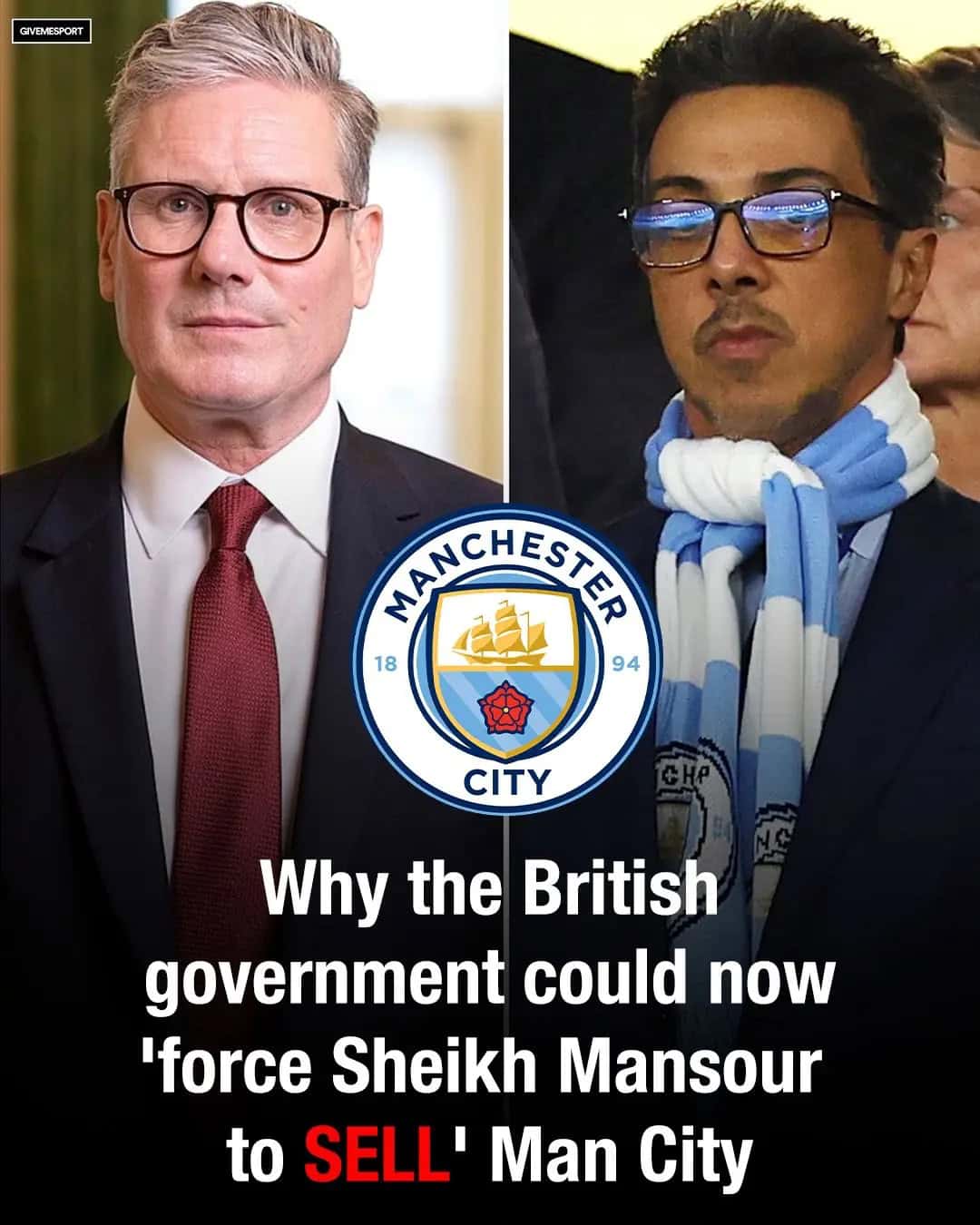
The tension around Manchester City is no longer just about football, no longer just about what happens on the pitch, no longer just about goals, tactics, or trophies, because what is unfolding right now feels much bigger, much deeper, and far more serious than anything fans have seen in recent years, and it all begins with one powerful name that has shaped the club’s modern history, Sheikh Mansour.
For years, Manchester City have been the symbol of dominance, a team that rose from the shadows into global power, a club that transformed from mid-table struggles into one of the most feared sides in world football, winning title after title, breaking records, rewriting history, and building what many fans believed was an unstoppable empire under the leadership of Pep Guardiola.
But now, everything feels uncertain.
Everything feels like it is standing on the edge.
Because behind the success, behind the trophies, behind the celebrations, there is a storm quietly growing, and that storm could change everything that Manchester City have built over the last decade.
It starts with the growing pressure from the British government, a situation that has slowly been developing but is now beginning to gain serious attention, as discussions intensify around the possibility of sanctions being placed on Sheikh Mansour, a move that could have massive consequences not just for the owner himself, but for Manchester City as a football club.
This is not just a football story anymore.
This is politics, power, and global conflict entering the world of sport.
Sheikh Mansour is not only known as the owner of Manchester City, he is also a key political figure in the United Arab Emirates, holding a powerful position as deputy prime minister, which means that any action taken against him goes far beyond football and enters the complex world of international relations, diplomacy, and global scrutiny.
In recent months, human rights organisations have increased their calls for action, with groups like FairSquare urging the UK government to consider sanctions, pointing to alleged links between the UAE and conflicts abroad, particularly the ongoing crisis in Sudan, where reports have suggested connections between external support and violent groups involved in the conflict.
The UAE have strongly denied these allegations, maintaining that they are not involved in supporting any side, but that has not stopped the pressure from growing, and in situations like this, perception can sometimes be just as powerful as proven fact.
If the UK government decides to act, the consequences could be immediate and severe.
Sanctions could include freezing assets, restricting financial transactions, and limiting business activities within the UK, and this is where football becomes directly affected, because under the rules of the Premier League, any owner who is subject to government sanctions automatically fails the Owners’ and Directors’ Test.
And that means only one thing.
They cannot continue to own the club.
This is where the situation becomes even more dramatic, because if Sheikh Mansour is sanctioned, he could be forced to sell Manchester City, bringing an end to one of the most successful ownership eras in football history, an era that has completely redefined what the club represents.
To understand how big this is, you have to go back to 2008, the moment when Mansour took over Manchester City, a club that was struggling to compete at the highest level, a club that had history but lacked the resources to challenge the biggest teams consistently.
That takeover changed everything.
Investment flowed into the club, world-class players arrived, infrastructure improved, and slowly but surely, Manchester City became a giant, winning eight Premier League titles, lifting the UEFA Champions League, and dominating English football in a way that very few teams have ever done.
It became what many people now call a golden era.
But now, that golden era could be under threat.
Because if history has taught us anything, it is that situations like this can escalate quickly, and there is already a recent example that shows exactly how things can unfold, the case of Roman Abramovich and Chelsea.
Back in 2022, Abramovich faced sanctions from the UK government due to alleged links with the Russian state following the invasion of Ukraine, and despite denying those allegations, he was ultimately forced to sell Chelsea, ending his long and successful ownership of the club.
The impact of that decision was immediate.
Chelsea entered a new era under different ownership, and while the club still had resources, the stability, identity, and dominance they once had began to shift, showing just how powerful and disruptive such changes can be.
Now, many are asking the same question.
Could Manchester City face a similar future?
If Sheikh Mansour is forced to sell, who takes over?
What happens to the structure of the club?
Will the success continue, or will it begin to fade?
And perhaps the biggest question of all, how will this affect the ongoing investigation into the 115 financial charges hanging over Manchester City?
Because that is another layer to this already complex situation.
The club is still under investigation for alleged breaches of financial rules, a case that could lead to serious consequences depending on the outcome, and if ownership changes before a verdict is reached, it could create even more uncertainty, even more confusion, and even more debate about what should happen next.
Fans are already divided.
Some believe this is all part of a larger agenda against Manchester City, a continuation of the scrutiny that has followed the club for years, while others believe that rules must be followed and that no club, no matter how successful, should be above accountability.
The conversations are everywhere.
On social media, in stadiums, in press conferences, and in everyday discussions among football fans, because this is not just about one club anymore, this is about fairness, power, and the future of football itself.
Meanwhile, on the pitch, the season continues.
Matches are being played, points are being won and lost, and the title race remains alive, with Manchester City still fighting, still pushing, still trying to maintain their position among the best.
But it feels different now.
There is a sense of uncertainty, a feeling that something bigger is happening in the background, something that could change everything at any moment.
And yet, despite all this, Guardiola and his players continue to focus on football, continue to prepare for matches, continue to perform, because that is their job, that is their responsibility, and that is what they can control.
Everything else is out of their hands.
The schedule moves on, fixtures come and go, and the Premier League calendar continues to deliver high-stakes games, with clubs battling for titles, European spots, and survival, each match carrying its own story, its own drama, its own consequences.
But for Manchester City, every game now feels like it is being played under a shadow.
A shadow of uncertainty.
A shadow of questions.
A shadow of what might happen next.
Because if the unthinkable becomes reality, if Sheikh Mansour is forced to sell, it will not just be a change of ownership, it will be the end of an era, the closing of a chapter that has defined modern football, and the beginning of something completely unknown.
And that is what makes this situation so powerful.
It is not just about what has happened.
It is about what could happen.
It is about the fear of change, the uncertainty of the future, and the realization that even the strongest empires can face moments where everything hangs in the balance.
For Manchester City fans, this is a time of waiting, watching, and hoping, hoping that the club can navigate through this storm, hoping that stability can be maintained, and hoping that the success they have enjoyed will not be taken away or disrupted.
For rival fans, it is a moment of curiosity, speculation, and debate, as they watch closely to see how the situation unfolds and what it could mean for the balance of power in English football.
And for the football world as a whole, it is a reminder that the game is not just played on the pitch, it is influenced by politics, economics, and global events, forces that can shape the sport in ways that go far beyond goals and trophies.
As the days pass, the pressure will continue to build.
Decisions will need to be made.
And at some point, clarity will come.
But until then, the story continues, filled with uncertainty, tension, and the feeling that something big is coming.
Because right now, Manchester City are not just fighting for a title.
They are facing a moment that could redefine their entire future.
And whether that future continues the legacy of dominance or takes the club into a completely new direction, one thing is certain.
Football will be watching.