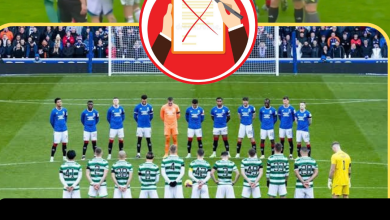
Celtic and Rangers have learned the identity of the officiating team for the second instalment of their autumn double-header, with the Scottish FA confirming that John Beaton will take charge of Sunday’s Premiership meeting at Celtic Park. Beaton’s assistants on the day will be David McGeachie and Jonathan Bell, while Nick Walsh — the man in the middle for the previous derby between these two sides — moves into the video assistant referee’s room for the Parkhead clash, working alongside Grant Irvine as his assistant VAR. The appointment brings the officiating carousel full circle inside the space of a single week, with Walsh’s shift from the pitch to the video suite drawing plenty of attention before a ball has even been kicked.
The context behind this fixture is impossible to ignore. It arrives as the second leg of a rapid double-header between Glasgow’s two biggest clubs, following on directly from their Premier Sports Cup quarter-final meeting at Ibrox, where Rangers inflicted a heavy defeat on their rivals. That result has been described as a crushing one for Celtic, and it has completely reshaped the emotional temperature heading into Sunday’s league fixture. Whereas the cup tie was played out under Walsh’s whistle with comparatively little scrutiny of the officiating — the scoreline itself did most of the talking, with five yellow cards shown across the ninety minutes — this weekend’s rearranged focus on officials is a different story altogether, given the history that Beaton in particular carries into Old Firm occasions.
Beaton’s appointment is one that will not have gone unnoticed inside Parkhead or across the east end of Glasgow more broadly. He is a referee with a well-established recent history in fixtures involving both clubs, most notably his role in the closing stages of the previous Premiership season, when he awarded Celtic a heavily contested penalty away at Motherwell. That decision arrived in the second-last round of fixtures and effectively handed Celtic the opportunity to seal the title with victory on the final day, a moment that provoked fierce debate among supporters of both clubs and beyond. The fallout from that call proved to be significant enough that the Scottish FA was compelled to publicly defend its official after he became the subject of personal abuse and, more seriously, threats that were said to have required police security measures to be put in place around him. That backdrop makes his return to the middle of an Old Firm fixture a notable talking point in its own right, regardless of how Sunday’s ninety minutes eventually play out.
Beaton also has previous experience specifically in fixtures between these two clubs beyond the Motherwell controversy. He has taken charge of Celtic and Rangers on big occasions before, including a League Cup final between the sides at Hampden Park, giving him a body of experience in high-pressure derby environments that the Scottish FA will no doubt have factored into Sunday’s appointment. His assistants for this one, McGeachie and Bell, complete an on-field team that will be working under intense scrutiny from managers, players and supporters alike, all too aware that Old Firm fixtures tend to magnify every marginal call, whether it concerns a physical challenge, a handball claim, or a coming-together in the penalty area.
It is Walsh’s role that may end up drawing just as much conversation as Beaton’s, however, given how recently he was the man refereeing on the pitch rather than reviewing incidents from the video suite. Only days removed from taking charge of the cup quarter-final at Ibrox, Walsh now finds himself with a different vantage point entirely, and any contentious review during Sunday’s ninety minutes will inevitably be framed against the context of his own recent experience refereeing this exact fixture list. Whether that recency proves to be an asset or a talking point of its own, it adds another layer of intrigue to an appointment that was always likely to be pored over given the magnitude of the occasion. Grant Irvine, working as assistant VAR alongside Walsh, rounds out an officiating unit that the Scottish FA will be hoping can navigate Sunday’s fixture without becoming the story themselves, though history suggests that is easier said than done whenever these two clubs meet.
Sunday’s fixture carries substantial weight in the context of the wider title race, with Celtic having made an impressive start to the season prior to their cup exit. Coming into the weekend, Celtic have maintained a hundred per cent start domestically in the league, a run that has kept them well clear of Rangers even before this latest derby is played. A victory at Parkhead would extend that gap significantly, potentially moving Celtic eight points clear of their rivals after just seven league fixtures — a commanding position this early in a Scottish Premiership campaign, and one that would go a long way to shaping the complexion of the title race for the months ahead. For Rangers, the equation is framed rather differently. Having enjoyed the considerable satisfaction of beating Celtic comprehensively in cup competition just a week earlier, Derek McInnes’s side know that a similar result, or even a narrow win, at Parkhead would haul them back into contention, cutting the gap to just two points and completely transforming the narrative of the opening months of the campaign. That contrast — Celtic looking to assert dominance and put real daylight between themselves and their oldest rivals, against Rangers hoping to seize on the momentum built at Ibrox and turn one derby win into two in the space of a week — is what gives this fixture its edge, quite apart from anything the officials might be involved in.
The build-up itself has been compressed into an unusually short turnaround for both clubs. Celtic have European commitments to attend to before Sunday arrives, with a Europa League fixture against Ferencváros at Celtic Park scheduled for Thursday, meaning Martin O’Neill’s side will have precious little time to recover, regroup and refocus before turning their attention back to Rangers just three days later. That is a demanding sequence of fixtures for any squad to negotiate, and it raises obvious questions about squad rotation, fitness management and mental freshness heading into a fixture of this magnitude. Rangers, for their part, will have had a full week’s turnaround following their cup success at Ibrox, giving McInnes the chance to prepare his players specifically for the league assignment without the distraction of a midweek continental fixture to plan around. Whether that additional preparation time proves to be a meaningful advantage remains to be seen, but it is certainly a factor that will not have escaped the attention of either coaching staff as the week has unfolded.
For Celtic, the psychological dimension of Sunday’s fixture is arguably just as important as the points on offer. Losing so emphatically to their fiercest rivals in a cup quarter-final is the kind of result that tends to linger, and O’Neill’s side will be acutely aware that anything other than a strong response at Parkhead risks allowing the narrative of the season to shift firmly in Rangers’ favour. There is a widely understood sense of hurt around Celtic’s cup exit, and manager and players alike will want to use Sunday’s fixture as an opportunity to draw a line under that disappointment and reassert their position at the top of the table. A home fixture against their biggest rivals, with the chance to further extend an already healthy lead, represents about as good an opportunity as any side could ask for to put a difficult result behind them, and there will be an expectation from supporters that the team responds accordingly. Anything less than victory would raise uncomfortable questions just as the champions’ league form had appeared to be building nicely toward an extended unbeaten start to the campaign.
Rangers arrive at Parkhead with an entirely different emotional charge running through their preparations. Having delivered arguably their most significant result of the season so far against Celtic at Ibrox, McInnes and his players will want to prove that the cup victory was no isolated occurrence, but rather a genuine marker of progress under his management. The Ibrox win will have provided a considerable confidence boost to a Rangers dressing room that has, at various points, faced scrutiny over inconsistent form, and replicating anything close to that level of performance away at Celtic Park would represent a statement result that could meaningfully alter perceptions of the title race heading into the winter months. There is also a tactical intrigue to how McInnes approaches the fixture: does he stick with the approach that brought such reward in the cup, trusting the same principles to work again in a different context and venue, or does he make alterations to account for the different demands of a league fixture at Celtic’s own stadium, where home advantage and crowd intensity typically play a significant role in shaping the contest?
The wider context of Scottish football officiating cannot be entirely separated from the discussion either. Old Firm fixtures have, for years, carried an additional layer of scrutiny when it comes to refereeing and VAR decisions, with contentious calls in previous meetings between these clubs frequently dominating post-match analysis and extending the conversation well into the following week. Sunday’s fixture, given the emotions already stirred by the cup result and the historical baggage that Beaton in particular carries into these occasions, seems unlikely to be an exception to that pattern. Supporters on both sides will be watching closely for any marginal decision — a penalty shout, a red card incident, an offside review — that could become the defining moment of the afternoon, for better or worse. The Scottish FA’s decision to appoint Beaton, given his recent history, suggests a degree of confidence in his ability to handle the pressure of the occasion, but it is also a decision that inevitably invites additional attention regardless of how the ninety minutes unfold.
Beyond the officiating team itself, there are broader storylines swirling around Scottish football this week that add further texture to the build-up. Aberdeen’s recent announcement of Adrian Bevington as their new chief executive, arriving so soon after Alan Burrows’s departure from the role, has been a significant story in its own right, underlining just how much upheaval is currently taking place across the Scottish game away from the two Glasgow giants. Elsewhere, Hearts and Falkirk have provided their own talking points, with Wouter Vrancken candid about aspects of his side’s underwhelming display, while Beaton’s recent involvement in a Hearts fixture at Falkirk has already been the subject of criticism from that club’s travelling support — another data point in the pattern of scrutiny that seems to follow the experienced official from game to game this season. None of these stories carry the same weight as Sunday’s derby, of course, but they form part of the broader backdrop against which the Celtic-Rangers rematch will be played out, a reminder that Scottish football’s news cycle rarely slows down even in a week dominated by preparations for an Old Firm collision.
Looking specifically at the head-to-head context between these two clubs this season, the pendulum has swung dramatically in the space of just a few months. Earlier meetings between Celtic and Rangers produced tightly contested, dramatic finishes, including one memorable occasion at Ibrox where Rangers led by two goals at half time through a well-taken brace, only for Celtic to fight their way back into the contest and salvage a stoppage-time equaliser through a converted rebound after an initial penalty had been saved. That kind of fluctuating, high-drama script is exactly what makes fixtures between these clubs so unpredictable, and it is a useful reminder that recent cup form, however emphatic, does not always translate directly into the outcome of the next meeting. Sunday’s fixture, coming so soon after a lopsided cup result, could easily follow the pattern of previous encounters and produce a much closer contest than the recent scoreline at Ibrox might suggest, particularly given the raised stakes and the extra motivation on both sides to either consolidate or respond.
From a tactical perspective, much of the pre-match discussion is likely to centre on how each side approaches the physical and psychological intensity of a Parkhead atmosphere that will be fully primed for the occasion. Celtic’s home advantage has historically been a significant factor in these fixtures, with the crowd’s energy often cited as a contributing element in high-tempo, error-strewn periods of play that can produce exactly the kind of contentious incidents that place officials under such pressure. Rangers, buoyed by their recent cup success, will need to find a way to nullify that atmosphere and impose their own game plan without being drawn into the kind of chaotic, end-to-end exchanges that can favour the home side in this fixture. McInnes’s ability to manage that balance, alongside whatever tactical tweaks he opts to make, could well prove decisive in determining whether Rangers can back up their cup heroics with an even more significant result in the league.
As kick-off approaches, all the ingredients are in place for a fixture that promises to be closely fought, emotionally charged, and likely to generate significant discussion regardless of the eventual outcome. The appointment of Beaton, Walsh, McGeachie, Bell and Irvine as the officiating team adds an extra dimension of intrigue given the recent history each of them carries into Old Firm occasions, while the context of Celtic’s cup exit and Rangers’ subsequent confidence boost ensures that both dressing rooms will arrive at Parkhead with contrasting but equally powerful motivations. Celtic will be desperate to reassert their dominance and push their lead out to a commanding eight points, while Rangers will sense a genuine opportunity to close the gap to just two and fundamentally reshape the story of the season’s early months. Add in the compressed fixture schedule facing Celtic ahead of their continental commitments, and the broader context of officiating scrutiny that has followed several of Scotland’s leading referees this season, and Sunday’s Premiership meeting at Celtic Park has all the makings of a defining early-season occasion in the battle for the Scottish title. Supporters of both clubs will now count down the hours until kick-off, fully aware that whatever unfolds on the pitch, the identity and performance of the officiating team is likely to remain a significant part of the conversation well beyond the final whistle