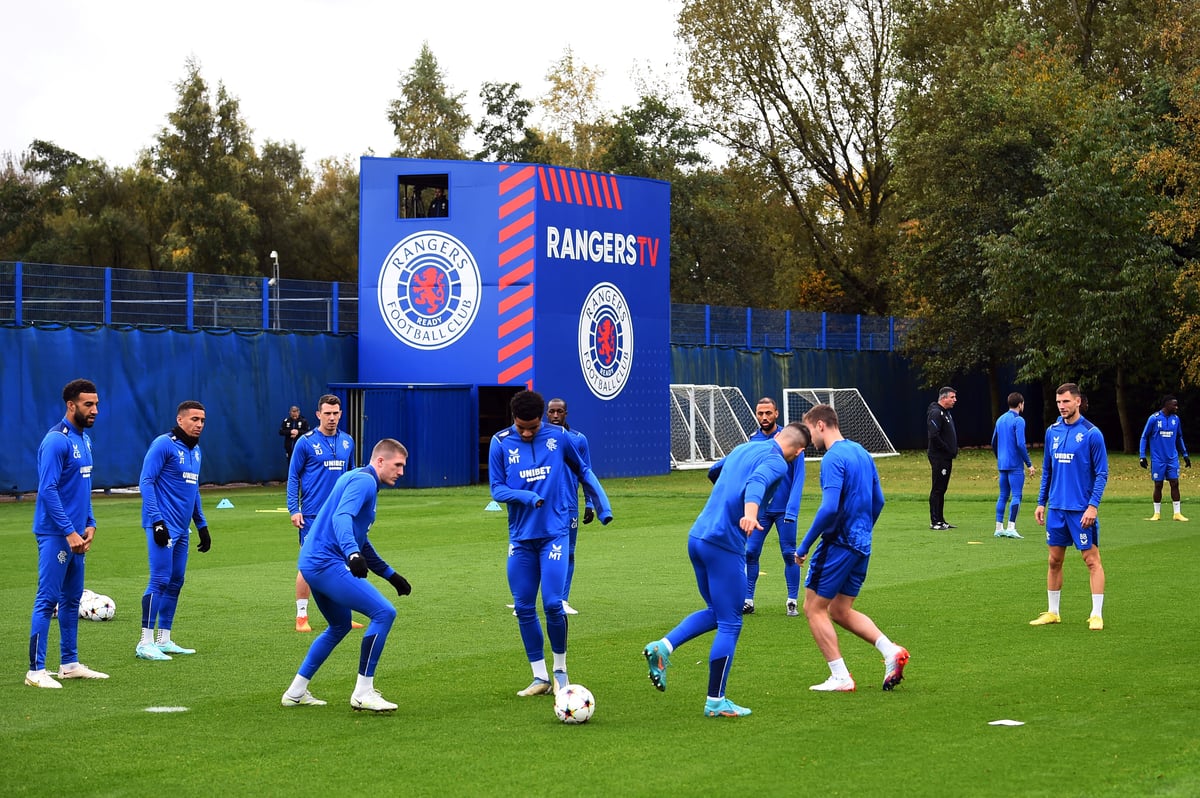
Professional football’s pre-season period represents far more than merely ceremonial warm-up activities preceding competitive league campaigns. Rather, the weeks immediately preceding new season commencement serve crucial developmental functions that fundamentally influence teams’ capabilities when official competition resumes. For managers like Derek McInnes, pre-season training camps and friendly matches provide invaluable opportunity to assess squad capabilities, implement tactical systems, develop player fitness, and construct team chemistry necessary for sustained competitive success.
Rangers’ commitment to conducting pre-season preparations in Spain reflects sophisticated understanding of how environmental factors, competitive intensity, and strategic planning during pre-season period establish foundation for competitive success. The decision to establish training base in Alicante, Spain, rather than remaining in Scotland, carries specific strategic implications regarding player development, tactical implementation, and preparation quality. By relocating to continental Europe for concentrated pre-season camp, Rangers gains access to quality opposition for competitive preparation while simultaneously creating immersive environment facilitating tactical implementation and team bonding.
Within this broader context of Spanish pre-season preparation, Rangers will face Johor Darul Ta’zim (JDT), Malaysian football’s dominant club, in what represents significant competitive test within the predetermined sequence of friendly matches designed to prepare the squad for Scottish Premiership competition. This specific encounter offers particular value regarding competitive intensity and team preparation, as JDT brings distinctive tactical approach and competitive philosophy likely to present challenges differing from typical Scottish football opposition.
Pre-season football occupies peculiar position within professional football calendar, existing technically outside official competitive frameworks yet carrying genuine competitive stakes regarding player development, squad assessment, and tactical implementation. Unlike league matches where competitive outcomes directly impact standings and playoff positioning, pre-season friendlies carry no official consequences—teams accumulate no points, standings remain unaffected, and results do not determine playoff advancement.
However, this apparent lack of consequence masks genuine importance residing within pre-season football’s developmental functions. For managers like McInnes, pre-season represents extended opportunity to evaluate squad capabilities in competitive environments without consequences of failed experiments damaging official standings. Players struggling during pre-season can receive additional development time or tactical adjustment without immediate competitive pressure. Tactical innovations can be tested against quality opposition, revealing whether theoretical concepts function effectively in competitive reality.
Additionally, pre-season provides crucial opportunity for assessing player fitness and physical preparation. Professional football’s physical demands impose substantial stress on muscular, skeletal, and cardiovascular systems. Players arriving at pre-season having completed varying amounts of off-season training typically require graduated progression in physical demands. Pre-season matches provide measurable competitive environments where coaching staff can assess players’ fitness levels, identify deficiencies, and adjust training accordingly.
Player rotation during pre-season serves additional strategic function. Most significant pre-season matches feature multiple substitutions allowing managers to assess squad depth and emerging younger players. Rather than playing established first-choice formations continuously, managers can evaluate alternative combinations, assess whether backup options possess sufficient quality for meaningful contribution, and identify which younger players demonstrate readiness for significant competitive involvement.
For Rangers specifically, pre-season preparation carries additional significance given managerial transition. Derek McInnes has recently arrived at Ibrox, replacing previous management structure. His pre-season period represents crucial opportunity to implement his tactical philosophy, develop understanding with squad regarding his expectations, and establish team culture reflecting his managerial principles. The concentrated environment of Spanish pre-season camp facilitates this cultural and tactical implementation more effectively than dispersed pre-season schedule remaining in Scotland.
Rangers has commenced their pre-season campaign with promising results suggesting adequate fitness preparation and competitive readiness as the squad builds toward competitive season opening. The club’s early pre-season matches have produced encouraging scorelines and performance levels indicating that squad conditioning and player development are progressing appropriately.
The opening pre-season match against Raith Rovers resulted in convincing 5-1 victory, establishing positive momentum and demonstrating offensive capability within the squad. While Raith Rovers represents modest competitive opposition relative to Rangers’ ultimate targets, the commanding victory provided psychological benefit and tangible evidence that offensive players are achieving appropriate fitness and sharpness. Accumulating five goals against organized opposition confirms attacking capability exists within squad, even if opposition quality suggests somewhat limited test.
Subsequent encounter against Dunfermline resulted in additional convincing victory, with Rangers securing 3-1 success confirming consistency in performance level and competitive intensity. Back-to-back victories against Scottish opposition established psychological momentum and demonstrated that squad is responding appropriately to McInnes’ tactical implementation. Acquiring consecutive victories—regardless of opposition quality—provides confidence benefit and reinforces training principles being established during pre-season.
However, Rangers’ pre-season journey included more challenging encounter in Spain against Kaizer Chiefs, South African football’s prominent club, resulting in 1-1 draw. This match proved particularly significant for several reasons. Firstly, the opposition quality elevated substantially compared to Scottish lower-league clubs, providing genuine competitive test. Kaizer Chiefs’ international status and South African football credentials ensured competitive intensity approximating levels Rangers will encounter during league competition.
The 1-1 draw result, while representing loss of victory, carried meaningful implications regarding squad development. The draw against quality opposition suggested that Rangers can compete at elevated competitive level while simultaneously indicating areas requiring continued refinement. Rather than securing comfortable victory, Rangers discovered that established opposition provides sufficient tactical organization and competitive intensity to restrict Scottish club’s dominance. This reality check carries value within pre-season framework, as it identified potential vulnerabilities requiring attention before league competition commences.
The progression through these pre-season matches—from commanding victories against modest opposition toward competitive draw against quality international opposition—reflects typical pre-season trajectory where teams gradually encounter increasingly demanding competitive tests. Rangers’ preparation appears to be advancing appropriately along this progression, with squad building fitness and tactical understanding while encountering improving opposition quality.
The selection of Johor Darul Ta’zim as pre-season opposition represents strategic choice by Rangers’ technical staff regarding specific competitive qualities and tactical characteristics the Malaysian club provides. JDT stands among Asian football’s most successful and strategically progressive clubs, representing legitimate elite competitive force within continental Asian football framework.
Johor Darul Ta’zim’s dominance within Malaysian football has been extraordinary. The club has established themselves as the league’s consistent champions, accumulating titles with regularity suggesting systematic competitive superiority relative to domestic opposition. This sustained success reflects organizational excellence, strategic investment in player recruitment, and sophisticated tactical development enabling the club to maintain advantage over competitors.
The 2025/26 season exemplified JDT’s offensive capabilities and scoring prowess. The Malaysian club established new record for goals scored within Malaysian Super League season, accumulating an extraordinary 117 goals across the campaign. This offensive output—distributed among 27 different players contributing to goal tally—demonstrates not only individual quality but organizational systems enabling multiple players to contribute attacking threat. The breadth of goal contributors suggests that JDT’s attacking capability does not depend on individual superstars but rather represents system-wide capability where multiple attacking options create scoring opportunities.
This offensive proficiency carries specific implications for Rangers’ pre-season preparation. Rather than encountering defensive-minded opposition focused on restricting Rangers’ attacking play, Rangers will face team prioritizing aggressive offensive approach and attacking football. JDT’s approach likely emphasizes possession-based attacking play, width exploitation, and systematic creation of scoring opportunities. This tactical profile differs substantially from some Scottish opposition that might employ defensive organization prioritizing containment.
Additionally, JDT represents particular quality level within global football hierarchy. While not competing at elite European level, Malaysian football’s best representative clubs operate at standard substantially exceeding Scottish lower-league opposition but likely below Premier League competitive standards. This intermediate quality level makes JDT ideal pre-season opponent: competitive enough to provide genuine test, yet not so overwhelming as to create unrealistic preparation scenario.
Understanding JDT’s significance requires broader context regarding Malaysian football development and the club’s specific role within Southeast Asian football. Malaysia has developed increasingly competitive football infrastructure over recent years, investing substantially in player development, training facilities, and tactical sophistication.
JDT specifically has benefited from substantial investment and organizational commitment. The club operates with financial resources exceeding most Malaysian competitors, enabling recruitment of quality players both domestically and internationally. This competitive advantage has transformed JDT into consistently dominant force unlikely to be seriously challenged within domestic competition.
However, the international competitive dimension adds meaningful context. While JDT dominates domestically, competing in AFC Champions League—Asia’s premiere continental competition—exposes the club to significantly elevated competitive levels. Participation in continental competitions forces JDT to test themselves against elite Asian clubs and occasionally against quality from other continents. This international exposure typically improves standards and provides genuine competitive pressure absent from domestic dominance.
JDT’s participation in AFC Champions League alongside domestic league competition has likely contributed to their development as genuinely competitive international club. Rather than existing within insular domestic environment, JDT regularly encounters quality opposition enforcing continuous improvement and competitive development.
Rangers’ decision to conduct pre-season preparation in Alicante, Spain, carries specific strategic implications extending beyond simply relocating training activities to warmer climate. The choice of Spain as pre-season base reflects sophisticated understanding of how environmental and logistical factors influence player development and tactical implementation.
Spain provides several specific advantages for elite football clubs conducting pre-season preparation. Firstly, the climate offers controlled training environment with consistent weather patterns enabling predictable scheduling. Unlike Scotland, where weather can prove unpredictable, Spanish summer provides reliable sunshine and warm temperatures supporting player adaptation to fitness demands without weather complications.
Secondly, Spain’s developed football infrastructure provides access to quality practice facilities and training venues appropriate for elite clubs. Rather than improvising training arrangements, Rangers can utilize established facilities designed specifically for professional football preparation. These facilities typically feature superior pitch quality, training apparatus, and infrastructure supporting comprehensive player development.
Thirdly, the Spanish location provides access to quality pre-season opposition. Continental European football has developed dense ecosystem of clubs providing friendly match opportunities. Rangers can encounter international opposition from various European nations, Asian clubs visiting Europe during their own pre-season campaigns, and other clubs conducting similar preparation activities.
Additionally, the immersive Spanish environment facilitates team bonding and cultural experiences strengthening group cohesion. Extended time in unified location—away from domestic distractions and individual players’ personal commitments—creates concentrated environment where squad members develop understanding and team chemistry. This bonding carries particular significance during managerial transitions when new manager must establish cultural framework reflecting his philosophies.
For McInnes specifically, the Spanish pre-season camp provides ideal environment for implementing his tactical systems and establishing expectations. Rather than managing training schedules around domestic commitments, McInnes can dedicate concentrated attention to tactical development and squad preparation. The immersive environment of Spanish camp facilitates efficient implementation of coaching philosophy.
The inclusion of international opposition like JDT within pre-season schedule provides specific tactical advantages that purely domestic opposition cannot replicate. Asian football, while operating under identical basic rules as European football, has developed distinct tactical cultures and philosophies that create different competitive challenges.
JDT’s Malaysian football background suggests tactical approach emphasizing possession-based attacking play and systematic creative patterns. Malaysian football, influenced by Dutch tactical philosophy through historical coaching connections, typically emphasizes technical quality and organized attacking structures. This contrasts with Scottish football’s traditional emphasis on direct play and physical intensity.
Encountering Asian opposition therefore forces Rangers players and coaching staff to adapt to different tactical frameworks. Rather than facing familiar Scottish approaches, Rangers must recognize different defensive organization patterns, alternative pressing strategies, and distinct attacking methodologies. This tactical adaptation requirement enhances preparation value by forcing squad to develop tactical flexibility.
Additionally, Asian clubs frequently emphasize technical quality and possession-based football to degree exceeding average Scottish opposition. This technical emphasis requires Rangers midfielders to demonstrate possession control and creative passing capability. Rather than simply relying on direct football or physical dominance—approaches potentially effective against Scottish opposition—Rangers must implement technical systems matching Asian opposition’s possession emphasis.
The quality differential between JDT and Scottish lower-league opposition also provides educational value. Younger Rangers players benefit from exposure to elevated competitive standards. Emerging players like those potentially involved in squad rotation gain experience against quality opposition that would rarely be available through purely domestic pre-season schedule.
Pre-season friendlies provide opportunity for systematic squad rotation that official competitive matches cannot accommodate. During league competition, managers typically employ first-choice formations continuously, with substitutions primarily involving tactical adjustments or injury necessities. Pre-season allows more extensive rotation enabling comprehensive assessment of squad depth.
Rangers will likely utilize the JDT match to evaluate squad members not regularly featuring in competitive minutes. Backup options, emerging younger players, and squad periphery members can gain meaningful competitive experience against quality opposition. This rotation serves dual functions: assessing whether backup options possess sufficient quality for competitive contribution, while simultaneously providing valuable development experience for emerging talent.
The rotation approach also facilitates fitness management. Players requiring additional conditioning can receive graduated exposure to competitive intensity rather than immediate full-intensity involvement. Similarly, players returning from injury can be gradually reintroduced to competitive football without immediate full participation.
For McInnes specifically, pre-season rotation provides crucial evaluation opportunity regarding squad depth. The manager must determine which backup options warrant retention and which represent surplus to requirements. Pre-season matches against quality opposition like JDT provide objective assessment of capability levels enabling informed decisions regarding squad composition.
Derek McInnes has implemented specific tactical approach at Rangers reflecting his managerial philosophy and squad capabilities. Pre-season matches provide opportunity to test whether theoretical tactical concepts function effectively in competitive reality.
McInnes’ systems typically emphasize defensive organization and structured attacking approaches. The manager generally favors compact defensive shapes with appropriate pressing intensity and organized attacking transitions. Pre-season provides opportunity to refine these systems against quality opposition before league competition commences.
The JDT match represents specific opportunity to test whether Rangers’ defensive organization functions adequately against possession-based attacking football. JDT’s offensive proficiency and goal-scoring tendency will provide genuine test of Rangers’ defensive capabilities. Successfully restricting JDT’s attacking threat would suggest McInnes’ defensive systems are functioning effectively.
Conversely, defensive vulnerabilities exposed against JDT would identify areas requiring tactical adjustment before league competition begins. Rather than discovering deficiencies during official competition with competitive consequences, Rangers can identify and address problems during consequence-free pre-season.
Professional football imposes extraordinary physical demands requiring players to operate at peak fitness levels for sustained periods. Pre-season training progresses systematically from initial fitness establishment through gradual intensity escalation culminating in match-ready condition.
Early pre-season emphasizes cardiovascular fitness development and muscular adaptation. Players gradually increase training intensity and duration, building foundational fitness upon which competitive match demands will be superimposed. Initial pre-season matches typically feature multiple substitutions facilitating graduated introduction to competitive intensity.
As pre-season progresses, match intensity increases and substitution frequency decreases. By late pre-season, matches approximate competitive intensity and formation continuity approximating league football. The JDT match, occurring mid-way through pre-season preparation, represents transitional phase where squad should be achieving reasonable fitness while continuing development toward peak condition.
Rangers’ coaching staff will monitor physical performance closely, assessing whether players are achieving appropriate fitness progression. Players demonstrating inadequate conditioning might receive additional training focus. Conversely, players progressing effectively can gradually increase competitive intensity.
Beyond purely technical and physical dimensions, pre-season matches provide psychological preparation invaluable for competitive seasons. Accumulating positive results, even within pre-season context, develops confidence and establishes winning mentality.
Rangers’ previous pre-season victories against Raith Rovers and Dunfermline, while against modest opposition, provided psychological benefit. Establishing winning patterns and demonstrating consistent performance establishes confidence that players carry into competitive season.
The slightly disappointing 1-1 draw against Kaizer Chiefs provided different psychological value. Rather than confirming unrealistic superiority, the draw against quality opposition provided reality check regarding competitive challenges ahead. Understanding that established opposition can restrict Rangers’ dominance creates appropriate psychological preparation for competitive intensity.
The JDT match represents opportunity to establish consistency against quality opposition. Victory or strong draw would reinforce confidence while suggesting tactical systems and team organization are functioning appropriately.
The timing of pre-season matches relative to player availability carries strategic implications. Players involved in international tournaments might require additional recovery time before competitive availability. Similarly, players returning from injury need graduated reintroduction to competitive football.
The JDT match timing—occurring during July in pre-season—suggests all players should theoretically be available barring injury or incomplete recovery from international involvement. Rangers’ squad appears to be largely available for pre-season, enabling comprehensive team development.
However, individual players’ fitness statuses likely vary based on previous campaign demands and international involvement. McInnes must carefully manage playing time, ensuring players achieve appropriate fitness progression without excessive injury risk.
Rangers’ pre-season preparation in Spain, progressing through matches against increasingly challenging opposition culminating in JDT encounter, represents strategically sound approach to competitive season preparation. The progression from Scottish lower-league opposition through quality international clubs provides graduated introduction to competitive intensity.
The inclusion of JDT specifically provides distinctive tactical and competitive value through Asian opposition’s different tactical approach and elevated quality level. Successfully competing against Malaysian football’s dominant club suggests Rangers’ preparation is advancing appropriately.
For Derek McInnes, the pre-season period represents crucial opportunity to implement his tactical systems, develop squad chemistry, and establish team culture reflecting his managerial philosophy. The Spanish training camp environment facilitates concentrated implementation impossible during dispersed domestic schedules.
As Rangers approaches competitive season commencement, pre-season results and performances against opposition like JDT will provide meaningful indicators regarding squad readiness. The progression through pre-season matches, combined with tactical implementation and physical development, positions Rangers for competitive season prepared adequately for challenging Scottish Premiership campaign ahead. Whether this preparation translates into competitive success remains to be determined once official competition commences, but Rangers’ current pre-season trajectory suggests systematic preparation and strategic development appropriate for title contention objectives.