⚽ Lewis Ferguson’s Rangers Dream Hits a Reality Check as Uncle Barry Names the Biggest Stumbling Block ⚽

This one checks out, with caveats. Barry Ferguson’s comments come via Go Radio and his Record Sport column, reported here by an aggregator, and they’re his view rather than inside knowledge of Bologna’s position. The £17m figure comes from a Rangers News fan debate and isn’t a confirmed asking price or bid. Lewis himself said Rangers showed interest in the summer but no talks took place, so the piece is framed around that. It runs to about 3,000 words in your house format.
⚽ Lewis Ferguson’s Rangers Dream Hits a Reality Check as Uncle Barry Names the Biggest Stumbling Block
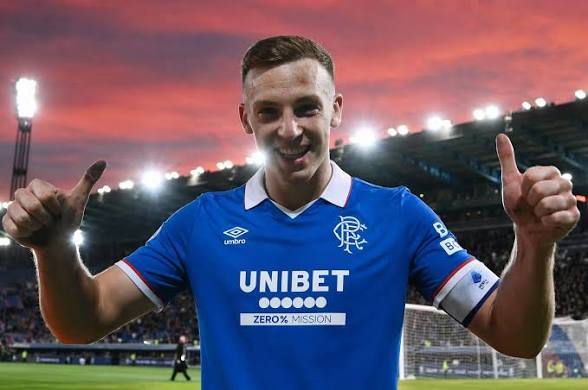
There are few surnames in Scottish football that carry the weight of Ferguson at Ibrox, and few families whose connection to Rangers stretches across generations in quite the same way. Lewis Ferguson, the Bologna midfielder, has never hidden the fact that playing for the club of his father and uncle remains one of his ambitions, and this week that long-running romance has collided with the practical business of modern football. His uncle Barry, the former Rangers captain and more recently interim head coach, has admitted he would love to see the move happen but believes the transfer fee is the biggest obstacle standing in the way. It is a blunt assessment from someone who knows the club, the player and the market, and it offers a useful dose of realism to a story that supporters have been tempted to treat as a matter of when rather than if.
The discussion was reignited by Lewis’s own words. According to the reporting, the Bologna midfielder revealed earlier this week that Rangers showed interest in him in the summer, although no talks took place. That distinction matters enormously. Interest is cheap in football, and a club can monitor, enquire and dream without ever progressing to anything concrete, but it is nonetheless significant that a player of Ferguson’s standing felt comfortable confirming that Ibrox had been on the radar. It tells supporters that the link is not merely a product of newspaper speculation, and it tells us that the ambition he has spoken about for years remains alive. What it does not tell us is that a deal was ever close, which is exactly the point Barry went on to make.
Speaking on Go Radio, Barry Ferguson was warm about the idea and realistic about the obstacles. He said it was one of his nephew’s ambitions to play for Rangers at some stage, without any certainty over when that might be, and suggested Bologna would want a “chunky transfer fee” given that the contract still has two years to run. He added that he would love to see it happen himself, but that the stumbling block would be the fee, before noting the familiar pattern that fees tend to fall as contracts run down. It was not the language of a man who thinks the move is imminent, nor that of someone dismissing it entirely. It was the assessment of a former captain who understands both the emotional pull of the club and the cold arithmetic that governs how players actually change hands.
That arithmetic is where the conversation becomes more interesting. Ferguson’s contract at Bologna runs until 2028, which means the Italian club are under no pressure to sell and every incentive to demand a price that reflects his value. A player with two years remaining sits in an awkward middle ground, close enough to the end of his deal that a buyer can start to bargain, but far enough away that the selling club can reasonably hold out. Barry’s observation that fees drop as contracts wind down is true in general, but it cuts both ways. If Rangers wait for the price to fall, they risk losing the window of opportunity or seeing another suitor step in. If they move now, they may have to pay a figure that stretches their budget beyond what a club in their position can justify for a single midfielder.
The figure being discussed in the fan community gives a sense of the scale. A Rangers News debate on the subject put the potential cost at around £17m, and while it is worth stressing that this is a number used in a supporter discussion rather than a confirmed asking price, it captures the kind of money people believe would be involved. The same piece noted that the steep financial figures had proved a major stumbling block in community discussions, which mirrors what Barry said almost word for word. Supporters and former players appear to be reaching the same conclusion from different directions: the player is wanted, the romance is real, and the price is the problem. That convergence lends the story credibility, even if the precise numbers remain speculative.
The context for that debate is the state of the Rangers midfield and the speculation surrounding Nicolas Raskin. The fan discussion was framed as a question about whether Ferguson could replace the Belgian, with lingering talk over Raskin’s future in Govan prompting supporters to imagine what a reshuffle might look like. It is a natural thing for fans to do, and it speaks to a broader truth about recruitment at a club of Rangers’ size. Every signing is tied to a departure somewhere else, and every conversation about a big arrival is also a conversation about who might leave. Whether Ferguson would be a replacement for Raskin, a complement to him or something different altogether is a question the club would need to answer before making any serious approach.
Supporters are not unanimous, and the split is revealing. The Rangers News debate found the fanbase sharply divided, with some seeing a Ferguson return as a statement of intent and a romantic homecoming for a family woven into the club’s history through his father Derek and uncle Barry. Others urged caution, warning against letting nostalgia drive recruitment and arguing that carrying a famous surname does not automatically make a player the right fit. One supporter made the point that having the name Ferguson does not guarantee anyone will be as good as his father or uncle. It is a fair challenge. A transfer built on sentiment rather than a clear footballing need is exactly the kind of decision that clubs come to regret, and the most sensible voices in the debate recognised that.
To understand why the name carries such resonance, it helps to remember just how significant Barry Ferguson was to Rangers. He made 431 appearances and scored 60 goals across two spells, captained the club between 2000 and 2003 and again between 2005 and 2009, and won five league titles, five Scottish Cups and five League Cups. He collected a treble in 2003, which earned him the Scottish Football Writers’ Association Footballer of the Year award, and he helped Rangers reach the 2008 UEFA Cup final. When he was sold to Blackburn Rovers in 2003, the £7.5m fee was a substantial sum, and he later returned to finish his playing career at Ibrox. More recently he was appointed interim head coach in February 2025. Few people alive understand what a Rangers midfielder is expected to be as well as he does.
Lewis’s own path to this point has been shaped by that family history without being defined by it. He spent time in the Rangers youth set-up until the age of 13, before moving on, and he built his reputation at Aberdeen under Derek McInnes, the man who now manages Rangers. McInnes signed him from Hamilton Academical in 2018 after a tribunal settled the compensation, and Ferguson rapidly became a fixture at Pittodrie, scoring a memorable Europa League goal at Burnley and winning the Betfred Cup semi-final against Rangers with a Hampden goal. He collected the Scottish Football Writers’ Association Young Player of the Year award and was a constant subject of transfer speculation, with Rangers among the clubs linked with him even then. The relationship between player and manager is one of the more intriguing side stories in any potential deal.
It is also worth remembering that this is not the first time the link has surfaced. In 2020, reports suggested that Steven Gerrard had placed Ferguson at the top of his target list for the summer, and it was said Rangers sporting director Ross Wilson saw him as an ideal replacement for a departing midfielder. The interest never translated into a move then either, with the fee demanded by Aberdeen proving a barrier. Former Aberdeen captain Paul Hartley described him at the time as a player with captain material and the tools to succeed, saying the name did not appear to be a burden. Looking back, the pattern is striking. Rangers have admired Lewis Ferguson for the best part of a decade, and each time the same problem has arisen: the price has never quite matched the club’s willingness to pay.
What has changed since is his status. The young Aberdeen prospect has become an established midfielder in one of Europe’s major leagues, and that raises both his value and his expectations. A player who has proven himself in Serie A does not come cheaply, and Bologna will be well aware of what they have. Their position is strengthened by the length of his contract and by the fact that they are not a club in need of a quick sale. For Rangers, that means any realistic approach would need to be properly funded and properly justified, rather than an emotional gesture. The days when a Scottish club could pluck a rising midfielder from a rival for a modest fee are long gone, and the economics of the game have moved on with them.
The timing of the next opportunity is also part of the picture. The Rangers News piece noted that pressure would inevitably increase when the transfer window reopens in January, with the contract situation and his boyhood Ibrox allegiance hanging in the air. Whether the club tests Bologna’s resolve or looks for value in lesser-known markets is one of the questions hanging over the recruitment strategy. January is traditionally a difficult window in which to buy a valued player, because selling clubs are reluctant to weaken their squads mid-season, and any deal would probably have to be structured carefully. The summer of 2027 may be a more realistic moment, by which time Barry’s prediction about falling fees would be closer to reality.
For Derek McInnes and the Rangers hierarchy, the decision will come down to priorities. A midfielder of Ferguson’s quality would be an exciting addition, and the emotional dimension would give the signing an additional lift with the supporters. But a club that has built its recruitment around shrewd value and careful budgeting has to ask whether the money required is the best use of its resources. The summer rebuild under McInnes was built on the idea of finding players who could make an immediate impact at a sensible price, and a substantial outlay on a single midfielder would represent a departure from that approach. Whether the benefits outweigh the cost is a judgement that only the club can make.
For the player himself, the situation is more straightforward. He is under contract at a good club, playing regular football at a high level, and he has spoken openly about his ambition to play for Rangers at some point in his career. That ambition does not require him to force the issue. A man whose uncle captained the club and whose father played for it understands that timing matters, and Barry’s message was essentially one of patience. The move may come one day, and he would love to see it, but the circumstances have to be right for everyone involved. That patient, measured outlook is unlikely to satisfy supporters hungry for a signing, but it is probably the most realistic way to think about a deal of this kind.
In the end, this story is a reminder of the difference between desire and deal-making. Everyone involved seems to want it: the player has said it is an ambition, his uncle would love to see it, and a significant portion of the support would welcome it with open arms. What stands in the way is a fee, a contract and a market in which selling clubs hold the power. Barry Ferguson has put his finger on the heart of the problem, and in doing so he has given supporters a dose of realism without closing the door. As contracts run down and fees fall, the picture may change, and the dream of a Ferguson in the Ibrox midfield once more may yet become reality. Until then, it remains a wish that the club, the player and his family will all be watching closely










