Eight Minutes That RuineHow Hendry’s Red Card Wrecked Pocognoli’s Hampden Debut Against Switzerland

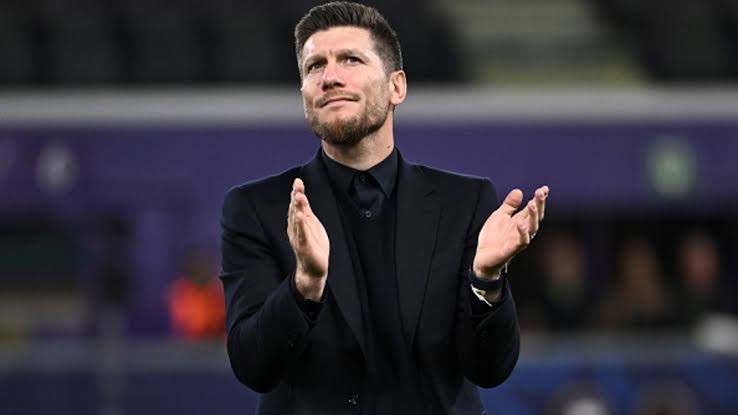
Sebastien Pocognoli has spent the past few weeks explaining what kind of Scotland he wants to build, and on Tuesday night at Hampden Park he discovered how quickly an idea can be taken away from a manager. His first home match as head coach ended in a 3-0 Nations League defeat by Switzerland, with Jack Hendry’s evening at Hampden not even lasting ten minutes. Ricardo Rodríguez, Nico Elvedi and Zeki Amdouni scored for the visitors, and the final whistle left Pocognoli with two games in charge and still no goal to show for them. Scotland did not fall apart in any dramatic fashion, and there were stretches of real resistance, but the scoreline was a fair reflection of a match in which one side had eleven players and the other had ten and a problem.
The decisive moment arrived so early that the crowd had barely settled. According to the Telegraph’s match report, the evening started to unravel in the eighth minute after Hendry was caught the wrong side of Dan Ndoye and pulled the winger back as he raced towards goal. It was the kind of error that every defender fears, a mistimed reaction against a quick forward with the goal opening up in front of him, and there was never going to be much debate about the outcome. The red card came out, Scotland were down to ten, and Pocognoli’s carefully prepared approach had been rendered obsolete before the game had found a rhythm. Nothing in a pre-match briefing prepares a team for losing a defender inside ten minutes, and nothing in a tactical plan can easily absorb it.
Worse was to follow almost immediately. Scotland had not even reorganised before Switzerland punished them from the resulting set piece. As Sky Sports described it, it was not a penalty, but what a free-kick, as Rodríguez stepped up and blasted the ball past Angus Gunn in the 12th minute. Pocognoli later made the same point himself, describing an unlucky red card that was punished with the free-kick as the worst possible scenario. It is hard to argue with that assessment. A dismissal is bad enough on its own, but conceding from the very next dead ball compounds the damage by removing any chance of settling the team before the pressure builds. Within four minutes of Hendry’s foul, Scotland were a man down and a goal behind.
To appreciate how much was lost, it helps to remember what Pocognoli had set out to do. All week the message had been about aggression and control, about refusing to show the Swiss too much respect and taking the game to them at home. He had made three changes from the goalless draw in Ljubljana, bringing in Luis Binks, Kieran Bowie and Nathan Patterson, and explained that the alterations were about presenting a different profile to a strong opponent rather than any disappointment with those who had played in Slovenia. It was a selection designed to be proactive. A front-foot plan depends on numbers in advanced areas, on full-backs who can push up and on a midfield that can squeeze play high, and it is precisely that kind of structure that cannot survive the loss of a defender in the first ten minutes.
The next decision was one that no manager wants to make, and it shaped the rest of the night. Pocognoli had to rebuild his defence, and the casualty was one of his forwards. The Telegraph noted that Bowie’s third cap was brought to a premature end as he was replaced by Welsh, as Pocognoli sought to replenish his defence. It is a painful sacrifice for any coach, taking off an attacker who has barely had time to play himself in and hoping the remaining players can carry the burden. For Bowie, who had only just been handed a starting role, it was a cruel moment. For Scotland, it meant that an already stretched attacking plan became thinner still, with the focus shifting from imposing a game on Switzerland to preventing one from being imposed on them.
What followed in the first half was an exercise in damage limitation, and the figures explain why. Switzerland had control of proceedings, with Johan Manzambi, Amdouni and the lively Ndoye all threatening to add to their lead before the break, and the visitors enjoyed 75 per cent of the possession. Those are the numbers of a team playing a one-sided training exercise, yet Scotland reached the interval only one goal down. That deserves some credit. The defensive shape held for long periods, Gunn was not overwhelmed, and the gap between the sides did not widen in the way it might have against a team of Switzerland’s quality. Ten men can defend for a long time if they are organised and disciplined, and for the first forty-five minutes they were.
Pocognoli’s frustration became visible towards the end of the half. The Telegraph recorded that he was booked for remonstrating with the referee in the closing moments of a first half in which the visitors enjoyed 75 per cent possession. It was a rare flash of anger from a manager who has so far presented himself as calm and methodical, and it hinted at how much the night had tested him. Whether the protest was about the red card itself, the free-kick decision or simply the accumulation of circumstances, it showed a coach who felt the evening had been taken out of his hands. There is nothing wrong with that emotion, and supporters are unlikely to hold it against him, but it is a reminder that the job of international manager involves absorbing setbacks he cannot control.
There was a subplot on the other touchline too. Switzerland manager Murat Yakin nearly missed the game altogether. According to the Telegraph, he was able to take his place on the sidelines after hearing issues, linked to pressure from the flight into Glasgow, caused him to miss the press conference at Hampden on the eve of the match. It was an unusual footnote to a night that otherwise went to script for the visitors. Yakin’s side arrived in Glasgow on the back of a convincing win in North Macedonia, and they looked organised and assured for the full ninety minutes, exactly as a team should when handed an extra man early on. The Swiss do not need much encouragement to play with confidence, and Scotland’s early collapse gave them all the encouragement they required.
The second half followed the pattern that the first had set. Elvedi extended the lead in the 55th minute, and from that moment the contest felt effectively over. Scotland, playing with ten men against a technically superior side, could not keep up the intensity indefinitely, and the Swiss were patient in waiting for their moment. It came again through Ndoye, who was a constant menace all night. Amdouni completed the scoring in the 82nd minute by stepping onto Ndoye’s cutback and lashing the ball past Gunn, and the Burnley forward’s finish capped a performance that had been coming from the moment the numerical advantage arrived. It was a clinical goal, created by the best player on the pitch and finished with conviction, and it settled the question of how large the margin would be.
Afterwards, Pocognoli chose his words carefully. In his post-match comments he said the evening would be more about the reaction than the result, insisted his players had done the best they could, and expressed the hope that “we will remember this night differently later on”. He also looked ahead immediately, saying Scotland had to move on and secure a good result in North Macedonia. It was a measured response, neither defensive nor dramatic, and it fitted the tone he has adopted since arriving. He did not use the red card as an excuse, but he did not pretend it was irrelevant either. The message was that the defeat was painful, that circumstances had conspired against the team, and that the answer lay in how the squad responded over the next few days.
That response matters more than usual because of the context surrounding the result. Sky’s live coverage summed it up by noting two games for Pocognoli and no goals, and that statistic will follow the Belgian into the next fixtures. The pattern is worth unpicking honestly. In Ljubljana on Saturday, Scotland dominated the ball, recorded an expected-goals figure above two and struck the post without finding the net. On Tuesday, they played eighty-odd minutes a man short and were never realistically going to create much. Neither night says anything conclusive about the team’s attacking quality, but together they create a run that needs to end soon. A first goal would lift a considerable weight from the squad, and the pressure to deliver it will grow with every passing fixture.
The defensive question is the most immediate practical headache. Hendry’s red card means he is likely to miss at least the next match under standard disciplinary rules, which forces Pocognoli to think again about the structure at the back. Welsh, who made his debut in Slovenia and then came on to replace Bowie in the middle of this game, has already been pressed into service, and Binks started in the heart of the defence. The options are there, but the loss of an experienced centre-back always complicates a manager’s plans, especially one still learning the strengths and weaknesses of his pool. It is one of the less glamorous realities of international management, where a single dismissal can ripple through two or three fixtures.
It would be unfair to judge Switzerland’s display as merely the product of Scotland’s misfortune, because they played well. Ndoye was a constant threat, dragging the defence out of shape and supplying the pass for Amdouni’s goal. Manzambi looked comfortable in midfield, and Rodríguez’s free-kick was a moment of genuine quality. This is a side with a settled identity and a good record in major competition, and Scotland have experienced that first hand before. At Euro 2024, Scotland took an early lead but were held to a draw as Xherdan Shaqiri’s stunner earned Switzerland a point, and the Swiss have a habit of making life difficult even when they are not at their best. On Tuesday they did not need to be spectacular, only efficient, and they were.
Amid all the disappointment, there are reasons to take a longer view, and the Yahoo headline for the PA report captured it neatly by noting that Pocognoli was looking at the bigger picture. He has a two-year contract that runs to the European Championship in 2028, which Scotland will co-host, and the nature of the appointment always implied a project measured in seasons rather than fixtures. The Nations League group is open enough that the season can still be rescued, and the next two matches, away to North Macedonia and then at home to Slovenia, offer a clear chance to do so. A manager who inherited a squad from a tournament exit and is still learning its personalities cannot be judged on eighty minutes with ten men.
What matters now is how the team reacts, and that is precisely the point Pocognoli stressed. A squad that comes through a night like this with its confidence intact and its structure sound can build on it, while one that allows it to fester can find a bad night turning into a bad month. The supporters will want to see evidence of the front-foot approach that was promised, and there is no reason to think the manager has abandoned it. The defeat was heavy, but it was also highly unusual, the product of a sequence of events that would have troubled any side. The test will be whether Scotland can show, in Skopje, that the plan was sound and the circumstances were the problem.
The broader lesson is about the gap between a philosophy and its execution. Pocognoli arrived with a reputation for progressive, attacking football and a mandate to bring it to the national team, and the early evidence suggests he is sincere about it. But principles are tested by adversity, and the first serious test came in the eighth minute at Hampden. How he adapts, how he rebuilds and how he keeps the group believing will tell us more about his prospects than any single result. On that measure, the verdict remains open. The night was bruising, the scoreline was ugly and the goal column is still empty, but the tenure has barely begun and the road to 2028 is long