Celtic Add Sean Dyche, the English Manager Sir Alex Ferguson Called “Fantastic”, to Contingency List as O’Neill Faces Pressure

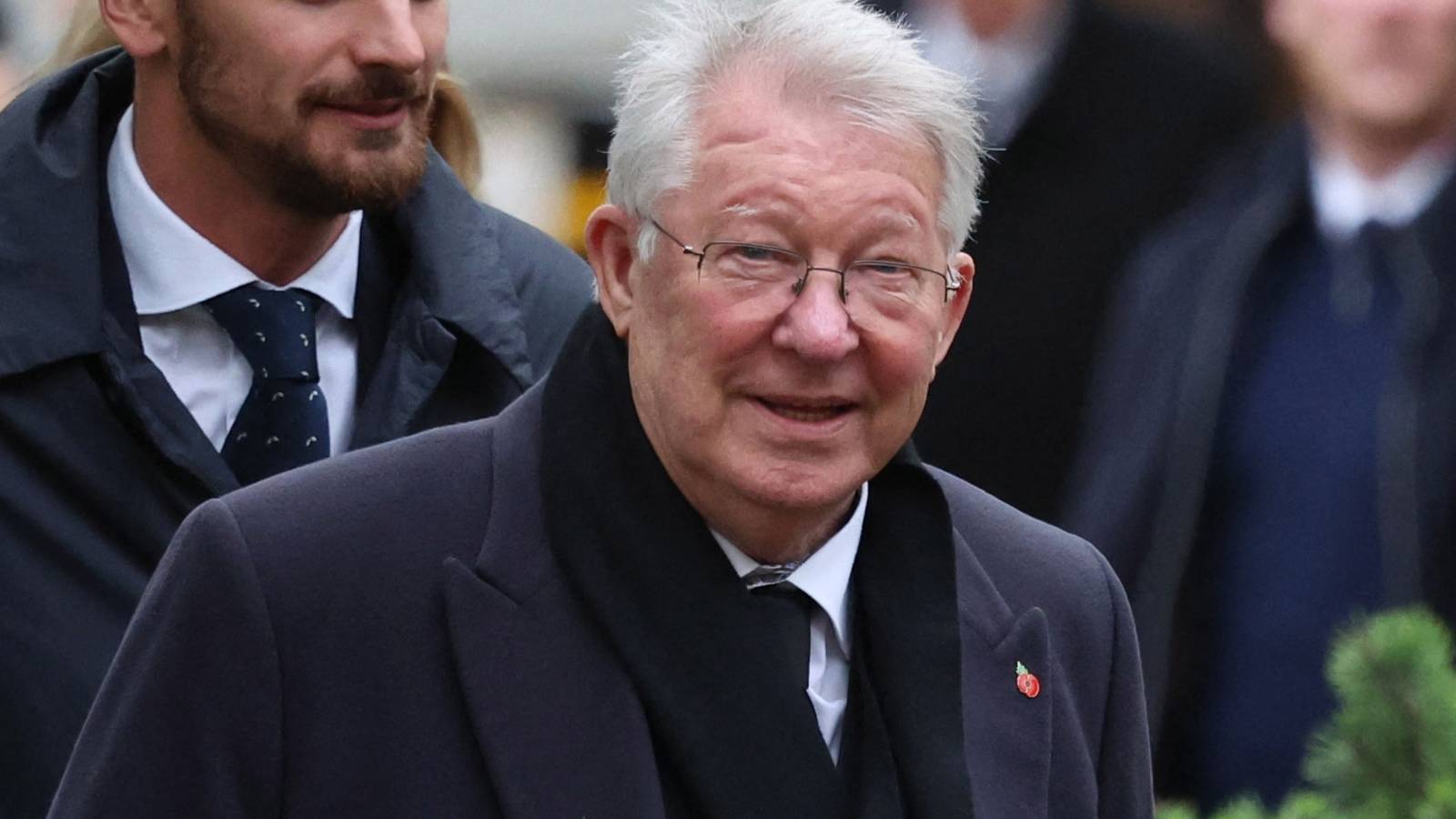
Every club at the top of the game keeps a folder in the bottom drawer for the day the manager’s chair becomes vacant, and at Celtic Park that folder has started to fill up. Reports this week suggest that Sean Dyche, the former Burnley, Everton and Nottingham Forest manager, has been added to a shortlist of names that could be called upon if Martin O’Neill departs. Sir Alex Ferguson once described Dyche as “fantastic” after his work at Burnley, and that endorsement from the most decorated manager in British football history has followed him around for years. The context matters, though. Celtic have not sacked anyone, O’Neill has not resigned, and the club’s public position is one of support. What has emerged is a picture of a board doing what boards do, preparing for a scenario it hopes will not arrive while acknowledging that it might.
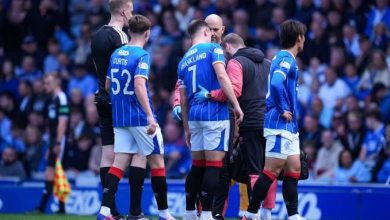
The reason the conversation has surfaced at all is the mood surrounding the team. The international break arrived at a welcome moment for O’Neill, because the league position that looks healthy on paper has been accompanied by performances that have drawn criticism. Celtic are only two points clear of Rangers in the Scottish Premiership, and the pressure on the manager has been increasing. TEAMtalk’s own figures put the champions top of the table on 18 points from seven matches, yet described the start to the campaign as a disappointment all the same. That gap between results and feeling is one of the most dangerous places for a manager to sit. When a side wins but does not convince, every dropped point becomes an argument and every uneven display becomes a referendum on the man in the dugout.
What has fuelled the speculation most is that O’Neill himself has spoken in reflective terms. The poor performances prompted the Northern Irishman to speak of personal reflection, and the report went as far as noting that he had told reporters the end of his time in charge could be near. It is not the language of a manager who is ready to be pushed out, but neither is it the language of one who expects to be in the job for years. At 74, having returned to the club he served so successfully at the start of the century, O’Neill has always presented the role as a duty rather than a project. He came back because Celtic needed him, and he has never pretended that the arrangement was meant to be permanent. That candour is part of his appeal, and it is also the reason every public comment he makes gets read for signs of an exit.
To understand how delicate the situation is, it helps to recall how extraordinary the last twelve months have been. O’Neill returned to Celtic as interim manager in October 2025, and after Wilfried Nancy was dismissed following just 33 days he was reappointed in January 2026. What followed was a remarkable turnaround. He guided the club to the Scottish Premiership title on the final day of the season and then won the Scottish Cup final 3-1 against Dunfermline Athletic at Hampden to complete a domestic double. For a club that had lurched through a chaotic season, it was a rescue of the highest order, and it earned him enormous goodwill on the terraces and in the boardroom. It is precisely that goodwill that explains why the board has been so consistent in its public backing.
The summer brought a further commitment, though a carefully limited one. O’Neill signed a one-year contract with the option of an additional year for what is effectively his third spell at the club. That structure is revealing. It gave Celtic continuity after the double, it gave O’Neill the platform to build on it, and it kept the door open for both sides to reassess without any awkwardness. It is the kind of deal that invites succession planning almost by design. Nobody in the boardroom would have signed it without considering what comes next, and the arrival of a shortlist should be read in that light rather than as a vote of no confidence.
Indeed, the wider discussion about a successor had been simmering for weeks. Former Celtic striker Dion Dublin, speaking a few weeks ago, named Frank Lampard and Sean Dyche as candidates who could handle the job once O’Neill eventually stepped aside. He was careful to say that there is nobody who is perfect to replace O’Neill, and the piece reporting his comments stressed that neither man had been approached, shortlisted or discussed internally at that stage. What has changed since is the sourcing. Dublin was offering an opinion. TEAMtalk is now reporting that Dyche sits on a list inside the club’s thinking, which is a very different category of story, even if it remains a long way from an offer.
That list, as reported, is not short on variety. The names in circulation include Dyche, Kieran McKenna, a possible return for Neil Lennon, and Shaun Maloney stepping up to take full control. Other coverage has floated Eddie Howe, the former Newcastle United manager, as a further possibility. What stands out is the range. A promotion from within, a returning club figure, a young English coach with a modern reputation and an experienced Premier League operator represent four wildly different philosophies about what Celtic should be. The fact that they can all appear on the same page tells you the board has not settled on a type, which is exactly what you would expect from a contingency exercise rather than a live search.
One name was firmly removed from the conversation. TEAMtalk was explicit that Roy Keane is not an option to replace O’Neill, after weeks of noise linking the former Manchester United captain to the job. That clarification matters for the credibility of the whole story. Media coverage of managerial changes at big clubs is often a swirl of names with no substance behind them, and the willingness to rule one out suggests the reporting has some grounding in what the club is actually considering. It also shows how quickly speculation attaches itself to any Old Firm vacancy, real or imagined, and how important it is to separate genuine intelligence from the ambient chatter that follows the sport.
Which brings the focus back to Dyche, whose profile is unusual among the names mentioned. The 55-year-old has been without a managerial role since leaving Nottingham Forest in February 2026, and that departure came after just 25 games last season. It was a short and difficult spell, and it is the blemish on an otherwise substantial record. Before Forest there was the long, defining period at Burnley, where he took a club with limited resources to the Premier League and then to European qualification, and the later stint at Everton, where he was widely credited with steadying a side that had been in trouble. He has 99 Premier League wins to his name, a figure that puts him among the most experienced English managers of his generation and suggests a level of tactical resilience that few of his rivals for the Celtic job can match.
The Ferguson endorsement deserves a little context of its own. The remark about Burnley was made at a time when Dyche was performing minor miracles on a modest budget, and coming from a man who spent decades at the top of the sport it carried real weight. It is also worth being honest about what it does and does not tell us. Dyche has often been hired to pull clubs away from relegation danger, and he has no significant title on his record. Praise for organisation and consistency is not the same as proof that a manager can dominate a league or drive a team through the pressure of expectations at Celtic, where anything short of a trophy is treated as underachievement. Ferguson’s word is a compliment, not a guarantee.
Some of those who have worked with him are enthusiastic anyway. Former Everton goalkeeper Asmir Begovic said he would like to see it happen, and explained why Dyche would suit the job should O’Neill leave. Players who have been coached by a manager tend to see qualities the outside world does not, and Begovic’s comments reflect a familiar theme in the way Dyche is discussed by those who know him: clarity of message, strong dressing-room management and an ability to get the best from a squad. At a club like Celtic, where the squad has been through repeated upheaval, those attributes have obvious appeal. A manager who provides structure and calm could be exactly what a fragile group needs after a bruising year.
The harder question is one of fit. Celtic’s supporters have grown up expecting their team to control matches, to dominate possession and to play attacking football at pace, and that expectation is baked into the identity of the club. Dyche’s teams have generally been built on compact organisation and directness, which works brilliantly when the objective is survival against superior opposition but sits less naturally when a team is expected to overwhelm most of its opponents every week. He has also never worked in Scottish football, and the demands of the Premiership, of European qualifying and of an Old Firm rivalry that shapes every season are unlike anything in England. None of that rules him out. It simply means the appointment would carry a degree of risk that the board would need to weigh carefully, with the memory of a very short-lived managerial experiment still fresh.
The alternatives each carry their own logic. A return for Neil Lennon would appeal to the emotional side of the club and to supporters who remember his previous spells, while Shaun Maloney stepping up would represent continuity and a bet on a younger voice from within. Kieran McKenna’s name reflects the fashion for progressive, development-minded coaches, and the mention of Howe shows how far Celtic might be prepared to reach if the opportunity arose. Set against that field, Dyche looks like the safe pair of hands, the experienced professional who would arrive with credibility and a track record of stabilising difficult situations. Whether safe is what Celtic want depends entirely on what kind of club they intend to be over the next two years.
There is, of course, a Rangers angle that Ibrox will not miss. With the gap at the top so narrow and Derek McInnes building his own project across the city, any wobble at Parkhead is scrutinised more closely than it would be in a comfortable title race. A two-point lead is barely a lead at all, and the sense that Celtic might be preparing for a change while Rangers grow in confidence adds spice to a rivalry that hardly needs any. Managers on both sides know that the narrative can flip in a matter of weeks. A dropped point at the wrong moment can turn a stable campaign into a crisis, and the speculation that has surrounded O’Neill only adds to the noise.
The pressure of the Old Firm job is well documented. Gordon Strachan, a former Celtic manager, has spoken about how a person’s entire life is ripped apart by the demands of the role, and O’Neill himself has voiced concern about the atmosphere of the fixture after the chaotic scenes that ended the Scottish Cup quarter-final earlier this year. Those comments give a flavour of the environment any successor would inherit. It is a job that consumes everyone who does it, and it is fair to ask whether a manager in his mid-seventies, having already delivered a double, should be expected to carry that weight indefinitely. The respect for O’Neill is genuine, but it does not remove the practical reality that time is a factor in every decision.
For now, there is no decision to report. TEAMtalk says O’Neill has the complete support of the Celtic board, and has given no indication that he intends to walk away. The shortlist is described as standard practice, a contingency that any major club would maintain. If the break has passed without a resignation, as the report suggests would normally have been signalled by now, then the assumption must be that O’Neill will take charge when the league resumes. What happens next will depend on results, on performances and on whether the reflection he spoke of leads to a conclusion. A convincing run of wins would quieten the noise very quickly, while a stumble could revive it just as fast.
Sean Dyche, meanwhile, will wait. He is a manager with a decorated reputation, a famous admirer and a point to prove after a short spell at Forest, and Celtic represent the sort of challenge that could reinvent his career. Whether the call ever comes is a question for another day and another set of circumstances. The truth about this story is both smaller and more interesting than the headline suggests: a club with a proud manager and a supportive board is quietly preparing for a future it has not yet decided to embrace. For O’Neill, the best answer to every shortlist is simply to keep winning, and for Celtic the hope is that the folder in the bottom drawer stays exactly where it is.