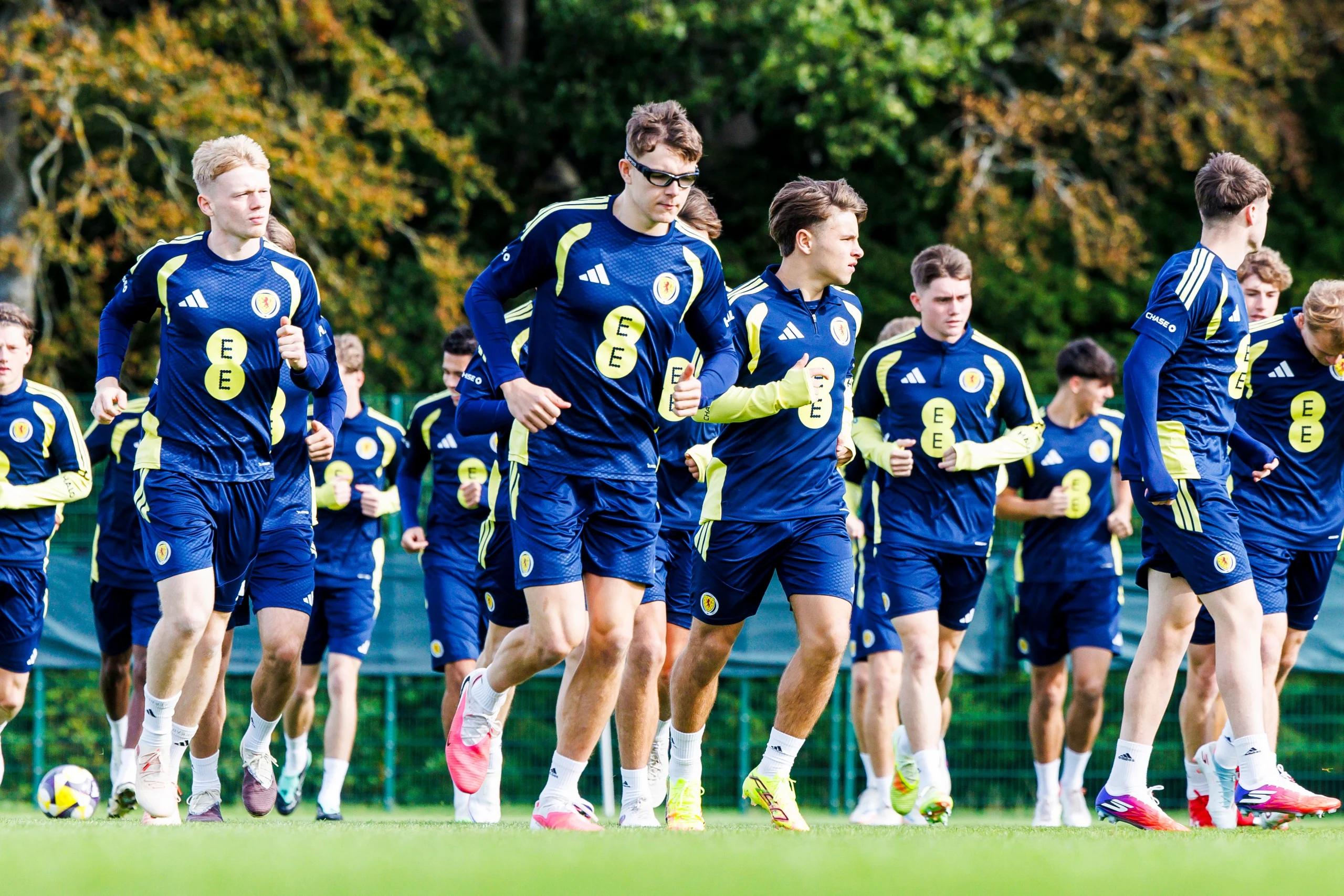
Sebastien Pocognoli spent the days before his first home game in charge of Scotland talking about comfort, control and the sense of occasion that comes with walking out at Hampden Park for the first time as national team head coach. By the eleventh minute on Tuesday night, all of it had been turned upside down. Jack Hendry was sent off in the 11th minute, and Switzerland scored through Ricardo Rodríguez a minute later, before Nico Elvedi and Zeki Amdouni added further goals in the 55th and 82nd minutes. The scoreline was a hard one for a new manager to absorb and an even harder one for a Tartan Army still getting used to life after the summer’s World Cup. The Belgian now has two games and no goals to his name, and he must lift a group before it travels to North Macedonia in the days ahead.
It is worth remembering how quickly all of this has happened, because the context matters when judging a night like this. Steve Clarke resigned in June after leading Scotland to their first World Cup in 28 years, only for the team to exit at the group stage. Scotland managed a single victory in their three matches at the tournament. That left the Scottish FA with a decision that would define the next chapter, and they went abroad for the answer. Pocognoli signed a two-year contract and became only the second foreign manager in Scotland’s history, following Berti Vogts, who held the post from 2002 to 2004. The deal runs to a European Championship in 2028 that Scotland will co-host, which gives the appointment a natural horizon and, for the fans, a natural yardstick.
The CV that persuaded the governing body is a modern one. Pocognoli led Union Saint-Gilloise to the Belgian title in 2024-25, his first season as a head coach. He was named Belgian Coach of the Year that year and managed Union’s first-ever Champions League matches. The move to Monaco followed in October, and while the Principality club reached the Champions League knockout phase and lost narrowly to Paris Saint-Germain, he was dismissed on June 1 after a seventh-place finish in Ligue 1 and a failure to qualify for the Champions League. As a player he was a left-back who won 13 caps for Belgium, and he spent two seasons at West Bromwich Albion and a season-long loan at Brighton in the Championship, so Britain is not entirely foreign to him. Scotland is still his first senior international job and only his third senior head coaching role, and he is learning the international game in public.
What the SFA said it wanted was clear enough. Chief football officer Craig Mulholland predicted Pocognoli would bring an aggressive, front-foot style of play that would excite supporters. That promise hung over both of the manager’s opening fixtures. In Ljubljana on Saturday there were encouraging signs without a reward. The first half was slow-ish, followed by a much improved second period in which Scotland created chance after chance and converted none of them. Robbie Ure hit the post in the first half, and Scotland missed several clear-cut chances after the break. The numbers backed up the eye test: Scotland had 65 per cent of the possession and an expected-goals figure of 2.16 against Slovenia. It was a goalless draw, but one that looked like a performance with a bit of promise about it.
The manager, for his part, seemed at ease with what he had seen. He handed debuts to Stephen Welsh and Ure, recalled Oli McBurnie after a five-year international exile, and said he was relaxed about the stalemate given the chances created and the quality of the defending. He also framed the Nations League window as something closer to a laboratory than a sprint. He said there were four games in which Scotland would try to balance results with a different approach and a different profile on the pitch. That framing invited a degree of patience from supporters, though patience is easier to give when you are not losing 3-0 at home.
The mood before kick-off was one of anticipation rather than dread. Pocognoli called his first Hampden outing a special moment and said he had been looking forward to it since he was appointed. He urged his players to be aggressive and take control against the Swiss, and said Scotland had two choices in their approach: to respect the opposition or to show they were at home. The message was consistent across every interview. Respect the opponent in the sporting sense, then refuse to let that respect dictate the shape of the game. It is an attractive philosophy for a stadium that likes to see its team lean forward, and for a national side that has often been accused, fairly or otherwise, of waiting for the game to come to it.
The team he picked reflected the same idea of freshness. Luis Binks, Kieron Bowie and Nathan Patterson came in for Welsh, Ure and Aaron Hickey, and the side read Gunn, Robertson, Binks, McGinn, Gilmour, McBurnie, Hendry, McKenna, Ferguson, Bowie, Patterson. Asked about the alterations, Pocognoli was quick to head off any suggestion of dissatisfaction. He said the changes were about seeing a different profile against a good opponent, and insisted they did not come from disappointment with anyone who played in Slovenia. There was logic to it. Switzerland would arrive with a very different threat from the one posed by the hosts in Ljubljana, and a coach in the early stages of assessing a large pool is entitled to use a home fixture to gather information.
That opponent was never going to be a gentle introduction to Hampden. Switzerland arrived full of confidence after a 3-0 win away to North Macedonia. The numbers from that night were formidable, with 23 shots and 11 on target as the Swiss overwhelmed a weaker side, and the reference points before kick-off all pointed in the same direction. Switzerland were ranked 14th in the world, and Scotland carried the memory of the previous Nations League campaign, in which they were relegated from League A with two points from six matches. The last competitive meeting between the sides was a happier one for the Scots, who took their only point of Euro 2024 from a 1-1 draw with the Swiss. Nothing about the history suggested an easy night, and Pocognoli said as much when he warned that excessive respect would invite punishment.
Then came the moment that changed the shape of the evening. Hendry’s dismissal came before the first quarter-hour had even been reached, and the Swiss needed only a minute to punish it as Rodríguez curled the opener home. It is difficult to overstate what that sequence does to a game plan. A team built to press high, to take control and to be aggressive relies on numbers in the right areas and on the confidence that comes from a level scoreline. Lose a defender within eleven minutes and concede almost immediately, and the whole model has to be rethought on the fly. The plan the manager had spent the week explaining was suddenly a plan for a different game.
To their credit, Scotland did not fold in the first half. The match reports described a decent first period in Glasgow, with the hosts trailing by a single goal at the interval despite playing with ten men. At one point Remo Freuler fired wide from the centre of the box following a corner, and the commentary greeted it with relief. That escape mattered, because it kept the deficit manageable and the game open. It also showed the kind of resilience that a manager can build on. Ten against eleven for almost eighty minutes is a punishing assignment against any side, let alone one that had already scored three in its previous outing, and holding the line for a long spell speaks to the character in the squad.
The second half told the harder truth. Elvedi made it 2-0 in the 55th minute, and Amdouni added a third in the 82nd. Neither goal was a surprise. Switzerland had the extra man and the greater technical certainty, and they used both to control the tempo and stretch a Scotland side that was already running on effort. From the moment the second goal went in, the question was how large the margin would become rather than whether the game could be rescued. Amdouni’s late strike settled that. It was a night on which the visitors did what a good side does when handed an advantage, which is to turn it into a comfortable result. The full-time report summed it up as a tough night against the world’s 14th-ranked side, with Pocognoli having two games and no goals.
That last statistic deserves some unpacking, because it is the number that will follow the manager into the October fixtures. Two games without a goal is not a crisis in itself, and the circumstances of Tuesday night make it a poor guide to the team’s real attacking ability. But it does sit alongside the Slovenia evidence and create a pattern that needs addressing. In Ljubljana the process looked sound and the finishing let it down, with a post struck and a stack of chances squandered. The expected-goals figure of more than two suggests a team that got into good positions and simply did not take them. It is the kind of problem that can resolve itself with a single deflection or a single sharp finish, but it can also become a weight if the run stretches on.
The forward line will therefore be the subject of a lot of conversation over the coming days. McBurnie returned after five years away and led the line in the lineup on Tuesday, with Bowie alongside him, and Ure had made his debut in Slovenia. The bench listed for the Swiss game also contained Hickey, Welsh, Ure, Christie, Miller, Gannon-Doak, Graham and Montgomery among others, which shows the depth of options Pocognoli has to work with. That is one of the more encouraging aspects of the picture, because a manager with a big pool and a willingness to experiment has room to find solutions. The tension is between that spirit of exploration and the pressure for results in a group where the Swiss have already opened up a lead in quality.
There is a fair case that Pocognoli deserves the benefit of the doubt on the night itself. A red card in the opening minutes is not a tactical failing on the touchline, and a manager cannot legislate for it. The changes he made were explained coherently, the approach he outlined was consistent with what he was hired to deliver, and the first half played out with more composure than the circumstances demanded. The harder questions will arrive if performances and results do not converge over the next fortnight. International management is a discipline of short camps and compressed preparation, and imposing a distinctive style on a group that meets a handful of times a year is one of the hardest jobs in the game. The Belgian said himself that this window was partly about trying different profiles, and losing a player early inevitably limits how much can be learned.
The relationship with the supporters is the other thread running through all of this. Tuesday was the first home game since the disappointing showing at the World Cup this summer, and the Hampden crowd had spent the build-up being asked to help set the tone. Pocognoli said before the game that he believed the fans would reflect what the team became on the pitch, which is a generous way of sharing responsibility and also a reminder that the connection works in both directions. A new manager needs the stadium on side when things are going badly as much as when they are going well. The early result gives the Tartan Army a reason to be frustrated, but the wider mood around the national team, after the first World Cup in nearly three decades, is one of a supporter base that still wants to believe in the project.
The calendar does not allow much time for reflection. Scotland visit North Macedonia on October 3 before hosting Slovenia at Hampden on October 6. Those two games now look like the real test of the first window, because they offer the chance to turn a difficult opening into a respectable return. North Macedonia are the side the Swiss beat 3-0 without any trouble, which tells you something about the standard of the group but also about what Scotland can reasonably expect to be capable of. Slovenia, whom Scotland already faced without scoring, will arrive at Hampden knowing the hosts struggled to break them down the first time. The Slovenia rematch in particular looks like a chance for the team to prove that the chance creation in Ljubljana was a foundation rather than a false dawn.
Selection will bring its own issues, because Hendry’s dismissal leaves a decision to be made at the back. Under the standard disciplinary framework a straight red card brings at least a one-match suspension, so his availability for the trip to North Macedonia is in doubt, and the manager may need to reshape the defensive unit. Welsh and Binks are both in the mix and the bench on Tuesday included further defensive cover, so there are options, but the loss of an experienced centre-back is never ideal in a short campaign. It also complicates the balance Pocognoli wants to strike between experimentation and stability, since every enforced change reduces the scope for the deliberate ones.
The wider picture is that League B Group 1 has already tilted in the Swiss direction. Scotland were relegated from League A in the last Nations League cycle and will be desperate to bounce straight back, and a defeat like this makes that ambition harder. Switzerland have now won both of their opening fixtures, scored six goals in doing so, and look like the team to beat. For Scotland, the realistic aim is to stay in touch, take maximum points from the two matches that follow, and make sure the group does not slip beyond reach before the autumn is over. That is achievable, and the result at Hampden does not rule it out, but it does mean the next two matches carry more weight than anyone planned for.
In the end, this was a night that says less about Sebastien Pocognoli’s ideas than it does about the brutal arithmetic of international football. A red card in the eleventh minute turns a home debut into a damage-limitation exercise, and the Swiss are far too good to be gifted that kind of opening and not exploit it. The manager still has a two-year contract, a long runway to the home European Championship, a deep squad and a philosophy that fits what the fans want to see. What he needs now is a first goal, a first win and a night at Hampden on which everything goes the way he described it before kick-off. The home comforts he came looking for did not arrive on Tuesday, but the season is long, the group is open, and the next chapter of his tenure is only