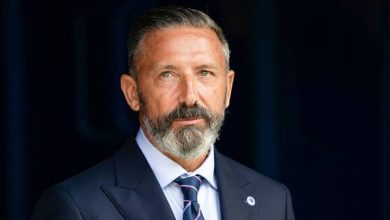
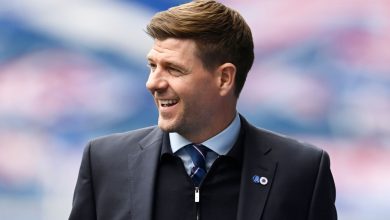
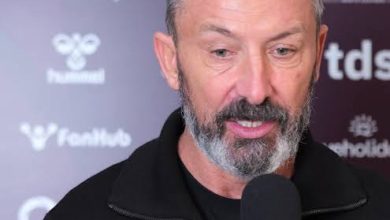
🗣️ “A complete clown. That’s what he is.” 🗣️”He never liked me anyways” 🗣️ “He sits there on his couch collecting his pundit paycheck, talking as if he knows anything.” 🗣️”His Managing career Ended when he was stripped off his license for incompetence”He wasn’t successful as a manager, that’s why he retired early and became a pundit” Martin O’Neil

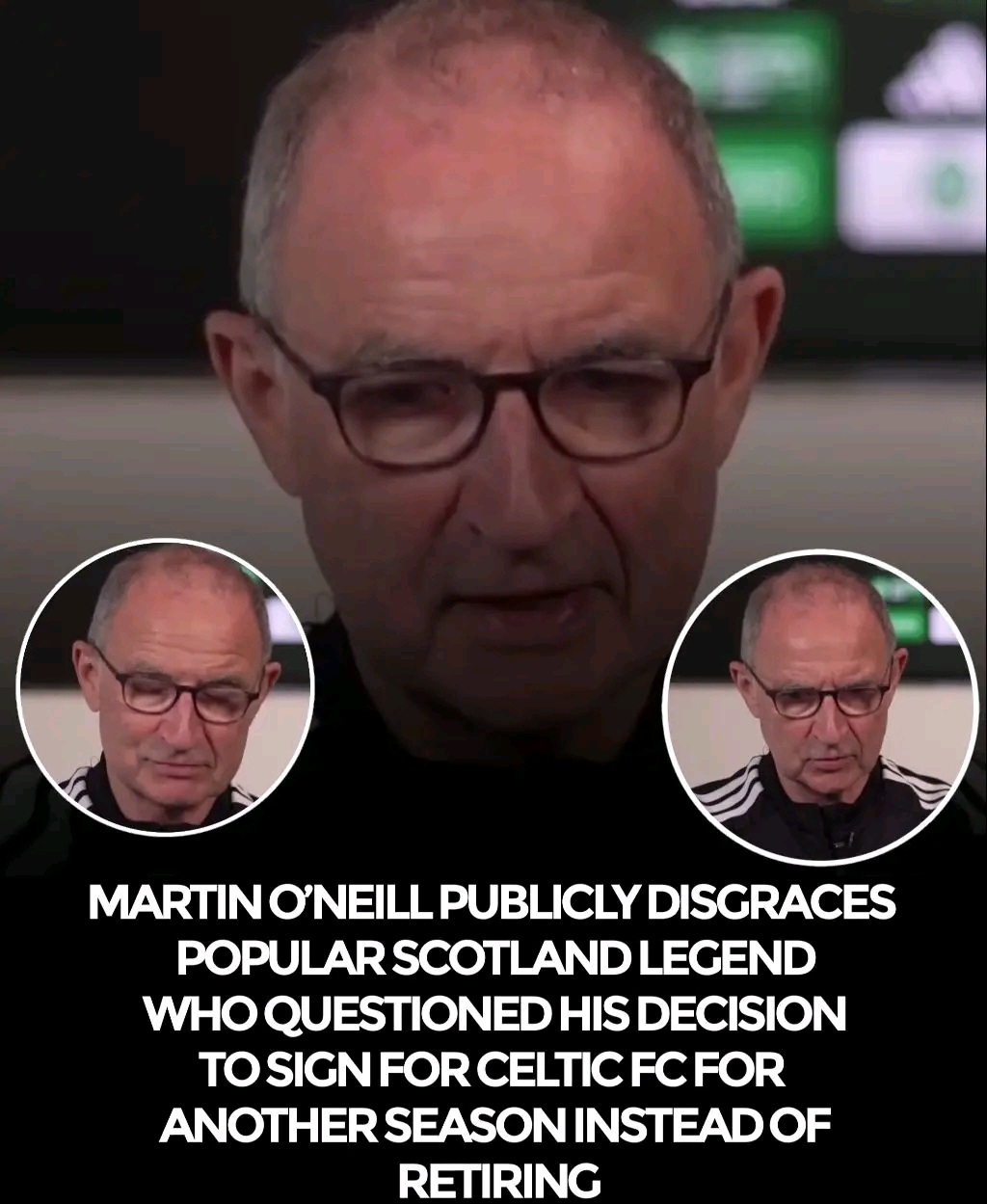
Few figures in modern British and Irish football have moved between the touchline and the television studio quite as fluidly as Martin O’Neill. Over a management career spanning more than three decades, he built a reputation as one of the most successful club bosses of his generation, took charge of a national team, and became a fixture of televised football analysis — all while enduring the setbacks and sackings that come with a life spent in senior management. This profile traces that career in full: the triumphs, the failures, and the punditry work that followed.
Martin Hugh Michael O’Neill was born on 1 March 1952 in Kilrea, County Londonderry, Northern Ireland. As a young man he showed genuine talent in Gaelic football before turning to soccer, and he began his senior playing career with Distillery in the Irish League, helping the club to the 1971 Irish Cup final, where he scored twice.
That form caught the attention of Nottingham Forest, and O’Neill left his law studies at Queen’s University Belfast to sign for the English club in 1971. He became a key part of the Forest side built by Brian Clough, winning the First Division title in 1977–78 and, remarkably, back-to-back European Cups in 1979 and 1980 — a period regarded as one of the great overachievements in English football history. At international level, O’Neill won 64 caps for Northern Ireland and captained the side at the 1982 World Cup, where they reached the second round.
After Forest, his playing career wound down with spells at Norwich City, Manchester City, Notts County, Chesterfield and Fulham.
O’Neill’s move into coaching was not immediate; after retiring as a player he briefly worked in insurance before taking his first managerial post at non-league Grantham Town in 1987, followed by a short spell at Shepshed Charterhouse. His breakthrough came at Wycombe Wanderers, whom he took charge of in February 1990. Under O’Neill, Wycombe won the FA Trophy in both 1991 and 1993, and in the 1992–93 season he led the club into the Football League for the first time in its history, before securing a second successive promotion the following year. His win rate at Wycombe — 75.5% — remains, by some measures, the best of any manager in the club’s history.
In June 1995, O’Neill left Wycombe for Norwich City, one of his former playing clubs. The stay was brief and unhappy: he departed after only a few months, in December 1995, following a dispute with the club’s chairman.
He moved immediately to Leicester City, where his managerial reputation was made in earnest. In his first season in charge, Leicester won promotion to the Premier League via the play-offs. O’Neill went on to establish the club as a competitive top-flight side and guided them to three League Cup finals, winning the trophy in both 1997 and 2000. It was this sustained success at a mid-sized club that made him one of the most sought-after managers in the English game
In 2000, O’Neill took over at Celtic, and the five years that followed are widely regarded as the high point of his managerial career. Between 2000 and 2005, he led Celtic to seven major trophies, including three Scottish Premier League titles, and took the club to the 2003 UEFA Cup final, where they lost to Porto after extra time. His Celtic side developed a fierce rivalry with Rangers and is remembered fondly by supporters for both its trophy haul and its style of play. He left the post in 2005, citing his wife’s ongoing illness as a factor in his decision to step back from full-time management.
O’Neill returned to club management in 2006 with Aston Villa. He steered the club to three consecutive sixth-place finishes in the Premier League — a period of relative stability and progress for a club that had often struggled to break into the top half of the table — and led Villa to the 2010 League Cup final, which they lost to Manchester United. He left the club by mutual consent in August 2010, days before the start of the new season, reportedly over disagreements regarding transfer strategy and the direction of the squad.
In December 2011, O’Neill was appointed manager of Sunderland, the club he had supported since boyhood. The appointment initially looked like a natural fit: he won seven of his first ten matches in charge and guided Sunderland to a 13th-place finish in the 2011–12 season.
The following season told a different story. Sunderland’s form collapsed, and by late March 2013 the club had taken just three points from a possible 24 across eight league games, leaving them one point above the relegation zone. After a 1–0 home defeat to Manchester United on 30 March 2013, the club dismissed O’Neill within hours of the final whistle. It was, by his own account and by that of reporting at the time, the first sacking of his managerial career, ending his 16-month spell in charge, in which he won 16 of 55 Premier League matches. Sunderland’s chairman, Ellis Short, later stated plainly that O’Neill was dismissed “because of poor results.” O’Neill himself later said he felt he did not deserve to be sacked, pointing to his role in keeping the club up the previous season, though he acknowledged in the same interview that little in football management surprises him anymore.
Paolo Di Canio was appointed as his successor within 24 hours.
Eight months after leaving Sunderland, in November 2013, O’Neill was appointed manager of the Republic of Ireland, with former Manchester United captain Roy Keane as his assistant — a pairing O’Neill described at the time, with characteristic wit, as himself being “the bad cop” to Keane’s “bad, bad cop.” The partnership proved effective on the pitch. O’Neill led Ireland to qualification for UEFA Euro 2016, the country’s third appearance at a European Championship, and the team reached the round of 16 in France, memorably beating Italy in the group stage. He left the Ireland role in 2018 after a difficult Nations League campaign and a heavy play-off defeat to Denmark that ended their 2018 World Cup qualification hopes.
O’Neill returned to club management in January 2019, taking charge of Nottingham Forest — with Roy Keane again working alongside him as assistant manager — after the club sacked Aitor Karanka. Forest were ninth in the Championship when he arrived and finished the season in the same position, missing out on the play-offs. Keane departed the club that summer, and shortly afterward, on 28 June 2019, Forest confirmed that O’Neill had also left after just five months in the role. The club thanked him for his efforts, and the parting was, by all public accounts, amicable rather than acrimonious, though it marked a short and largely uneventful final chapter to his permanent club management career at that time
Alongside and after his management career, O’Neill built a long-running second career in football broadcasting. He has worked as an analyst for both the BBC and ITV, covering major tournaments including World Cups, European Championships, and UEFA Champions League matches, drawing on his experience both as a European Cup-winning player and as a title-winning manager at multiple clubs. Trade coverage of British football punditry has consistently rated him among the more respected figures in the field, with outlets describing him as a “punditry natural” whose wry, experienced perspective sets him apart from pundits without his level of trophy-winning managerial pedigree.
In 2024, O’Neill expanded his media work by co-hosting *The Football Authorities Podcast* alongside veteran commentator Clive Tyldesley, offering ongoing analysis of major football stories. He has also remained active on the after-dinner and corporate speaking circuit, drawing on his decades in the game to talk about leadership, resilience, and the inside stories of his time at Forest, Leicester, Celtic, Villa and with Ireland.
O’Neill’s connection to Celtic, the club where he enjoyed his greatest sustained success, was renewed in October 2025, when he returned as interim manager following Brendan Rodgers’ resignation. He departed the role in December 2025 after Wilfried Nancy was appointed as the club’s permanent manager, closing out a short stewardship during a period of transition at the club. Current listings of his managerial record indicate he took up a further role with Celtic in 2026, reflecting the club’s continued willingness to call on him during periods of instability.
O’Neill’s contribution to football has been recognised with national honours on two occasions: he was appointed a Member of the Order of the British Empire (MBE) in 1983 for services to association football, and promoted to Officer of the Order (OBE) in 2004 for his services to the game. He was inducted into Norwich City’s Hall of Fame by supporter vote in 2002, and received the Nottingham Lifetime Achievement Award in 2013 in recognition of his playing and managerial ties to Nottingham Forest. In November 2022, he published a memoir, *On Days Like These: The Incredible Autobiography of a Football Legend*, reflecting on his career as both player and manager
Taken as a whole, O’Neill’s managerial career is a study in contrasts. At Wycombe, Leicester and above all Celtic, he built teams that consistently overperformed expectations and won meaningful silverware — seven trophies in five years at Celtic alone is a record few managers in Scottish football have matched. At Aston Villa, he delivered a period of top-half stability that the club has struggled to recapture since. With the Republic of Ireland, he secured qualification for a major tournament and oversaw a memorable run at the finals.
Against that, his Sunderland tenure ended in the club’s decision to sack him amid a run of poor form, and his second spell at Nottingham Forest lasted only five months without clear improvement in results. Both episodes are part of the public record and are reasonably cited by critics as points where his methods did not translate to sustained success. What is not supported by the public record, however, is any claim that O’Neill was ever “stripped of his license” as a manager; no such disciplinary action appears in reporting on his career, and he has continued to be entrusted with senior coaching roles — including, most recently, a return to Celtic — well into his seventies.
His subsequent, decades-long career in broadcasting has been built on the credibility of a managerial record that includes European Cup-winning experience as a player, multiple domestic trophies as a manager at three different clubs, and a major-tournament qualification with a national side — a body of work that broadcasters have evidently continued to value, rather than one built in spite of it.
Martin O’Neill’s career resists a simple verdict. He is neither the untouchable serial winner his Celtic years alone might suggest, nor the failed manager implied by his Sunderland and second Forest departures. He is, more accurately, a manager whose highs were genuinely high — trophies at three clubs, a major tournament with Ireland, sustained Premier League respectability at Villa — and whose lows were real but not exceptional by the standards of a profession in which even title-winning managers are regularly sacked. That mixed but substantial record is precisely what has continued to earn him a platform, first in dugouts and now in television studios and podcast booths, more than three decades after he first took charge of a football team.