🗣 “I can’t believe what am hearing” 🗣 “The whole body is corrupt” 🗣 “Are they trying to change the rule” SFA release the full audio conversation between the Referee and VAR👀

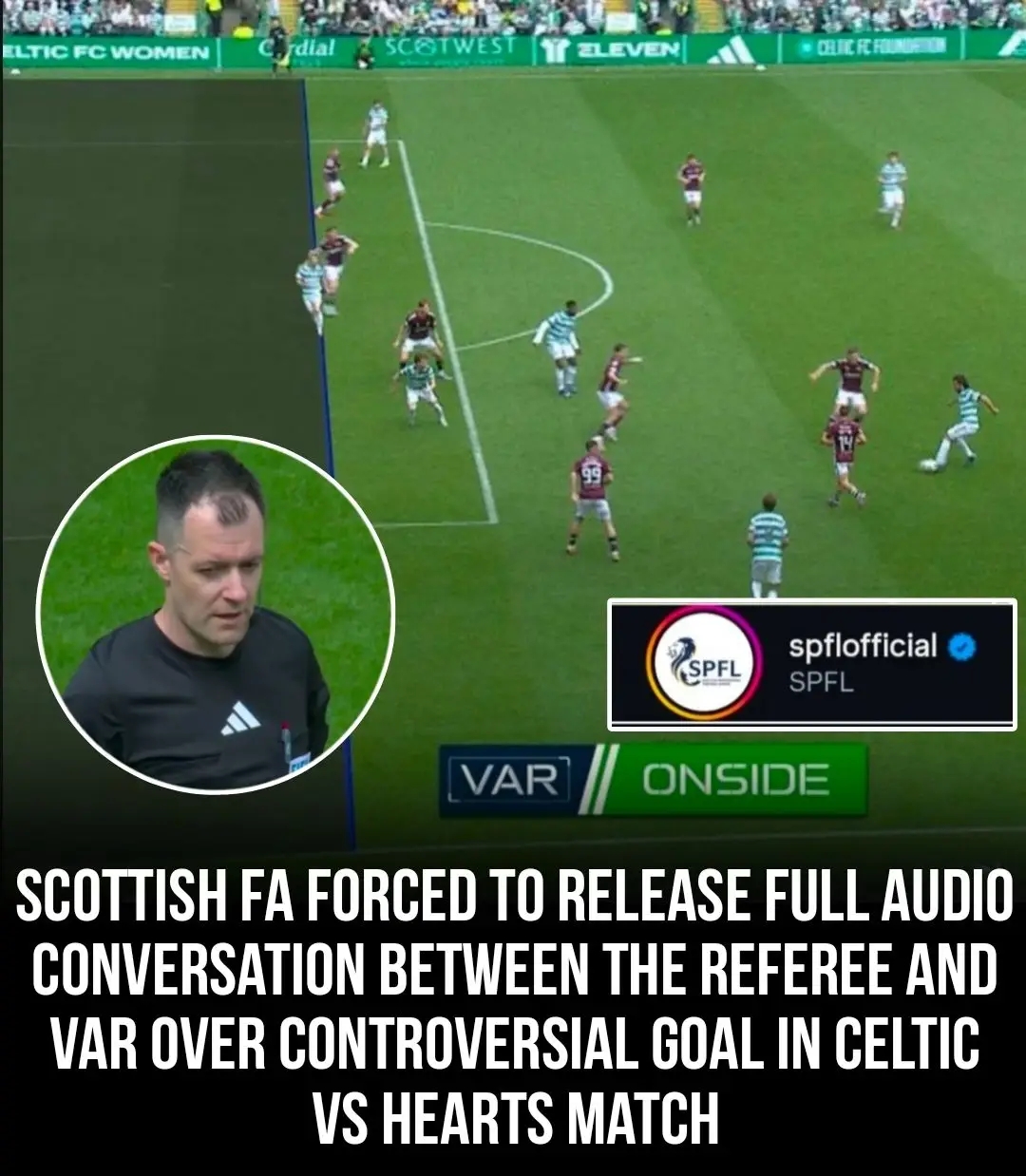
The moment the news broke, it spread like wildfire across Scottish football, leaving fans shocked, confused, and desperate for answers. The Scottish Football Association had officially released the full audio conversation between the match referee and the VAR officials, and what people heard in those recordings immediately sparked outrage, debate, and serious questions about the integrity of decisions in the game.
“I can’t believe what I am hearing.” That was the reaction from many supporters as the audio clips began circulating online. Fans of Celtic, Rangers, Hearts, and even neutral observers all found themselves drawn into the controversy. It was no longer just about one decision in one match. It had become a wider conversation about trust, transparency, and whether the rules of the game were being applied fairly.
The audio itself was meant to provide clarity. For years, fans had demanded more transparency in how VAR decisions are made. Many believed that if they could hear the conversations between referees and VAR officials, they would better understand the process. The SFA responded by releasing the recordings, expecting it to calm tensions. Instead, it created an even bigger storm.
Within the audio, there were moments of hesitation, confusion, and disagreement between officials. At key points, the referee seemed unsure, asking for confirmation, while the VAR team reviewed footage repeatedly. The tone of the conversation, the choice of words, and the time taken to reach decisions all became subjects of intense analysis.
One particular moment stood out. During a critical decision, the referee appeared to question what he was being told. His voice carried uncertainty, and that alone was enough to raise concerns among fans. If the officials themselves sounded unsure, how could supporters feel confident in the final outcome?
“The whole body is corrupt.” That statement, shared widely across social media, reflected the anger of some fans who felt that the system was broken. While such claims are extreme and not supported by evidence, they show the level of frustration that has built up over time. VAR was introduced to reduce mistakes, but for many supporters, it has only made things more complicated.
Another question began to trend almost immediately: “Are they trying to change the rules?” This was not about conspiracy, but about interpretation. Some fans believed that the way rules were being applied in VAR decisions seemed different from what they understood. Handball decisions, offside interpretations, and foul assessments all came under scrutiny.
The release of the audio pulled back the curtain on a process that is usually hidden. It revealed how much communication happens behind the scenes, how many angles are reviewed, and how decisions are discussed before being finalised. But instead of reassuring fans, it exposed just how complex and sometimes uncertain the process can be.
For players and managers, the situation added another layer of frustration. Many have already expressed concerns about VAR throughout the season. They argue that the delays break the flow of the game and that decisions are not always consistent. Hearing the audio only strengthened those concerns, as it showed that even officials can struggle to reach clear conclusions in certain situations.
Inside the dressing rooms, conversations quickly turned to the impact of these decisions. Matches can be decided by a single moment, and when that moment is influenced by VAR, it carries even more weight. Players train all week, prepare mentally and physically, and then see their efforts affected by decisions that are later debated for days.
Managers, too, found themselves under pressure. Some chose to speak carefully, avoiding direct criticism of officials, while others were more open about their frustrations. They know that speaking out can lead to fines or disciplinary action, but they also feel a responsibility to represent their clubs and supporters.
For the referees themselves, this situation is not easy. Their job is already one of the most difficult in football. Every decision they make is analysed from multiple angles, replayed in slow motion, and debated by millions of people. The introduction of VAR was supposed to support them, but in many cases, it has added even more pressure.
The audio revealed that referees are constantly communicating, checking, and re-checking decisions. It is not a simple process. There are protocols to follow, guidelines to consider, and limited time to make final calls. Even with technology, human judgment remains a key part of the game.
The SFA defended its decision to release the audio, stating that transparency is important for the future of football. They believe that by showing how decisions are made, they can build trust with fans. However, they also acknowledged that the reaction has been stronger than expected.
In response to the backlash, discussions have already begun about possible improvements. Some have suggested clearer communication during matches, similar to other sports where referees explain decisions over a microphone. Others have called for changes in how VAR is used, including limiting its involvement to only the most obvious errors.
Fans, meanwhile, continue to debate every detail. Social media platforms have been flooded with clips, opinions, and breakdowns of the audio. Some supporters have tried to analyse the decisions step by step, while others have focused on the tone and language used by the officials.
What this situation has shown more than anything is how deeply people care about football. Every decision matters because it affects results, standings, and emotions. Supporters invest their time, energy, and passion into their clubs, and they expect fairness in return.
The controversy has also highlighted the gap between how officials see the game and how fans experience it. On the pitch, decisions must be made quickly, often under pressure and with limited information. In the stands or at home, fans have the benefit of replays, slow motion, and multiple angles.
Bridging that gap is one of the biggest challenges facing football today. Technology like VAR was introduced to help, but it has also created new questions. How much should technology influence the game? Where should the line be drawn between human judgment and video review?
As the debate continues, one thing is certain. This moment will not be forgotten quickly. The release of the audio has opened a new chapter in the conversation about refereeing and VAR in Scottish football. It has forced everyone, from officials to fans, to look more closely at how decisions are made.
For now, the SFA stands by its decision, but the pressure for change is growing. Whether that change comes in the form of new rules, improved communication, or adjustments to VAR itself remains to be seen.
What started as an attempt to provide clarity has instead created more questions. And until those questions are answered, the debate will continue, the discussions will grow louder, and every future decision will be viewed through the lens of what was heard in that now-famous audio recording.
In football, moments like this can shape the future of the game. They force reflection, spark debate, and sometimes lead to meaningful change. Whether this will be one of those moments is something only time will tell. But for now, fans are left listening, analysing, and asking the same question again and again: what exactly is going on behind the scenes?